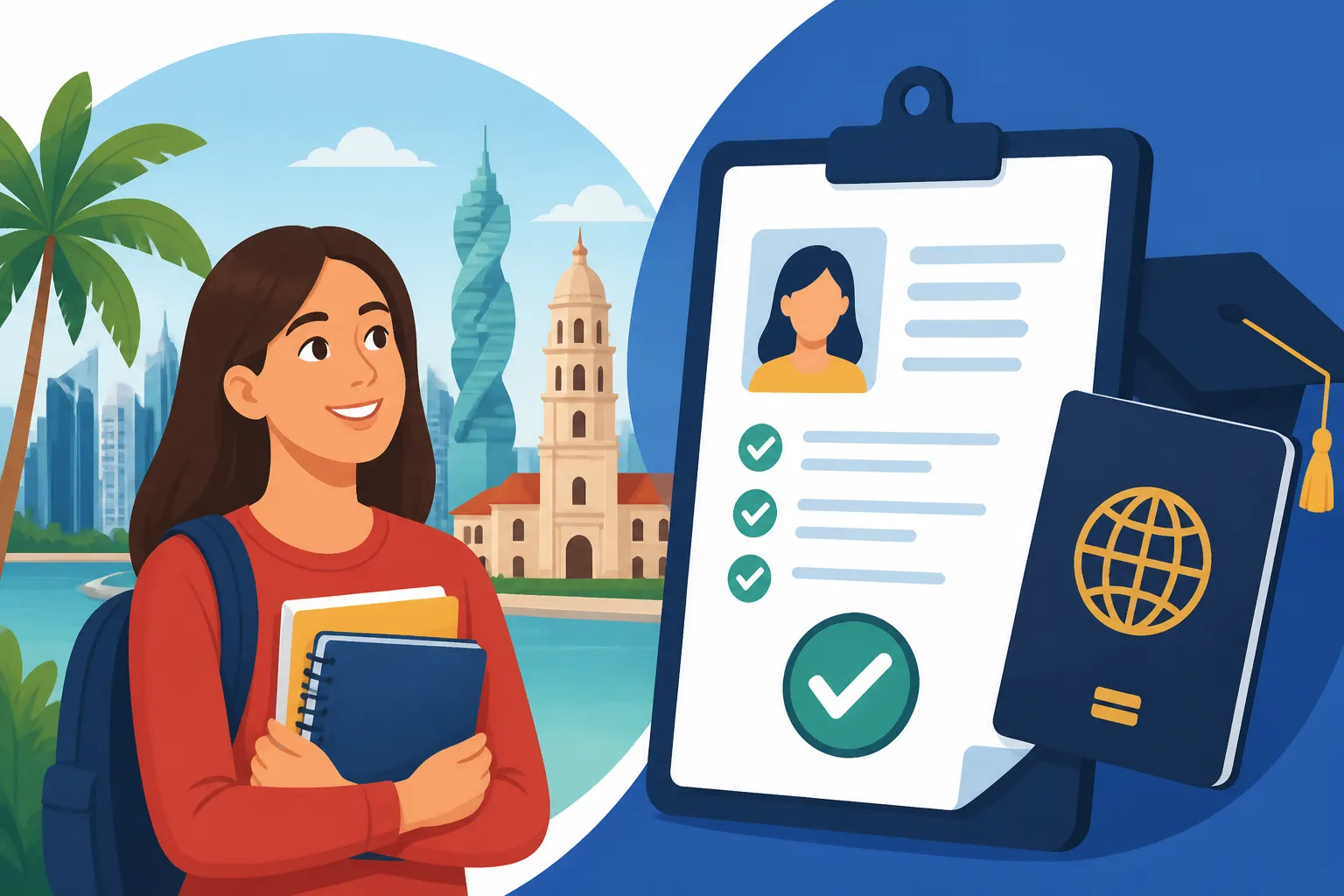
How Do I Apply for a Student Visa for Panama?
Dreaming of hitting the books in sunny Panama, perhaps perfecting your Spanish or diving into an MBA program? It’s a fantastic goal, but the reality of actually getting here to study can feel a bit like trying to navigate a maze blindfolded. Many hopeful expats get bogged down in the visa process before they even pack their first box. This guide is going to walk you through the entire student visa application for Panama, demystifying each step so you can focus on your studies, not the paperwork.
Understanding the Panamanian Student Visa Landscape
First things first, let's clear up what a student visa in Panama actually is and why you need one. You can't just arrive on a tourist visa and decide to enroll in a long-term program. That's a recipe for administrative headaches and potential issues down the line. A student visa, or Visa de Estudiante, is a specific type of temporary residency granted by the Panamanian National Immigration Service (SNM) that allows you to live in the country for the explicit purpose of pursuing accredited academic or vocational studies.
This visa is specifically designed for those enrolling in recognized educational institutions, whether it's a university like the Universidad de Panama, a specialized language school in El Cangrejo, or a vocational training center. The key is "recognized" – your chosen institution must be approved by the Panamanian Ministry of Education or the corresponding government body. This isn't just a formality; it ensures that your studies are legitimate in the eyes of the Panamanian government and that your visa application has a solid foundation.
It's crucial to understand that a student visa is a temporary status. It's not a direct path to permanent residency, though it can be a stepping stone depending on future circumstances. Typically, these visas are issued for one year and are renewable as long as you remain enrolled and meet all the necessary requirements. Think of it as a clear contract: you're here to study, and the visa grants you that right for a defined period. This framework helps both you and the immigration authorities manage your stay effectively.
The process of securing this visa can feel daunting, especially with the language barrier and different administrative practices. Many expats find the initial research overwhelming, encountering conflicting information or outdated advice. Rest assured, we'll break down the requirements and steps into manageable chunks, giving you a clear roadmap from application to classroom.
Eligibility and Requirements for Your Student Visa
Before you even start gathering documents, it's essential to understand the fundamental eligibility criteria the Panamanian government looks for. These aren't just hoops to jump through; they're designed to ensure that international students are genuinely committed to their education and have the means to support themselves during their stay. Skipping any of these foundational elements can lead to delays or even rejection of your application, so pay close attention.
Generally, you must be formally accepted into an approved educational institution in Panama, demonstrate sufficient financial resources, maintain good health, and have a clean criminal record. Your acceptance letter is paramount, as it proves the legitimate reason for your stay. The financial aspect is also critical – Panama wants to know you won't become a burden on the state, so proving you can cover tuition, living expenses, and return travel is non-negotiable. It's a holistic review, ensuring you're a responsible and dedicated prospective student.
General Eligibility Criteria
Let's dig a bit deeper into what these general criteria mean in practice. Firstly, age requirements usually state that applicants must be at least 18 years old to apply independently, though exceptions exist for minors enrolling in accredited K-12 international schools, in which case their parents or legal guardians would manage their visa process. The core of your application hinges on your formal acceptance letter from a Panamanian university, language school, or vocational institution. This letter must clearly state your enrollment, the program's duration, and the start and end dates. Without this, you don't have a basis for a student visa.
Financial solvency is another critical component. You'll need to prove that you have enough funds to cover your tuition, accommodation, food, transportation, and personal expenses for the entire duration of your studies, or at least for the first year if it’s a multi-year program. This might involve bank statements, a letter from a sponsor (with their financial proof), or scholarship letters. The exact amount isn't always fixed and can vary depending on the institution and location (studying in Panama City will generally be more expensive than in David or Santiago), but immigration authorities typically look for demonstrable, consistent funds.
Lastly, you must demonstrate good standing regarding your health and legal history. A medical certificate from a licensed doctor in Panama will be required to confirm you are in good health and free from contagious diseases. For your legal standing, a police clearance certificate from your country of origin and any countries where you've resided for a significant period will be necessary. This ensures you pose no security risk to the Panamanian public. These checks are standard for most residency applications, including student visas, reflecting Panama's commitment to public safety.
Essential Document Checklist for Your Application
Now, for the nitty-gritty: the documents. This is where many expats hit their first real wall, especially with the requirements for apostilles and official translations. Get this right, and the rest of the process becomes significantly smoother. Here's a breakdown of what you'll need:
- Passport: A valid passport with at least six months of validity remaining beyond your intended stay. You'll need photocopies of every page, notarized by a Panamanian notary. Don't underestimate the "every page" part – even blank pages.
- Passport-Sized Photos: Usually four to six recent passport-sized photos with a white background. Specific dimensions might be requested, so check with your lawyer or the immigration office.
- Acceptance Letter: Original letter of acceptance from the educational institution in Panama. This needs to be on official letterhead, signed, and include all relevant program details.
- Proof of Financial Solvency: This is a big one. It could be bank statements (Panamanian or international, often requiring a local bank reference), a letter from a sponsor detailing their commitment and financial capacity, or a scholarship award letter. You'll need to show enough funds to cover at least $500 per month for your living expenses, plus tuition fees.
- Police Clearance Certificate: An original police record from your country of origin, and any other country where you've lived for the last two to five years (depending on immigration's discretion). This document must be apostilled or legalized by the Panamanian Consulate in your home country. This can be a lengthy process, so start early! For more details on this, you might find "How to Get Your Documents Apostilled for Panama Immigration" helpful.
- Medical Certificate: An original medical certificate issued by a licensed Panamanian doctor after you arrive in Panama. This usually involves a general check-up and a simple blood test.
- Enrollment Certificate/Transcript: Once you've actually enrolled, a certificate confirming your ongoing studies or a transcript of courses.
- Authenticated Diploma/Transcripts: Your highest educational diploma or academic transcripts from your previous institution, also apostilled or legalized. This demonstrates your academic background.
- Letter of Responsibility: If you are a minor, a letter from your parents or legal guardian taking full responsibility for your stay and expenses.
- Application Forms: Duly completed application forms provided by the National Immigration Service, often prepared by your Panamanian immigration lawyer.
- Power of Attorney: A special power of attorney given to a Panamanian lawyer, authorizing them to act on your behalf throughout the visa application process. This is almost universally required for immigration processes here.
- Proof of Payment: Receipts for application fees and, if applicable, tuition fees.
It’s worth noting that any document not originally in Spanish must be translated by a certified public translator in Panama. This adds another layer of complexity and cost. For those considering an international move, you might be planning to ship personal items. Companies like Sirelo can assist with logistics, but remember that the administrative paperwork for your visa takes priority.
The Application Process: Step by Step
Alright, so you’ve got your head around the requirements. Now, how do you actually put it all together and get it submitted? The student visa application process in Panama, like most immigration procedures here, is not a DIY project for the faint of heart. Seriously, I cannot stress enough the importance of engaging a qualified Panamanian immigration lawyer. They understand the nuances, the ever-changing interpretations of the law, and the bureaucratic maze that can frustrate even the most seasoned expat.
Your lawyer will be your guide, translator, and advocate throughout the journey. They'll ensure your documents are correctly prepared, apostilled (or legalized), translated, and submitted according to the latest regulations. They'll also handle communication with the National Immigration Service, saving you countless hours and potential missteps. Think of their fee as an investment in your peace of mind and the successful outcome of your application.
Preparing Your Application Package
This stage is all about meticulous organization and attention to detail. Once you’ve collected all the essential documents we discussed earlier, your lawyer will review everything with a fine-tooth comb. They'll check for any discrepancies, missing signatures, or incorrect dates that could trigger a rejection. This is where their expertise truly shines; they know exactly what the immigration officials are looking for.
Any documents from outside Panama (like your police clearance or academic transcripts) will need to be properly apostilled in your home country before you even bring them to Panama. An apostille is an international certification attached to public documents that verifies their authenticity. If your home country isn't part of the Hague Apostille Convention, then your documents will need to be legalized through the Panamanian consulate in your country, which is a more involved process. Once they arrive in Panama, your lawyer will arrange for any non-Spanish documents to be officially translated by a certified public translator. This isn't something you can do yourself, even if you're fluent in Spanish; it has to be a translator officially recognized by the Panamanian government. This entire preparation phase can take weeks, so patience is key.
Submitting Your Application
With your perfectly organized and authenticated package in hand, your lawyer will then formally submit your student visa application to the National Immigration Service (Servicio Nacional de Migración) in Panama City. Unlike some other countries where you might apply at an embassy abroad, most long-term residency applications for Panama, including student visas, are processed within Panama. This means you will need to enter Panama on a tourist visa first, then work with your lawyer to submit the application.
During the submission, you will also typically undergo fingerprinting and a photograph session at the immigration office. This is part of their biometric data collection. Once submitted, you'll receive a provisional residency stamp in your passport, often valid for a few months. This stamp allows you to remain legally in Panama while your main application is being processed, which is a huge relief for many students. The actual processing time can vary significantly, from a few months to even longer, depending on the volume of applications and the specific immigration official assigned to your case. Your lawyer will keep you updated on the status.
What Happens After Submission
After your application is submitted, it enters a waiting period. The National Immigration Service reviews your entire file. They might request additional information or clarifications, which is why having a lawyer to manage this back-and-forth is invaluable. They'll know exactly how to respond and what supplementary documents might be needed. Sometimes, an interview might be required, though this is less common for student visas unless there are specific questions about your intent or documentation.
Once your application is approved, you'll receive an official resolution. At this point, you'll typically need to pay a final fee and present yourself once more at the immigration office to receive your temporary residency card, known as a cédula E. This card is your official proof of residency as a student and will have an expiration date. Don't forget, this is a temporary visa, so you'll need to be mindful of its expiration and plan for renewal well in advance. For those thinking ahead, you can read more about "How to Renew Your Residency in Panama" once you're settled.
Life After Visa Approval: What's Next for Students
Congratulations! You’ve navigated the bureaucratic labyrinth and your student visa has been approved. This is a huge milestone, but it's not the absolute end of your administrative journey in Panama. There are a few more crucial steps to solidify your status and ensure you can fully enjoy your time studying in this vibrant country. Think of it as transitioning from "applicant" to "official resident student."
The first few weeks after approval will involve completing these final administrative tasks, which are just as important as the application itself. It's about getting your official ID, understanding what you can and cannot do regarding work, and being prepared for future renewals. This phase helps integrate you fully into the Panamanian system, allowing you to focus on your academic pursuits with peace of mind.
Getting Your Cedula E
Once your student visa is approved, the next vital step is obtaining your cédula E. This is your temporary residency card and acts as your official identification document in Panama. It’s essentially your local ID, much like a driver's license or state ID in your home country, but specifically for residents. You'll need it for everything from opening a bank account (you can learn more about this in "The Expat Guide to Opening a Bank Account in Panama") to signing contracts, receiving mail, and even getting discounts that locals enjoy.
Your lawyer will typically accompany you to the Tribunal Electoral (Electoral Tribunal) to apply for your cédula E. This process usually involves another fingerprinting session, a photo, and filling out some forms. Make sure you keep this card safe, as it’s proof of your legal status. Losing it can lead to a minor administrative hassle, so treat it like your passport. Having your cédula E in hand makes life in Panama so much smoother and really makes you feel like you’ve officially arrived. For a deeper dive into this, check out "How to Get Your Cedula (Residency ID) in Panama".
Work Rights and Limitations for Students
This is a frequently asked question, and the answer is crucial for managing expectations. Generally, a student visa in Panama does not automatically grant you the right to work. Your primary purpose for being in the country is study, and the visa reflects that. Attempting to work without the proper authorization can lead to severe penalties, including fines, deportation, and jeopardizing any future visa applications.
If you do wish to work, even part-time, you would typically need to apply for a separate work permit. This is a complex process often requiring an employer to sponsor you and prove that no Panamanian or existing resident can fill the position. There are specific rules and restrictions for foreign workers in Panama, and these almost always take precedence over a student's desire to earn extra cash. It's a tough pill to swallow for many, but it's the reality of the immigration system here. Therefore, your financial solvency needs to truly cover your needs without relying on local employment. If you’re looking into working in Panama later, "Do I Need a Work Permit to Work in Panama?" might be of interest.
Renewing Your Student Visa
As mentioned earlier, student visas are typically issued for one year. This means that as long as you continue your studies, you'll need to renew your visa annually. The renewal process is similar to the initial application but usually less strenuous, as you’ve already established your initial status. You'll still need your lawyer to assist you, and you'll have to demonstrate continued enrollment and financial solvency.
Start the renewal process well in advance of your visa’s expiration date – ideally, two to three months beforehand. This buffer time is crucial, as immigration processes can sometimes take longer than expected. You’ll need a current enrollment certificate or academic transcript from your institution, updated bank statements, and potentially a new medical certificate. Your lawyer will guide you through the specific requirements at the time of renewal, as regulations can sometimes change. Staying on top of renewals ensures uninterrupted legal residency and allows you to continue your educational journey in Panama without unnecessary stress.
| Document Type | Requirement | Notes |
|---|---|---|
| Passport | Valid for at least 6 months, notarized copies of all pages | Ensure clarity and completeness. |
| Photos | 4-6 passport-sized, white background | Check for specific dimensions with your lawyer. |
| Acceptance Letter | Original, on institution letterhead, signed | Must clearly state program, duration, and dates. |
| Financial Proof | Bank statements (Panamanian/international), sponsor letter, scholarship | Demonstrate ~$500/month + tuition. Panamanian bank reference often needed for international statements. |
| Police Clearance | Original, from home country + any country lived for 2-5 years | MUST BE APOSTILLED/LEGALIZED before coming to Panama. Start this early! |
| Medical Certificate | Original, issued by a licensed Panamanian doctor (after arrival) | Involves general check-up and basic blood tests. |
| Academic Transcripts | Highest diploma/transcripts, apostilled/legalized | Shows your academic background; necessary for university or higher education. |
| Power of Attorney | Special power of attorney for Panamanian lawyer | Essential for your lawyer to represent you. |
| Application Fees | Receipts for immigration fees | Confirm current fees with your lawyer. |
| Translations | All non-Spanish documents translated by certified Panamanian translator | Your lawyer will arrange this. |
| Health Insurance | Proof of international health insurance or local plan | While not always explicitly listed as a visa document, highly recommended. Comprehensive international plans like those from Cigna Global are a good option. |
Navigating the Panamanian healthcare system, especially as a student, is another key aspect of moving here. While it might not be a direct visa requirement, having robust health coverage is non-negotiable for your peace of mind and well-being. Knowing you're covered for unexpected emergencies or routine doctor visits can make a huge difference, allowing you to fully concentrate on your studies. For more on this, consider reading "Health Insurance in Panama: Private and International Options Explained".
Moving to Panama for studies is an exciting adventure. While the visa process might seem complicated, with the right preparation and professional guidance, it's entirely manageable. Your focus should be on preparing diligently, understanding the requirements, and securing competent legal assistance. Embrace the journey, and soon you'll be enjoying your academic pursuits under the Panamanian sun. If you want to dive deeper into the education system here, take a look at "The Complete Guide to Studying at a Panamanian University (2026)". Good luck with your studies and welcome to Panama!
Disclaimer
Please remember that immigration laws and procedures in Panama can change without prior notice. This guide provides general information based on current knowledge and common practices. It is not legal advice. Always consult with a qualified Panamanian immigration lawyer and refer to the official website of the National Immigration Service of Panama for the most accurate and up-to-date requirements and regulations concerning student visas.