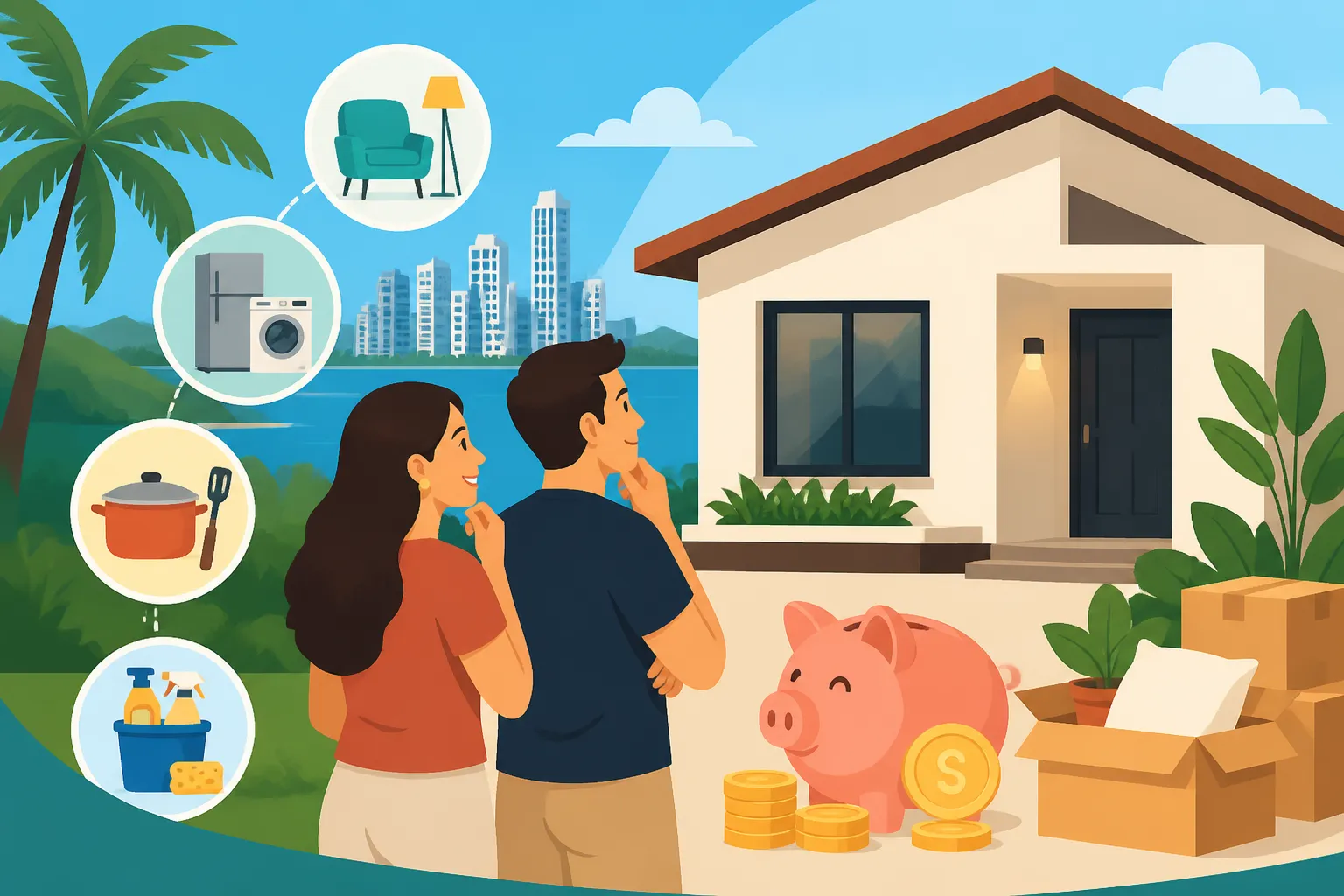
How Much Does It Cost to Set Up a Home in Panama?
Moving to a new country like Panama is incredibly exciting, but let's be real – the initial setup can feel like navigating a dense jungle without a map. You're dreaming of sipping coffee on your new balcony, but first, there's the administrative maze of deposits, connections, and finding everything you need to turn a house into a home. This guide is here to cut through the confusion and give you a realistic breakdown of what to expect when setting up your new life in Panama, from your first rental payment to stocking your pantry.
Initial Rental or Purchase Costs
One of the biggest hurdles when first arriving in Panama is securing your living situation, whether you're looking to rent or buy. Both options come with their own distinct set of upfront costs that you absolutely need to factor into your budget. It's not just about the monthly rent or the purchase price; there are a myriad of associated fees that can quickly add up.
Rental Deposits and First Month's Rent
When you're looking to rent an apartment or house in Panama, landlords typically require a security deposit. This is pretty standard practice worldwide, but the amounts can vary. You'll usually be asked for one or two months' rent upfront as a security deposit. This money is held to cover any potential damages to the property or unpaid utility bills when you eventually move out. Additionally, you'll need to pay the first month's rent before you can move in. So, right off the bat, you're looking at paying anywhere from two to three months' worth of rent just to get the keys.
Let's say you're eyeing a charming one-bedroom apartment in El Cangrejo in Panama City. If the rent is $900 per month, you might need to prepare for $1,800 for two months' security deposit plus another $900 for the first month's rent, totaling $2,700 before you even start decorating. If you're looking at a more rural area like Boquete, where rents might be closer to $600 a month, your initial outlay could be around $1,800. Some landlords might also ask for a separate, smaller deposit specifically for utilities to ensure those final bills are covered. It's crucial to read your rental contract (preferably with the help of a local lawyer) to understand exactly what each deposit covers and the conditions for its return. Don't be afraid to ask for clarity on these terms; it’s your money, after all! If you're curious about the general cost, you can read more about how much it costs to rent an apartment in Panama City in 2026?.
Property Purchase Down Payments and Closing Costs
If you're jumping straight into property ownership, the initial costs are naturally going to be significantly higher. Foreigners can absolutely buy property in Panama, and it's a popular choice for many expats seeking long-term stability. The first major hurdle is the down payment, which typically ranges from 10% to 30% of the purchase price, depending on the property type, the lender (if you're getting a mortgage), and your financial standing. For a $200,000 apartment, that's $20,000 to $60,000 right there.
Beyond the down payment, you'll face a range of closing costs that can amount to an additional 3% to 7% of the purchase price. These costs include:
- Legal Fees: It is highly recommended, almost essential, to engage a Panamanian lawyer to handle the property transfer, conduct due diligence, and ensure the title is clean. These fees vary but can be a significant portion of your closing costs.
- Property Transfer Tax (ITBM): This is a 2% tax on the higher of the registered value or the sale price of the property.
- Registration Fees: Fees paid to the Public Registry to record the change of ownership.
- Notary Fees: Paid for notarizing documents involved in the transaction.
- Real Estate Agent Commissions: While typically paid by the seller, sometimes parts of these can indirectly factor into the negotiation.
For that $200,000 apartment, closing costs could easily add another $6,000 to $14,000. It's vital to have these funds liquid and ready. Don't underestimate these "hidden" costs when budgeting for your dream home in Panama. Understanding how to buy property in Panama as a foreigner: the full guide (2026) can offer even more insights into this complex process.
Setting Up Essential Utilities and Services
Once you've got a roof over your head, the next step is to make it functional. This means getting electricity, water, internet, and phone services up and running. In Panama, this can sometimes feel like a test of patience, but it's entirely manageable with the right approach and a bit of foresight.
Electricity, Water, and Gas Connections
Getting your basic utilities connected is one of the first things you'll need to tackle. For electricity, the main provider in Panama City and many urban areas is ENSA (Empresa Nacional de Energía S.A.). For water, it's IDAAN (Instituto de Acueductos y Alcantarillados Nacionales). If your new home uses gas, it's typically through propane tanks (cilindros de gas) that you purchase and have delivered, or occasionally a central gas supply managed by your building.
To set up new accounts or transfer existing ones, you'll usually need:
- Your cédula (Panamanian ID) or passport.
- A copy of your rental agreement or property title.
- Proof of address (like another utility bill, if you have one).
- Sometimes, a reference letter or a deposit, especially if you're new to the system.
Initial connection fees for electricity or water are generally not exorbitant, often just a small administrative charge. However, ensure that all previous bills from the landlord or seller are paid in full before you take over the account. You do not want to inherit someone else's outstanding debt. Average first bills can vary wildly depending on your usage, especially with air conditioning being a near-necessity in many parts of Panama. Expect to pay more in warmer months or if you run your A/C constantly. For a typical one-bedroom apartment, your first combined electricity and water bill could range from $50 to $150, but this is a very rough estimate. You can learn more about how to set up electricity after moving to Panama.
Internet and Mobile Phone Services
Staying connected is a must, whether for work, entertainment, or just keeping in touch with family back home. Panama has several reputable providers for internet and mobile phone services, including Cable & Wireless (now +Móvil), Tigo, Digicel, and Claro.
For internet, you'll likely have options for fiber optic or cable internet, particularly in urban areas like Panama City. Installation fees can range from $20 to $50, sometimes waived with certain promotions or longer contracts. Monthly packages vary greatly depending on speed and data limits, but you can typically find reliable home internet for $30-$70 per month.
Getting a local SIM card is usually straightforward. You can pick one up at almost any supermarket, convenience store, or official provider store. You'll need your passport, and often you can just buy a prepaid SIM and top it up as needed. If you want a more permanent solution with a monthly plan, you'll need your cédula or proof of residency and potentially a bank account. For those initial days, before you're fully set up, a digital SIM (eSIM) from a provider like Airalo can be a lifesaver, giving you immediate data access upon arrival without the hassle of hunting for a physical SIM card. This means you can call a taxi, use maps, and communicate right away. Choosing the best provider is key, and you can get more information on how to choose a mobile and internet provider in Panama.
Home Furnishings and Appliances
Unless you've found a fully furnished rental, you'll need to budget for furnishings and appliances. This can be one of the more substantial initial costs, depending on your preferences.
- Buying New: Stores like Doit Center, Arrocha, and Félix B. Maduro offer a range of new furniture and household goods. For appliances, you'll find brands at prices comparable to what you might see in North America. A new basic refrigerator might cost $400-$800, a stove $300-$600, and a washer/dryer set $800-$1500. Air conditioning units are practically essential in most parts of Panama, and while some rentals include them, if you need to buy and install one, factor in $300-$800 per unit, plus installation.
- Buying Used: For budget-friendly options, check out local markets, Facebook Marketplace groups, and expat forums. You can often find decent quality used furniture and appliances at a fraction of the cost. This is a great way to save money, especially for temporary setups or if you prefer a more eclectic style.
- The Basics: Don't forget essentials beyond the big items: kitchenware, bedding, towels, basic cleaning supplies, and small electronics. These easily add up to a few hundred dollars.
It’s worth noting that some long-term rentals, especially in expat-heavy areas, do come furnished or semi-furnished, which can significantly reduce this upfront cost. Always clarify what is included in your rental agreement.
Moving and Shipping Your Belongings
Deciding what to bring with you and how to get it to Panama is another major financial consideration. Many expats opt to bring only essentials, while others ship entire households. The costs vary wildly depending on the volume of your belongings and your chosen method.
International Shipping Costs
Shipping your possessions across borders is rarely cheap, and Panama is no exception. Several factors will influence the final price:
- Volume and Weight: The more stuff you have, the more it will cost. This is the primary driver of shipping expenses.
- Distance: Where are you shipping from? Naturally, shipping from North America is often less expensive than from Europe or Asia.
- Method of Transport: Sea freight is the most economical for large shipments but takes weeks or even months. Air freight is much faster but substantially more expensive.
- Customs Duties and Taxes: Be prepared for potential import duties and taxes on your household goods, especially if they are new or not considered personal effects. Panama has specific regulations, and a reputable moving company can help navigate these.
- Insurance: Always insure your belongings during transit. It's an added cost but provides peace of mind.
For a modest shipment (e.g., a few boxes and small furniture items), you might pay anywhere from $1,000 to $3,000 via sea freight. For a full 20-foot container, expect to pay $3,000 to $8,000 or more, not including customs and port fees on the Panamanian side. It’s always best to get multiple quotes from international moving companies. Services like Sirelo can help you compare different movers and their offerings, ensuring you get a competitive price for your specific needs. They can also offer guidance on what's worth shipping versus what might be more cost-effective to buy new once you arrive. You can dive deeper into this topic by reading how much does it cost to ship belongings to Panama?.
Local Moving and Setup Services
Once your belongings arrive in Panama, or if you're just moving within the country, you'll need to consider local transport and setup costs.
- Local Transportation: If your shipment arrives at a port like Cristóbal or Balboa, you'll need to arrange for local transport to your home. This could be a truck or van service. Similarly, if you're relocating within Panama (e.g., from Panama City to David), local moving services can range from a few hundred dollars to over a thousand, depending on the distance and volume.
- Unpacking and Assembly: Many moving companies offer unpacking and furniture assembly services. While convenient, these come at an extra cost. If you're on a tighter budget, you might opt to do it yourself or hire local day laborers for assistance, which is often much more affordable.
- Customs Clearance: This can be a complex and time-consuming process. Even with a good moving company, you might need to personally visit the customs office in Panama to clear your items, which can involve fees and some waiting.
Other Initial Setup Expenses
Beyond the major housing and moving expenses, there are several other important costs that will hit your wallet in those crucial first weeks and months. Don't let these catch you off guard!
Visa and Immigration Processing Fees
Unless you're arriving as a tourist, securing your legal right to live and work in Panama is paramount. This process, while rewarding, comes with substantial fees. These are usually paid to the Panamanian government for application processing, along with fees for legal counsel.
Common visa types for expats include the Pensionado (Retiree) Visa and the Friendly Nations Visa. For the Pensionado Visa, for example, beyond proving a stable lifetime pension income of at least $1,000 per month, you'll pay government fees (application, multiple entry, cédula issuance) that can add up to a few hundred dollars. More significantly, you'll need to factor in legal fees, which can range from $1,500 to $5,000 or more, depending on the complexity of your case and the lawyer you choose. This often covers not just the application but also navigating the bureaucracy, apostille of documents from your home country, and translations. It's a significant investment, but essential for legal residency. You can delve into the details of the pensionado (retiree) visa in Panama (2026) or understanding the Friendly Nations Visa in Panama (2026) to see specific requirements and associated costs.
Transportation Buying a Car vs Public Transport
Getting around Panama is another aspect of setting up your new home that demands a budget. Your choices typically boil down to purchasing a vehicle or relying on public transport and ride-sharing.
- Buying a Car: If you decide to buy a car, initial costs include the purchase price itself (which can range from a few thousand for a used car to tens of thousands for new), registration fees, and mandatory vehicle insurance. You'll also need to get a Panamanian driver's license, which involves converting your foreign license. All these can add up to several hundred to a few thousand dollars just for the initial setup, not to mention fuel and maintenance. To understand the specifics of this process, you might want to read driving in Panama: licences, registration and rules for expats (2026).
- Public Transport: Panama City boasts an impressive Metro system and an extensive Metrobus network. To use these, you'll need to purchase a rechargeable Metro card, which costs a few dollars, and then load it with funds. Fares are quite affordable, often less than $0.50 per ride. Taxis and ride-sharing apps like Uber are also readily available and reasonably priced, especially in urban areas. For your initial weeks, relying on public transport and ride-shares can be a much more budget-friendly option than buying a car outright.
Initial Groceries and Household Supplies
The moment you step into your new, empty home, you'll realize you need more than just furniture. The first big grocery run can be surprisingly expensive, as you're not just buying food for the week, but also stocking up on pantry staples, cleaning supplies, and toiletries.
Expect to spend $100-$300 on your first grocery trip, depending on where you shop and your cooking habits. Supermarkets like Riba Smith tend to be pricier but offer a wider selection of imported goods, while Super 99 and Machetazo are generally more budget-friendly. Don't forget basic household items like toilet paper, soap, laundry detergent, trash bags, and cleaning products – these small purchases accumulate quickly. This initial stock-up is a one-time hit, but it's crucial for making your home truly livable from day one. For a broader picture, you can consult The complete guide to cost of living in Panama for expats (2026).
Here's a quick summary table of estimated initial costs for setting up a modest 1-bedroom home in Panama City:
| Category | Low Estimate (USD) | High Estimate (USD) | Notes |
|---|---|---|---|
| Housing (Rental) | |||
| Security Deposit (1-2 months) | $700 | $1,800 | Based on $700-$900/month rent. |
| First Month's Rent | $700 | $900 | |
| Utilities & Services | |||
| Electricity/Water Connection Fees | $20 | $50 | Initial administrative fees. |
| First Month's Utilities (Estimated) | $50 | $150 | Dependent on A/C usage. |
| Internet Installation & First Month | $50 | $120 | Includes installation fee and first month's plan. |
| Mobile SIM Card & Initial Top-up | $10 | $30 | Prepaid SIM card and initial data/calls. |
| Home Furnishings | |||
| Basic Appliances (Fridge, Stove, Fan) | $700 | $1,500 | If not included, buying new or good used. |
| Basic Furniture (Bed, Table, Chairs) | $500 | $1,000 | If not included, buying new or good used. |
| Household Essentials (Kitchenware, Bedding) | $150 | $400 | Pots, pans, plates, towels, sheets, cleaning supplies. |
| Moving & Shipping | |||
| International Shipping (Partial Container) | $1,000 | $3,000 | Highly variable. Does not include customs. |
| Local Transport / Customs Help | $100 | $500 | For port-to-home transport or assistance with clearance. |
| Other Initial Expenses | |||
| Visa/Residency Legal & Government Fees | $1,500 | $5,000 | Estimate for lawyer & government fees for a common residency type, very variable. |
| Initial Groceries & Pantry Stock | $150 | $300 | First large shopping trip. |
| Public Transport Card & Initial Top-ups | $5 | $20 | If not buying a car immediately. |
| Total Estimated Initial Setup Cost | $5,715 | $14,870 | This is a rough estimate and can vary greatly based on individual choices, location, and specific visa type. This does NOT include car purchase. |
Keep in mind that these are just initial setup costs. Your ongoing monthly expenses will be a separate budget item. Panama offers a fantastic lifestyle, but going in with a clear financial picture for your initial setup will save you a lot of stress and allow you to truly enjoy your new adventure.
Disclaimer
The information provided in this guide is for general informational purposes only and does not constitute financial, legal, or immigration advice. While we strive to provide accurate and up-to-date information, costs and regulations in Panama can change rapidly. It is highly recommended to consult with local professionals, such as lawyers, real estate agents, and financial advisors, for advice tailored to your specific situation before making any decisions.