How to Include Family in Your Panama Residency Application
Moving to a new country is a huge undertaking, full of excitement but also a mountain of paperwork that can quickly turn joy into sheer frustration. When you’re looking to make Panama your new home, and you’re bringing your family along for the adventure, that paperwork mountain doubles, triples, or even quadruples. The good news is, Panama welcomes families, but the process of including your loved ones in your residency application requires careful planning and a deep understanding of the local immigration laws. This comprehensive guide will walk you through everything you need to know to ensure your entire family can legally and comfortably establish their new life in this vibrant Central American gem.
Understanding Dependent Residency in Panama: The Basics
When you embark on the journey of obtaining residency in Panama, it’s important to understand that your family members typically fall under the category of "dependents." This means their right to reside in Panama is tied to your status as the principal applicant. It's a system designed to keep families together, but it comes with its own set of rules and prerequisites.
Who Qualifies as a Dependent?
Panamanian immigration law is generally quite clear about who can be included in a dependent residency application, but there are crucial age limits and conditions you absolutely must be aware of.
First and foremost, your spouse is almost always eligible, provided you have a legally recognized marriage certificate. This document is paramount, and it must be properly apostilled or authenticated, depending on its country of origin, before it even touches Panamanian soil. We'll delve deeper into that bureaucratic hurdle later. For children, the general rule is that they must be under 18 years old. However, Panama offers a bit more flexibility for older children under specific circumstances. If your child is between 18 and 25 years old, they can often still qualify as a dependent if they are unmarried and actively enrolled as a full-time student in an accredited university. This requires official proof of enrollment and a letter confirming their student status. What about adult children with disabilities? Panamanian law also provides for adult children who are unable to support themselves due to a disability; these cases typically require specific medical certifications and a legal declaration of dependence. Finally, in some cases, elderly parents can also be included as dependents, though this usually comes with stricter financial requirements for the principal applicant to demonstrate full support.
Navigating these age limits and conditions means that every birth certificate and, if applicable, every marriage certificate for your immediate family members needs to be meticulously prepared. These aren't just pieces of paper; they are the legal backbone of your family's new life here. Don't assume a simple photocopy will do – Panamanian authorities are sticklers for official, authenticated documents.
The Importance of a Principal Applicant
Think of your family's residency application as a tree: you, the principal applicant, are the trunk, and your dependents are the branches. The stability of the branches depends entirely on the health and standing of the trunk. This means your residency application is the foundation upon which your family's ability to live in Panama rests.
If you are applying for a visa or residency, your dependents' applications are filed alongside yours or, in some cases, shortly after yours. They are explicitly named as your spouse, your children, or your parents, and their eligibility flows directly from your own. This interconnectedness is vital to understand. Should your principal residency status be revoked, denied, or expire without renewal, the dependent status of your family members is directly jeopardized. It's not like each family member has their own independent visa that stands alone. For instance, if you secure a Pensionado (Retiree) Visa in Panama, your spouse and eligible children are granted their residency through your Pensionado status. If, for some unforeseen reason, your Pensionado status was to be invalidated, their dependent status would cease to exist as well, requiring them to find alternative legal pathways to stay in Panama or, unfortunately, to leave. This emphasizes the critical importance of maintaining your own residency in good standing.
Therefore, when you're preparing your application, always remember that you're not just applying for yourself; you're anchoring the entire family. Any changes to your employment, financial situation, or legal status that might impact your residency will inherently affect your dependents. This is why having a clear, stable path to residency for the principal applicant is the absolute first step in bringing your loved ones to Panama.
Common Residency Visas and How They Accommodate Family
Panama offers several pathways to residency, and most of the popular options for expats are designed with family inclusion in mind. Understanding how each visa type allows for dependents is crucial in choosing the right one for your family's circumstances.
The Friendly Nations Visa and Family
The Friendly Nations Visa has been a cornerstone for many expats seeking residency in Panama. While it has undergone some changes over the years, it remains a viable option for many, and it explicitly caters to families. The core principle is that if the principal applicant qualifies – typically through employment with a Panamanian company or by establishing economic solvency via real estate or a fixed-term deposit – then their immediate family can also apply.
For the principal applicant, the current iteration requires either being employed by a Panamanian company, demonstrating solvency through a $200,000 investment in real estate, or a fixed-term deposit in a Panamanian bank. Once that’s established, the path for dependents becomes clearer. Each family member, whether spouse or eligible child, will need to provide their own set of personal documents, such as birth certificates and passports. The most significant requirement for dependents under the Friendly Nations Visa is that the principal applicant must demonstrate sufficient financial means to support them. This often translates into showing an income level that can adequately cover living expenses for the entire family unit. The immigration authorities want to see that your family won't become a burden on the state, which is a reasonable expectation in any country. It's not enough to just cover your own expenses; you need to prove financial stability for everyone you're bringing with you.
It's also worth noting that changes to this visa can impact the dependent application process. For example, previous versions of the visa were more straightforward regarding employment proof. Now, with the updated rules, the principal applicant's route to the Friendly Nations Visa needs to be firmly established before the dependents can piggyback on it. Your immigration lawyer, who is absolutely essential for this process, will guide you through the latest requirements to ensure your family's application is compliant.
The Pensionado (Retiree) Visa and Family
Ah, the Pensionado Visa! This is arguably one of the most attractive residency programs in the world, renowned for its excellent benefits, and thankfully, it's also very family-friendly. Designed for retirees with a stable income, it extends its generous provisions to spouses and eligible children without much additional hassle, provided the financial requirements are met.
To qualify for the Pensionado Visa, the principal applicant must prove a lifetime pension or annuity of at least $1,000 USD per month. If you’re bringing your spouse, the minimum income requirement doesn't necessarily double; often, an additional $250 per month for your spouse (totaling $1,250 USD) is sufficient, though it can vary based on individual circumstances and the discretion of immigration officials. For each eligible child, you might need to show an additional $100 per month, again, subject to review. The beauty of this visa is its permanence: once granted, it's a lifelong residency for the principal and dependents, as long as the conditions (primarily the pension income) continue to be met. This provides incredible peace of mind for families looking for a stable, long-term home.
Imagine a couple, John and Mary, both retired and looking to move to Panama. John has a pension of $1,200 USD per month. If he wants to include Mary as a dependent, he would easily meet the general requirement of showing $1,000 for himself plus an additional $250 for Mary. Their application would proceed together, allowing them both to enjoy the benefits of the Pensionado Visa, including discounts on various services. This visa simplifies the family residency process significantly, making Panama an incredibly popular destination for retirees with families.
Other Residency Options for Families (Work Visas, Qualified Investor)
Beyond the Friendly Nations and Pensionado visas, Panama offers several other residency categories that can include family members, though they might have different nuances or higher thresholds. These include specific work visas, the Qualified Investor program, and even some special category visas.
If you're coming to Panama for a specific job, a work permit or professional visa will be your primary route. Once your work visa is secured, you can typically apply for dependent visas for your spouse and children. The key here is that your employment provides the legal and financial foundation for your family's residency. For instance, if your employer sponsors your work permit, they might also be involved in facilitating your family’s dependent visas. Each dependent will still need to provide their own personal documentation, and you, as the principal, will need to show you can support them financially.
For those with significant capital, the Qualified Investor (Golden Visa) Programme in Panama offers an expedited path to residency through investment in real estate, a fixed-term deposit, or a combination of both. This program is explicitly designed to include immediate family members (spouse and children under 18, or up to 25 if students, and sometimes even parents), making it an attractive option for high-net-worth individuals. The investment threshold is substantial, but the process for family inclusion is generally straightforward once the principal investment is made. Regardless of the visa type, the general principle remains: if the principal applicant meets the criteria for residency, their immediate family members can usually apply as dependents, provided all individual documentation and financial support requirements are diligently met.
Documentation Demystified: What Each Family Member Needs
Gathering the correct documents is often the most time-consuming and stressful part of any immigration process. When applying for family residency in Panama, this challenge is amplified because you’re doing it for multiple people, and every single document must be perfect. Missing stamps, incorrect dates, or un-apostilled papers can lead to frustrating delays.
Essential Documents for All Dependents
Every family member applying as a dependent will need a core set of documents that are non-negotiable. These include, but are not limited to, valid passports, birth certificates, marriage certificates (for spouses), and police background checks.
Let's start with the passports: they must be valid for at least six months, if not longer, beyond your intended application date. It’s always best to have passports with ample validity to avoid issues down the line. Next, birth certificates are crucial for every dependent child, proving their relationship to the principal applicant. Similarly, for your spouse, a legally recognized marriage certificate is indispensable. Here’s where the "apostille or legalization" hurdle comes in. For any document issued outside of Panama, it must be apostilled if your home country is part of The Hague Apostille Convention, or legalized by the Panamanian consulate in your home country if it's not. This process verifies the authenticity of the document's signature and seal, and it is absolutely essential for Panamanian immigration. I cannot stress this enough: documents without proper authentication will be rejected. Many expats have been caught off guard by this, wasting precious time and money. For a detailed walkthrough on this critical step, refer to our guide on How to Get Your Documents Apostilled for Panama Immigration. Additionally, police background checks are required for all applicants typically over the age of 18 (though sometimes 16), from both their home country and any country they have resided in for the past two years. These too need to be apostilled or legalized. Finally, you’ll need multiple passport-sized photographs (usually 8-10, white background, specific dimensions) for each applicant, along with a health certificate from a Panamanian doctor, which you'll obtain once you arrive.
Imagine trying to submit an application for yourself, your spouse, and two children without all these documents perfectly aligned. It’s a recipe for headaches. Each apostille, each certificate, each photograph must meet the exact specifications set by the Panamanian National Immigration Service. This is where the value of meticulous preparation and professional guidance truly shines.
Financial Proof and Support for Dependents
Beyond personal identification and relationship documents, perhaps the most critical component for including family in your residency application is demonstrating robust financial solvency. Panama needs to be assured that you, as the principal applicant, can fully support your entire family without them becoming a public burden.
This proof typically involves a combination of official bank statements, letters from your bank confirming your financial standing, and income verification letters from employers or pension providers. For many visas, such as the Friendly Nations Visa or even some work-related residencies, you might need to show a certain amount in a Panamanian bank account. This isn't just a lump sum; sometimes, it's about demonstrating consistent income flow that can sustain your household. For instance, if the minimum income for a single Pensionado applicant is $1,000, adding a spouse might require proving an additional $250, and children more. These aren't arbitrary figures; they are calculated to ensure a reasonable standard of living in Panama. The Panamanian immigration authorities will scrutinize these documents carefully. They want to see consistent income, not just a sudden deposit. The clearer and more consistent your financial documentation, the smoother this part of the process will be.
It's not just about the numbers on the page; it's about presenting a coherent and undeniable financial narrative. If your income sources are diverse, you’ll need documentation for each. If you're self-employed, tax returns and business financial statements will be paramount. Any gaps or inconsistencies can raise red flags and lead to further requests for information, delaying your application significantly. Being proactive and transparent with your financial proof is key to a successful family residency application.
Specific Documents for Children and Spouses
While many documents are universal, there are particular requirements unique to spouses and children that warrant special attention. These specific documents help to clearly define the family unit and ensure all legal bases are covered.
For children, especially those between 18 and 25 years old who are applying as students, you’ll need official enrollment letters and transcripts from their educational institution. This isn't just a casual email; it needs to be an official, signed document on university letterhead, often notarized and apostilled or legalized. If only one parent is applying for residency with the children, and the other parent is not (either remaining in the home country or deceased), you'll also need a notarized consent form from the non-applying parent allowing the children to reside in Panama with you. If the other parent is deceased, a death certificate, also apostilled or legalized, will be required. These measures are in place to prevent international child abduction and ensure the well-being of the minors. For spouses, beyond the marriage certificate, there might be additional forms to fill out, confirming the marriage is genuine and ongoing. In rare cases, immigration officials might request a brief interview to verify the marital relationship, though this is less common for straightforward applications.
Blended families often face additional complexities. If you have stepchildren you wish to include, you might need not only their birth certificates but also adoption papers or court orders demonstrating your legal guardianship and responsibility for them. Each case is unique, and these specific scenarios underscore why engaging an experienced Panamanian immigration lawyer is not just recommended, but practically mandatory. They can foresee these potential complications and help you prepare all the necessary documentation upfront, saving you immense stress and time.
The Application Process: Step-by-Step for Families
Embarking on the Panamanian residency application journey with your family can feel like navigating a dense jungle – confusing, full of hidden paths, and occasionally, slow-moving. However, understanding the step-by-step process, especially when armed with the right guidance, can make it much more manageable.
Engaging a Panamanian Lawyer: A Non-Negotiable Step
Let me be absolutely clear: trying to navigate the Panamanian immigration system on your own, especially with a family, is an exercise in futility that will likely end in frustration and wasted money. Hiring a qualified Panamanian immigration lawyer isn't just a good idea; it's practically a non-negotiable requirement for a smooth and successful application.
A good lawyer understands the ever-changing nuances of Panamanian law, the specific quirks of the National Immigration Service, and the precise order and format in which documents must be submitted. They act as your indispensable guide, translator, and advocate throughout the entire process. From reviewing every single document to ensure it's properly authenticated and translated, to submitting your application in person, to liaising with immigration officials on your behalf, their expertise is invaluable. They can also provide a realistic timeline, anticipate potential challenges, and advise on the most suitable visa category for your family. If you're wondering Why You Need a Panamanian Lawyer for Residency, know that they are your bridge over troubled bureaucratic waters. Their fees are an investment, not an expense, considering the time, stress, and potential pitfalls they help you avoid.
The cost for legal services varies depending on the complexity of your family's situation and the type of visa. Expect to pay anywhere from a few thousand dollars upwards for a family application. While this might seem like a significant upfront cost, think of it as purchasing peace of mind. Without a lawyer, you risk delays, rejections, and having to start over, which ultimately costs more in both time and money. They will also manage the submission of forms like the power of attorney, which grants them permission to act on your behalf, further streamlining the process.
Concurrent vs. Subsequent Applications
When bringing your family to Panama, you generally have two main approaches for their residency applications: applying concurrently with yours or doing it subsequently. While both are possible, one often proves to be significantly more efficient and less complicated.
Applying concurrently means that your application as the principal and all your dependents' applications are submitted to the National Immigration Service at the same time. This is almost always the recommended approach. It allows the immigration officials to process your entire family unit as one case, which can streamline the review process. It also means that, ideally, your family members will receive their provisional and then permanent residency at roughly the same time, avoiding staggered statuses that can complicate travel and access to services. Your lawyer will bundle all the necessary documents for each family member into a comprehensive package, ensuring nothing is overlooked for anyone.
However, sometimes circumstances dictate a subsequent application. Perhaps a family member couldn't gather their documents in time, or they decide to join you later. In such cases, once your principal residency is established, you can then sponsor your remaining family members. This typically means starting a new, separate application process for them, which can sometimes take longer and incur additional fees, as it's not part of the initial "bundle." Just like with obtaining various services in Panama, such as figuring out How to Sponsor Your Spouse and Children for Residency in Panama, doing it all at once with professional help is generally the most straightforward path. It prevents a situation where one family member might have full residency while another is still on a tourist visa, leading to logistical headaches and potential visa run requirements.
Initial Entry, Provisional Status, and Cedula Issuance
Once your application is submitted, the journey typically involves a few distinct stages: initial entry, obtaining provisional residency, and finally, receiving your official Panamanian identification card, the cédula.
Upon successful submission of your complete application, you and your family members will typically receive an initial visa stamp in your passports, often valid for a specific period (e.g., six months). This allows you to reside in Panama legally while your full application is under review. This is not yet full residency, but it’s a crucial step. During this provisional period, you may be required to attend an interview or provide additional documentation if requested by immigration. After a period of review, which can range from a few months to over a year, you and your family members will be granted provisional residency. This means you are legally allowed to live in Panama, often for a set period, such as two years. This provisional status is typically evidenced by a sticker in your passport or a temporary residency card.
The final and most significant step is the issuance of your cédula. This is your official Panamanian ID card, proof of your permanent residency, and a document you’ll use for everything from opening a bank account to accessing government services. For a detailed guide on this, check out How to Get Your Cedula (Residency ID) in Panama. The cédula typically comes after your provisional residency is converted to permanent residency, which usually happens after a specific waiting period (e.g., after two years of provisional residency for many visa types). This card will be issued to every family member who has successfully completed the residency process. Expect bureaucratic delays at each stage – this is Panama, and patience is a virtue here. The important thing is to have your lawyer follow up consistently and keep you informed of your application's progress.
Life as a Resident Family in Panama: Beyond the Application
Once the paperwork is done, the visas are stamped, and the cédulas are in hand, the real adventure of living as a resident family in Panama begins. This new status opens doors to a variety of rights and responsibilities, all while navigating the practicalities of expat family life.
Rights and Responsibilities of Dependent Residents
Becoming a dependent resident in Panama means gaining certain rights, but it also comes with responsibilities that are important to understand to maintain your legal status and integrate smoothly into Panamanian society.
Firstly, as a dependent resident, your primary right is to reside legally in Panama for the duration of your principal applicant's valid residency. This means no more visa runs, no more counting days on a tourist stamp. You and your family can enjoy continuous, uninterrupted life in the country. Access to public services such as healthcare through the Caja de Seguro Social (CSS) may become available, though this often depends on the principal applicant's employment and contributions. For many expats, private health insurance is a preferred choice, and international providers like Cigna Global offer comprehensive plans tailored to expat families in Panama. For more details on the broader healthcare landscape, our guide on The Complete Guide to Healthcare in Panama for Expats (2027) is an invaluable resource. Children of resident expats also gain the right to enroll in Panamanian schools, whether public, private, or international. Our article Schools and Education in Panama: A Complete Guide for Expat Families provides detailed insights into educational options. However, a crucial responsibility is understanding work rights. Generally, dependents do not automatically receive the right to work. Their ability to work often requires obtaining a separate work permit, which can be a complex process depending on the visa type and the local job market.
Moreover, all resident family members are expected to abide by Panamanian laws and cultural norms. This includes everything from respecting local customs to fulfilling tax obligations (though Panama's territorial tax system often means foreign-sourced income is not taxed). You are also responsible for keeping your immigration documents up-to-date, notifying authorities of changes in address, and ensuring your residency is renewed when necessary. Failure to adhere to these responsibilities can jeopardize your status, leading to fines or even revocation of residency.
Renewing Residency and Maintaining Status
Obtaining residency is a major achievement, but it's not a "set it and forget it" situation, especially for dependent family members. You need to be diligent about renewing your residency and understanding how to maintain your status long-term.
Most residency visas in Panama are initially granted for a provisional period, often one or two years. Before this provisional period expires, you and your family will need to apply for its renewal, or conversion to permanent residency. This process typically involves submitting updated documents, paying renewal fees, and ensuring the principal applicant's underlying qualifying conditions (e.g., income, investment, employment) are still met. For some visas, like the Pensionado, once permanent residency is granted, the renewal process becomes much simpler, often just requiring periodic revalidation of the cédula. However, for other visas, regular renewals might be required. For a comprehensive overview, read our guide on How to Renew Your Residency in Panama.
Special considerations arise when family dynamics change. What happens if a child ages out of the dependent category (e.g., turns 18 and is not a student, or finishes their studies at 25)? They would then need to explore their own independent path to residency, such as a work permit or another visa category, or risk losing their legal status. Similarly, if a marriage dissolves, the dependent spouse's residency status, being tied to the principal applicant, would likely be affected, requiring them to seek independent legal advice and potentially a new visa. It is paramount to stay informed about any changes in immigration law and to consult with your lawyer well in advance of any renewal dates or significant life events to ensure everyone's status remains secure.
Navigating Life with Family: Practical Considerations
Beyond the legalities, integrating your family into life in Panama involves a host of practical considerations that contribute to a happy and successful expat experience.
One of the first practical steps is arranging for the physical move itself. Services like Sirelo can be invaluable in comparing quotes and coordinating the shipping of your household belongings to Panama, ensuring your family feels settled in their new home with familiar comforts. Finding the right school for your children is another top priority. Panama City boasts several excellent international schools that follow curricula from various countries, along with a wide array of quality private bilingual schools. Beyond formal education, consider extracurricular activities and opportunities for your children to socialize and practice Spanish, which will greatly aid their integration. Healthcare, as mentioned, is a significant consideration. While public options exist, many expats opt for private care, with numerous high-quality private hospitals and clinics available, especially in Panama City.
Culturally, Panama is welcoming, but it's different. Prepare your family for a slower pace of life, different bureaucratic processes, and the omnipresent heat and humidity. Encouraging language learning, exploring local markets, and engaging in community events can help everyone adjust. Don't underestimate the emotional aspect of the move; children, especially teenagers, might struggle with leaving friends and familiar surroundings. Creating a supportive home environment and actively seeking out expat communities can provide valuable social connections and support systems. For a broader understanding of the financial implications of setting up a life here, our article The Complete Guide to Cost of Living in Panama for Expats (2026) offers invaluable insights into budgeting for your family's new life.
Common Challenges and Expert Tips for Families
Navigating the Panamanian immigration system, even with professional help, can present unique challenges, especially when you're managing applications for an entire family. Knowing what to expect and how to mitigate potential issues can save you a lot of grief.
Overcoming Bureaucracy and Delays
If there's one constant in Panamanian administrative processes, it's that things often move at their own pace. What might seem like a simple step can become a protracted ordeal, leading to significant delays and understandable frustration for expats.
The "mañana" (tomorrow) culture often translates into "not right now" in bureaucratic terms. Expect your applications to take longer than you anticipate, and be prepared for requests for additional, sometimes seemingly redundant, documents. The key to overcoming this is a combination of immense patience, meticulous organization, and persistent follow-up, ideally through your lawyer. Don't assume that because you've submitted something, it's being actively processed. Sometimes, a gentle nudge from your legal representative is all it takes to get things moving again. It's a system that thrives on personal interaction and a certain level of persistence. Trying to rush or become confrontational will almost certainly backfire. Embrace the "tranquilo" mindset as much as you can, and always build extra time into your relocation plans.
Hypothetically, you might be told that a document will be processed in two weeks, only to find a month later that it hasn't even been looked at. This isn't necessarily malice; it's often just how things operate. Your lawyer's role here is crucial, as they can navigate these internal channels more effectively, understanding the unspoken rules and relationships that can expedite processes. They know when to push, and when to patiently wait.
Keeping Documents Current and Organized
One of the most frequent causes of delays or even rejections in family residency applications is expired, missing, or improperly organized documentation. With multiple family members, the volume of papers multiplies, and so does the potential for error.
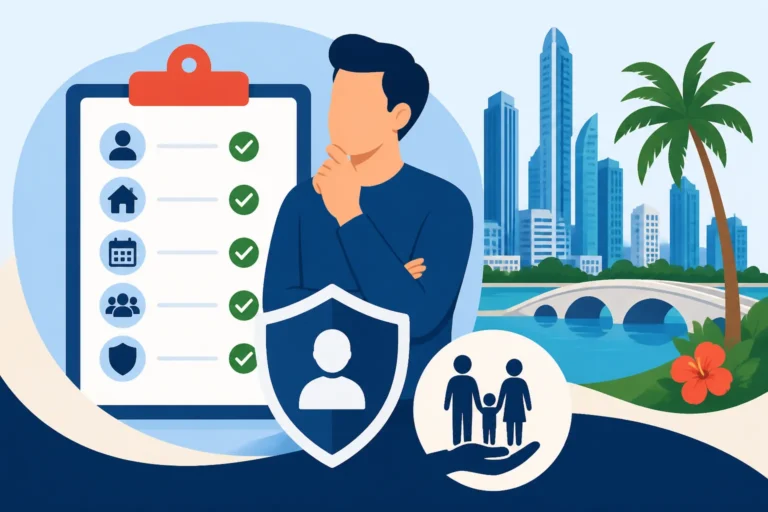
Before you even submit, create a comprehensive checklist for each family member and tick off every single document. Ensure every birth certificate, marriage certificate, police check, and bank statement is not only current but also properly apostilled or legalized and translated (if required). Many documents, like police checks, have a limited validity period (often 3-6 months), so timing their acquisition correctly is vital. Imagine your police check expiring while your application is still in queue – you’d have to go through the whole process of getting a new one, getting it apostilled, and submitting it again, causing substantial delays. My advice? Make multiple certified copies of everything, both physical and digital. Keep these backups in separate, secure locations. A good lawyer will help you manage this, often asking for original documents to be kept safe, while they submit certified copies.
Think of it this way: the Panamanian immigration office is a massive paper-pushing machine. The easier you make it for them to process your documents, the faster your application is likely to move. Clear labeling, chronological order, and adherence to their specific formatting requests can make a surprisingly big difference. An organized file is a happy file, and a happy file moves faster.
Preparing for the Financial Commitments
While Panama is often lauded for its affordable cost of living, obtaining residency for a family comes with a significant financial outlay that extends far beyond the visa fees themselves. Being thoroughly prepared for these costs is paramount.
First, there are the immigration fees, which vary by visa type and the number of dependents. These are the direct government charges for processing your application. Then, there are the legal fees for your attorney, which, as we've discussed, are an essential investment. Beyond these, you'll incur costs for apostilles or legalization of every foreign document, as well as official translations into Spanish by a certified Panamanian translator. These can quickly add up. Don't forget the costs associated with getting Panamanian health checks, acquiring new passport photos, and potentially domestic travel within Panama to attend appointments. Your initial entry might also involve establishing a Panamanian bank account, which often requires minimum deposits.
Furthermore, there are the costs of actually moving your family and setting up your new life. This includes shipping your belongings (which can be substantial, even with efficient services like Sirelo), initial housing deposits, furnishing a home, enrolling children in schools (international schools, in particular, can have hefty tuition fees), and covering daily living expenses until you find your footing. Have a substantial buffer in your savings to cover at least 6-12 months of living expenses, plus all the upfront immigration and relocation costs. Underestimating these financial commitments is a common pitfall for new expats. A detailed budget that accounts for every potential expense will serve you well and prevent unpleasant surprises during this transitional period.
Disclaimer
This article is for general informational purposes only and does not constitute professional advice. Laws, prices and regulations vary by location and change over time. Consult a qualified professional for guidance on your specific situation.