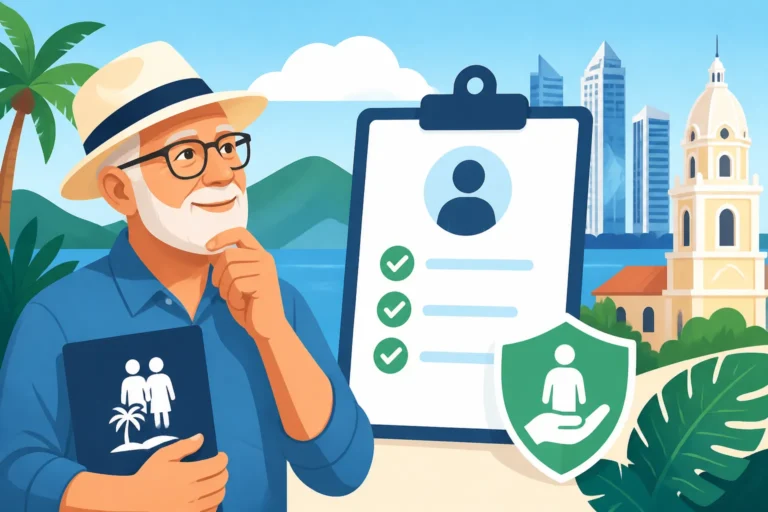
Can I Bring My Parents to Live in Panama?
One of the most profound desires many of us expats share, once we've settled into the rhythm of life in Panama, is to have our parents closer. It’s natural to want to share this beautiful country with them, especially as they get older, but the path to bringing your parents to live in Panama permanently can feel like navigating a dense jungle without a map. This guide aims to demystify the immigration process, outline the various visa options, and prepare you for the real-world considerations of having your elderly parents join you in this tropical paradise.
Understanding the Avenues for Parental Residency in Panama
When you first start thinking about bringing your parents to Panama, it’s easy to assume there’s a straightforward “dependent visa” available, much like you might sponsor a spouse or minor child. However, the reality of Panamanian immigration law for parents is often more nuanced and, frankly, a bit of a bureaucratic maze. The key is understanding that parents are typically not considered direct dependents in the same way spouses or minor children are under most common residency programs. This means you’ll often need to look at independent visa categories for them.
The Dependent Residency Route for Direct Family Members
Panama’s immigration laws do have provisions for "dependent residency," but these are primarily tailored for spouses and children under specific age limits, or children with certified disabilities. For parents, the definition of "dependent" becomes much stricter and hinges heavily on demonstrable, complete financial reliance. It’s not enough to simply state your parent is dependent; you must provide exhaustive evidence that they cannot support themselves, and that you are their sole financial provider.
This isn't just about sending them money sometimes; it's about proving a state of absolute necessity. You’ll need to show bank statements, income transfers, and sworn affidavits. The process is scrutinised very closely by the National Immigration Service, and it can be a significant hurdle. Many expats find this route incredibly challenging because the bar for "dependency" on an adult child is set remarkably high, often requiring that the parent has no other means of support, no pension of their own, and lives entirely on your provision. It’s a road fraught with administrative delays and often requires the unwavering patience of a saint.
Exploring Other Visa Categories for Parents
Given the complexities of proving financial dependency for parents, many expats find it more practical to explore other visa categories that their parents might qualify for independently. These options often require the parent to meet certain criteria themselves, rather than relying solely on their child's residency status. It might seem counterintuitive, but it often proves to be a more direct and less complicated route in the long run.
These alternative visas are not "dependent" visas in the traditional sense, but rather primary residency programs that your parents can apply for on their own merit. They each have distinct requirements related to income, investment, or specific nationalities. While it means your parents will have their own independent residency process, it sidesteps the intense scrutiny of the "dependent parent" category. This approach can also provide your parents with greater autonomy and a clearer path to permanent residency in Panama.
Navigating the Dependent Visa Process for Parents If Applicable
Let's be clear: pursuing a dependent visa for your parents in Panama is not for the faint of heart. It requires meticulous preparation, unwavering commitment, and a deep understanding of what Panamanian immigration authorities truly mean by "dependency." If your parents truly fit the stringent criteria, and you are prepared for the rigorous documentation, this section will help you understand what lies ahead. However, for many, the other independent visa options will prove far more feasible.
Proving Financial Solvency and Dependency
This is arguably the trickiest part of the dependent parent application. Panamanian immigration requires irrefutable evidence that your parent is completely financially dependent on you, the applicant. This isn't just a friendly arrangement; it's a legal state of affairs where your parent relies solely on your financial support for their basic needs, including housing, food, and medical care. You’ll need to provide your own financial statements demonstrating significant income – far beyond the minimum required for your own visa – to show you can support yourself, your primary dependents (spouse/children), and your parent(s).
Expect to furnish bank statements, tax returns, and possibly even an employer letter confirming your salary and ability to support multiple dependents. Crucially, you'll need to demonstrate a consistent history of supporting your parent, not just a recent sudden influx of funds. This might involve showing international money transfers over several years, proof of rent payments you’ve made on their behalf, or payment of their medical bills. Furthermore, your parent will likely need to submit a sworn declaration stating their lack of independent income or assets, making the proof of financial dependency a two-pronged effort. It's a heavy burden of proof, designed to ensure that the Panamanian state is not burdened by individuals who could otherwise support themselves.
Required Documentation and Apostille Process
Just like any other residency application in Panama, the dependent parent route demands an extensive list of documents, all of which must be meticulously prepared and authenticated. Beyond the standard passport copies and application forms, you'll need specific documents to prove the familial relationship and the dependency. This includes original birth certificates for both you and your parent(s) to establish the direct lineage, and often marriage certificates for your parents if they are applying together. These documents must clearly state the names of the parents and children.
Then comes the infamous apostille process. Every single official document issued outside Panama – birth certificates, marriage certificates, police records (for both you and your parents), and medical certificates – must be apostilled in the country of origin. This means getting an official stamp or certificate that verifies the authenticity of the document's signature and seal. For example, if your parents are from the UK, their birth certificates need to be apostilled in the UK before they can be submitted in Panama. If the originating country is not part of the Hague Apostille Convention, then a lengthier legalization process through the Panamanian consulate in that country is required. This step alone can add significant time and cost to the process, often requiring assistance from a local expert or a reputable international moving service like Sirelo that can guide you through the initial steps of gathering and authenticating documents. Be sure to check out our detailed guide on How to Get Your Documents Apostilled for Panama Immigration for a full breakdown.
Alternative Pathways for Parents to Live in Panama
Given the often-challenging nature of the dependent parent visa, many expats find that alternative, independent visa programs offer a much clearer and more straightforward path for their parents to gain residency. These programs require your parents to qualify on their own merits, rather than relying on your sponsorship, but they come with established guidelines that can be easier to meet than the subjective criteria for parental dependency.
The Pensionado (Retiree) Visa: A Popular Option
The Pensionado Visa, also known as the Retired or Annuitant Visa, is hands down one of the most popular and attractive residency options for foreigners in Panama, especially for retirees. If your parents are receiving a pension or annuity from a government, international agency, or private company, and that income is for life, they might qualify. The primary requirement is a guaranteed lifetime income of at least $1,000 USD per month. If they buy a property in Panama with a value of at least $100,000 USD, this monthly income requirement drops to $750 USD.
The Pensionado Visa offers fantastic benefits beyond just residency. It provides significant discounts on a wide range of goods and services in Panama, including medical expenses, utility bills, airfare, entertainment, and restaurants. This can make a huge difference to the cost of living and quality of life for retirees. The application process, while still requiring legal assistance, is generally well-defined and less ambiguous than the dependent parent route. It's a powerful incentive and a welcoming pathway for those with stable retirement income. For a deep dive into this excellent option, read our comprehensive guide: The Expat Guide to the Pensionado (Retiree) Visa in Panama (2027).
Friendly Nations Visa: Work or Investment as an Entry Point
The Friendly Nations Visa was once an incredibly accessible pathway, but its requirements have become stricter over time. It is still an option for citizens of specific "friendly nations" (a list that Panama publishes and updates periodically), but now it requires applicants to demonstrate either an active economic activity (like a job offer or establishing a Panamanian company) or a qualifying real estate investment.
For parents, this visa might be less suitable if they are no longer working or intending to start a business. However, if your parents are from one of the designated friendly nations and are planning to make a significant investment in Panamanian real estate or genuinely want to engage in an economic activity, it could still be a viable route. The investment option, specifically, typically involves purchasing real estate above a certain value or placing funds in a fixed-term deposit with a Panamanian bank. While not designed specifically for retirees, some active, investing parents find this a good fit. To understand the specifics and see if your parents' nationality qualifies, you should consult our detailed article on Understanding the Friendly Nations Visa in Panama (2027).
Qualified Investor Visa: High Investment, Faster Route
For parents with substantial financial resources, the Qualified Investor Visa, often referred to as Panama's "Golden Visa," offers a faster and more streamlined path to permanent residency. This program is designed to attract foreign investment into Panama and provides several options for obtaining residency in exchange for a significant financial commitment. The most common options include investing in real estate, purchasing shares in a Panamanian company, or making a fixed-term deposit in a Panamanian bank.
The minimum investment amount for this visa is typically in the range of $300,000 to $500,000 USD, depending on the specific investment category chosen. While a high threshold, it bypasses many of the bureaucratic complexities of other visas and often has a quicker processing time. For parents looking for a direct route and willing to make a substantial investment in the country, this can be an excellent option that provides permanent residency from the outset. It’s certainly not for everyone, but for those who meet the financial requirements, it offers unparalleled ease and speed. You can explore the full details of this program in our article: Understanding the Qualified Investor (Golden Visa) Programme in Panama.
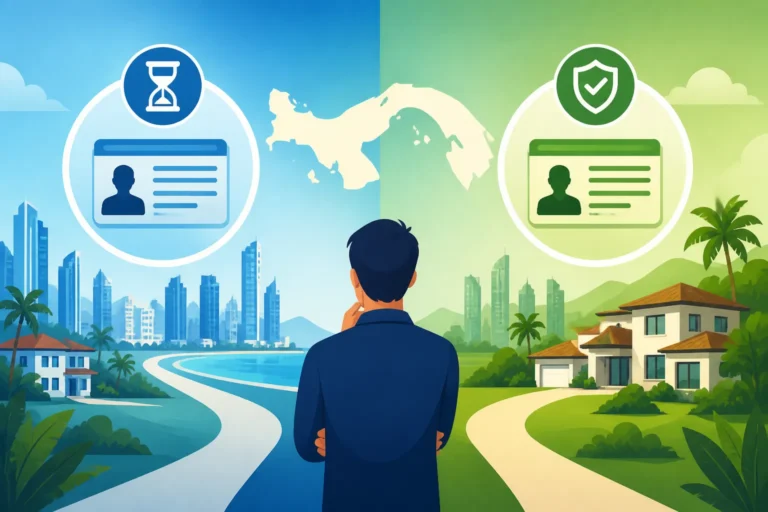
Here’s a quick overview of the most common pathways for parents:
| Visa Type | Primary Requirement | Key Benefit for Parents | Typical Processing Time (approx.) | Best Suited For |
|---|---|---|---|---|
| Dependent Parent Visa | Absolute financial dependency on a resident child | Allows parents to live with their resident child | 6-12+ months | Parents with no independent income, fully reliant on child. |
| Pensionado (Retiree) Visa | Lifetime pension/annuity of $1,000 USD/month (or $750 with property purchase) | Extensive discounts on goods and services; stable income | 3-6 months | Parents with a guaranteed, stable retirement income. |
| Friendly Nations Visa | Citizenship from a "friendly nation" + economic activity or real estate investment | Broader access for certain nationalities | 4-8 months | Parents who can work, open a business, or make specific investments. |
| Qualified Investor (Golden) Visa | Significant investment ($300k-$500k USD+) in real estate, bank deposit, or company shares | Fast-track to permanent residency; minimal bureaucracy | 2-4 months | Parents with substantial capital for investment. |
Practical Considerations and Challenges
Bringing your parents to live in a new country like Panama isn't just about obtaining a visa; it's about a complete lifestyle shift that impacts everything from their daily comfort to their long-term well-being. It is worth noting that anticipating these practicalities and challenges is just as important as navigating the immigration paperwork.
The Importance of a Good Immigration Lawyer
Let's be brutally honest: trying to navigate Panamanian immigration on your own, especially for something as complex as bringing parents, is a recipe for headaches, delays, and potentially wasted money. The laws are intricate, constantly evolving, and the bureaucratic processes can be opaque. This is where an experienced immigration lawyer isn't just a luxury, it's an absolute necessity. A good lawyer will guide you through the specific requirements for each visa, help you gather and prepare the voluminous documentation, ensure everything is correctly apostilled or legalized, and represent you and your parents before the National Immigration Service.
They know the nuances, the unwritten rules, and how to anticipate potential issues before they become major problems. They can save you countless hours of frustration, missed appointments, and potentially devastating rejections. Finding the right legal counsel is paramount; look for one with specific experience in expat residency visas, and ideally, one who comes recommended by other expats who have successfully navigated similar processes. For more insights on this critical step, refer to our guide: Understanding Why You Need a Panamanian Lawyer for Residency.
Healthcare and Insurance for Elderly Parents
This is a monumental consideration, perhaps even more critical than the visa itself. While Panama boasts a robust private healthcare system, it’s not free, and public healthcare (the CSS, or Caja de Seguro Social) can have long wait times and varying standards, particularly outside of major cities. Your parents will need comprehensive medical coverage. Relying on their foreign insurance might be an option initially, but for long-term residency, a local private plan or a robust international health insurance policy is usually advisable.
International options like Cigna Global can provide excellent coverage, particularly if your parents plan to travel or desire comprehensive care that may include evacuation options. Local private insurance plans in Panama can be more affordable but might have limitations, especially concerning pre-existing conditions or age restrictions for enrollment. It's vital to research these options meticulously and understand exactly what is covered, deductibles, and co-pays. An unexpected medical emergency without proper insurance can quickly deplete savings and create immense stress. Dive deeper into your options by reading Health Insurance in Panama: Private and International Options Explained and get a clear picture of costs in The Cost of Healthcare in Panama: A Complete Breakdown for Foreigners (2026).
Cultural Adaptation and Support Systems
Moving to a new country, especially later in life, can be incredibly challenging for parents. They might face language barriers (Spanish is essential outside expat bubbles), miss their established social networks, and struggle with adapting to a new climate, pace of life, and cultural norms. While Panama is beautiful, it’s not home. Providing a strong support system is key. This means not just your presence, but helping them integrate. Look for expat communities, clubs, or activities tailored to their interests.
Consider English-speaking social groups in areas like Panama City, Coronado, or Boquete, where many North American and European expats reside. Help them learn basic Spanish phrases; even a little goes a long way. Understanding local customs and the concept of "Panamanian time" can be a source of frustration, so gentle guidance and patience from you will be invaluable. The adjustment period can be long, and homesickness is a real concern. Setting up their living situation to be comfortable and accessible, perhaps with the help of relocation services (like those offered by Sirelo, which can assist with the logistics of moving household goods), can ease the transition significantly.
Financial Planning for Long-Term Stay
Beyond the initial visa costs and potential investments, you need to think about the long-term financial implications of your parents living in Panama. What is the actual cost of living for them? Will they maintain their pension or income from abroad? How will they access and manage their money? The overall cost of living in Panama, while generally lower than in North America or Europe, still needs careful budgeting. This includes housing, utilities, groceries, transportation, and discretionary spending.
Ensure their financial assets are accessible and that they understand how to use local banking services or international transfer options. Will their current bank accounts be sufficient, or will they need to open a local Panamanian bank account? Factor in potential currency exchange rates if their income is not in USD. Regular visits back to their home country will also add to travel expenses. A solid financial plan, factoring in ongoing medical expenses, potential home care, and daily living costs, is crucial for their comfort and your peace of mind. For a full picture of what to expect financially, read our guide: The Complete Guide to Cost of Living in Panama for Expats (2026).
Disclaimer
Please note that immigration laws and procedures in Panama can change frequently. The information provided in this guide is for general informational purposes only and does not constitute legal advice. It is essential to consult with a qualified Panamanian immigration lawyer for the most accurate, up-to-date, and personalized advice regarding your specific situation and your parents' eligibility for any visa or residency program.