How Do I Get My Residency Renewed Before It Expires in Panama?
The quiet dread of seeing that expiry date loom on your Panamanian residency card is a feeling every expat here knows intimately. It’s a pit-in-your-stomach kind of worry, isn’t it? The thought of navigating the infamous bureaucracy again, coupled with the fear of accidentally losing your status, can be overwhelming. But take a deep breath; this isn't a race against time you have to lose. This guide will walk you through exactly how to get your residency renewed in Panama before it expires, ensuring you maintain your legal status with as much peace of mind as possible.
Why Proactive Residency Renewal in Panama is Non-Negotiable
Expats often get caught off guard by an expiring residency card, and it's never a fun situation. In Panama, like many countries, the immigration process moves at its own rhythm, and that rhythm is often slow and requires a lot of patience. Waiting until the last minute isn't just stressful; it can lead to some genuinely problematic consequences.
Understanding the Consequences of Lapsed Residency
Let's be blunt: allowing your residency to expire in Panama is a bad idea. First and foremost, you risk incurring hefty fines. These aren't just minor penalties; they can quickly add up, turning what should be a straightforward renewal into a costly headache. The Panamanian immigration authorities are quite clear on this: if you overstay or allow your legal status to lapse, you will be penalized. This can include fines for each month you've overstayed your welcome, and these are often non-negotiable.
Beyond the financial implications, a lapsed residency can throw a wrench into your entire life here. Imagine trying to drive, access banking services, or even see a doctor – suddenly, your valid ID is gone, and everything becomes ten times harder. Your Panamanian driver's license, which often relies on your residency status, could become invalid. Banking activities might be restricted or even frozen until you can prove legal status again. And if you face a medical emergency? While you'll still receive care, dealing with the administrative side of things, like insurance claims or hospital admissions, becomes a nightmare without proper identification and legal standing. It essentially grinds your expat life to a halt.
The Ideal Timeline for Starting Your Renewal Process
So, when should you start? The golden rule in Panama is: the earlier, the better. While some might suggest three months, my personal experience and observation tell me that aiming for six months before your current residency card expires is a far safer bet. This might sound excessive, especially if your initial process felt relatively swift, but trust me, the renewal queue can be just as long, if not longer.
Panama's National Immigration Service (SNM, or Migración) handles countless applications, and yours is just one among many. Giving yourself a generous buffer of six months allows for all the unexpected delays that can pop up: a missing document, a bureaucratic hiccup, a new requirement introduced without much fanfare, or simply the time it takes for your lawyer to secure an appointment. Starting early means you won't be sweating bullets as the expiry date approaches, potentially needing to make last-minute changes to travel plans or even face a temporary period without valid residency while your application is still pending. It’s all about giving yourself that crucial margin for error in a system that rarely operates with urgency.
Your Step-by-Step Guide to Panamanian Residency Renewal
Renewing your residency might seem like a daunting task, especially if you’re still scarred by the initial application process. But once you break it down, it’s manageable, particularly with the right guidance. The core principle remains the same: meticulous preparation and a good immigration lawyer are your best friends. Understanding the Role of the National Immigration Service in Panama is crucial here.
Gathering Essential Documentation
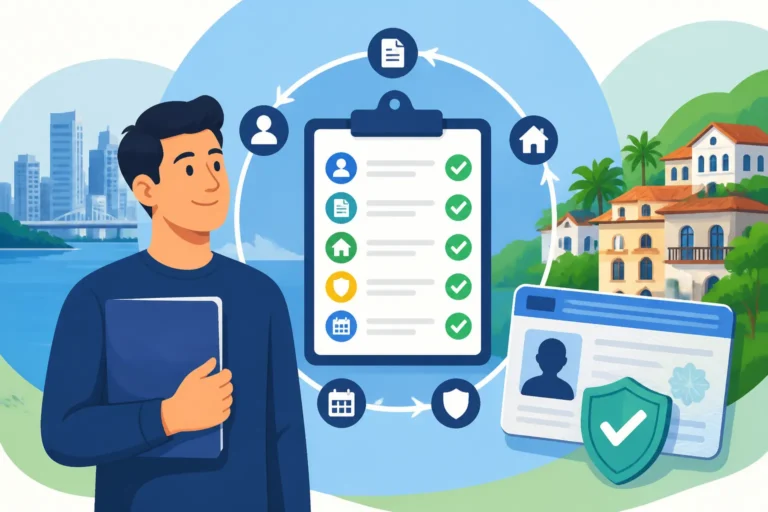
This is where the real work begins, and it's often the most anxiety-inducing part for many. You’ll need to re-gather a lot of the documents you submitted for your initial residency, plus a few updates. Expect to need:
- Your current residency card (Cedula E): This is obvious, but often overlooked in the stress of gathering other papers. You’ll need copies and the original for verification.
- Your passport: Copies of all pages, especially the biometric data page and any entry stamps. Make sure your passport has at least six months of validity remaining beyond your expected renewal date.
- Paz y Salvo Nacional: This is a clearance document from the Dirección General de Ingresos (DGI), proving you’re up-to-date on your taxes. If you’ve been paying taxes here, this is straightforward. If you’re under a special visa (like Pensionado) that exempts you from certain taxes, your lawyer will advise on the specific version required.
- Updated bank statements: Proof of sufficient funds is often required, even for renewals, to demonstrate you can support yourself in Panama. The exact amount can vary, but generally, expect to show a consistent balance that indicates financial stability. For many, this might be a local Panamanian bank account statement.
- Sworn Declaration (Declaración Jurada): A legal document stating that you meet all current requirements for your specific visa type. Your lawyer will prepare this.
- Four passport-sized photos: Ensure they meet current Panamanian immigration standards (white background, no glasses, neutral expression).
- New criminal background check: This is a common requirement for renewals, particularly for those on temporary residency moving to permanent, or even for some permanent renewals. You'll need an updated police record from your home country, apostilled or legalized, and translated into Spanish by a certified public translator in Panama. This can be one of the longest lead-time items, so start on it early.
- Medical Certificate: A health certificate from a licensed Panamanian doctor. This is usually a quick visit for a general check-up.
- Lawyer’s Letter: A letter from your Panamanian immigration lawyer outlining your application.
For a full list and to ensure nothing is missed, I strongly recommend checking out What Documents Do I Need for Panama Residency?. Remember, any foreign documents absolutely must be apostilled in your home country (if it's part of the Hague Apostille Convention) or legalized by a Panamanian consulate, then translated into Spanish by a public translator here in Panama. Don't skip these steps; they will cause delays.
Navigating the Immigration Office (Migración)
Once all your documents are meticulously prepared, your Panamanian immigration lawyer will take the lead. This is where their expertise truly shines. In Panama, having an attorney is almost always a requirement for residency applications and renewals, and for good reason. They know the current rules, the unspoken protocols, and how to present your case effectively. If you're wondering Understanding Why You Need a Panamanian Lawyer for Residency, this is it.
Your lawyer will review everything, make sure it’s perfect, and then submit your complete dossier to the National Immigration Service. Often, this involves securing an appointment, which can be a process in itself. Once submitted, your application enters the queue. During this waiting period, if your current residency is nearing expiration, the immigration office might issue you a provisional residency stamp in your passport. This stamp acts as temporary proof of your legal status while your renewal is processing. It's incredibly important because it legally allows you to remain in Panama and can be crucial for things like banking or if you need to travel. Many expats wonder, Can I Travel In and Out of Panama While My Residency Is Processing?, and with a provisional stamp, the answer is generally yes, but always confirm with your lawyer before making plans.
The Waiting Game and Follow-Up
Ah, the Panamanian waiting game. If you've been here a while, you know it well. Residency renewals can take anywhere from a few months to over a year, depending on the complexity of your case, the volume of applications at Migración, and sometimes, frankly, the alignment of the stars. It’s a test of patience, and expecting a quick turnaround will only lead to frustration.
Your lawyer will be your primary point of contact during this period, keeping tabs on your application's progress. They'll follow up with the immigration authorities on your behalf, respond to any requests for additional information (which are common), and inform you when your new Cedula E is ready for pick-up. This process often involves several visits to Migración, sometimes for your lawyer to drop off documents, and eventually for you to collect your new card and get your fingerprints updated. Understanding the Cost and Timeline of the Panama Residency Process helps manage expectations.
Specific Requirements for Common Residency Types
While the general renewal process shares similarities across different categories, the specific requirements to maintain eligibility for renewal can differ significantly based on your visa type.
Renewing Friendly Nations Visa Residency
The Friendly Nations Visa has been a popular route for many expats, but its requirements have evolved over the years. When it comes to renewal, especially moving from provisional to permanent residency, the focus shifts to proving your continued economic ties to Panama. This usually means demonstrating:
- Employment with a Panamanian company: You’ll need updated work letters, copies of your work permit (if applicable), and proof of CSS (social security) contributions. Your employer will play a key role in providing these documents.
- Formation of a Panamanian corporation: If you used this route, you’ll need to provide updated proof of your company's good standing, an updated RUC (tax ID) number, and potentially business bank statements showing active operations.
- Real estate investment: For those who qualified through a property purchase, you’ll need to provide an updated title deed and proof of continued ownership.
The key here is to continuously meet the criteria that originally qualified you. If you initially got a provisional Friendly Nations Visa based on a business, you'll need to show that business is still active and compliant to get permanent residency, and then to renew that permanent status. Your lawyer will guide you on the specific nuances, as the rules can be subject to interpretation and updates by the immigration authorities.
Renewing the Pensionado (Retiree) Visa
The Pensionado Visa, or Retiree Visa, is often lauded for its relative simplicity and stability once obtained. The renewal process for permanent Pensionado residents is generally one of the most straightforward. The primary requirement is to continue proving your minimum pension income. This usually means providing:
- Updated bank statements: Showing consistent receipt of your foreign pension income into your Panamanian bank account.
- A recent letter from your pension provider: Confirming the ongoing payment of your pension and the amount.
Unlike some other visas, the Pensionado usually doesn't require recurrent criminal background checks or extensive financial solvency beyond the pension proof for permanent residency renewals. It’s designed for retirees, and once you’ve met the initial income threshold and secured permanent status, maintaining it is typically less complex. For more details on this popular visa, refer to How Do I Apply for the Pensionado Visa in Panama?.
Other Residency Categories: A Brief Overview
Panama offers a range of other residency options, each with its own specific renewal criteria. For instance:
- Family Reunification Visas (e.g., Understanding Dependent Residency in Panama, married to a Panamanian citizen): Renewals often require proof of continued marital or familial relationship (e.g., marriage certificate, birth certificates) and continued economic solvency of the principal applicant or Panamanian spouse.
- Qualified Investor Visas (e.g., through real estate or economic investment): Renewals will require updated proof that the investment is still held and meets the minimum value, along with other financial and personal documents.
- Worker Visas: These are tied to specific employment. Renewal typically requires updated employment contracts, company good standing certificates, and consistent CSS contributions. If your job status changes, your residency status will likely need to be adjusted accordingly.
Regardless of your category, the common thread is that you must continue to meet the original conditions under which your residency was granted, along with presenting up-to-date personal documentation. Always confirm the exact, current requirements with your immigration lawyer.
Tips for a Smooth Renewal Process and Maintaining Status
Renewing your residency doesn't have to be a nightmare. With foresight and strategic planning, you can navigate the process efficiently and reduce stress. It really comes down to preparation, professional help, and a dash of patience.
The Indispensable Role of Your Immigration Lawyer
I can't stress this enough: for anything related to Panamanian immigration, your lawyer is your most valuable asset. They are not just paper-pushers; they are your navigators through the sometimes murky waters of Panamanian law and bureaucracy. They know the latest regulations (which can change frequently), they have direct lines of communication with immigration officials, and they can anticipate potential issues before they become major problems.
Choosing a reputable, experienced immigration lawyer is key. Look for someone with a proven track record, clear communication, and transparent fee structures. Avoid anyone who promises "guaranteed fast-track" or seems vague about costs. A good lawyer will explain every step, advise you on gathering documents, handle submissions, and follow up relentlessly on your behalf. They'll also be the ones to tell you if a new requirement has been introduced or if a specific office is experiencing unusual delays. Truly, this is one area where cutting corners can cost you far more in the long run.
Financial and Logistical Considerations
Renewing residency comes with costs, so it’s wise to budget for them well in advance. These typically include:
- Government fees: These are mandatory fees paid directly to the immigration office.
- Lawyer’s fees: Your lawyer's professional fees for their services. These can vary widely, so get a clear quote upfront.
- Document costs: Expenses for obtaining new criminal background checks, medical certificates, notarizations, apostilles, and certified translations.
- Travel and accommodation: If you don’t live in Panama City, factor in costs for trips to Migración and your lawyer's office.
Keeping meticulous records of all your documents, receipts, and communication is vital. Create a dedicated folder (digital and physical) for your residency application. This isn't just for renewal; it’s good practice for any administrative task in Panama.
When thinking about logistics, particularly if you're coming and going or need to arrange for documents from abroad, services like Sirelo can be incredibly helpful for managing international moves or ensuring sensitive documents are shipped securely. While not directly involved in immigration, their expertise in logistics can alleviate stress related to getting your paperwork to the right place at the right time.
Also, don't forget your health insurance. While your residency is processing, you need continuous coverage. Options like Cigna Global are often favored by expats for their comprehensive international coverage, ensuring you’re protected regardless of your residency status phase. It’s always smart to have a plan in place for How Your Residence Status Affects Health Coverage in Panama.
Understanding How to Maintain Your Permanent Residency in Panama
Once you secure permanent residency, the hard part is mostly over. However, "permanent" doesn't always mean "set it and forget it." Panama's laws typically require you to maintain some connection to the country. For most permanent residents, this means not abandoning your status through prolonged absence. While there isn't a strict "X days per year" rule for all permanent residencies, it's generally advised not to be absent from Panama for more than two consecutive years. Always consult your lawyer for the specifics of your visa category.
It's also important to keep your Cedula E (residency card) up to date. These cards have their own expiry dates, usually every 10 years, and while the underlying permanent residency doesn't expire, the physical card itself does. This requires a renewal process for the card itself, which is typically much simpler than the initial residency process. Learn more about this by reading Understanding How to Maintain Your Permanent Residency in Panama. Staying informed and compliant will ensure your life as an expat in this beautiful country remains smooth and enjoyable.
Remember, the goal is peace of mind. By starting early, meticulously preparing your documents, working with a trusted lawyer, and understanding the financial and logistical aspects, you can navigate your residency renewal with confidence. Panama is a fantastic place to live, and with a little planning, you can ensure your status here is secure for years to come.
Disclaimer
Please note that immigration laws and procedures in Panama are subject to change. The information provided in this guide is for general informational purposes only and does not constitute legal advice. It is essential to consult with a qualified Panamanian immigration attorney for advice tailored to your specific situation and to ensure you have the most up-to-date information before taking any action.