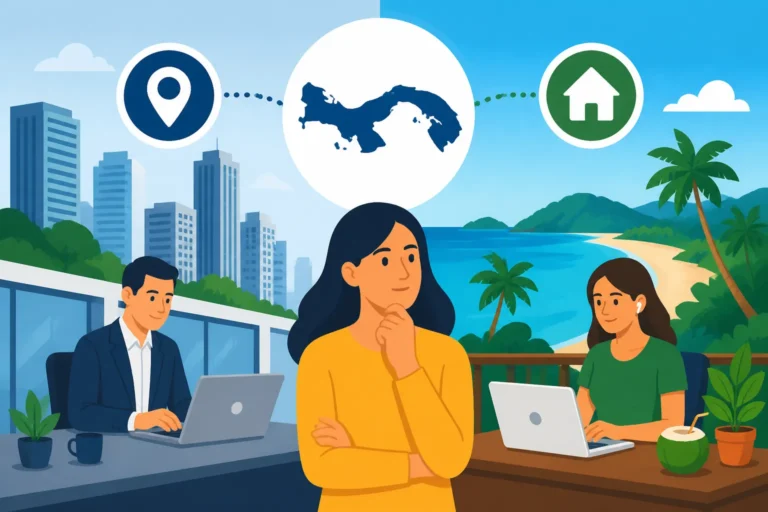
How Do I Write a Cover Letter for a Panamanian Company?
Moving to Panama and trying to navigate the job market here can feel like trying to solve a Rubik's Cube blindfolded. You've got your resume ready, but then comes the cover letter – and suddenly you're wondering if what works back home will land you an interview here. Trust me, many of us expats have been there, staring at a blank screen, trying to figure out how to make a great impression in a new cultural context. This guide is here to walk you through the nuances of crafting a compelling cover letter for a Panamanian company, helping you stand out for all the right reasons.
Understanding the Panamanian Job Market Culture
Before you even put pen to paper, or fingers to keyboard, for your cover letter, it's absolutely vital to grasp the cultural undercurrents of the Panamanian job market. It's not just about language; it's about unspoken expectations, respect, and how professional relationships are built.
The Emphasis on Formality and Respect
Unlike some Western countries where a more casual approach might be acceptable, Panama places a high value on formality and respect in professional settings. This isn't just a quaint tradition; it's woven into the fabric of business communication. When you address someone, whether in an email or a cover letter, using appropriate titles like Estimado/a Sr./Sra. (Dear Mr./Ms.) or Estimado/a Gerente de Recursos Humanos (Dear Human Resources Manager) is not just polite, it's expected. Skipping these steps can unintentionally signal a lack of seriousness or cultural awareness, which is the last thing you want when you're trying to make a good first impression. Remember, the Panamanian business world often operates with a more hierarchical structure, and acknowledging that through formal communication is key.
The Importance of Networking and Contactos
While your cover letter and CV are crucial, never underestimate the power of networking, or contactos, in Panama. Many positions, especially in smaller or family-owned businesses, are often filled through referrals and personal connections. It’s not necessarily about who you know more than what you know, but often, it's about who can vouch for you. This isn't to say your application won't be considered on its own merits, but if you have a mutual connection who can put in a good word, it can significantly boost your chances. This informal network can also provide insights into specific companies or industries. If you're struggling to find relevant connections, consider attending industry events, joining expat groups, or even reaching out to professionals on platforms like LinkedIn. This proactive approach can set you apart and give you a valuable edge in the Panamanian job market.
Spanish Proficiency: Beyond the Basics
Even if the job description says "English required," having a good grasp of Spanish is often an unspoken prerequisite for many roles, especially if you're working directly with local teams or clients. While there are certainly roles in international companies or specific sectors where English is the primary language, demonstrating a willingness and ability to communicate in Spanish will always be seen as a huge advantage. It shows respect for the local culture and a commitment to integrating. If your Spanish isn't perfect, use your cover letter to express your eagerness to improve. Consider using services like iTalki to practice your conversational Spanish, which can boost your confidence for potential interviews. For those looking to dive deeper into the local job search, it's worth reading up on The Expat Guide to Finding a Job in Panama (2027) for broader strategies.
Navigating Foreigner Considerations: The Idóneo Requirement and Work Permits
This is often the biggest hurdle for expats looking to work in Panama, and it's something you simply cannot ignore. Panama has laws designed to protect local employment, meaning many professions require a Panamanian degree or certification to be considered idóneo (qualified). This applies to fields like law, medicine, engineering, and even some teaching roles outside of international schools. Even if you hold an impressive degree from your home country, you might still need to get your foreign qualification recognised in Panama, which can be a lengthy process.
Moreover, securing a work permit is a separate and often complex process, usually requiring employer sponsorship. In your cover letter, it's prudent to proactively address your legal right to work in Panama, or your plan to obtain it, if you're a foreign applicant. If you already have residency that grants work rights (like some categories under the Friendly Nations Visa or the Pensionado Visa), make sure to clearly state this. If you require sponsorship, expressing your understanding of the process and your readiness to cooperate is a good idea. Knowing How a Work Permit and Employer Sponsorship Work in Panama is absolutely essential for any expat considering employment here.
Crafting Your Cover Letter: Key Components and Cultural Nuances
Now that you're armed with a better understanding of the local landscape, let's break down the actual construction of your cover letter. Every section is an opportunity to make a strong, culturally appropriate impression.
The Formal Salutation
As mentioned, formality is paramount. Always address your letter to a specific person if possible. A quick search on LinkedIn or the company website can often reveal the name of the HR manager or the department head for the role you're applying to.
- If you know the name: Use Estimado/a Sr./Sra. [Last Name]. For example, Estimada Sra. González.
- If you don't know the name but know the department: Estimado/a Gerente de Recursos Humanos (Dear Human Resources Manager) or Estimado/a Departamento de Contratación (Dear Hiring Department).
- Avoid: Casual greetings like "Hi," "Hello," or "To Whom It May Concern." These are rarely well-received in a formal Panamanian context.
The Concise and Clear Introduction
Your opening paragraph should be straightforward and immediately state your purpose. No long wind-ups or abstract statements.
- State the position: Clearly name the specific job title you are applying for.
- Where you saw the advertisement: Mention the platform (e.g., the company website, LinkedIn, Konzerta.com, a specific referral).
- Your immediate intent: Express your keen interest in the role and the company.
Example: "Estimada Sra. González,
Me dirijo a usted con gran interés para postularme al puesto de [Job Title] en [Company Name], el cual encontré anunciado en [Platform Name]. He seguido la trayectoria de su empresa con admiración y estoy convencido de que mis habilidades y experiencia se alinean perfectamente con los requisitos de esta posición."
(Dear Ms. González,
I am writing to you with great interest to apply for the position of [Job Title] at [Company Name], which I saw advertised on [Platform Name]. I have followed your company's trajectory with admiration and am convinced that my skills and experience align perfectly with the requirements of this position.)
The Body Paragraphs: Why Them and Why You
This is where you make your case. Dedicate one paragraph to why you're interested in their company, and another to why you are the ideal candidate.
-
Why them (Company Alignment):
Show that you've done your homework. Research the company's mission, values, recent projects, or achievements. Explain how their work resonates with your professional goals or values. This demonstrates genuine interest beyond just needing a job. For instance, if the company is involved in sustainability, highlight your commitment to environmental initiatives. If they are expanding into a new market, talk about your experience in market entry or international business development. Mentioning specific projects or aspects of the company shows you're not just sending out generic letters. -
Why you (Highlighting Skills and Experience):
This paragraph should directly address the requirements listed in the job description. Don't just list your responsibilities; highlight your achievements and quantify them whenever possible. Instead of saying "managed projects," say "successfully managed five projects, delivering them 10% under budget and 15% ahead of schedule." Connect your experience to the specific needs of the role. If the job calls for leadership, provide an example of when you demonstrated strong leadership. If it requires problem-solving, describe a situation where you effectively resolved a complex issue. Tailoring this section precisely to each application is non-negotiable.
Addressing Your Foreign Status Proactively
For expats, this is a crucial point that needs careful handling. Panamanian companies are often hesitant to hire foreigners due to the perceived complexity of work permits and the idóneo laws. It’s better to address this head-on rather than leaving them to wonder.
- If you have existing work authorization: Clearly state your residency status and confirm that you are legally authorized to work in Panama without needing employer sponsorship. For example: "Como residente permanente de Panamá, tengo plena autorización legal para trabajar en el país sin necesidad de patrocinio adicional." (As a permanent resident of Panama, I am fully legally authorized to work in the country without requiring additional sponsorship.)
- If you require sponsorship: Acknowledge the requirement and express your understanding and willingness to cooperate fully with the process. "Entiendo que, como ciudadano extranjero, requeriré patrocinio para mi permiso de trabajo y estoy totalmente preparado para colaborar estrechamente con su equipo de Recursos Humanos para facilitar este proceso de manera eficiente." (I understand that, as a foreign national, I will require sponsorship for my work permit and I am fully prepared to collaborate closely with your Human Resources team to facilitate this process efficiently.) This transparent approach can alleviate some concerns upfront. For more detailed information, consider diving into Understanding the Rules and Restrictions for Foreign Workers in Panama.
The Professional Closing
Your closing should reiterate your interest and call to action without being overly demanding.
- Express gratitude: Thank them for their time and consideration.
- Reiterate enthusiasm: State your eagerness for an interview.
- Professional farewell: Use a formal closing like Atentamente (Sincerely) or Saludos cordiales (Kind regards).
Example: "Agradezco sinceramente su tiempo y consideración para esta postulación. Adjunto mi currículum vitae para su revisión y espero tener la oportunidad de conversar con usted en una entrevista sobre cómo mis habilidades pueden contribuir al éxito de [Company Name]."
"Atentamente,
[Your Full Name]"
(I sincerely thank you for your time and consideration for this application. I have attached my curriculum vitae for your review and look forward to the opportunity to discuss in an interview how my skills can contribute to the success of [Company Name].)
Common Mistakes to Avoid and Best Practices
Applying for jobs anywhere comes with its pitfalls, but in Panama, some missteps can be particularly detrimental to your chances. Let's make sure you sidestep them gracefully.
Avoiding Generic Letters (The "Spray and Pray" Method)
One of the biggest blunders is sending out the exact same cover letter to multiple companies. Panamanian hiring managers, like their counterparts worldwide, can spot a generic letter from a mile away. It signals a lack of genuine interest and effort. Each company and each role is unique, and your cover letter should reflect that. Take the time to tailor every single letter: reference specific company projects, mention how your skills directly address their needs, and personalize the salutation. This effort demonstrates respect and shows you are truly invested in their opportunity.
Maintaining a Formal Tone Throughout
While you want to be engaging, steer clear of overly casual language, colloquialisms, or slang. The tone should be professional, respectful, and slightly formal. Think of it as a business letter, not a casual email to a friend. This formality extends to avoiding contractions and using complete, well-structured sentences. This is a subtle but important cultural cue that shows you understand professional boundaries.
Meticulous Grammar and Spelling (Especially in Spanish)
Nothing undermines your professionalism faster than typos, grammatical errors, or awkward phrasing. This is doubly true if you're writing in Spanish. If Spanish is not your native language, invest time in proofreading, use online translation tools with caution (they can often miss nuances), and ideally, have a native Spanish speaker review your letter. Even for English-speaking roles, perfect English grammar is expected. For more tips on language and job applications, consider checking out How to Write a CV and Cover Letter for Jobs in Panama.
Thorough Company and Role Research
A cover letter that doesn't mention the company's name or misstates details about the role is a red flag. Before you start writing, spend time on the company's website, read their "About Us" section, look at their recent news, and analyze the job description in detail. This research will allow you to weave specific references into your letter, making it highly relevant and impressive. Understanding their needs helps you position yourself as the solution to their problems.
Addressing the Idóneo Laws and Work Permit Situation
As discussed earlier, this cannot be stressed enough. If you gloss over the work permit or idóneo requirements, you're essentially creating a barrier before your application even gets proper consideration. Panamanian companies face legal restrictions and administrative burdens when hiring foreigners, so being transparent and proactive about your status is crucial. If you don't address it, they might assume you haven't researched the requirements, or worse, that you are not legally able to work. This information is vital for any company considering a foreign hire.
Length and Formatting: Keep it Professional
A cover letter should ideally be one page, maximum. Hiring managers are busy, and a lengthy, rambling letter will likely be skimmed or dismissed. Be concise, get to the point, and ensure every sentence adds value. As for formatting, stick to a clean, professional layout. Use a standard font (like Arial, Calibri, or Times New Roman) between 10-12 points, with clear headings and adequate spacing. Present your contact information clearly at the top. Save your cover letter as a PDF to ensure the formatting remains consistent across different systems.
Table: Do's and Don'ts for Panamanian Cover Letters
| Do's | Don'ts |
|---|---|
| Address to a specific person (Sr./Sra. [Last Name]). | Use "To Whom It May Concern" or casual greetings. |
| Use formal Spanish if applying to a local company. | Use informal language, slang, or text abbreviations. |
| Clearly state the position and where you saw it. | Send a generic letter without tailoring to the role/company. |
| Research the company and mention specific details. | Show no knowledge of the company's mission or work. |
| Highlight achievements and quantify them with numbers. | Just list job responsibilities without impact. |
| Proactively address work authorization/permit needs. | Ignore or vaguely mention your foreign work status. |
| Keep it concise, ideally one page. | Write a lengthy, rambling letter. |
| Proofread meticulously for grammar and spelling. | Have typos, grammatical errors, or awkward phrasing. |
| Save as a PDF to maintain formatting. | Send in editable formats like Word if not requested. |
| Express gratitude and eagerness for an interview. | Sound demanding or entitled about an interview. |
Final Touches and What Comes Next
You’ve poured your heart and soul into crafting that perfect cover letter, meticulously adapting it for the Panamanian context. But your work isn't quite done yet! There are a few crucial final steps to ensure your application is polished and ready, and then, of course, the waiting game begins.
Proofreading Meticulously (Again!)
I know I’ve said it already, but seriously, proofread one more time. And then ask someone else to proofread it. A fresh pair of eyes can catch mistakes that your own, tired eyes might miss. This is especially critical if you’ve written it in Spanish and it’s not your native tongue. A small typo might seem minor, but it can create a subconscious impression of carelessness, and that's the last thing you want when vying for a job. Consider using grammar and spelling checkers, but remember they aren't foolproof, particularly with nuanced language or cultural expressions. Every word should reflect your professionalism.
Saving in the Correct Format
Always, always, always save your cover letter as a PDF document. This ensures that your formatting, fonts, and layout remain exactly as you intended, regardless of what operating system or software the recipient uses. Sending a Word document might seem convenient, but it can shift unexpectedly, making your beautifully crafted letter look messy or unprofessional. Unless specifically requested otherwise, PDF is the universally accepted standard for job application documents.
Understanding Submission Methods and Etiquette
Most Panamanian companies now prefer online submissions, either through a dedicated application portal on their website, via email, or sometimes through local job boards like Konzerta.com or Encuentra24. Make sure to follow their instructions precisely.
- Online Portals: These often have specific fields to fill out. Ensure your cover letter and CV are uploaded as distinct files and named professionally (e.g., "JuanPerez_CoverLetter_JobTitle.pdf").
- Email Submissions: If sending via email, the subject line is crucial. It should be clear and concise, typically stating the job title you're applying for and your name (e.g., "Application: [Job Title] – [Your Name]"). The email itself should also be professional, with a brief introductory message and a clear mention of your attached documents. Avoid sending large attachments that might bounce or take ages to download.
- Physical Mail (Less Common but Still Exists): For very traditional companies or specific government roles, you might encounter a request for a physical application. If so, ensure your documents are printed on good quality paper and presented impeccably.
Preparing for the Next Step: The Interview
If your cover letter and CV make the cut, the next hurdle is the interview. This is where your language skills, cultural understanding, and professional demeanor will truly be tested. Be prepared to discuss your experience in detail, explain why you want to work in Panama, and reiterate your legal right to work here. Research common interview questions and practice your answers in both English and Spanish, if applicable. Prepare your own questions to ask the interviewer, as this demonstrates engagement and genuine interest. Topics like company culture, team dynamics, and future projects are always good to explore. If you get to the stage of discussing compensation, knowing How to Negotiate Salary and Benefits for a Job in Panama will be incredibly helpful. Remember that the entire job search in Panama, from application to offer, can be a marathon, not a sprint. Patience and persistence are your greatest allies.
Disclaimer
Please note that while this guide provides comprehensive information based on current knowledge and common practices for expats in Panama, immigration laws, labor regulations, and specific company policies can change. It is always advisable to consult with a qualified Panamanian immigration lawyer or labor law expert for personalized advice regarding your specific situation, especially concerning work permits, visa requirements, and contractual agreements. This content is for informational purposes only and does not constitute legal or professional advice.