How to Write a CV and Cover Letter for Jobs in Panama
Let's be honest, trying to navigate the job market in a new country like Panama can feel like trying to solve a Rubik's Cube blindfolded. You’ve got your experience, your skills, your enthusiasm, but then you stare at a job application and wonder: how do I make myself stand out here? This guide is going to walk you through exactly how to craft a Panamanian-ready CV and a cover letter that actually gets noticed, helping you translate your professional journey into a language local employers understand.
Understanding the Panamanian Job Market Landscape
Moving to Panama, or any new country, means hitting the reset button on a lot of your assumptions, especially when it comes to finding work. The job market here, while dynamic and full of opportunity, operates on a slightly different rhythm than what you might be used to back home. Before you even start tweaking your resume, it's vital to grasp these underlying currents. It's not just about what you know, but how you present it within the local context.
Local Expectations vs. International Standards
You might have a sleek, minimalist CV that worked wonders in New York or London, but in Panama, the expectations can be a bit more traditional, and frankly, a bit more personal. While some international companies here, especially those in the financial services or multinational logistics sectors, might appreciate a more Western-style resume, many local Panamanian businesses will expect something slightly different. For instance, it’s not uncommon, and sometimes even expected, to include a professional headshot on your CV here. This might feel unusual or even unprofessional to some expats, but it’s a fairly standard practice in Panama and other Latin American countries.
Beyond the photo, the emphasis can often be on a more comprehensive overview of your personal details early on, sometimes even including your civil status or age, which would be a huge no-no in many other parts of the world due to anti-discrimination laws. Here, it’s often seen as providing a full picture. The length of a CV also tends to be a bit more flexible; while a one-page resume is often preached elsewhere, two pages or even slightly more is acceptable for experienced professionals in Panama, as long as it's relevant and well-organized. It’s a delicate balance, trying to maintain your professional integrity while adapting to local customs.
Key Industries and Opportunities
Panama's economy is largely driven by its strategic geographical position and its status as a regional hub. This means certain sectors are constantly buzzing with activity and offer more opportunities for foreigners. Understanding these will help you tailor your applications more effectively. The Panama Canal, of course, underpins a massive logistics and shipping industry, creating a demand for skilled professionals in supply chain management, maritime operations, and trade. The financial sector is also huge, with many international banks and corporations having regional headquarters in Panama City, leading to roles in finance, accounting, and administration.
Tourism and hospitality are evergreen industries, especially in coastal areas like Bocas del Toro or the bustling capital, offering jobs in hotel management, culinary arts, and tour operations. Furthermore, with the growth of technology and real estate, there are emerging opportunities in IT, digital marketing, and property development. When you apply, thinking about how your skills align with these dominant industries, even if your direct experience isn't a perfect match, can give you a significant edge. Highlighting transferable skills and demonstrating an understanding of the local economic drivers will show you’ve done your homework and are serious about settling in. For a deeper dive, you might want to read Working in Panama's Banking, Logistics and Tourism Sectors: The Expat Guide (2027).
The Role of Networking and Referrals
While a stellar CV and cover letter are absolutely indispensable, it would be disingenuous to talk about job searching in Panama without acknowledging the immense power of personal connections. In Panamanian culture, as in much of Latin America, professional networks and referrals often play a more significant role than in many Western countries. Many job opportunities, especially in smaller companies or certain local sectors, are filled through word-of-mouth recommendations before they even reach public job boards.
This isn’t to say that if you don't know someone, you're out of luck. Not at all! It simply means that alongside perfecting your application documents, actively building your network should be a parallel priority. Attend industry events, join expat groups, participate in professional organizations, and leverage platforms like LinkedIn to connect with people in your field. A personal introduction, even from a casual acquaintance, can sometimes open doors that a cold application, no matter how perfectly crafted, might not. Think of your CV and cover letter as your official handshake, but networking as the warm introduction that sets the stage. Don't underestimate the power of a friendly face and a solid recommendation.
Crafting Your Panamanian CV (Curriculum Vitae)
Now that you have a feel for the landscape, let's get down to the nitty-gritty of creating a CV that speaks to Panamanian employers. This document isn't just a list of your past jobs; it's your personal marketing brochure, tailored to the local market, that needs to make a strong first impression.
The Essential Sections
A well-structured Panamanian CV needs to include several key sections, often in a specific order, to effectively present your professional profile.
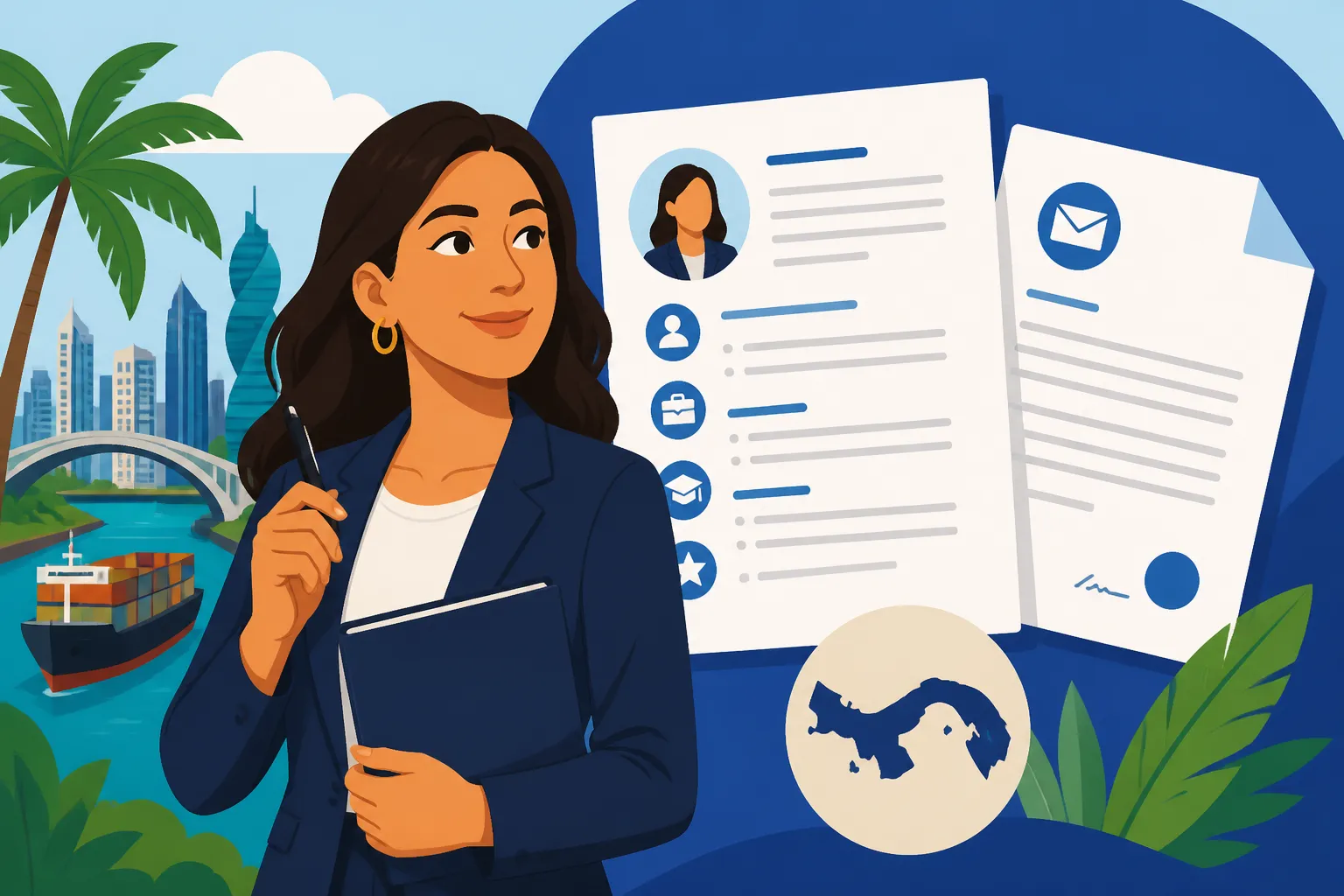
- Personal Details (Datos Personales): This section is more extensive than many expats might be used to. It should include your full name, contact information (Panamanian phone number if you have one, email, LinkedIn profile URL), nationality, and often your date of birth, civil status, and the number of your Panamanian cedula or passport if you are legally able to work. As mentioned, a professional, recent headshot (passport-style, clear, and friendly) is typically expected and can be placed at the top right or left of this section. While it might feel like oversharing, omitting it could make your application seem incomplete to some local recruiters.
- Professional Summary/Objective (Resumen Profesional/Objetivo): This is your elevator pitch at the top of your CV. For experienced professionals, a Resumen Profesional should highlight your years of experience, key achievements, and the value you bring. For those new to the Panamanian job market or changing careers, an Objetivo might be more appropriate, stating your career goals and how your skills align with the role you're seeking in Panama. Keep it concise but impactful – a paragraph or two at most.
- Work Experience (Experiencia Laboral): List your employment history in reverse chronological order, starting with your most recent role. For each position, include your job title, company name, location, and employment dates. Under each role, use bullet points to describe your responsibilities and, crucially, your achievements. Quantify these achievements whenever possible – e.g., "Increased sales by 15%," "Managed a team of 10," or "Reduced project costs by $5,000." This is where you really showcase your impact.
- Education (Educación): Again, in reverse chronological order, list your academic qualifications. Include the degree/diploma, institution name, location, and graduation date. If you have specific certifications relevant to the role, list them here too. If you're wondering how your foreign degree stacks up, it's worth exploring How to Get Your Foreign Qualification Recognised in Panama early in your job search process.
- Skills (Habilidades): This section is critical. Break it down into categories:
- Language Skills (Idiomas): Panama is a bilingual country, and Spanish proficiency is a huge asset. Clearly state your fluency level in Spanish (basic, intermediate, advanced, native) and any other languages. Being able to communicate effectively in Spanish will significantly broaden your job prospects.
- Technical Skills (Habilidades Técnicas): List any software proficiency (e.g., Microsoft Office Suite, SAP, Salesforce), programming languages, or other technical tools relevant to your field.
- Soft Skills (Habilidades Blandas): Teamwork, leadership, problem-solving, adaptability, and communication are highly valued. Tailor these to the specific job description.
Tailoring Content and Keywords
Simply translating your existing CV into Spanish isn’t enough. You need to adapt it. This means using local terminology for job titles, responsibilities, and qualifications, even if the application is primarily in English. For instance, what might be a "Marketing Executive" in one country could be an "Ejecutivo de Mercadeo" here, or perhaps a more specialized role like "Gerente de Marca" (Brand Manager). Researching job descriptions for similar roles in Panama can give you valuable insight into the preferred local phrasing and keywords that recruiters are looking for.
When writing about your past roles, think about the context in which your achievements would be understood in Panama. If you mention managing a project, explain the type of project and its scale in terms that resonate locally. Use the job advertisement itself as a guide; if they repeatedly use terms like "logística," "banca," or "comercio internacional," ensure these keywords are woven naturally into your CV where appropriate. This isn't about keyword stuffing, but rather demonstrating that your experience directly addresses their needs, even if your previous company used different internal jargon. This shows cultural awareness and a genuine interest in working within the Panamanian professional environment.
Furthermore, if you are a freelancer or self-employed, consider how to frame your experience. Panama has a growing ecosystem for independent professionals, but clarity is key. If you've managed your own finances, mentioning platforms like "Taxes for Expats" in discussions around financial management might not be directly applicable to your CV, but understanding local tax implications for the self-employed shows a level of seriousness about working in the country. For advice on tax obligations, you'll find great information in How to File Taxes If You Have Both Foreign and Panama-Source Income.
Formatting and Presentation Tips
First impressions count, and a poorly formatted CV can unfortunately land your application in the reject pile before anyone even reads its content. Keep your CV clean, professional, and easy to read.
- Length: As a general guideline, aim for one page if you have less than 5 years of experience, and up to two pages for more seasoned professionals. Anything longer might be overwhelming, unless you're in a highly academic or research-heavy field where a detailed publication list is expected.
- Font: Stick to professional, legible fonts like Arial, Calibri, or Times New Roman, in a size between 10 and 12 points for the main text, and slightly larger for headings.
- Layout: Use clear headings and bullet points to break up text and make it scannable. Consistent formatting throughout the document is crucial. Margins should be standard (1 inch or 2.5 cm). Avoid overly decorative elements or flashy colors that might distract from your content.
- File Format: Always save and submit your CV as a PDF unless the job advertisement specifically requests another format (like Word document). This ensures your formatting remains intact regardless of the recipient's software or device.
- Professional Photo: We’ve discussed this, but it bears repeating: if you're comfortable with it, a high-quality, professional headshot can be a strong addition, particularly for roles that involve client-facing interactions. Dress professionally, smile genuinely, and use a neutral background.
Remember, the goal is clarity and professionalism. A well-organized CV not only highlights your qualifications but also demonstrates your attention to detail, a quality employers universally appreciate. For more insights on this, you can check out How to Adapt Your CV for the Panamanian Job Market.
Writing a Compelling Cover Letter
While your CV provides a factual overview of your experience, your cover letter is where your personality, enthusiasm, and genuine interest in the role and in Panama can truly shine. It’s your chance to tell a story that connects your background directly to the employer's needs.
Purpose and Structure
Think of your cover letter not as a mere formality, but as a strategic tool to complement your CV. Its primary purpose is to introduce yourself, express your keen interest in the specific position, and, most importantly, explain why you are the ideal candidate for this particular company in Panama. It's your opportunity to elaborate on key points from your CV, providing context and demonstrating a deeper understanding of the role and the company.
A strong cover letter typically follows a clear, logical structure:
- Your Contact Information and Date: Placed at the top left.
- Recipient's Contact Information: Below yours, aligned left. If you know the hiring manager's name, use it! "Estimado [Sr./Sra. Last Name]" is much more impactful than a generic "A quien corresponda." A little research can go a long way here.
- Salutation: A formal and respectful greeting.
- Opening Paragraph (Introducción): Immediately state the position you are applying for and where you saw the advertisement. Briefly express your enthusiasm and state your core qualification or what makes you a strong initial fit. For example: "I am writing to express my enthusiastic interest in the [Job Title] position advertised on [Platform], as my [X years] of experience in [relevant field] aligns perfectly with your requirements."
- Body Paragraphs (Cuerpo): This is where you connect your skills and experience directly to the job description. Don't just rehash your CV; instead, pick 2-3 key requirements from the job ad and provide specific examples of how you've met similar challenges or achieved related successes. This is where you can weave in your understanding of the Panamanian context or the industry. Use bullet points for impact if discussing specific achievements.
- Closing Paragraph (Cierre): Reiterate your interest in the role and the company. Express your eagerness for an interview to discuss how you can contribute to their team. Thank them for their time and consideration.
- Formal Closing and Signature (Despedida y Firma): Use a professional closing like "Atentamente," or "Saludos cordiales," followed by your typed name.
Keep it to one page, concise and impactful. A cover letter that’s too long will likely not be read thoroughly.
Highlighting Relevant Skills and Experience
The most effective cover letters are those that act as a bridge between your past accomplishments and the employer's future needs. This means strategically selecting which skills and experiences to highlight based on the specific job description. If the ad emphasizes "team leadership" and "project management," then your cover letter should showcase examples of these.
Don't just list skills; illustrate them. Instead of saying "I have strong communication skills," say "My experience leading cross-functional teams in diverse environments honed my communication abilities, enabling me to successfully mediate conflicts and ensure project alignment." Quantify your achievements here too, just as you did in your CV. If you managed a budget, state the amount. If you improved efficiency, state the percentage or timeframe.
Crucially, think about the value you bring to the Panamanian market. Are you bringing international best practices? A unique skill set not widely available locally? Highlight these as strengths. For example, if you're applying for a role in a multinational company, emphasizing your experience in diverse cultural settings and your adaptability can be a significant advantage. The aim is to demonstrate not just what you've done, but how it directly benefits the prospective employer in their Panamanian operations.
Demonstrating Cultural Fit and Language Proficiency
In Panama, demonstrating that you understand and appreciate the local culture, and that you are willing to integrate, can be just as important as your professional qualifications. Your cover letter is an excellent place to subtly convey this.
Express genuine interest in Panama, its business environment, or even its lifestyle. For example, you might mention your excitement about contributing to Panama's growing logistics sector, or how you admire the country's diverse cultural fabric. This shows you’re not just looking for a job, but a job in Panama. This level of sincerity can truly set you apart.
Language proficiency, especially in Spanish, is a major factor. Even if the job itself primarily uses English, demonstrating a commitment to improving your Spanish or highlighting any existing fluency is a huge plus. You could casually mention in your cover letter (if relevant to the role's requirements) that you are actively improving your Spanish skills, perhaps even mentioning resources like "iTalki" if you use it for language learning. This shows proactive integration and a willingness to communicate effectively with local colleagues and clients. Being bilingual, or at least committed to becoming so, significantly broadens your appeal to Panamanian employers who often operate in a mixed-language environment. Being able to easily speak with local clients, vendors, or team members removes a potential barrier and makes you a more attractive candidate.
Common Pitfalls and How to Avoid Them
It's easy to make mistakes when navigating a new job market. Even the most experienced professionals can stumble if they don't understand the local landscape. Knowing what to watch out for can save you a lot of frustration and increase your chances of success.
Overlooking Local Nuances
One of the biggest traps expats fall into is assuming that what worked at home will work perfectly in Panama. As we’ve discussed, Panamanian CVs and cover letters have their own unspoken rules. Overlooking these can make your application seem out of place.
Forgetting to include a professional photo, for example, might not seem like a big deal to you, but to a Panamanian recruiter, it could signal a lack of understanding of local customs or even a reluctance to fully present yourself. Similarly, an overly verbose CV that doesn’t get straight to the point can be quickly set aside. Panamanian employers appreciate clarity and directness, even if the document itself is a bit longer than what you'd see in a tech startup in Silicon Valley. Another common mistake is failing to translate key professional terms or certifications into their Panamanian equivalents. If you have a specific certification that's well-known internationally but not locally, explain what it entails briefly. Don't leave employers guessing; make it easy for them to see your value within their context. Understanding How to Get Your Foreign Qualification Recognised in Panama is crucial here.
Language Barriers and Proofreading
Even if the job advertisement is in English and you plan to submit your documents in English, a significant portion of the Panamanian professional world operates in Spanish. If you include any Spanish in your application (e.g., job titles, personal details, or even a casual phrase in your cover letter), it must be impeccable. Grammatical errors or awkward phrasing in Spanish can undermine your professionalism.
If you’re submitting in English, don't assume that a general English speaker will be proofreading it. There might be subtle differences in dialect or professional terminology that a Panamanian English speaker might pick up on. Always, always proofread your documents multiple times. Better yet, ask a native Spanish speaker (if your documents contain Spanish) and a native English speaker to review them. Tools like Grammarly or professional proofreading services can also be incredibly helpful. Poor language quality, in either English or Spanish, can give the impression of carelessness, which is the last thing you want when trying to make a good first impression. Remember, clear communication is paramount, especially when bridging cultural gaps.
Generic Applications
In a competitive job market, generic CVs and cover letters are a guaranteed way to get overlooked. Employers in Panama, like everywhere else, can spot a mass-produced application a mile away. Sending a template that you've used for fifty other jobs, with only the company name changed, shows a lack of genuine interest and effort.
Each application you send should be specifically tailored to the job description and the company. This means:
- Researching the Company: Understand their mission, values, recent projects, and position in the market. Mention something specific about them in your cover letter that shows you've done your homework.
- Analyzing the Job Description: Identify the key skills, responsibilities, and qualifications. Then, directly address how your experience matches these points in both your CV and cover letter.
- Customizing Keywords: Use the language and keywords from the job description in your application. This not only makes your application more relevant but also helps if the company uses Applicant Tracking Systems (ATS) that scan for specific terms.
While tailoring each application takes more time and effort, it significantly increases your chances of getting an interview. It demonstrates that you are serious about this particular role and that you are willing to invest the time to make a compelling case for yourself. It’s an investment in your future here in Panama.
Application Strategies and Next Steps
Once your carefully crafted CV and cover letter are ready, it's time to put them into action. Knowing where and how to apply, and what to expect afterward, is the final piece of the puzzle in your Panamanian job search.
Online Portals and Direct Applications
While networking is powerful, online job portals remain a critical channel for finding opportunities in Panama. There are several key platforms where you should focus your efforts. LinkedIn is incredibly popular and widely used by international companies and professionals in Panama. Make sure your LinkedIn profile is up-to-date, professional, and reflects the same tailored information as your CV. Many recruiters actively source candidates directly from LinkedIn.
Local job boards like Konzerta (part of the larger Bumeran network) are also essential. These sites often list positions from a wide range of local Panamanian companies that might not always post on international platforms. Indeed and Computrabajo are other common options. When applying through these portals, pay close attention to the specific application instructions. Some may require you to upload your documents, while others might ask you to fill out an online form directly. Always follow their lead.
Beyond online portals, consider direct applications. If there's a specific company in Panama you dream of working for, check their "Careers" or "Trabaja con Nosotros" section on their website. Many companies prefer direct applications, and it can show initiative. Also, don't overlook government job boards if you have relevant public sector experience or are interested in civil service roles, though these often have stricter residency and language requirements. Understanding Job Boards and Finding Work in Panama can help you navigate these platforms effectively.
Following Up and Interview Prep
Once you've sent off your applications, the waiting game begins, and it can feel like an eternity. While you might be tempted to call every day, Panamanian professional etiquette generally dictates a more measured approach. A polite follow-up email about a week to ten days after your initial application is usually appropriate, reaffirming your interest and inquiring about the status of your application. Avoid being overly aggressive or persistent, as this can be counterproductive.
If you secure an interview, congratulations! Now it's time to prepare. Research the company thoroughly, understand their products or services, and know who you'll be interviewing with. Practice answering common interview questions, and be ready to discuss your CV in detail, highlighting how your experience aligns with the role's demands. Be prepared for questions about your motivations for moving to Panama and how you envision integrating into the local work culture. If the interview is in Spanish, ensure your language skills are up to par. If it's in English, be aware that your interviewer may not be a native speaker, so speak clearly and avoid overly complex jargon. Dress professionally – business formal is generally preferred for in-person interviews. This meticulous preparation is your opportunity to shine and show you are truly invested in the opportunity.
Legalities and Work Permits
Finally, and perhaps most importantly, is understanding the legal framework for working as a foreigner in Panama. A perfect CV and cover letter are great, but they won't get you far without the correct legal standing. Panama has specific regulations regarding foreign labor, and a work permit is typically required for non-Panamanian citizens to be employed legally.
Many residency visas, such as the Friendly Nations Visa or the Pensionado (Retiree) Visa, come with certain work restrictions or requirements. For instance, the Friendly Nations Visa typically requires you to either establish a business or be employed by a Panamanian company. Some specialized professions might have additional licensing requirements. It's crucial to understand these rules before you embark on a serious job search, as employers will often ask about your work eligibility. Sometimes, an employer will sponsor your work permit, but this is usually for highly specialized roles where local talent is scarce. Don't leave this to chance; explore resources like How a Work Permit and Employer Sponsorship Work in Panama or Do I Need a Work Permit to Work in Panama? to get a clear picture of what's required for your specific situation. Being knowledgeable about these legal aspects not only protects you but also shows potential employers that you are a serious and responsible candidate.
Disclaimer
The information provided in this guide is for general informational purposes only and does not constitute legal, financial, or immigration advice. While we strive to keep the information up-to-date and accurate, regulations and requirements in Panama can change. It is essential to consult with qualified legal, immigration, or financial professionals for advice tailored to your specific situation before making any decisions related to your employment or residency in Panama.