How Do I Get My UK Degree Recognised in Panama?
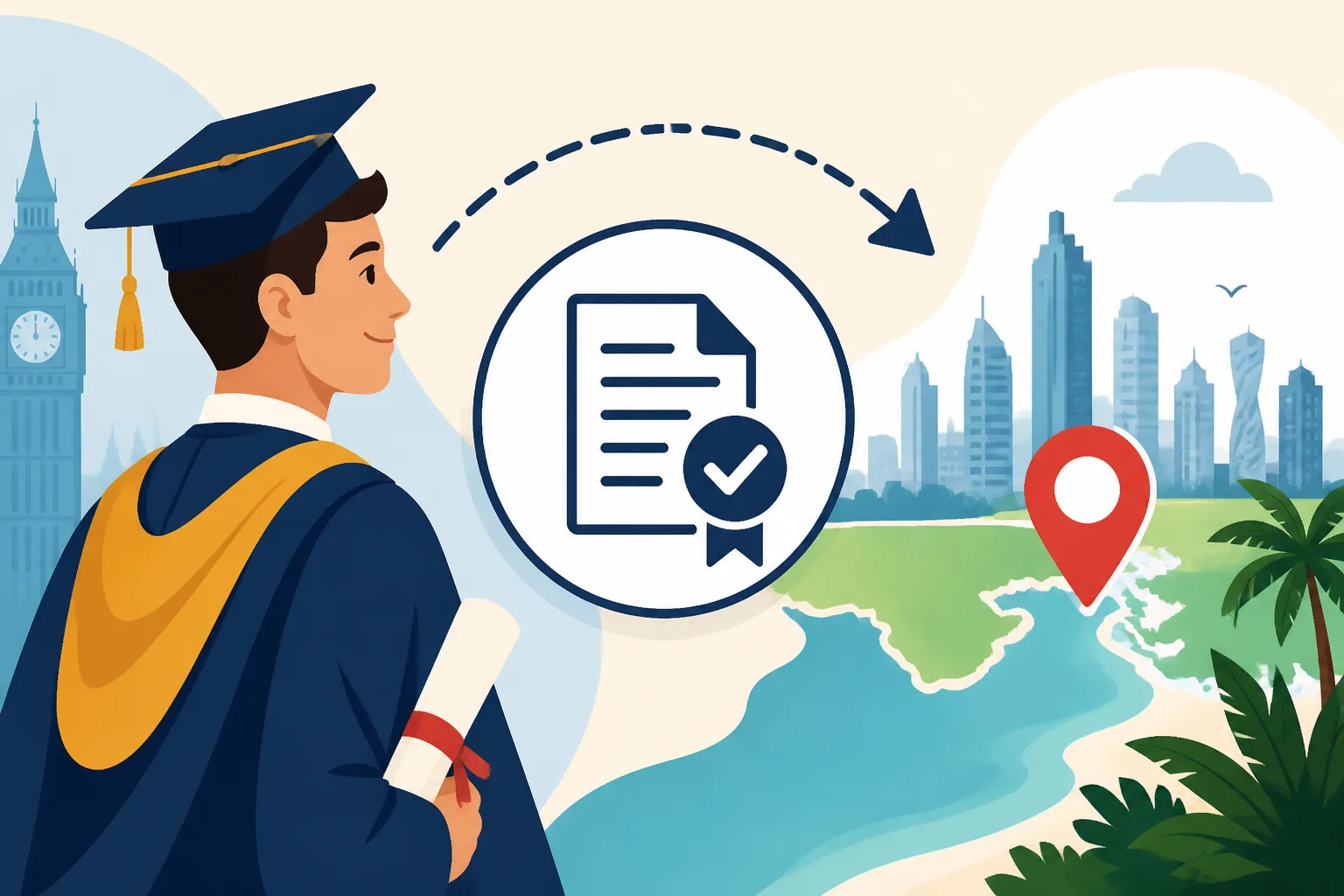
Oh, the joy of moving to a new country and realizing your perfectly valid degree from back home might as well be written in invisible ink here! Many of us expats arrive in Panama, diplomas in hand, only to discover that getting them officially recognized by the local authorities is a bureaucratic marathon, not a sprint. If you're a UK graduate looking to use your qualifications in Panama, whether for work or further study, this guide is going to walk you through the often-confusing process, sharing the exact steps you need to take and offering some real-world advice to save you a few headaches along the way.
Understanding Why Your UK Degree Needs Panamanian Recognition
You might be thinking, "It's a legitimate UK degree! Why wouldn't it be recognized?" Well, welcome to the world of international credential evaluation, where every country has its own standards, systems, and layers of paperwork. For expats in Panama, this isn't just a formality; it's often a legal requirement if you intend to practice a regulated profession, enroll in postgraduate studies, or even sometimes just to demonstrate your qualifications to an employer.
Panama's educational system, like many, needs to ensure that foreign qualifications align with its own standards. This isn't a slight against your alma mater; it's about maintaining educational quality and professional licensing. For instance, if you're a doctor, an engineer, or an architect, your profession is regulated, and without formal recognition, you simply won't be able to practice legally here. Even for non-regulated fields, employers often prefer or require local validation to be sure of your credentials. Imagine showing up to a job interview with a British engineering degree, only to be told it means nothing unless the Ministry of Education has signed off on it. It’s a frustrating reality many of us have faced. The goal is to compare your curriculum, the duration of your studies, and the academic standing of your UK institution against Panamanian norms.
The Bureaucratic Maze: What to Expect
The path to getting your UK degree recognized in Panama can feel like navigating a maze designed by a government committee on a particularly hot afternoon. It involves multiple government agencies, each with its own specific requirements, waiting times, and forms. You'll likely encounter the Ministry of Education (Ministerio de Educación or MEDUCA), the Ministry of Foreign Affairs (Ministerio de Relaciones Exteriores), and potentially specific professional bodies depending on your field. Don't underestimate the sheer volume of paperwork and the importance of having everything in perfect order. One missing stamp, one incorrectly translated document, and you're back to square one, often waiting weeks for the next appointment. Many expats find themselves learning valuable lessons about patience and persistence during this process, and maybe even a few new Spanish phrases to help them along. If you’re also looking into wider aspects of settling in, a comprehensive resource like The Complete Guide to Working in Panama as a Foreigner (2027) might give you an even broader picture of the professional landscape.
The Step-by-Step Process for UK Degree Recognition
Now, let's get down to the nitty-gritty. This is where your organizational skills will be put to the test. The process for getting your UK degree recognized in Panama generally follows a specific sequence, and skipping a step or doing things out of order will only lead to delays.
Step 1: Document Preparation in the UK (Apostille)
Before you even think about submitting anything in Panama, your UK degree and academic transcripts need to be legalized for international use. This means getting them apostilled. The apostille is a certification issued by the UK government (specifically, the Foreign, Commonwealth & Development Office – FCDO) that authenticates the signatures and stamps on public documents. It's essentially a fancy sticker that says, "Yes, this document is real and was issued by a legitimate authority in the UK."
You'll need to send your original degree certificate and academic transcripts (which should ideally be issued directly by your university, or at least be certified copies) to the FCDO. They offer both standard and premium services, with varying processing times. It's crucial to get both your degree certificate and your full academic transcripts (listing all modules, grades, and credit hours) apostilled. Panama will need to see both to properly evaluate your studies. Without the apostille, your documents won't be accepted by the Panamanian authorities, full stop. Don't make the mistake of thinking you can just show up with the originals; the apostille is the first, non-negotiable hurdle.
Step 2: Certified Translation in Panama
Once your UK documents are apostilled, the next critical step happens in Panama: getting them officially translated into Spanish. This isn't a job for Google Translate or a friend who speaks a bit of Spanish. You must use a certified public translator (traductor público autorizado) recognized by the Ministry of Foreign Affairs in Panama. These translators are officially accredited and their translations carry legal weight.
You'll take your apostilled documents to one of these translators. They will translate every word, including the apostille itself, and then affix their official stamp and signature to the translation, often binding it with the original apostilled document. This step is crucial because all official submissions to MEDUCA and other government bodies will need to be in Spanish. Expect the translation to take some time, depending on the length and complexity of your documents and the translator's workload. It's not the cheapest part of the process, but it's non-negotiable.
Step 3: Legalization at the Ministry of Foreign Affairs (Panama)
After your documents have been apostilled in the UK and then officially translated into Spanish by a certified public translator in Panama, you'll need to take both the original apostilled documents and their certified Spanish translations to the Panamanian Ministry of Foreign Affairs (Ministerio de Relaciones Exteriores). Here, they will authenticate the signature of the certified public translator.
This step is essentially the Ministry confirming that the person who translated your documents is indeed an officially recognized translator in Panama. It adds another layer of legal validity to your translated documents. Without this additional authentication, MEDUCA likely won't accept your submission. This can involve queues and waiting times, so prepare for a bureaucratic experience. It's a common step for any foreign document that needs to be officially recognized in Panama. For further guidance on legalizing documents for various purposes, you might find How to Get Your Documents Apostilled for Panama Immigration a helpful read, as the principles are quite similar.
Step 4: Submission to the Ministry of Education (MEDUCA)
This is the main event. With all your documents apostilled, translated, and legalized, you'll compile everything and submit it to the Department of Equivalencies and Recognition of Degrees (Departamento de Equivalencias y Reconocimiento de Títulos) within the Ministry of Education (MEDUCA).
You'll need:
- Your original UK degree certificate (apostilled).
- Your original academic transcripts (apostilled).
- The certified Spanish translations of both the degree and transcripts, authenticated by the Ministry of Foreign Affairs.
- Copies of your passport and residency documents (if applicable).
- A formal application letter addressed to MEDUCA, requesting the recognition of your degree.
- Any other supporting documentation requested by MEDUCA, such as course syllabi, detailed program descriptions, or evidence of professional experience.
MEDUCA's role is to evaluate your entire academic program and compare it to equivalent Panamanian degrees. They will assess the curriculum, the number of credit hours, the duration of study, and the accreditation of your UK university. If there are significant differences, they might require you to complete additional courses or examinations at a Panamanian university to bridge the gap. This evaluation process can take several months, sometimes longer, so prepare for a waiting game.
Step 5: Potential University Validation or Professional College Registration
For certain professions, especially those with specific licensing requirements, MEDUCA's recognition might be just one part of the journey. Once MEDUCA has approved your degree, you might then need to take that recognition to a relevant Panamanian university or a professional college (Colegio Profesional) to get further validation or to register to practice.
For example, if you're a doctor, the College of Physicians and Surgeons might need to review your credentials even after MEDUCA gives its stamp of approval. Lawyers, engineers, and other professionals will also have their own specific colegios that regulate practice. These bodies will ensure you meet all the professional and ethical standards for your field in Panama. This step often involves additional fees, paperwork, and sometimes even a local exam or an interview. It's worth noting that this layer of validation isn't always necessary for all degrees or professions, but it's very common for regulated fields.
To help you keep track of the main document requirements:
| Document Type | UK Action Required | Panamanian Action Required | Purpose |
|---|---|---|---|
| Degree Certificate | Apostille by FCDO | Certified Translation, Ministry of Foreign Affairs Auth. | Proof of qualification |
| Academic Transcripts | Apostille by FCDO | Certified Translation, Ministry of Foreign Affairs Auth. | Detailed record of studies, crucial for evaluation |
| Passport & Residency | N/A | Copies | Identity verification, legal status in Panama |
| Application Letter | N/A | Written in Spanish, addressed to MEDUCA | Formal request for recognition |
| Course Syllabi | Obtain from UK University | Translate (if requested by MEDUCA) | Detailed curriculum breakdown for comparative analysis |
Remember, this table outlines the basic requirements; MEDUCA may request additional documents based on your specific degree and field. It's always best to check their current requirements directly or consult with a Panamanian lawyer specializing in immigration and education.
Challenges and Important Considerations for UK Expats
Navigating the degree recognition process in Panama as an expat from the UK comes with its unique set of challenges. It's not always a smooth ride, and being prepared for these bumps in the road can make a significant difference.
Language Barrier and Communication
While Panama City, especially in business and tourist areas, has many English speakers, the official language of government and bureaucracy is Spanish. All forms, official communications, and direct interactions at government offices will be in Spanish. This can be a significant barrier if your Spanish isn't up to par. It's not just about understanding the words on a form but also grasping the nuances of bureaucratic language, which can be complex even for native speakers.
Having a trusted Panamanian friend, colleague, or a lawyer who can accompany you to appointments and help you understand specific requirements is invaluable. Don't rely solely on online translation tools for official documents or communications. Consider taking some Spanish lessons; platforms like iTalki offer one-on-one tutoring that can be incredibly helpful for learning the specific vocabulary you’ll encounter. A solid grasp of Spanish will make the entire process less daunting and will also greatly assist you if you intend to How to Find an English-Speaking Doctor in Panama or simply navigate daily life.
The Ever-Changing Requirements and Waiting Times
Panamanian bureaucratic processes can be fluid. Requirements can change with little notice, and what was true last year might not be true today. This can be incredibly frustrating for expats used to more predictable systems. Always double-check the latest requirements directly with MEDUCA or through an experienced local lawyer before you start compiling your documents.
Waiting times are another common challenge. Government offices operate at their own pace, and while there are official processing times, delays are not uncommon. It’s not unusual for the entire recognition process, from initial apostille to final approval by MEDUCA, to take anywhere from six months to a year, or even longer in complex cases. This means you need to plan ahead, especially if your job prospects or further studies depend on this recognition. Patience, as they say in Panama, is a virtue, and here, it's a necessity. If you're planning to work in Panama, understanding How a Work Permit and Employer Sponsorship Work in Panama is vital, as recognition of your degree is often a prerequisite for many professional work permits.
Cost Implications
Obtaining degree recognition isn't free. You'll incur costs at various stages:
- Apostille fees in the UK.
- Certified translation fees in Panama (these can be significant, depending on the volume of documents).
- Legalization fees at the Ministry of Foreign Affairs in Panama.
- MEDUCA processing fees.
- Professional college registration fees (if applicable).
- Legal consultation fees if you opt to use an immigration lawyer or specialist to guide you through the process, which many expats wisely choose to do.
These costs can add up, so it's important to budget for them from the outset. While it might seem like a lot, consider it an investment in your ability to work or study legally in Panama.
Alternatives and Next Steps if Direct Recognition Proves Difficult
Sometimes, despite your best efforts, direct degree recognition can be exceptionally challenging, especially if your UK program doesn't have a direct equivalent in Panama or if the academic comparison proves too complex. It's not the end of the road, though. There are other paths and considerations for expats who encounter significant hurdles.
Exploring Equivalency Options or Further Study
If MEDUCA determines that your UK degree isn't directly equivalent, they might offer a pathway to equivalency by suggesting you complete additional courses or a bridging program at a Panamanian university. This can be a practical solution, albeit one that requires further time and financial commitment. It might mean enrolling in specific subjects or even a short diploma course to meet the local standards. This option is common for fields where there are significant curricular differences between the UK and Panamanian systems. If you're considering this, exploring resources like How to Apply to a Panamanian University as an International Student could be a good starting point.
Focusing on Experience and Non-Regulated Fields
For many expats, especially those in fields that aren't strictly regulated (like some areas of IT, marketing, or general business), direct degree recognition might not be an absolute necessity for employment. Many international companies and even some local businesses might value your international experience and skills over a formally recognized degree, especially if your role doesn't require a professional license.
In these cases, your resume, portfolio, and interview performance become paramount. While having your degree recognized is always a plus, sometimes proving your capabilities through experience and practical skills can open doors. This is particularly true for roles in multinational corporations or remote work opportunities based outside Panama. Understanding the Rules and Restrictions for Foreign Workers in Panama can help you navigate these nuances.
Consider English Teaching or Entrepreneurship
If direct professional employment in your field becomes too complicated due to recognition issues, many expats turn to teaching English as a foreign language. There's a high demand for native English speakers in Panama, especially in private language academies and international schools. While a TEFL certificate is usually required, formal degree recognition is often less of a hurdle.
Another popular route is entrepreneurship. With the right visa and business plan, you can How to Register as a Self-Employed Person in Panama and start your own business. This allows you to leverage your skills and experience without needing to fit into a traditional employment structure that might demand degree recognition. Panama is quite welcoming to foreign entrepreneurs, and many expats have found success by creating their own opportunities.
Leveraging Professional Credentials and Certifications
Beyond academic degrees, many professions have international certifications (e.g., PMP for project management, various IT certifications, ACCA for accounting). These professional certifications are often highly valued by employers in Panama and can sometimes bypass the need for full academic degree recognition, especially if your role is specialized. They demonstrate practical competence and adherence to international industry standards, which can be very appealing to businesses. It's always worth researching if your field has such internationally recognized credentials.
Ultimately, getting your UK degree recognized in Panama requires diligence, patience, and a bit of a fighting spirit against bureaucracy. But with the right approach and a clear understanding of the steps involved, it's an achievable goal that can unlock many professional and academic opportunities in your new home. For those navigating the financial implications of working in Panama, remember that Understanding Income Tax in Panama (2027) is crucial once you begin earning.
Disclaimer
Please remember that this guide provides general information based on current practices and personal experiences as of 2026. Immigration, education, and professional recognition laws and procedures in Panama can change. It is always highly recommended to consult directly with the Ministry of Education (MEDUCA), the Ministry of Foreign Affairs (Ministerio de Relaciones Exteriores), and a qualified Panamanian immigration lawyer or education specialist for the most current and personalized advice regarding your specific situation and degree.