How Much Annual Leave Do Employees Get in Panama?
One of the trickiest things about moving to Panama and starting a new job, beyond deciphering the local lingo or navigating the morning traffic, is understanding your annual leave entitlements. You might come from a country with very different labor laws, where vacation days accrue monthly or roll over indefinitely, and suddenly you're faced with Panamanian rules that can feel a bit… unique. It's easy to get confused, leading to frustration or even missed opportunities for a well-deserved break. This guide is here to unravel the specifics of annual leave for employees in Panama, helping you understand your rights, how to plan your time off, and what to expect from your employer.
Your Vacation Entitlement in Panama: The Basics
Let's cut right to the chase because this is probably your biggest question: how much time off do you actually get? Panama's labor laws are quite clear on this, offering a generous, albeit structured, approach to vacation time. It’s a bit different from what many expats are used to, so let’s break down the fundamentals.
Earning Your First Vacation Days
Here's where it often catches newcomers off guard. Unlike many countries where you start accruing a small amount of vacation time from day one, in Panama, the general rule is that an employee is entitled to 30 days of paid annual leave after completing 11 consecutive months of work for the same employer. Yes, you read that right – 11 months before your first full vacation entitlement kicks in.
This means if you start a new job in January, you won't be eligible to take your vacation until December of that year. It's a system designed to reward consistent employment and ensure a significant break, but it can be a shock if you're used to taking a week off after just a few months. For example, if you began working on March 15th, 2024, your 11 months would be up on February 15th, 2025, and only then would your entitlement to 30 days of leave be fully vested. This initial waiting period is a crucial point that many expatriates overlook when planning their first year in the Panamanian workforce. It means careful budgeting of your energy and perhaps planning shorter trips or long weekends using unpaid time off, if your employer allows it, during that initial period. Understanding this initial threshold is key to avoiding disappointment and effectively managing your expectations about when you can truly unplug.
The Standard 30 Calendar Day Rule
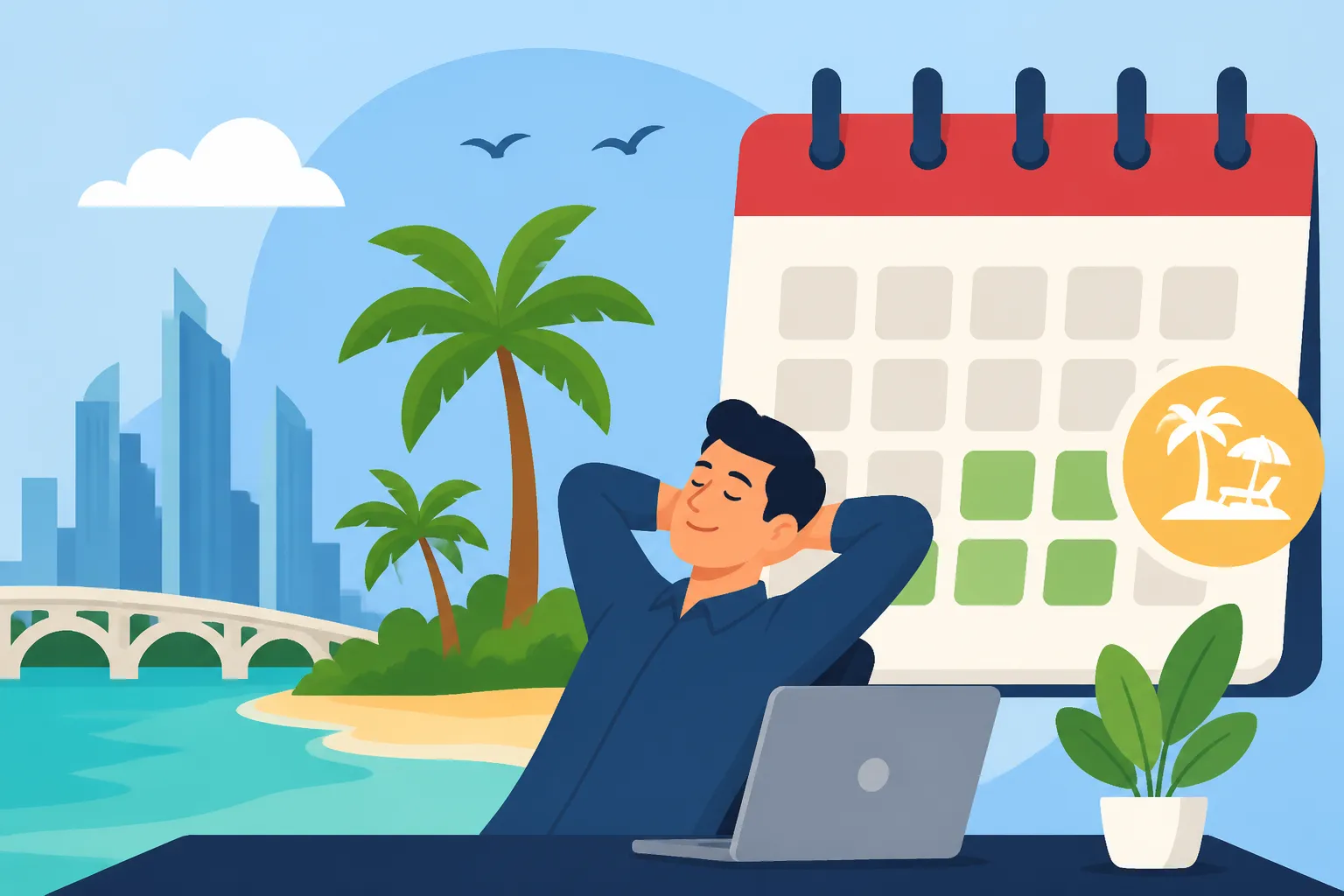
Once you've cleared that initial 11-month hurdle, employees in Panama are entitled to 30 calendar days of paid annual leave for every 11 months of continuous service. It’s important to stress that this refers to calendar days, not business days. This means weekends and public holidays that fall within your approved vacation period are counted towards your 30 days.
So, if you take a vacation from Monday, July 1st, and return to work on Wednesday, July 31st, that would count as 30 calendar days of leave. Effectively, for someone working a standard Monday-Friday week, this usually translates to about 22 working days off, spread over a full month including the weekends. This generous allowance is a real perk of working in Panama, giving you ample time to explore the country, visit family back home, or simply relax and recharge. However, the calendar day counting can feel a little counterintuitive if you're accustomed to vacation being calculated purely on working days. Always clarify with your HR department or employer how they specifically calculate and schedule your time, especially if you have particular dates in mind that might include a public holiday that could extend your effective time off without costing you extra "working" days.
Understanding Your Rights and Employer Obligations
Panamanian labor law, specifically the Labor Code, aims to protect employees while also giving employers the necessary operational flexibility. Navigating these rights and obligations can sometimes feel like a dance, but knowing the steps will help you ensure a harmonious experience.
Requesting and Scheduling Your Leave
While you are entitled to your annual leave, the exact timing of it is generally determined by mutual agreement between you and your employer. The law states that leave should be granted within three months following the completion of the 11-month qualifying period. However, in practice, most companies have a vacation planning process where employees submit their preferred dates, and these are then approved by management, taking into account operational needs.
It's common for larger companies to have a formal system for requesting leave, perhaps through an online portal or a specific form. You'll typically need to submit your request well in advance, usually a month or more, especially if you're planning to take time off during peak seasons like December, January, or around major holidays like Carnival or Easter Week. Open and early communication is key here. Don't just spring a vacation request on your boss a week before you want to leave. This isn't just about professional courtesy; it’s about allowing your employer to plan for your absence and ensure workflow continuity. Sometimes, if you're not fully fluent in Spanish, articulating these requests clearly can be a challenge. Consider brushing up on your workplace Spanish; resources like iTalki can be incredibly helpful for practicing specific scenarios like discussing leave with your supervisor. A clear, well-communicated request is much more likely to be approved without a hitch.
What About Unused Vacation Days?
This is a frequently asked question among expats, often coming from systems where carrying over vacation days is standard practice. In Panama, the general rule is that annual leave should be taken, not accumulated indefinitely. The Labor Code discourages the accumulation of leave. Ideally, your 30 days should be taken within that three-month window after they become available.
However, in some specific circumstances and by mutual agreement, an employer and employee might agree to postpone leave. But legally, a more common scenario for "unused" vacation is when an employment contract ends. If you leave your job (either by resignation or termination) and you have accrued but untaken vacation days, your employer is legally obliged to pay you for those days. This payment should be calculated based on your last salary. This can sometimes result in a decent lump sum, which is important to factor into your financial planning if you're transitioning between jobs. However, it's not a voluntary "cash-out" option you can choose instead of taking your vacation mid-employment. Always keep track of your accrued leave, and if you have any questions about calculations or payments upon separation, consulting with a labor lawyer or a trusted HR professional is advisable. For expats specifically, navigating these financial aspects, including potential tax implications of receiving a large payout, might warrant a quick chat with a specialist like those found at Taxes for Expats.
Vacation vs. Public Holidays and Sick Leave
It's crucial to understand the distinction between different types of paid time off in Panama, as they are governed by different rules and do not overlap.
First, public holidays are separate from your annual leave. When a public holiday falls on a workday, employees are entitled to that day off with pay, and it does not count against your 30 annual leave days. If you are required to work on a public holiday, the Labor Code stipulates that you must be paid 150% of your regular salary for that day, in addition to receiving another day off. This means strategically planning your annual leave around public holidays can effectively extend your time away from work without using extra vacation days. For instance, if you take a week off that includes a public holiday, you'll still only subtract five working days from your annual leave, but you'll have had six days off. This is a great way to maximize your time for travel or relaxation. You can learn more about these specifics in our guide on Understanding Annual Leave and Public Holiday Entitlements in Panama.
Second, sick leave is also entirely distinct. If you fall ill and cannot work, you are entitled to sick leave, provided you have a valid medical certificate from a doctor. This time off is typically paid through the social security system (CSS) or directly by your employer for a certain period, and it does not reduce your annual leave balance. It's a common mistake for expats to conflate these, but they are separate entitlements under Panamanian labor law. Trying to use sick leave as extended vacation or vice versa can lead to serious issues. Our guide on Understanding Sick Leave Entitlements Under Panamanian Labour Law delves into this in much greater detail, providing clarity on when and how to access this benefit. Always ensure you follow the correct procedures for each type of leave to remain compliant with your employer's policies and the law.
Practical Considerations for Expats
As an expat, you're already juggling so much – a new culture, a different language, and unfamiliar administrative processes. Understanding annual leave is another layer, and sometimes, those little nuances can make all the difference.
Managing Your Leave During Employment Changes
Life as an expat often involves transitions, whether it's moving between jobs or even leaving Panama. Knowing how your annual leave is handled during these periods is vital.
If you are new to a company, remember that initial 11-month waiting period before you're eligible for your 30 days. This means that during your Understanding the Probationary Period for New Jobs in Panama and the subsequent months leading up to your first 11-month anniversary, you won't have any paid annual leave to take. Any time off during this period would typically be unpaid, at your employer's discretion, or for specific emergencies. It's a common point of contention or surprise for new hires. Plan your relocation carefully, perhaps taking a substantial break before you start your new Panamanian job, knowing that immediate vacations won't be on the table.
When you decide to leave a job, whether by resigning or if your contract is terminated, any accrued but untaken annual leave must be paid out by your employer. This is a non-negotiable legal obligation. The calculation usually involves prorating your 30 days based on the number of months you've worked since your last vacation period or since your start date. For instance, if you worked 6 months since your last vacation, you'd be entitled to compensation for half of your annual leave (15 days). This payout will be included in your final settlement along with other benefits like the "decimo tercer mes" (Thirteenth Month). Knowing this can significantly impact your financial planning for your transition. For a deeper dive into the broader legal framework around employment endings, check out our article on Understanding Notice Periods and Termination Under Panamanian Law.
Communication and Language Barriers in HR
One of the less-talked-about challenges for expats in any new country is navigating administrative processes in a foreign language. While many international companies in Panama have English-speaking HR staff, smaller local businesses might not. Explaining your situation, understanding complex policies, or even just asking for clarification on your leave balance can be daunting if Spanish isn't your strongest suit.
Misunderstandings can easily arise from subtle differences in phrasing or cultural communication styles. For example, a direct "I want my vacation on these dates" might be perceived differently than a more deferential "I was hoping to request my vacation for these dates, if possible, given team schedules." It's not just about knowing the words, but also the tone and cultural context. Don't be afraid to ask for things in writing (e.g., email confirmation of your leave approval) to avoid any future disputes. If you're struggling, consider asking a trusted bilingual colleague to help you draft an email or rehearse your conversation. Improving your Spanish skills, even for basic workplace interactions, can significantly reduce stress and improve your working relationship. As mentioned earlier, platforms like iTalki are fantastic for targeted language practice, allowing you to focus on professional scenarios that directly impact your life as an expat. The more proactive you are in ensuring clear communication, the smoother your experience will be, and the less likely you are to face awkward situations regarding your well-deserved time off.
Financial Aspects and Planning Your Time Off
Beyond simply getting the days off, there are financial considerations to keep in mind regarding your annual leave. This isn't just about budgeting for your trip, but understanding how your leave pay works and how best to utilize your time off effectively.
Tax Implications of Vacation Pay
When you take your annual leave in Panama, you receive your regular salary for those 30 days. This vacation pay is generally subject to the standard income tax deductions, just like your regular salary. It's not usually treated as a separate, untaxed bonus. However, if you are paid out for unused vacation days upon termination of employment, that lump sum will also be subject to income tax.
For most employees, this is straightforward and handled by your employer's payroll department. However, if you have a complex financial situation, perhaps due to other sources of income or specific tax residency status, it's always wise to understand the details. Consulting with a tax professional who specializes in expat taxation in Panama can provide clarity. Resources like Taxes for Expats can be invaluable here, helping you understand how your vacation pay, and any lump sum payouts, fit into your overall tax obligations in Panama. This kind of proactive financial planning ensures there are no surprises come tax season when you're Filing Your Tax Return with the DGI in Panama: The Complete Walkthrough (2027). Knowing how your benefits are taxed helps you budget more accurately and plan for your financial future in Panama.
Making the Most of Public Holidays
Panama has a decent number of public holidays throughout the year, celebrating everything from national independence to religious festivals. As we touched upon earlier, these days do not count against your annual leave balance. This presents a fantastic opportunity for strategic vacation planning.
By scheduling your annual leave days around public holidays, you can effectively create longer breaks using fewer of your allotted vacation days. For example, if a public holiday falls on a Monday or a Friday, taking the remaining four workdays off results in a full nine-day break for only four days of annual leave. This is a common tactic used by both locals and expats to maximize their time off for travel or extended relaxation. Keep an eye on the official public holiday calendar (which can sometimes shift slightly year by year, so always confirm) and plan your vacation requests accordingly. This approach allows you to explore more of Panama's beautiful provinces, take a quick hop to a neighboring country, or simply enjoy a longer staycation at home without burning through your annual leave too quickly. Being aware of these additional paid days off is part of truly understanding The Complete Guide to Working in Panama as a Foreigner (2027) and integrating smoothly into the local work-life balance.
Here's a quick summary table of key annual leave facts:
| Feature | Details |
|---|---|
| Entitlement | 30 calendar days for every 11 consecutive months of service. |
| First Leave Eligibility | After completing 11 months of work. |
| Leave Calculation | Counts calendar days (including weekends and public holidays within the period). Approx. 22 working days. |
| Scheduling | By mutual agreement with employer, ideally within 3 months after eligibility. |
| Unused Leave | Generally cannot be "cashed out" during employment. Must be paid out upon termination/resignation for accrued days. |
| Public Holidays | Separate from annual leave. Do not reduce your 30-day balance. Paid at 150% if worked, plus compensatory day off. |
| Sick Leave | Separate from annual leave. Requires medical certificate. |
| Payment | Vacation days are paid at your regular salary, subject to standard deductions. |
Hopefully, this breakdown has cleared up some of the confusion surrounding annual leave in Panama. It’s a generous system once you understand its nuances, offering a fantastic opportunity to enjoy your life here. Don't be afraid to ask questions of your HR department, and always try to plan ahead to make the most of your well-deserved time off! For further details on your overall employment rights, remember to consult our comprehensive guide on Understanding Panamanian Labour Law and Worker Rights (2027). And if you're still looking for a job, our article The Expat Guide to Finding a Job in Panama (2027) can provide even more insights into the local job market.
Disclaimer
The information provided in this guide is for general informational purposes only and does not constitute legal or professional advice. While we strive to provide accurate and up-to-date information, labor laws in Panama can be complex and are subject to change. For specific advice regarding your employment situation or legal rights, it is always recommended to consult with a qualified Panamanian labor lawyer or HR professional.