What Are My Rights If I’m Laid Off in Panama?
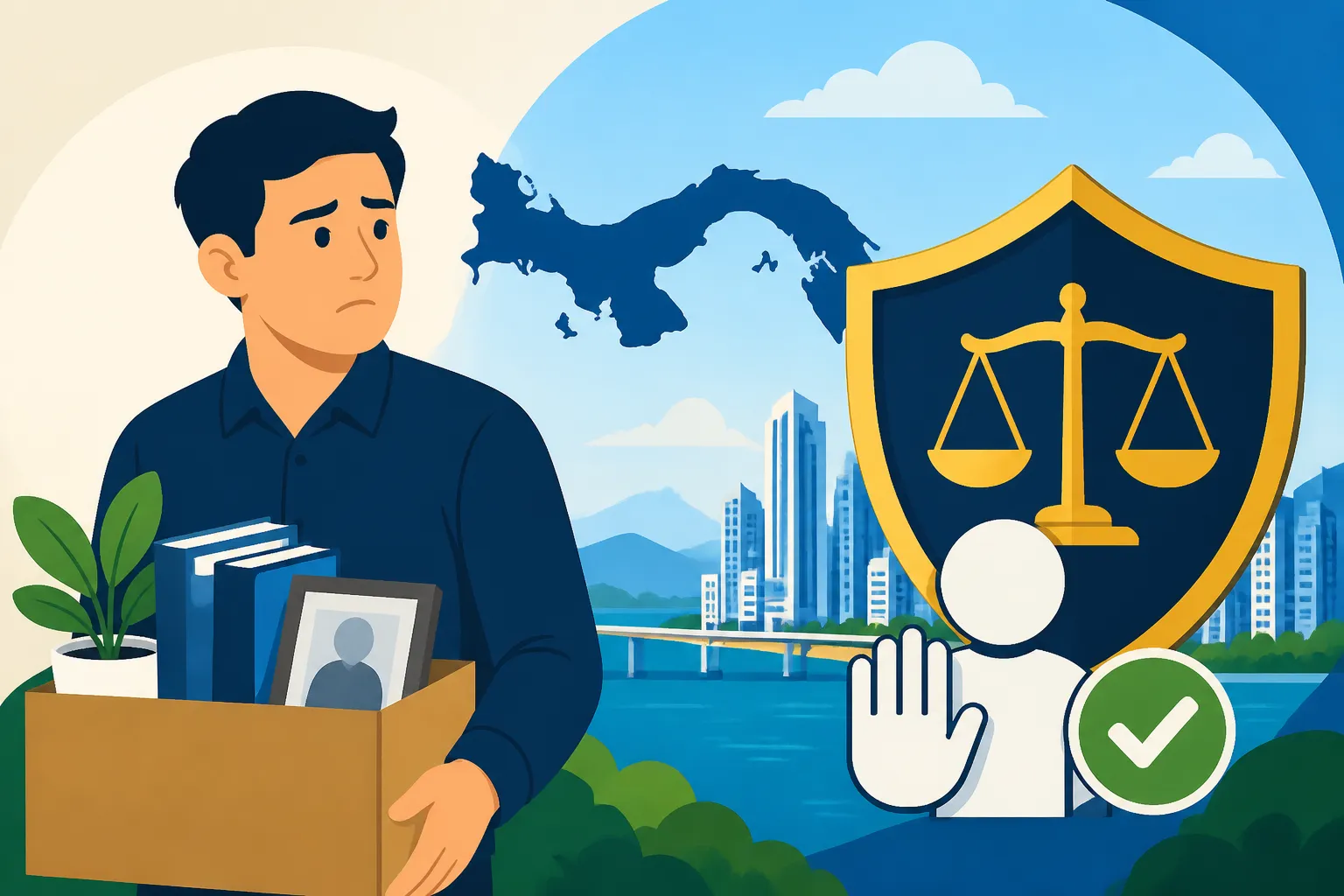
Being laid off from a job is an incredibly stressful experience in any country, but when you're an expat in Panama, it can feel like your entire world is thrown into chaos. Beyond the immediate financial worries, there’s the added anxiety about your visa status, your future in a foreign land, and navigating a legal system that’s completely new. This guide aims to pull back the curtain on Panamanian labor law, specifically focusing on your rights as a foreign worker if you find yourself suddenly unemployed, offering clarity and actionable steps during a tough time.
Understanding Panamanian Labor Law Basics for Expats
Navigating the intricacies of Panamanian labor law as an expat can feel like deciphering ancient hieroglyphs, especially when you're already grappling with the emotional weight of a layoff. The good news is that Panama's labor code, the Código de Trabajo, is quite comprehensive and generally offers strong protections for employees, whether they are Panamanian citizens or foreigners legally working in the country. This isn't always as transparent as a North American or European system, but the framework is there.
The Foundation of Worker Protections
At its core, Panama's labor law operates on the principle of protecting the worker, often leaning in favor of the employee in disputes. This means that employers have specific obligations and limitations when it comes to hiring, managing, and, crucially, terminating employees. It’s not simply a matter of "at-will" employment that you might be used to in some other countries. There are specific procedures, just causes, and compensatory benefits that must be adhered to. Many expats initially assume they have fewer rights than locals, but if you have a valid work permit and are legally employed, you generally fall under the same protective umbrella. Understanding these foundational principles is your first step to asserting your rights. It means recognizing that you aren't powerless, even when the situation feels overwhelming.
Who is Covered by Panamanian Labor Law?
The Código de Trabajo covers virtually all employees working under an employment contract within Panama, regardless of nationality. This includes you, as an expat, provided you are legally employed with the appropriate work permit and visa status. There are some nuances, of course. For instance, temporary contracts, certain independent contractors (though the lines can blur, which is a common area of dispute), and high-level management positions might have slightly different provisions in their contracts, but the fundamental protections generally still apply. For example, if you moved to Panama under a specific visa that allowed you to work, your employment terms will be regulated by this code. If your employer has been contributing to your social security (CSS), that's a strong indicator that you're considered a formal employee under the law, reinforcing your entitlements. It’s critical to remember that if you're working without a valid work permit, your legal standing to claim these benefits is severely compromised, which is why it's paramount to ensure your immigration status is always in order. Learning about How a Work Permit and Employer Sponsorship Work in Panama is a crucial step for any foreign worker.
Types of Termination and Your Entitlements
The manner in which your employment ends in Panama significantly impacts the benefits and severance you are entitled to receive. It's not a one-size-fits-all situation, and understanding these distinctions can be the difference between a fair settlement and a protracted legal battle.
Termination Without Just Cause Unjust Dismissal
This is perhaps the most common scenario for expats, and it's where Panama's labor laws offer significant protection. If your employer terminates your contract without a "just cause" as defined by the Código de Trabajo, it's considered an unjust dismissal. Just causes are very specific and typically involve serious misconduct on the employee's part, such as theft, gross insubordination, repeated unexcused absences, or significant performance failures that have been properly documented and communicated. If your employer simply decides they don't need you anymore, or replaces you with someone cheaper, that generally doesn't qualify as just cause.
In cases of unjust dismissal, you are entitled to several benefits:
- Preaviso (Notice Period Compensation): If your employer doesn't give you the legally mandated notice period (usually 30 days if you've been employed for over a year), they must pay you for that period.
- Severance Pay (Indemnización): This is calculated based on your length of service and your salary. The longer you've worked, the more you're entitled to. The law stipulates that for every year of service, you are entitled to a month's salary, with specific scaling for partial years. This is a significant sum and a key protection for workers.
- Vacation Pay: Any accrued, untaken vacation days must be paid out.
- Thirteenth Month (Decimo Tercer Mes): This is a mandatory bonus equivalent to one month's salary, paid in three installments throughout the year (April, August, December). If you're laid off, you're entitled to a pro-rata portion of this for the year.
The burden of proof for just cause lies with the employer. If they can't prove it, they pay. This is why many employers opt to pay severance rather than risk an unjust dismissal claim.
Termination With Just Cause
If your employer terminates you for a "just cause" as explicitly outlined in the Código de Trabajo, your entitlements are significantly reduced. As mentioned, these causes are specific and serious:
- Serious misconduct: Such as gross negligence that causes substantial harm to the company, dishonesty, or committing a crime in the workplace.
- Repeated, uncorrected offenses: If you've received written warnings for poor performance or infractions, and despite these warnings, the behavior continues.
- Abandonment of work: Unexcused absences for a certain number of days (typically three consecutive days without notification).
In such cases, you would generally only be entitled to payment for accrued, untaken vacation days and the pro-rata portion of your "thirteenth month" bonus. You would not receive preaviso or severance pay. It is crucial for your employer to have meticulously documented any alleged misconduct, including written warnings and opportunities for you to improve or respond. Without this documentation, it's very difficult for an employer to successfully argue just cause.
Mutual Agreement and Resignation
Sometimes, an employer might offer a "mutual agreement" (known as mutuo acuerdo) to terminate employment. This is often an attempt to avoid the legal complexities of a dismissal, potentially by offering a slightly lower severance package than you might be entitled to under an unjust dismissal, in exchange for a quicker, less contentious exit. Always be cautious here; review any proposed agreement with legal counsel before signing anything. Your signature on a mutual agreement usually waives your right to claim unjust dismissal.
Similarly, if you choose to resign (renuncia), you generally forfeit your right to severance pay, although you are still entitled to your accrued vacation and the pro-rata "thirteenth month." However, there's a specific scenario called "indirect dismissal" (despido indirecto) where an employee can resign and still claim unjust dismissal benefits. This happens when the employer's actions are so egregious that they make continued employment impossible (e.g., severe harassment, unpaid wages, significant contract changes without consent). In such a case, you would resign because of the employer's actions and then pursue a claim.
What Benefits to Expect: Severance, Vacation, and "Thirteenth Month"
Let's break down these crucial benefits further, as they form the bulk of your financial protection:
-
Severance Pay (Indemnización): This is the big one. For indefinite contracts (which most full-time expat positions are), after a probationary period of typically three months, you start accruing severance. The calculation generally follows a scale, with the most common understanding being one month's salary for each year of service. The law actually breaks it down into segments:
- After the probationary period up to one year of service: One week's salary.
- From one to two years: One month's salary.
- From two to five years: Two months' salary for the second year, and then pro-rata for additional years.
- From five to ten years: Three months' salary for the fifth year, and pro-rata.
- From ten to fifteen years: Four months' salary for the tenth year, and pro-rata.
- Over fifteen years: Five months' salary for the fifteenth year, and pro-rata.
This can get complicated, so always consult a Panamanian labor lawyer to get an accurate calculation for your specific case.
-
Vacation Pay (Vacaciones Acumuladas): For every 11 months of continuous work, employees accrue 30 days of paid vacation. If you're laid off, any unused vacation days that you have earned must be paid out to you, typically calculated based on your most recent daily salary.
-
Thirteenth Month Bonus (Decimo Tercer Mes): This mandatory bonus is equivalent to one month's salary per year, paid in three installments (April 15th, August 15th, December 15th). If you are terminated before the full year is up, you are entitled to a pro-rata portion based on the number of months worked during that year. For instance, if you're laid off in September, you'd get the pro-rata amount for January through September. This isn't a discretionary bonus; it's a legal entitlement.
Understanding these benefits is key to ensuring you receive a fair settlement. When considering your overall financial situation, remember that the tax implications of these payments can be complex. Consulting a specialist in Taxes for Expats might be wise to understand how your final payout affects your fiscal obligations in Panama and potentially back home.
Navigating the Notice Period and Final Paycheck
Beyond the entitlements themselves, the process of how you're notified and how your final payments are handled is equally important. It can often be a source of confusion and frustration for expats unfamiliar with local customs and legal requirements.
The Importance of the Notice Period
In Panama, the notice period, or preaviso, is a legal requirement for employers when terminating an indefinite contract without just cause, assuming the employee has passed their probationary period. If you've been employed for less than a year, the notice period might be shorter (e.g., 2 weeks for 3-6 months of service, 1 month for 6-12 months). If you've worked for a year or more, the employer must give you at least 30 days' notice before the termination becomes effective. During this notice period, you are still an employee and must continue to perform your duties unless explicitly told otherwise.
Crucially, if the employer does not provide this notice period, they are legally obligated to pay you compensation equivalent to the wages you would have earned during that period. This preaviso compensation is in addition to your severance pay and other benefits. It's a payment in lieu of notice, designed to give you a financial buffer while you search for new employment. Many employers prefer to pay the preaviso rather than have the employee remain in the office for the notice period, especially during sensitive terminations. Make sure you understand whether you're being asked to work out your notice or if they are simply paying it out. This is a critical detail in your final settlement.
Calculating Your Final Settlement
Calculating your final settlement, often referred to as your liquidación, requires careful attention to detail. This package should include all outstanding amounts: your regular salary up to the last day worked, compensation for any unserved notice period (preaviso), your full severance pay (indemnización), accrued and unused vacation days, and the pro-rata portion of your "thirteenth month" bonus.
Here's a simplified breakdown of what you should expect to see itemized:
| Benefit Type | Description | Calculation Basis |
|---|---|---|
| Salary | Wages earned up to the final day of employment. | Daily/monthly salary |
| Preaviso | Compensation for unserved notice period (if applicable). | 30 days of salary (for 1+ year of service) |
| Indemnización | Severance pay for unjust dismissal. | Scaled based on years of service (e.g., 1 month/year) |
| Vacaciones Acumuladas | Payment for accrued but untaken vacation days. | Daily salary x number of unused vacation days |
| Decimo Tercer Mes | Pro-rata portion of the "Thirteenth Month" bonus for the current year. | (Monthly salary / 12) x months worked in current year |
It's common for employers to present you with a final settlement document (acta de liquidación or finiquito). Never sign this document without thoroughly reviewing it, preferably with the help of a Panamanian labor lawyer. This document, once signed, typically means you agree to the terms and waive further claims against the employer. Don't let the pressure of the moment or a language barrier rush you into signing something you don't fully understand. Take it home, review it, and seek advice. This is your livelihood, and you have every right to ensure it's correct.
What to Do If You Believe Your Dismissal Is Unjust
Discovering you've been laid off is tough, but realizing you might have been unfairly dismissed adds another layer of stress. In Panama, you have avenues for recourse, but they require swift and strategic action.
Seeking Legal Counsel and Documenting Everything
The very first thing you should do after being laid off, particularly if you suspect unjust dismissal, is to seek advice from a reputable Panamanian labor lawyer. They are your best guide through this complex system. They can review your employment contract, assess the circumstances of your dismissal, calculate your entitlements accurately, and advise you on the best course of action. Trying to navigate this alone is a recipe for headaches and potentially leaving money on the table.
In parallel, start documenting absolutely everything:
- Your employment contract: Keep a copy of your signed contract, any amendments, and job description.
- Payslips: Have records of your monthly payslips, showing your salary and any deductions.
- Communication: Save all emails, WhatsApp messages, or other communications related to your employment, especially anything about your performance, warnings, or the termination itself.
- Witnesses: If there were any witnesses to the termination meeting or to circumstances leading up to it, note their names and contact information (if appropriate).
- Any company policies: Copies of employee handbooks or policy documents.
The more evidence you have, the stronger your position will be, especially if it contradicts your employer's stated reasons for dismissal. Your lawyer will thank you for being organized.
The Role of the Ministry of Labor MITRADEL
If negotiations with your former employer through your lawyer don't yield a satisfactory resolution, or if your employer is refusing to pay your legal entitlements, the next step is usually to file a complaint with the Ministry of Labor and Labor Development (MITRADEL – Ministerio de Trabajo y Desarrollo Laboral). MITRADEL is the government body responsible for enforcing labor laws in Panama.
You or your lawyer would formally present your case to MITRADEL. They will typically attempt mediation between you and your former employer. A conciliatory meeting will be scheduled where both parties present their arguments and evidence, and a MITRADEL official acts as a mediator to try and reach an agreement. Many disputes are resolved at this stage because employers often prefer to settle rather than face the possibility of a formal legal judgment against them, which can be more costly and time-consuming. This process is generally less formal than a court proceeding, but it still requires a clear presentation of your case. For more details on the overarching system, consider reading about Understanding Panamanian Labour Law and Worker Rights (2027).
Potential Legal Recourse and Timelines
If mediation at MITRADEL fails, your lawyer can then pursue a formal claim through the labor courts. This is a more adversarial process and can take significantly longer, often months or even years, depending on the complexity of the case and the court's workload. The court will hear evidence from both sides and make a binding decision. If the court rules in your favor, the employer will be ordered to pay all outstanding benefits, plus potential penalties and legal fees.
It's important to be aware of the statutory limitations, or timelines, for filing claims. Generally, you have a limited window, typically one year from the date of termination, to file a claim for labor benefits. Missing this deadline can mean losing your right to pursue compensation. This is another crucial reason why consulting a lawyer immediately is so important; they will ensure all deadlines are met. While pursuing legal action can be daunting, especially as an expat, the Panamanian system is designed to protect workers, and pursuing your rights can lead to a just outcome.
Post-Layoff Practicalities for Expats
Being laid off in Panama doesn't just impact your immediate finances; it can also have significant ramifications for your ability to stay in the country. This creates a unique layer of stress for expats that locals don't typically face.
Impact on Your Visa and Residency Status
For many expats, their work permit and residency are directly tied to their employment with a specific company. If you're laid off, your employer will likely cancel your work permit and notify immigration authorities. This means that your legal right to reside and work in Panama could be in jeopardy.
- Work Permit Cancellation: Once your employment ends, your employer is obligated to notify the Ministry of Labor and the National Immigration Service. Your work permit will be cancelled.
- Residency Implications: Depending on your specific visa type (e.g., Friendly Nations Visa, Professional Visa), the cancellation of your work permit might directly affect your residency status. You might have a grace period (often 90 days, but this can vary and change, so confirm with an immigration lawyer immediately) to either find new employment and transfer your work permit, or apply for a different type of visa, or even leave the country. Some residency types, like the [Pensionado (Retiree) Visa in Panama], are not tied to employment, so a layoff would not affect them. However, if your residency is employment-dependent, this becomes an urgent matter.
- Finding New Employment: If you want to stay in Panama and continue working, you'll need to find a new employer willing to sponsor a new work permit for you. The process will be similar to when you first applied, potentially requiring the new employer to apply for the 10% foreign worker quota exemption. You'll need to understand How Your Residence Status Affects Health Coverage in Panama during this transition as well.
The key takeaway here is proactivity. As soon as you are laid off, contact an immigration lawyer alongside your labor lawyer to understand your specific options and deadlines for maintaining your legal status in Panama. Do not delay, as immigration matters are time-sensitive and strict.
Managing Finances and Future Employment
Beyond the legal and immigration hurdles, the practicalities of daily life continue. Your financial situation needs immediate attention, and planning your next career move becomes paramount.
- Financial Planning: Review your severance package carefully with your lawyer. Understand how long these funds need to last, considering the time it might take to find a new job or secure a new visa. Update your budget to reflect your new circumstances. If you have been relying on your income to cover expenses, you might need to tap into savings or make adjustments to your lifestyle. Don't forget to consider how your severance and any final payouts might be taxed, both in Panama and in your home country. Resources like Taxes for Expats can be helpful in navigating these complex cross-border tax considerations.
- Job Search Strategy: Panama has a dynamic job market, but for expats, opportunities can be more concentrated in specific sectors or multinational companies. Polish your CV, network within the expat community and your professional field, and explore job boards. Consider looking into How to Find Work in Panama's Banking and Finance Sector if that aligns with your experience, or explore options in the logistics and tourism sectors. If you have a unique skill set, perhaps even consider Self-Employment in Panama: Registering a Business and Going Independent.
- Skill Development: If you have some time before finding your next role, consider using it to enhance your skills. Improving your Spanish, for example, can significantly broaden your job prospects. Platforms like iTalki can connect you with native Spanish tutors to boost your language proficiency from the comfort of your home. It's an investment that pays off in a country where knowing Spanish, even basic conversational skills, opens up many more doors, both professionally and socially.
Facing a layoff as an expat in Panama is undeniably challenging, but by understanding your rights, acting decisively, and seeking expert advice, you can navigate this period with greater confidence and secure your future in this beautiful country.
Disclaimer
The information provided in this guide is intended for general informational purposes only and does not constitute legal, financial, or immigration advice. Panamanian labor, immigration, and tax laws are complex and subject to change. It is essential to consult with qualified Panamanian legal, financial, and immigration professionals for advice tailored to your specific situation. Reliance on any information in this guide is solely at your own risk.