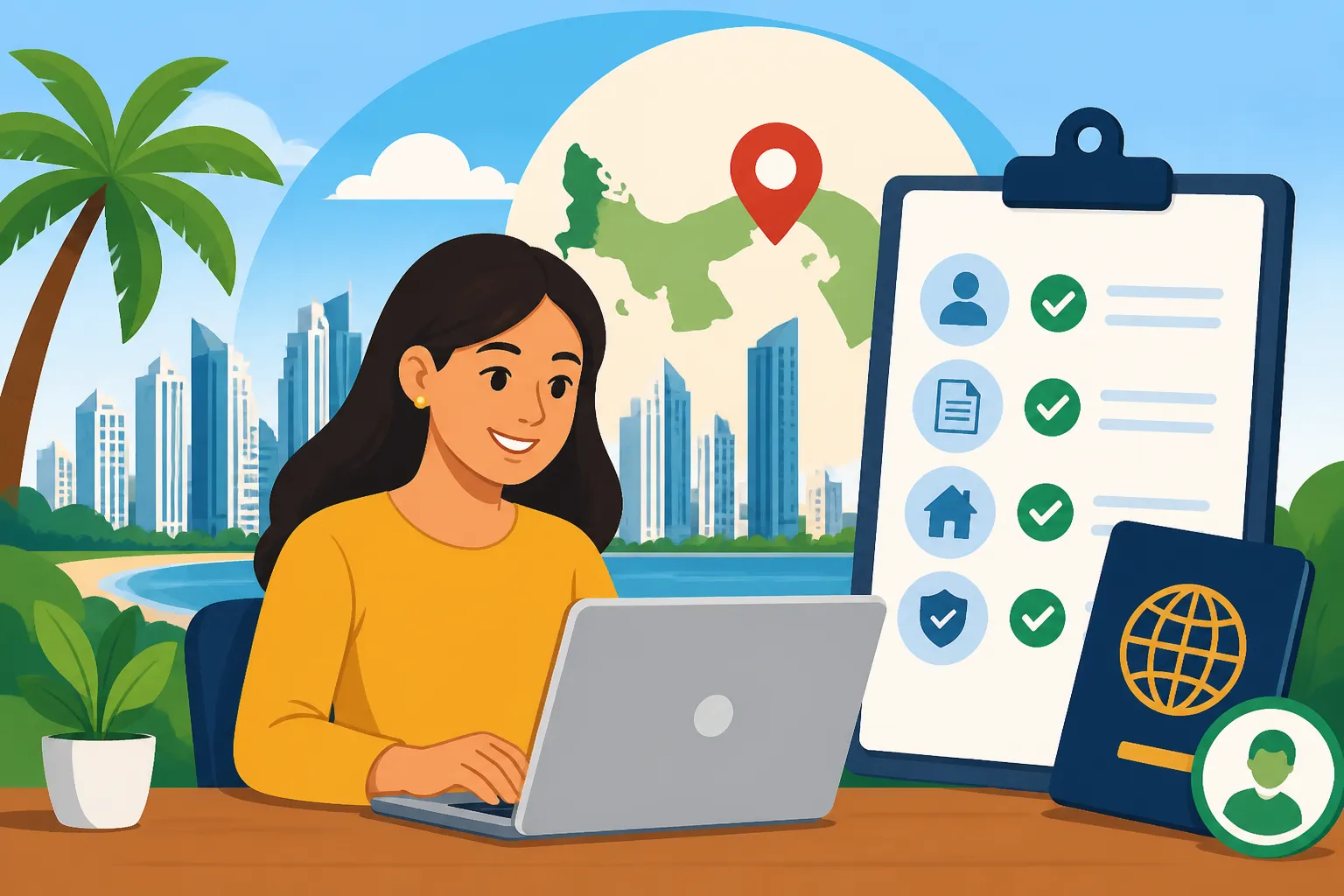
How to Apply for Residency from Inside Panama
It's a common scenario, isn't it? You arrive in Panama, perhaps on a tourist visa, fall head over heels for the place, and suddenly the thought of leaving feels utterly unbearable. Or maybe you came with plans to establish yourself, and now you’re knee-deep in the local rhythm, ready to make it official. The thing is, transitioning from a visitor to a resident when you're already physically in Panama can feel like navigating a bureaucratic labyrinth blindfolded. This guide is here to shine a light on that path, offering you a realistic, step-by-step walkthrough of how to apply for Panamanian residency from right here on the ground.
The Initial Lure of Panama and the Residency Reality Check
Panama has a way of drawing you in. The vibrant city life, the tranquil beaches, the lush rainforests – it's easy to see why so many of us decide to extend our stays beyond a typical vacation. Perhaps you came for a long-term visit, or maybe you explored the idea of retiring here through programs like the Pensionado (Retiree) Visa in Panama. Whatever brought you here, the initial honeymoon phase eventually bumps up against the practicalities of a longer-term stay, especially if you want to work or truly settle down. This is where the topic of residency, and specifically applying for it while you're already on Panamanian soil, becomes paramount.
Understanding Your Current Status and Its Limitations
Before you even think about submitting paperwork, you absolutely need to grasp your current immigration status. Most foreigners enter Panama on a tourist visa, which typically grants a stay of 90 days, though this can vary depending on your nationality. You might have been given a shorter period at immigration, or perhaps you've already requested an extension. The critical point is that a tourist visa does not grant you the right to work, nor does it typically provide a direct, seamless pathway to most residency categories without careful planning. Overstaying your tourist visa, even by a day, can lead to fines and potential complications when you eventually try to regularize your status or even leave the country.
Many expats find themselves in a bit of a pickle here. They arrive, fall in love, and then realize their 90-day stamp is ticking down rapidly. They might even start looking for work, only to discover that working without a proper visa is illegal and fraught with risks. This is why understanding the clock, and being proactive about your next steps, is crucial. If you're contemplating staying longer, you need to transition from a temporary visitor mindset to a long-term residency strategy, and fast. Trying to pull strings or cut corners will almost always backfire, often resulting in more stress, higher costs, and unnecessary delays.
Why Applying from Inside Panama Can Be Tricky
While it’s entirely possible to apply for residency while already present in Panama, it often comes with its own unique set of challenges compared to applying from your home country. For one, if your current visa is expiring or has expired, you might be considered "irregular," which can add complexity and require a special permit to regularize your stay before you can even apply for residency. This permit usually comes with a fine and an additional bureaucratic step. You also need to demonstrate continuous legal presence if you've been in the country for a while, which can be tricky if you've done border runs or overstayed.
Another hurdle is the "paper trail." Many residency applications require documents like criminal background checks, which often need to be sourced from your home country and then apostilled or authenticated. If you're already here, getting these documents can mean relying on family or friends back home, using courier services, or even having to make an unexpected trip back yourself. This adds time, expense, and a layer of logistical stress that could have been avoided with better upfront planning. Plus, finding reliable local resources, from notaries to immigration lawyers, suddenly becomes an urgent task, when it ideally should have been researched well in advance.
Navigating Residency Pathways When Already Here
So, you're in Panama, and you're committed to making it your home. Fantastic! Now, let's talk about the various residency categories available. The good news is that Panama offers several options, but you'll need to figure out which one aligns best with your personal circumstances. It’s not a one-size-fits-all situation, and the path you choose will dictate the documents and financial requirements you’ll need to meet.
Common Visa Categories for In-Country Applicants
For those already exploring Panama, a few residency visas tend to be the most popular choices. The Friendly Nations Visa has long been a favorite, though its requirements have become stricter in recent years. This visa is designed for citizens of specific countries (you'll need to check the most current list, as it changes!) who wish to establish professional or economic ties in Panama, often by creating a company or getting a job. If you're currently exploring job opportunities or thinking of launching a small business here, this might be your route. You can learn more about it in our comprehensive guide, Understanding the Friendly Nations Visa in Panama (2027).
Another highly sought-after option is the Pensionado or Retiree Visa. This one is perfect for those living off a pension or fixed income. It requires a lifetime pension of at least $1,000 USD per month (or $1,250 if you include a dependent). The beauty of this visa is that it comes with several perks, including discounts on various services. For a deep dive into this option, check out The Expat Guide to the Pensionado (Retiree) Visa in Panama (2027). Lastly, for those with more capital, the Qualified Investor Visa (sometimes called the Golden Visa) allows you to gain residency through significant investment in real estate, a fixed-term deposit, or the stock market. Each of these pathways has distinct requirements, so a thorough evaluation of your financial standing and intentions is crucial.
Transitioning from a Tourist to a Resident Status
The fundamental difference when applying for residency from inside Panama is often the need to adjust your existing immigration status. If you arrived as a tourist and your visa is still valid, you can generally proceed directly with a residency application. However, if your tourist visa has expired, you'll first need to process a "change of migratory category" or "regularization" (often called a permiso de regularización or salvoconducto if you've overstayed). This involves paying a fine for each month or fraction of a month you’ve overstayed. It's a penalty, yes, but it’s a necessary step to bring you back into a legal migratory status before the Directorate of Immigration will even look at your residency application.
It's a common misconception that you can simply apply for residency after overstaying for a bit. Panama's immigration department, the Servicio Nacional de Migración, has become increasingly strict. Trying to bypass this regularization step will lead to your residency application being rejected outright. This process also typically requires additional documentation to explain your overstay and confirm your intent to regularize. It adds another layer of paperwork and time, reinforcing the idea that it’s always best to start your residency application well before your current legal stay expires. Many expats, unfortunately, learn this the hard way, leading to frustrating delays and unexpected costs.
The Residency Application Process: A Step-by-Step Guide
Alright, you’ve decided on your visa category and you’re ready to roll up your sleeves. The process of applying for residency in Panama, especially from within the country, requires meticulous attention to detail and a fair bit of patience. It’s not a sprint; it’s a marathon across a hot, sticky obstacle course. Having a clear roadmap will prevent unnecessary detours and potential rejections.
Finding and Retaining a Reputable Immigration Lawyer
This isn't just a suggestion; it's a non-negotiable step. Panama's immigration laws are complex, often change, and are almost always interpreted with nuances that only experienced local lawyers understand. Trying to navigate the system yourself, especially when you're already in the country and might have language barriers, is a recipe for disaster. An immigration lawyer will advise you on the best visa category for your situation, help you gather and review all necessary documents, submit your application, and represent you at the immigration office (Servicio Nacional de Migración). They act as your shield and sword in this bureaucratic battle.
When choosing a lawyer, look for someone with specific experience in expat residency cases. Ask for references and make sure they are a licensed Panamanian attorney. Don't just go for the cheapest option; this is one area where expertise truly pays off. They will be your primary point of contact with immigration, ensuring your documents are correctly translated and authenticated, and guiding you through every appointment. Their fee might seem substantial upfront, but it pales in comparison to the costs of a rejected application, fines for overstaying, or having to leave the country and start over.
Gathering Your Documents and Preparing for Submission
This is where the real legwork begins. Regardless of the visa type, a core set of documents is almost always required for any residency application in Panama. These typically include:
- Passport: A copy of your entire passport, including all pages with stamps and visas. Your passport must be valid for at least six months.
- Background Check/Police Certificate: This is a crucial one. It must be issued by the relevant authority in your country of origin and any country where you’ve lived for more than two years in the last five years. Importantly, this document needs to be apostilled or authenticated by a Panamanian consulate in that country. If you're already in Panama, this is where having someone back home or using a specialized service becomes invaluable. Our guide, How to Get Your Documents Apostilled for Panama Immigration, offers more detail.
- Medical Certificate: Issued by a Panamanian doctor, confirming you are in good health and free of contagious diseases. This must be done in Panama.
- Five Passport-Sized Photos: Specific requirements often apply (e.g., white background, no glasses, specific dimensions).
- Declaration of Personal Background: A sworn statement prepared by your lawyer.
- Economic Solvency Proof: This varies greatly by visa type but generally involves bank statements, proof of pension, or business registration documents.
- Marriage/Birth Certificates: If applying with dependents, these must also be apostilled or authenticated.
Remember, every single foreign document needs to be translated into Spanish by a certified public translator in Panama, and then notarized. This adds another layer of cost and time. Think of it as a detailed treasure hunt – every item must be found, authenticated, and presented perfectly. A mistake here can send you back to square one.
Submitting Your Application to Servicio Nacional de Migración
Once all your documents are prepared, reviewed by your lawyer, and meticulously organized, your lawyer will submit the application to the Servicio Nacional de Migración in Panama City. This typically involves several steps:
- Initial Submission: Your lawyer will present all documents. You will likely need to be present to sign some forms and have your fingerprints taken. At this point, you'll receive a carnet provisional (a temporary residency card) and a visa multiple (multiple entry visa). This temporary card is vital as it legitimizes your stay while your application is being processed and allows you to travel in and out of the country without issues.
- Payment of Government Fees: There are various fees associated with the application, including repatriation fees, application fees, and cédula (ID card) fees. Your lawyer will advise you on the exact amounts, which can change without much notice.
- Interview (Potentially): While not always required, some applicants might be called for an interview with an immigration officer. This is less common for straightforward visas like the Pensionado, but can occur, especially for business-related visas.
- Tracking and Follow-Up: Your lawyer will be responsible for tracking your application and responding to any requests for additional information from immigration. This follow-up process can take months, so patience is truly a virtue. This is also where the importance of a good lawyer comes in, as they can often expedite or clarify issues that would be impenetrable to a layperson.
Key Considerations for In-Country Applicants
Applying from inside Panama certainly streamlines some aspects, like getting your medical certificate done locally. However, it also introduces specific challenges that need careful planning and execution. It's not just about ticking boxes; it's about strategizing your move to ensure legal continuity.
The Role of Health Insurance in Your Application
Health insurance is not just a good idea in Panama; for many residency categories, it's a mandatory requirement. While some visas might not explicitly list it as a document needed for the initial application, having comprehensive health coverage is absolutely essential for your peace of mind and financial security here. Panama has a dual healthcare system: the public Caja de Seguro Social (CSS) and a robust private sector. As an expat, especially during your residency application phase, private health insurance is highly recommended. Many international providers, like Cigna Global, offer excellent plans that cover you both in Panama and internationally.
When considering your health insurance options, look for plans that cover you from day one, ideally with good outpatient and inpatient benefits. While you might be able to get a local Panamanian policy once your residency is approved, having an international plan during the waiting period is smart. It covers emergencies, unexpected illnesses, and ensures you have access to top-tier private hospitals in Panama City like Hospital Punta Pacifica or Hospital Nacional, should you need them. Remember, relying solely on public healthcare without being properly registered with CSS can be a frustrating and slow experience. Our guide to Health Insurance in Panama: Private and International Options Explained can help you weigh your choices.
Financial Solvency and Local Bank Accounts
Demonstrating financial solvency is a cornerstone of almost every residency application. This typically involves providing bank statements, proof of income, or details of investments. When applying from within Panama, opening a local bank account becomes crucial, not just for proof of funds but also for managing your day-to-day finances. However, opening a bank account as a foreigner, especially without an established residency or a cédula, can be surprisingly challenging. Panamanian banks are very strict with their "Know Your Customer" (KYC) regulations.
You'll usually need a recommendation letter from your current bank (if abroad), proof of address in Panama, and sometimes even a utility bill in your name. Major banks like Banco General or Banistmo are generally expat-friendly, but the process can still be slow and require persistence. Your immigration lawyer can sometimes assist with introductions or by providing letters verifying your residency application is in progress. Having funds accessible in a local account can significantly smooth out the financial proof aspect of your residency application. For detailed guidance, refer to The Expat Guide to Opening a Bank Account in Panama.
Avoiding Overstays and Maintaining Legal Status
We touched on this earlier, but it bears repeating: avoiding an overstay is paramount. If your tourist visa is nearing its expiration date and your residency application hasn't been submitted, you should consult with your lawyer immediately about your options. In some cases, depending on your nationality and the specifics of your intended visa, it might be possible to request a visa extension. However, this is not guaranteed and often involves its own application process and fees.
The best-case scenario is to submit your residency application before your tourist visa expires. Once your application is formally submitted, and you receive your carnet provisional and visa multiple, you are then considered legally present in Panama while your application is processed. This temporary status allows you to stay in the country, even if the processing takes many months. This is why having all your documents ready, and a lawyer engaged well in advance of any expiry dates, is critical. Being proactive can save you a world of stress, potential fines, and complications with future immigration processes.
What Happens While You Wait? Life During the Processing Period
The waiting game for Panamanian residency can feel agonizingly long. It's not uncommon for the entire process, from initial submission to receiving your permanent residency card (cédula), to take anywhere from 6 to 18 months, sometimes even longer depending on the complexity of your case and the current workload at immigration. During this time, you’ll be living in Panama, holding your temporary documentation.
The Provisional Residency Card (Carnet Provisional) and its Uses
Once your application is initially submitted and accepted by the Servicio Nacional de Migración, you will be issued a carnet provisional, or provisional residency card. This is a small, usually laminated card that explicitly states your application is in process and grants you legal temporary residence. Alongside this, you'll also typically receive a visa multiple, which allows you to exit and re-enter Panama multiple times without needing a new tourist visa stamp, which is incredibly useful for those inevitable trips back home or regional travel.
This provisional card is your official proof of legal status in Panama. Carry it with you, as it's what you'll show if ever questioned by authorities. It allows you to legally reside in the country while you await the final decision on your permanent residency. However, it's important to note that the provisional card does not automatically grant you the right to work in Panama. If you are applying for a work-permit-eligible visa, your lawyer will often process a separate work permit application concurrently or immediately after you receive your provisional card. This is a key distinction that many new residents miss, leading to potential issues if they start working prematurely. For more on this, look into Can I Work in Panama While Waiting for My Residence Permit?.
Navigating Daily Life: Banking, Driving, and Services
With your carnet provisional in hand, much of your daily life becomes easier. You can use this document as proof of legal presence when dealing with various services. For example, if you initially had trouble opening a local bank account, having your provisional card can often smooth the process with banks like Banco General or Banistmo, as it signifies your long-term intent and legal status. This allows you to set up local bill payments, transfer money more easily, and integrate financially into Panamanian society.
When it comes to driving, your carnet provisional is a stepping stone. While you can often drive on your foreign driver's license for a certain period (usually 90 days after each entry), with your provisional residency, you are on your way to obtaining a Panamanian driver's license. This is another crucial step for long-term residents and can be initiated once you have your temporary documentation. You'll likely need to pass a practical driving test and vision test, but having your legal status sorted is the first hurdle. For shipping additional household goods, even if you are already in Panama, companies like Sirelo, which specialize in international relocations, can be a great resource for getting quotes and managing logistics for bringing over those items you've decided you can't live without. This is where your long-term planning truly starts to pay off.
What Happens When You Get Approved: The Cédula
The day your lawyer calls with the news that your permanent residency has been approved is a truly triumphant moment! The final step in this journey is obtaining your cédula, which is Panama's national identification card and your proof of permanent residency. Your lawyer will guide you through the process of getting this card, which involves another visit to the Servicio Nacional de Migración (or sometimes a regional office of the Electoral Tribunal) to have your photo taken and fingerprints recorded for the official ID.
The cédula is your official identity in Panama. You'll use it for everything from opening new bank accounts, signing contracts, accessing public services, to simply proving who you are. It replaces your provisional card and is a symbol of your successful integration into Panamanian life. It's truly a moment to celebrate! For more on this final step, check out How Do I Get My Cedula (Residency ID) in Panama?. From this point onward, you are officially a permanent resident, with all the rights and responsibilities that entails.
Understanding Potential Pitfalls and How to Avoid Them
While applying for residency from within Panama offers the convenience of already being here, it’s not without its potential stumbling blocks. Being aware of these common issues and proactively addressing them can save you immense stress, time, and money.
Dealing with Expired Tourist Visas and Fines
This is by far one of the most common pitfalls for expats who decide to apply for residency after arriving. It’s easy to lose track of time or underestimate the bureaucratic speed of a new country. If your tourist visa has expired before you’ve formally submitted your residency application, you will incur fines for each month, or fraction thereof, that you have overstayed. These fines are paid directly to the Servicio Nacional de Migración and are a mandatory step to legalize your status before your residency application can even be considered.
To avoid this, set calendar reminders for your visa expiration date as soon as you arrive. Better yet, start consulting with an immigration lawyer within your first month if you're seriously considering residency. A proactive approach means you can potentially submit your application while your tourist visa is still valid, thereby avoiding fines and the added complication of regularization. Always communicate openly and honestly with your lawyer about your arrival date and any previous extensions or border runs you might have made, as transparency is key to navigating any potential issues.
Document Apostille and Translation Hurdles
As mentioned earlier, securing apostilled or authenticated documents from your home country while you are physically in Panama can be a significant logistical challenge. Imagine needing a police certificate or a marriage certificate from back home, and realizing it needs a special seal from a government office or consulate that isn't in Panama. This often requires relying on family, friends, or specialized services to obtain and process these documents for you, then shipping them to Panama. The cost and time involved can be considerable, and any errors in the process can lead to rejections or further delays.
Therefore, if you have even a glimmer of an idea that you might want to apply for residency in Panama, it’s highly advisable to gather and apostille all potentially necessary documents (birth certificates, marriage certificates, police certificates, academic transcripts) before you leave your home country. This pre-emptive step can significantly cut down on stress, cost, and processing time once you're on the ground in Panama. If you’re already here, start this process immediately, utilizing reliable courier services and potentially international legal document services to assist.
The Importance of Staying Informed About Law Changes
Panama's immigration laws are not static. They can, and do, change. The Friendly Nations Visa, for example, has seen significant revisions over the years, impacting eligibility and requirements. What was true yesterday might not be true tomorrow. This constant evolution is another reason why having a competent and up-to-date immigration lawyer is not just a luxury but a necessity. They are the ones who monitor these changes and can advise you on how they might affect your application or your chosen residency pathway.
Relying solely on old forum posts or outdated blogs for immigration advice can lead you down the wrong path. While expat communities are invaluable for support and shared experiences, always cross-reference critical legal information with a licensed Panamanian immigration attorney. Staying informed means being prepared for any shifts in policy and ensures that your application meets the very latest requirements set forth by the Panamanian government.
Disclaimer
The information provided in this article is for general guidance and informational purposes only, and does not constitute legal, financial, or immigration advice. Panamanian laws and regulations, particularly concerning immigration, are subject to change. It is essential to consult with a qualified Panamanian immigration attorney for advice tailored to your specific situation. We strongly recommend seeking professional counsel before making any decisions related to your residency or legal status in Panama.