Is Cryptocurrency Taxed in Panama?
The world of cryptocurrency can feel like the Wild West even in your home country, but when you add the layers of a new tax system in a foreign land like Panama, it becomes an entirely different beast. Many of us expats find ourselves scratching our heads, wondering if our digital assets are going to bite us come tax season. This comprehensive guide will demystify the taxation of cryptocurrency in Panama, helping you understand how Panama's unique territorial tax system applies to your crypto holdings and activities.
Understanding Panama's Territorial Tax System and Cryptocurrency
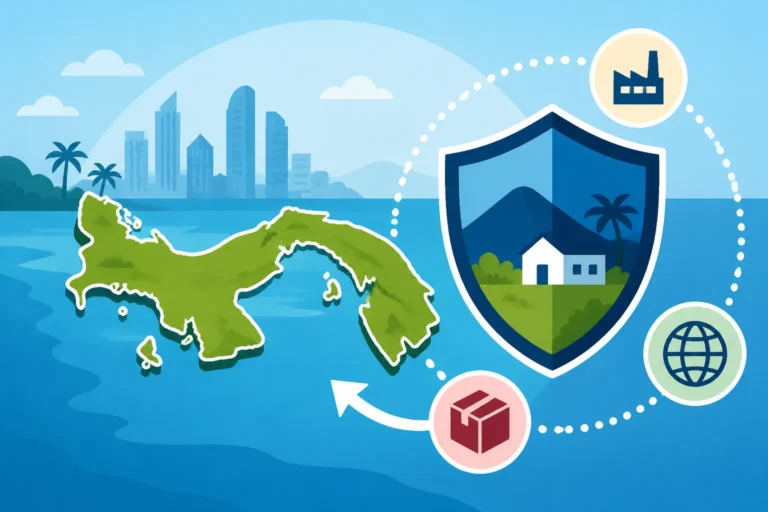
Let's cut right to the chase: Panama operates under a territorial tax system. This is often one of the biggest draws for expats, and it's absolutely crucial for understanding how your cryptocurrency might be taxed here. It means that generally, only income generated within Panama is subject to Panamanian income tax. Income derived from foreign sources, even if you are a resident of Panama, is typically not taxed. But what does "generated within Panama" truly mean when we're talking about something as borderless as cryptocurrency?
The Core Principle: Source of Income Matters
Imagine you're sitting on your balcony overlooking the Pacific, sipping your morning coffee, and making a trade on a crypto exchange based in, say, Estonia. The funds for that trade came from an account in your home country, and the profits are realized on that foreign exchange. Under Panama's territorial tax system, the key question isn't where you are physically sitting when you make the trade, but rather where the economic activity generating that income originates. If the actual source of the income, the service provided, or the asset generating the gain is truly outside of Panama, then it typically falls outside the scope of Panamanian income tax.
This principle is what makes Panama so attractive to digital nomads and those with international businesses. It's designed to promote local economic activity by taxing it, while not penalizing income that has no direct connection to the Panamanian economy. It's a fundamental difference from residence-based tax systems that many of us come from, where your worldwide income is taxed simply because you live there. For a deeper dive into this, you might want to read our guide on how Panama's Tax System Works: Territorial Taxation Explained (2026).
How This Applies to Your Crypto Gains
Now, let's translate that territorial principle to your crypto activities. If you're buying, selling, or trading cryptocurrencies on international exchanges, and the underlying assets and platforms are not based or operating within Panama, your capital gains or profits from these activities are generally considered foreign-sourced income. This means they would typically not be subject to income tax in Panama. This is a significant advantage for many crypto enthusiasts and investors living here.
However, it's not a free-for-all, and there are important distinctions to be made. For instance, if you establish a full-fledged crypto business in Panama, with employees, offices, and services rendered to clients physically located in Panama, then the income generated from those specific Panamanian operations would indeed be considered Panama-sourced and thus taxable. The DGI (Dirección General de Ingresos), Panama's tax authority, is primarily concerned with economic activities that directly benefit from and contribute to the local Panamanian economy.
Navigating the Nuances of Crypto Activities and Tax Implications
The world of crypto isn't just about buying and selling Bitcoin. There's staking, mining, DeFi, NFTs, and a whole host of other activities. Each of these needs to be considered through the lens of Panama's territorial tax system. It's easy to get lost in the jargon, but the core question remains: where is the income truly being generated?
Trading, Staking, Mining: Different Activities, Different Considerations
- Trading (Buying/Selling for Capital Gains): As discussed, if you're using international exchanges and platforms, your capital gains are generally considered foreign-sourced. This is the most common scenario for individual investors. You're not providing a service in Panama; you're simply engaging in investment activity on a global market.
- Staking Rewards: Staking involves locking up your cryptocurrency to support the operations of a blockchain network, for which you receive rewards. If your staking operations are entirely passive, managed on a foreign platform, and the rewards are generated from a global network, these rewards would likely be viewed as foreign-sourced income. However, if you set up a large-scale staking operation in Panama that requires significant local infrastructure, energy, and management, and perhaps serves a local client base, the waters become murkier. The crucial aspect is whether there's a tangible economic activity happening on Panamanian soil that generates the income.
- Mining Operations: This is where it gets particularly interesting. If you have a mining farm or even just a few mining rigs running in Panama, consuming Panamanian electricity, using Panamanian internet, and potentially requiring local maintenance or staffing, the income generated from these operations would very likely be considered Panama-sourced. This is because the physical infrastructure and the direct consumption of local resources are directly contributing to the generation of that income within the country. In such a scenario, you'd be looking at registering with the DGI, potentially paying income tax, and possibly even ITBMS (VAT) if your operations cross certain thresholds. If you're running a substantial operation, you'd want to consult with a specialist like those at Taxes for Expats to ensure full compliance.
- DeFi and Yield Farming: Similar to staking, if these activities are conducted on foreign decentralized platforms, and the yield or rewards are generated from a global pool of assets, the income is generally considered foreign-sourced. Again, the litmus test is whether there's a specific, identifiable economic activity within Panama generating that specific income.
- NFT Sales: Selling NFTs you've created or acquired. If you're a digital artist living in Panama, creating NFTs, and selling them on international marketplaces to a global audience, that income is likely foreign-sourced. If you set up a gallery in Panama to sell NFTs to local customers, that would be different.
The table below illustrates some common crypto activities and their likely tax classification under Panama's territorial system. Remember, these are general interpretations, and specific circumstances can always change the outcome.
| Crypto Activity | Typical Source of Income | Panamanian Income Tax Implication | Key Factor for Classification |
|---|---|---|---|
| Individual Trading | Foreign | Generally Not Taxable | Exchange/platform location, non-Panamanian counterparties |
| Passive Staking | Foreign | Generally Not Taxable | Platform location, global network, no local infrastructure |
| Large-Scale Mining Farm | Panama | Likely Taxable | Physical presence of equipment, local resource consumption (electricity, internet), local management |
| Crypto-Related Business | Panama/Foreign | Potentially Taxable | Where services are rendered, where clients are located, local employees/office |
| NFT Creation & Sale | Foreign | Generally Not Taxable | Marketplace location, global audience |
When Does Crypto Income Become "Panama-Sourced"?
This is the million-dollar question, and it’s where a lot of expats get confused. Simply having a Panamanian bank account that you use to transfer fiat currency after you've realized crypto gains on a foreign exchange doesn't automatically make that gain Panama-sourced. The income itself needs to originate from an activity within Panama.
Here are some scenarios that would likely trigger Panama-sourced income:
- Operating a Crypto Exchange or Brokerage in Panama: If you set up a company in Panama that facilitates crypto trading for local clients, charging fees or commissions, those fees are Panama-sourced.
- Providing Crypto-Related Services Locally: If you offer consulting services on blockchain technology, develop smart contracts for Panamanian businesses, or manage crypto portfolios for clients living in Panama from an office here, the income from these services would be Panama-sourced.
- Large-Scale Mining with Local Infrastructure: As mentioned, significant mining operations that rely on Panamanian electricity, internet, and physical presence are highly likely to be considered Panama-sourced income.
- Accepting Crypto Payments for Local Goods/Services: If you run a local business (e.g., a restaurant, a tour operator, a retail store) in Panama and accept cryptocurrency as payment for your goods or services, the income from those sales is Panama-sourced, just as if you had accepted USD. The fact that the payment was in crypto doesn't change the source of the income, which is the local sale of goods or services.
It’s crucial to understand this distinction. Many people mistakenly think that if they reside in Panama, any income they earn, including crypto, somehow becomes Panama-sourced. That’s not how the territorial tax system works. Your physical location is relevant for establishing tax residency, but the source of the income is determined by where the economic activity generating that income takes place. To understand more about what gets taxed, you might want to look into Understanding Income Tax in Panama (2026).
Practical Steps for Expats: Staying Compliant and Prepared
Even if most of your crypto gains are foreign-sourced, it's never a bad idea to be prepared and understand what might be required of you. The world of crypto and tax law is constantly evolving, and what's true today might have new considerations tomorrow. The Panamanian government, like many others, is still developing its stance on various aspects of digital assets.
Record-Keeping: Your Best Friend in Panama
This cannot be stressed enough: keep meticulous records. Regardless of whether your crypto income is currently taxable in Panama, good record-keeping is vital for several reasons:
- Proving Foreign Source: If the DGI ever questions the source of your income, detailed records will be your primary defense. This includes transaction histories from exchanges, screenshots of foreign platform accounts, records of initial capital contributions (especially if from foreign bank accounts), and any documentation proving the non-Panamanian nature of your crypto activities.
- Future Changes: Tax laws can change. Panama could introduce specific crypto taxes or modify its interpretation of "source" in the future. Having clear records will make it much easier to adapt and comply with any new regulations.
- Compliance in Your Home Country: Even if Panama doesn't tax your foreign-sourced crypto gains, your home country might. Many countries operate on a worldwide income tax system, meaning you might still owe taxes there. Good records are essential for your obligations back home, and they can sometimes help you claim foreign tax credits if you do end up paying taxes in both jurisdictions (though this is less common with Panama's territorial system).
- Peace of Mind: Knowing you have all your ducks in a row can alleviate a lot of expat anxiety.
Your records should ideally include:
- Dates of all transactions (buy, sell, trade, stake, mine).
- Amounts and types of cryptocurrency involved.
- Fiat currency equivalents at the time of transaction.
- Wallet addresses and exchange names.
- Costs basis for acquisitions.
- Any fees incurred.
Seeking Professional Advice: When to Call in the Experts
While the general principle of territorial taxation provides a good framework, the specifics of your situation might be more complex. This is especially true if you are:
- Running a crypto-related business in Panama.
- Engaging in large-scale mining operations here.
- Receiving a significant portion of your income from crypto activities that could arguably have a Panamanian nexus.
- Unsure about the "source" of specific crypto income streams.
In these scenarios, it’s absolutely prudent to consult with a Panamanian tax lawyer or an accountant specializing in international taxation and cryptocurrency. Firms like Taxes for Expats have experience navigating these complex cross-border issues and can provide tailored advice to ensure you're fully compliant. They can help you properly register with the DGI if needed and understand your filing obligations. Remember, ignorance of the law is not an excuse. While Panama's tax system is favorable for foreign-sourced income, it’s not an excuse to be lax about understanding your obligations. For those looking to set up their tax affairs correctly, learning how to Register with the DGI (Direccion General de Ingresos) in Panama is a good starting point.
Important Considerations Beyond Income Tax
Beyond the question of income tax, there are a couple of other areas where cryptocurrency might intersect with Panamanian regulations or financial practices. While Panama is largely crypto-friendly in terms of income tax, it’s not entirely unregulated.
ITBMS (VAT) and Crypto Transactions
ITBMS, Panama's equivalent of VAT or sales tax, is generally applied to the sale of goods and services within Panama. For most individual crypto investors, buying and selling crypto on international exchanges doesn't involve ITBMS because it's not considered a "good" or "service" rendered in Panama in the traditional sense, and it's not a local retail transaction.
However, if you are operating a business in Panama that provides crypto-related services (e.g., a crypto consulting firm, a blockchain development company) or sells goods for crypto within Panama, then you would be subject to ITBMS on the services or goods provided, just like any other business. The medium of payment (fiat or crypto) doesn't change the underlying taxability of the service or good itself if it’s Panamanian-sourced. Businesses that meet certain revenue thresholds are required to register for ITBMS and remit it to the DGI.
Reporting Obligations and Future Regulations
Currently, there are no specific broad reporting requirements for individual crypto holdings for tax purposes in Panama, especially if the income is considered foreign-sourced. However, financial institutions in Panama are subject to anti-money laundering (AML) and know-your-customer (KYC) regulations. If you're converting large amounts of crypto to fiat and transferring them into a Panamanian bank account, expect your bank to ask questions about the source of those funds. This isn't a tax issue per se, but a regulatory one designed to prevent illicit financial activities. Using services like Wise to manage international transfers can be beneficial, but be prepared for source-of-funds inquiries wherever you bank.
It's also essential to stay abreast of potential future regulations. Globally, governments are increasingly looking at ways to regulate and potentially tax cryptocurrencies. While Panama has historically maintained a pro-business and low-tax environment for foreign-sourced income, no jurisdiction is immune to global trends or financial pressures. Monitoring official announcements from the DGI and staying connected with expat tax professionals will help you stay ahead of any changes. Keeping an eye on "The Complete Guide to Taxes in Panama for Expats (2026)" can provide ongoing context.
In summary, for most expats primarily engaged in personal crypto investing and trading on foreign platforms, Panama's territorial tax system means your gains are likely foreign-sourced and therefore not subject to Panamanian income tax. However, if your crypto activities involve a physical presence, local services, or direct contribution to the Panamanian economy, the situation changes, and you'll need to ensure full compliance with local tax laws. It's a fantastic advantage for expats, but understanding the details is key to enjoying it without stress.
Disclaimer
The information provided in this article is for general informational purposes only and does not constitute legal, financial, or tax advice. While we strive for accuracy, tax laws and regulations can change and vary based on individual circumstances. It is essential to consult with a qualified Panamanian tax professional or legal advisor for advice tailored to your specific situation.