Why Does Panama Use the US Dollar?
Alright, let's talk about something that throws almost every newcomer for a loop when they first arrive in Panama: the money! You land, you hit an ATM, and out come crisp US dollar bills. You go to a store, prices are in dollars. Then someone mentions "Balboas" and suddenly you're wondering if you missed a memo. It's confusing, frustrating even, trying to navigate a country that seemingly has its own currency but doesn't actually use it in the way most places do. This guide is here to untangle that mystery, explain the unique history of Panama's monetary system, and tell you exactly what to expect when it comes to cash in your pocket here.
A Brief History: How Panama Became Dollarized
Panama's relationship with the US dollar isn't some recent economic trend; it's a deep-seated historical bond that dates back to the very foundation of the republic. For expats, understanding this history isn't just a fun fact – it actually helps you grasp why things work the way they do here and why financial stability is such a hallmark of Panamanian life.
The French Attempt and US Intervention
Before Panama was an independent nation, it was a department of Colombia, and even before that, a strategic transit point. The idea of a canal through the Isthmus of Panama captivated global powers for centuries, but it was the French, led by Ferdinand de Lesseps (the man behind the Suez Canal), who first seriously attempted to build it in the late 19th century. Their efforts, however, were plagued by disease, engineering challenges, and financial mismanagement, ultimately failing spectacularly.
This failure set the stage for the United States. With growing global ambitions, especially after the Spanish-American War, the US saw the strategic imperative of controlling a canal. When Colombia proved difficult to negotiate with for the rights to build and control the canal, the US, under President Theodore Roosevelt, played a pivotal role in supporting Panama's independence movement in 1903. This wasn't altruism; it was strategic. The Hay-Bunau-Varilla Treaty, signed shortly after Panama declared independence, granted the US perpetual rights to a strip of land known as the Panama Canal Zone. This treaty was highly controversial, but it cemented the US's economic and political influence in the nascent republic.
The Balboa and the US Dollar: A Unique Coexistence
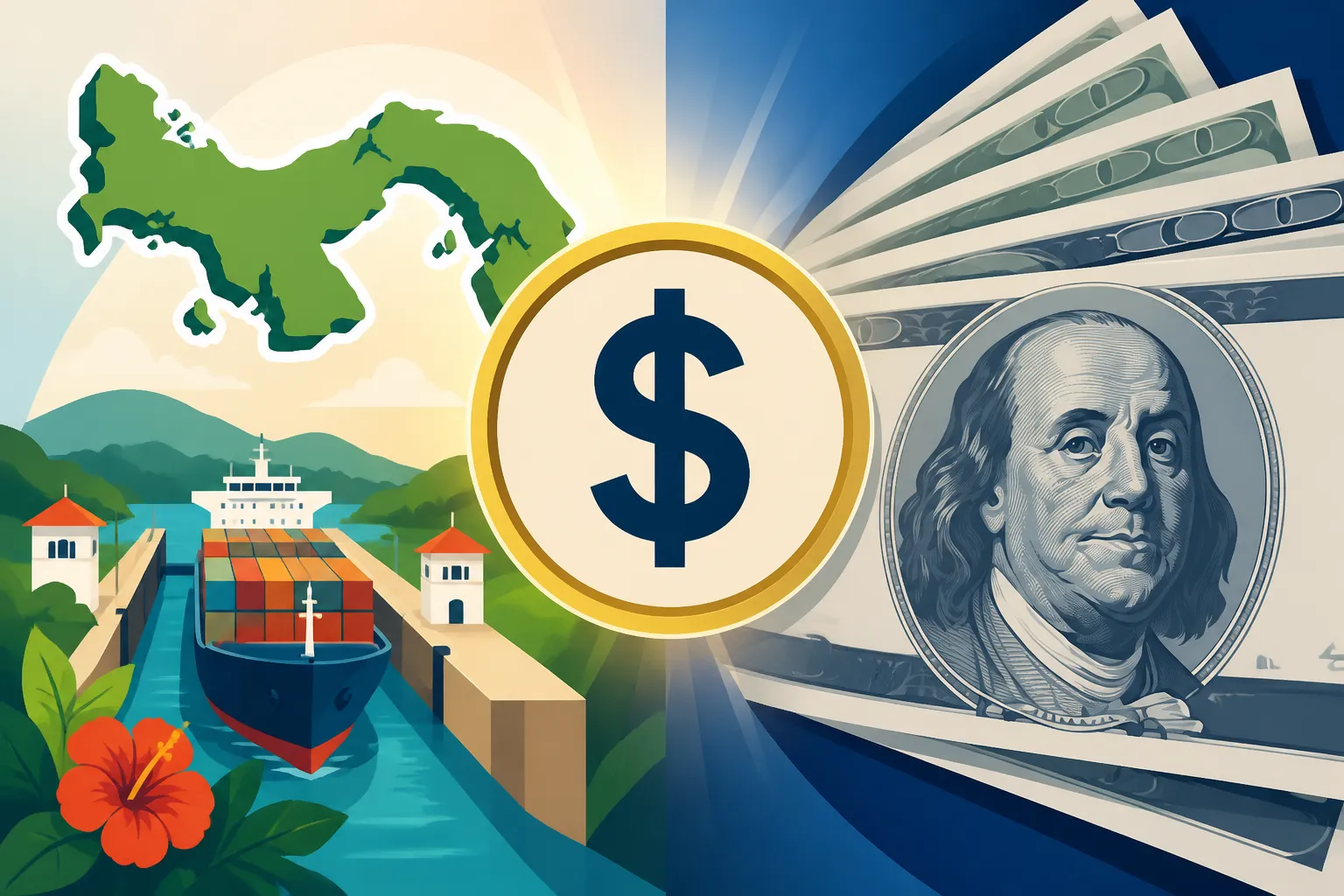
The story of Panama's currency begins almost immediately after its independence. In 1904, just a year after breaking from Colombia, the newly formed Republic of Panama adopted the Balboa as its official currency. Named after Vasco Núñez de Balboa, the Spanish explorer who "discovered" the Pacific Ocean, this new currency was established at a fixed rate of 1:1 with the US dollar.
But here's the crucial, often-misunderstood part: while Panama has an official currency, the Balboa, it has never issued its own paper money. From day one, the US dollar was decreed legal tender and allowed to circulate freely alongside Panamanian coins. The Balboa exists only in coin form, specifically in denominations corresponding to US cents (1 centavo, 5 centavos, 10 centavos, 25 centavos, 50 centavos, and sometimes $1 Balboa coins). So, essentially, Panama uses US dollar bills for all paper transactions and Balboa coins (or US coins, which are interchangeable) for change. This system, known as full dollarization, means that the US Federal Reserve, not Panama's National Bank, controls the supply of paper money circulating in the country. It's a truly unique setup that has characterized Panama's economy for over a century.
Economic Stability and Historical Context
The decision to fully dollarize wasn't made lightly, nor has it been without its critics over the years. However, its primary purpose and most enduring legacy have been economic stability. In a region often plagued by rampant inflation, currency devaluations, and financial uncertainty, Panama has largely sidestepped these issues thanks to the stability of the US dollar.
Think about it: by hitching its wagon to the world's most powerful reserve currency, Panama effectively outsourced its monetary policy to the US Federal Reserve. This eliminated the risk of hyperinflation, a scourge that has devastated economies in many neighboring countries. For businesses, this meant predictable costs and revenues, making long-term planning much simpler. For everyday Panamanians and expats alike, it meant their savings weren't constantly being eroded by a depreciating local currency. This stability has been a huge draw for international business and has undoubtedly contributed to Panama's success as a regional financial and logistics hub, and a magnet for expats seeking a more secure financial environment. It’s part of why you’ll see so many international companies thriving here, alongside local enterprises. When considering your finances here, it simplifies things greatly, for example, when looking at something like Understanding Why Foreign Income Is Not Taxed in Panama (2026).
The Practicalities of Daily Life: What Expats See and Use
When you move to Panama, the theoretical aspects of dollarization quickly become everyday reality. You'll find yourself seamlessly using US dollars for virtually everything, even as you encounter Panamanian coins. This blend is something you quickly adapt to, but it's good to know what to expect from the get-go.
Coins vs. Bills: Understanding What's in Your Wallet
This is where the rubber meets the road. In your daily life in Panama, all paper money you handle will be US dollar bills: the familiar one-dollar bills, fives, tens, twenties, fifties, and hundreds. These are indistinguishable from the bills you'd use in the United States.
However, when it comes to coins, things get interesting. Panama mints its own coins, the Balboas, which are exactly the same size, weight, and metallic composition as their US cent counterparts. A Panamanian 10-cent coin is physically identical to a US dime, a 25-cent coin to a US quarter, and so on. They even fit into vending machines or coin slots interchangeably. You'll hear Panamanians refer to these as "centavos" just as often as "cents." The only real difference is the imagery – Panamanian historical figures and national symbols instead of American ones. You might even come across a Panamanian $1 Balboa coin, often nicknamed a "Martinelli" after the president who introduced them, which is the same size as a US dollar coin (though less common in daily circulation than the paper $1 bill). Similarly, Panama issues a 50-centavo coin, which is roughly the size of a US half-dollar, though again, it's not super common to receive in change unless you're making a large purchase.
So, don't be surprised when you pay with a $5 bill and get a mix of US quarters and Panamanian 10-centavo pieces back. It's all the same value!
Shopping, Banking, and Transactions
Everything, and I mean everything, in Panama is priced in US dollars. Whether you're buying groceries at a Supermercado Rey or Super Xtra, ordering coffee at a local café in Casco Viejo, or paying for a taxi, the displayed prices are effectively in USD. There's no mental conversion needed; the numbers you see are the dollars you pay.
When it comes to banking, it's equally straightforward. ATMs across the country dispense US dollars. If you're setting up a local account, you'll be opening a US dollar account. Major banks like Banco General, Banistmo, and Davivienda all operate in USD. If you're looking into The Expat Guide to Opening a Bank Account in Panama, this seamless integration of the dollar makes the process much less daunting than in countries with volatile local currencies. You can easily manage your funds knowing their value won't suddenly plummet overnight.
For international money transfers, many expats still rely on services like Wise (formerly TransferWise) to move funds from their home country to their Panamanian bank accounts. While the local currency isn't a factor, Wise often offers more competitive exchange rates for converting funds into USD from other currencies (like Euros, Pounds, Canadian Dollars) before they hit your Panamanian account, compared to traditional bank transfers. This becomes really important when you need to How to Transfer Money Into and Out of Panama as an Expat. For daily spending, most places accept credit and debit cards, but having some cash is always a good idea, especially in smaller towns or for street vendors.
Dealing with Foreign Currency
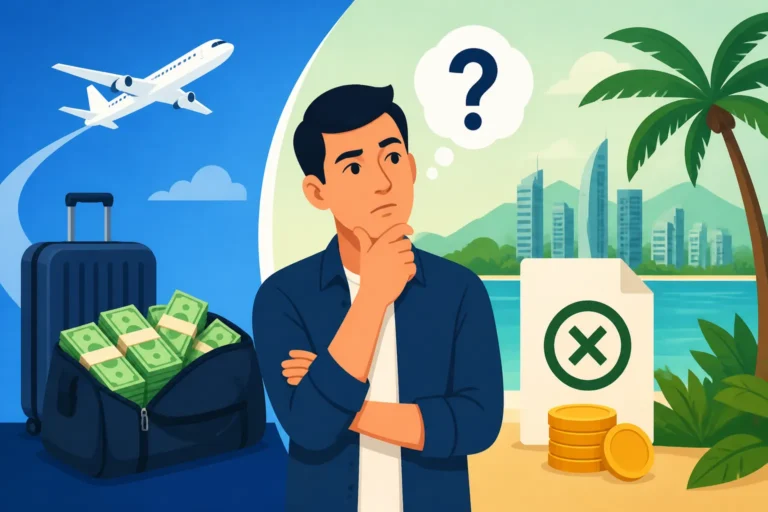
A common question for new arrivals is, "What if I bring Euros or Canadian dollars?" The honest answer is: don't. While Panama is a hub for international business, exchanging non-USD foreign currency can be surprisingly difficult and expensive outside of the main international banks in Panama City. Unlike many tourist destinations where currency exchange kiosks are plentiful, they are not a common sight in Panama because everyone just uses USD.
If you arrive with another currency, your best bet is to go to a major bank (like Banco General or Global Bank) in a major city like Panama City, where they might offer exchange services, but the rates will likely be poor. It's almost always more economical to convert your funds to US dollars before you arrive in Panama, or to use an international debit card at a Panamanian ATM to withdraw USD directly, especially if your bank offers favorable international withdrawal rates. This is a critical piece of advice for managing The Complete Guide to Cost of Living in Panama for Expats (2026) as unnecessary exchange fees can quickly add up.
The Economic Implications of Dollarization
Panama's dollarized economy isn't just a historical curiosity; it has profound and lasting impacts on the country's economic landscape, affecting everything from inflation rates to investment decisions. As an expat living here, these implications translate directly into your financial stability and the overall cost of living.
Advantages for Panama's Economy and Expats
The most immediate and tangible benefit of dollarization is the elimination of exchange rate risk. For businesses engaged in international trade and for foreign investors, not having to worry about a fluctuating local currency against the dollar is a massive advantage. Imagine planning a large investment only to have your projections decimated by a sudden 20% devaluation of the local currency – that simply doesn't happen in Panama. This predictability encourages foreign direct investment, which is a significant driver of Panama's economy.
For expats, this means your pension or foreign income, which is often in USD or easily converted to it, maintains its purchasing power without the constant stress of currency conversion losses. When you budget for something like How Much Does It Cost to Rent an Apartment in Panama City in 2026?, you know exactly what your dollars are worth.
Another significant advantage is inflation control. By importing the US dollar, Panama essentially imports the US's inflation rate. While this isn't always zero, it tends to be much lower and more stable than what many developing countries experience. This protects savings and helps maintain the value of wages. The fixed parity also means lower interest rates, as lenders don't have to factor in currency devaluation risk into their loan terms. This makes borrowing more affordable for businesses and individuals, stimulating economic growth. Panama's reputation as a reliable financial center, attracting major international banks and businesses, is heavily underpinned by its stable, dollarized economy. This contributes to the robustness of local institutions like Understanding the Difference Between Banistmo, Banco General and Other Banks.
Challenges and Criticisms
While dollarization brings undeniable benefits, it's not without its drawbacks. The primary challenge is Panama's lack of independent monetary policy. The National Bank of Panama cannot print money, devalue the currency, or adjust interest rates to stimulate the economy during a downturn. Its hands are tied to the decisions of the US Federal Reserve. If the US economy enters a recession, Panama is significantly impacted, even if its own internal economic fundamentals are strong. Similarly, if the US Federal Reserve raises interest rates to combat inflation, Panama's interest rates will also rise, regardless of local economic conditions.
Another point of criticism is the loss of seigniorage revenue. Seigniorage is the profit a government makes from issuing currency. Since Panama doesn't print its own paper money, it foregoes this revenue stream. While not crippling, it's a source of income that other sovereign nations enjoy. There's also a vulnerability to US economic shocks and inflation. If the US experiences high inflation, Panama will too, as the cost of imported goods (priced in USD) will rise. This means local authorities have fewer tools to mitigate such external pressures, relying more on fiscal policy (government spending and taxation) to manage the economy.
The Future of Panama's Monetary System
Given its long history and the deeply ingrained nature of the US dollar in every facet of Panamanian life, a significant shift away from dollarization seems highly unlikely in the foreseeable future. The system has served Panama well, providing a bedrock of financial stability that has allowed it to grow into the regional economic powerhouse it is today. While there are always academic discussions and minor political debates, the practical benefits, especially in terms of low inflation and ease of international trade, largely outweigh the perceived disadvantages for most Panamanians and the business community.
Any move to de-dollarize would be a monumental undertaking with enormous risks, potentially undermining the very stability that Panama has cultivated for over a century. For expats, this means you can comfortably plan your financial life here, whether you're dealing with How Do I Get an RUC (Tax ID) as a Foreigner in Panama, figuring out How Do I Pay My Income Tax in Panama?, or even Filing Your Tax Return with the DGI in Panama: The Complete Walkthrough (2027) knowing that the currency itself is one less thing to worry about. The dual-currency system, where the Balboa coexists perfectly with the US dollar, is a fundamental and likely permanent characteristic of this vibrant country.
Here's a quick reference table to help visualize the currency denominations you'll encounter:
| Denomination | US Dollar Equivalent | Panamanian Coin Name (Balboa) | US Coin Name (Cent) | Commonality in Circulation |
|---|---|---|---|---|
| $0.01 | 1 cent | Un centavo | Penny | Very common |
| $0.05 | 5 cents | Cinco centavos | Nickel | Very common |
| $0.10 | 10 cents | Diez centavos | Dime | Very common |
| $0.25 | 25 cents | Veinticinco centavos | Quarter | Very common |
| $0.50 | 50 cents | Cincuenta centavos | Half-dollar | Less common |
| $1.00 (Coin) | 1 dollar | Un Balboa | Dollar coin | Less common |
| $1.00 (Bill) | 1 dollar | N/A (US Dollar bill) | Dollar bill | Very common |
| $5.00 | 5 dollars | N/A (US Dollar bill) | Five dollar bill | Very common |
| $10.00 | 10 dollars | N/A (US Dollar bill) | Ten dollar bill | Very common |
| $20.00 | 20 dollars | N/A (US Dollar bill) | Twenty dollar bill | Very common |
| $50.00 | 50 dollars | N/A (US Dollar bill) | Fifty dollar bill | Common, for larger purchases |
| $100.00 | 100 dollars | N/A (US Dollar bill) | Hundred dollar bill | Common, for larger purchases |
Remember, all prices are implicitly in Balboas but paid with US dollars or Panamanian coins at a 1:1 ratio. So, when you see a price tag of "$5.50," it means five US dollars and fifty cents (or fifty centavos). It’s an interesting quirk that becomes second nature once you’ve been here a little while. This understanding is key to navigating the day-to-day economics of life here, alongside topics like How Do I Register with the DGI (Direccion General de Ingresos) in Panama for your financial obligations.
Disclaimer
Please note that while I strive to provide accurate and up-to-date information based on my experience and available resources, currency regulations and economic conditions can change. It's always advisable to consult with a financial advisor or a local expert like Taxes for Expats for personalized advice regarding your specific financial situation in Panama.