What Currency Does Panama Use?
Moving to a new country often throws you into a whirlwind of administrative quirks and cultural shifts, and figuring out the local currency can be one of those surprisingly baffling hurdles. You might wonder if you need to exchange money, what denominations to carry, and if you’ll constantly be calculating exchange rates in your head. Well, when it comes to Panama, I’m here to tell you that one major stress point is beautifully simplified, and this guide will walk you through exactly how currency works here, easing your financial worries from day one.
The Dual Currency System: The US Dollar and the Panamanian Balboa
One of the first things that often catches expats by surprise, in the best possible way, is Panama's unique currency system. Unlike most countries where you're constantly battling exchange rates and getting used to new denominations, Panama operates primarily on the US dollar. Yes, you read that right – the good old greenback! For many of us coming from the US, or even other countries that deal heavily with USD, this is a huge relief. It means no complicated currency conversions, no trying to figure out if you're getting ripped off at the exchange bureau, and no mental gymnastics when budgeting for your morning coffee or your monthly rent.
This isn't just a casual acceptance of the dollar; it's deeply ingrained in the Panamanian economy and has been for over a century. Panama adopted the US dollar as its legal tender back in 1904, making it one of the few countries in the world that is fully dollarized. What this means in practice is that all prices are listed in US dollars, all transactions are conducted in US dollars, and your ATMs will dispense US dollars. From the moment you land at Tocumen International Airport and grab a taxi, to buying groceries at Super 99 or paying for a fancy dinner in Casco Viejo, you'll be dealing exclusively with US dollar banknotes. It really makes life here incredibly straightforward when it comes to daily spending.
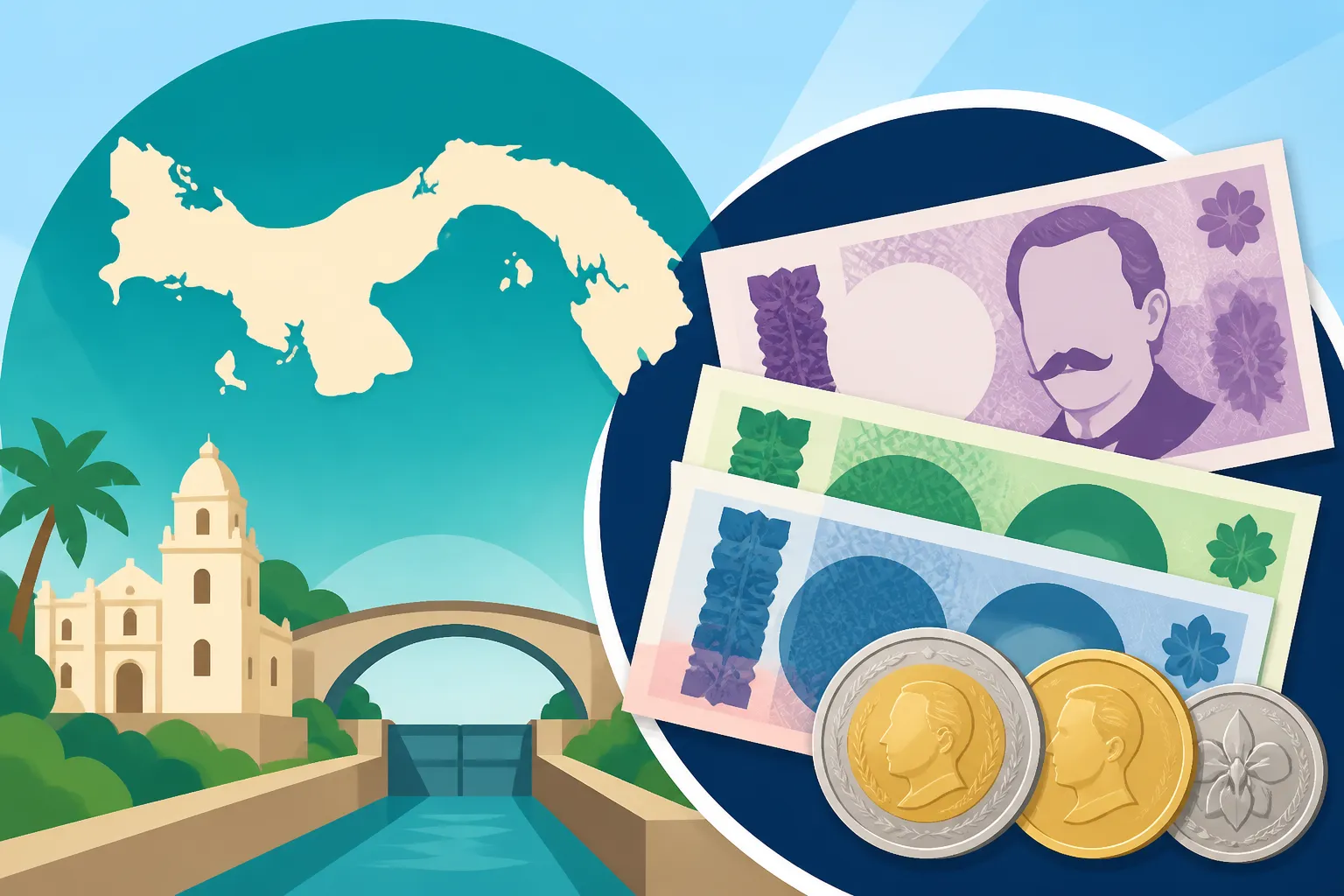
However, it's not just the US dollar. Panama actually has its own official currency called the Balboa (PAB), but here's where it gets interesting: the Balboa exists almost entirely in coin form and is pegged 1:1 to the US dollar. So, while you'll be using US dollar bills for everything from a $1 bill up, you'll find Panamanian Balboa coins mingling with US coins in your change. Don't worry, they are exactly equivalent in value and are used interchangeably. This dual system might sound confusing on paper, but in daily life, it's seamless. You won't even think twice about getting a US quarter or a Panamanian 25-centavo coin – they both hold the same value and function identically. This is one of those lovely little quirks that makes living in Panama so unique.
Why Panama Uses the US Dollar
Delving a bit deeper into the history really helps to demystify this system. Panama's decision to adopt the US dollar in 1904 wasn't just a whim; it was a strategic move linked to the construction of the Panama Canal and the new nation's economic stability. By linking its currency to the mighty US dollar, Panama effectively outsourced its monetary policy to the US Federal Reserve. This eliminated the risk of hyperinflation and currency devaluation, which has plagued many other developing nations. For expats, this means a significant level of financial stability; you won't wake up one day to find your savings halved due to a sudden currency crash. This stability has been a cornerstone of Panama’s economic success and is a huge draw for foreign investors and retirees alike.
The economic benefits extend beyond just stability. It fosters international trade, simplifies cross-border transactions, and makes Panama an attractive hub for international banking and business. Imagine the sheer convenience for companies operating globally – no need to hedge against currency fluctuations when dealing with a country that uses the world's primary reserve currency. For individuals, this translates into everyday ease. If you're pondering how to handle money for everyday expenses or even larger transactions like buying property in Panama as a foreigner, knowing that you're dealing in US dollars cuts out a massive layer of complexity. This foundational choice has shaped Panama into the financial and logistical hub it is today, offering a sense of predictability that is often hard to find elsewhere.
The Impact on Expats and Tourists
For us expats, this dollarization is a game-changer. It instantly removes one of the biggest headaches associated with living abroad: currency exchange. You don't need to visit a casa de cambio (exchange house) or worry about losing money on unfavorable rates when you arrive. Your US dollars are accepted everywhere, immediately. If you're coming from the US, you can literally use the cash you have in your wallet. If you're coming from elsewhere, you just need to ensure you convert your home currency to USD before or upon arrival, or withdraw USD from an ATM.
This also has a significant impact on budgeting and understanding the cost of living in Panama for expats. When you see a price tag, you know exactly what it means in terms of your home currency (if that's USD) or what it would convert to if you're thinking in Euros or Pounds. There's no hidden cost of conversion baked into every purchase. This transparency is invaluable, especially when you're just settling in and every dollar counts. Furthermore, if you're thinking about how to transfer money into and out of Panama as an expat, the fact that you're dealing in US dollars streamlines the process, often reducing transfer fees and eliminating conversion charges on the Panamanian side. Services like Wise, for example, facilitate direct USD transfers, making the process much smoother and more transparent for international money movement.
Understanding the Balboa: Panama's Official Currency (Sort Of)
So, while the US dollar banknotes dominate all cash transactions, Panama does have its own national currency, the Balboa (PAB). This can be a bit confusing at first, especially when you see coins marked "Balboa" in your change alongside US coins. But let me clarify: the Balboa is purely a conceptual currency for paper money and a physical currency for coinage, always maintained at a strict 1:1 parity with the US dollar. It’s like having two different names for the same thing when it comes to value.
Historically, Panama did issue its own banknotes in Balboas, but they were quickly withdrawn due to the strong preference for the US dollar and the benefits of dollarization. Today, Panamanian banknotes are essentially collector's items, not something you’ll encounter in daily commerce. This means you will never receive a B/.5 or B/.10 banknote in change; you’ll always get a US $5 or $10 bill. This unique arrangement underscores Panama's deep commitment to its dollarized economy and the convenience it offers both locals and foreigners.
Balboa Coins: Your Everyday Change
Where you will encounter the Balboa is in its coin form. Panama mints its own coins in denominations that perfectly mirror US coinage: 1 centavo (penny), 5 centavos (nickel), 10 centavos (dime), 25 centavos (quarter), and 50 centavos. There's also a B/.1 coin, often referred to as a "peso" by locals, which is equivalent to a US dollar coin (though those are rarely seen in either country). These Panamanian coins are often quite beautiful, featuring national heroes and symbols, and they circulate freely and interchangeably with US coins.
For instance, if you buy something for $3.75 and pay with a $5 bill, you might get a US dollar bill and then a mix of US quarters, Panamanian 10-centavo coins, and US pennies. It's completely normal, and you don't need to differentiate between them. They both work in vending machines, for bus fares (if you still pay with cash on some routes), and for any cash transaction. The only time you might notice the difference is if you're a coin collector, or if you're trying to figure out which coins are which for fun! This seamless interchangeability is one of the charming and practical aspects of living in Panama.
No Exchange Rate Headaches
One of the greatest benefits of this system, which I can't emphasize enough, is the complete absence of exchange rate volatility for your daily transactions. When you're managing your personal finances in Panama, every dollar you earn, spend, or save is exactly that: a US dollar. There are no daily fluctuations to track, no apps needed to calculate conversions, and no sudden losses because the market shifted. This makes budgeting incredibly stable and predictable.
For anyone who has lived in a country with a rapidly fluctuating currency, the peace of mind this brings is immense. You can plan your expenses, save for larger purchases, and invest without the constant worry of currency depreciation eating into your funds. This stability is particularly appealing to retirees on fixed incomes or anyone working remotely for an employer paid in USD. When you’re considering major financial decisions, such as understanding income tax in Panama (where your income is already in USD), or even looking at The Complete Guide to Taxes in Panama for Expats, this currency stability simplifies the entire financial landscape. It truly allows you to focus on adapting to life here rather than constantly monitoring currency markets.
Practicalities of Handling Money in Panama
Now that we've covered the basics of what currency Panama uses, let's talk about the practical side of handling your money here. While the US dollar is king, how you access and spend it can vary depending on where you are and what you're buying.
Cash, Credit Cards, and Debit Cards
In major urban centers like Panama City, David, or Coronado, credit and debit cards are widely accepted at most businesses, including supermarkets, restaurants, department stores, and even many smaller shops. Visa and Mastercard are the most commonly accepted, with American Express and Discover having less penetration but still accepted at larger establishments. When paying with a card, you'll simply be charged in US dollars. Remember to inform your home bank that you'll be using your card abroad to avoid any fraud alerts.
However, cash is still very much a part of daily life, especially for smaller purchases, street vendors, local markets, and in more rural areas. Always carry a decent amount of small US dollar bills ($1, $5, $10) as well as a good mix of coins (US or Panamanian, doesn't matter). Breaking a $20 or $50 bill for a small purchase at a local shop might be difficult, as they may not have enough change. It's not uncommon to see "No hay cambio" (No change) signs for larger bills at smaller kiosks. For instance, when you're getting a fresh coconut from a street vendor for $2, a $5 bill is usually the largest they can handle. This is a common aspect of cash economies, so being prepared saves you hassle.
ATMs and Banking Access
ATMs (often called cajeros automáticos) are abundant in urban areas and larger towns across Panama. You'll find them at banks, shopping malls, supermarkets, and gas stations. These machines will always dispense US dollars. Most major Panamanian banks, like Banco General, Banistmo, and Davivienda, have extensive ATM networks. When choosing a bank for expats in Panama, consider their ATM fees and network reach. It's important to be aware of potential fees: your home bank might charge a foreign transaction fee, and the Panamanian ATM itself will almost certainly charge a service fee (typically a few dollars).
It is wise to pull out larger sums less frequently to minimize these ATM fees. For security, try to use ATMs during daylight hours, preferably inside a bank branch or a well-lit, public area. Always be vigilant about your surroundings. If you’re opening a bank account at a Panamanian bank as a foreigner, you’ll find that the process, while requiring some paperwork, gives you seamless access to your funds locally. Setting up online banking with a Panamanian bank also allows you to manage your accounts and transfer funds efficiently.
Using Local Payment Systems
Beyond cash and cards, local payment systems are becoming more prevalent, especially in Panama City. Many businesses now accept Yappy, a popular peer-to-peer payment app offered by Banco General that allows instant transfers between bank accounts. While primarily used by locals, if you open an account with Banco General, you’ll gain access to this convenient system. It’s particularly useful for splitting bills with friends or paying small vendors who might prefer a direct transfer over a card payment.
For larger transactions, bank transfers are standard. If you’re paying for a car, making a deposit for an apartment, or handling a utility bill, a direct bank transfer is often the preferred method. This is where understanding how to pay your utility bills in Panama becomes important, as many providers offer online payment portals or direct debit options, often linked to your local bank account.
Managing Your Finances: Banking and Transfers for Expats
Navigating the financial landscape as an expat can be challenging, but Panama's dollarized economy certainly simplifies things. Still, there are important considerations for banking and moving your money efficiently.
Opening a Panamanian Bank Account
While you can certainly get by with your international credit and debit cards for a while, opening a local bank account in Panama as a foreigner is highly recommended, especially for long-term residents. It simplifies everything from paying bills and receiving local payments to setting up direct debits for rent or utilities. You'll find that banks like Banco General and Banistmo are popular choices among expats due to their widespread presence and generally good customer service, some even offering English-speaking staff.
The process of opening an account might require more documentation than you're used to – think proof of income, a letter of reference from your previous bank, and proof of residence. It’s part of the standard due diligence here, reflecting international banking regulations. But once it's set up, it makes your financial life in Panama so much easier. You can then learn how to set up online banking with a Panamanian bank, giving you full control over your finances from anywhere. This local account will also be crucial when you start looking into things like property ownership and the market in Panama, or if you ever consider buying a car as a foreigner in Panama.
International Money Transfers
For transferring larger sums into Panama, or sending money back home, you have several options. Traditional wire transfers through banks are always available, but they can be costly and slow. This is where modern remittance services really shine. Platforms like Wise (formerly TransferWise) offer competitive exchange rates and lower fees for international transfers, making them an excellent choice for expats. Since Panama uses the US dollar, you often don't have to worry about a currency conversion fee on the Panamanian side if you're sending or receiving USD, which is a huge advantage.
When you're trying to figure out how to transfer money into and out of Panama as an expat, I highly recommend comparing different services. Wise is often praised for its transparency and speed, allowing you to send money directly from your home currency to a USD account in Panama (or vice versa) with minimal fuss. This is particularly useful for those receiving pensions from abroad or managing investments internationally. Always double-check the fees and the real exchange rate (which Wise is famous for being transparent about) before initiating a transfer. This convenience and cost-effectiveness are especially important when you consider your overall financial planning, including your tax obligations, where the clarity of your income and transfers is paramount.
Tax Implications and Financial Planning
Understanding Panama's territorial tax system is crucial for expats, and the dollarized economy plays into this nicely. Panama generally taxes income generated within Panama. Foreign-sourced income, meaning income earned outside of Panama, is typically not taxed. This is a significant advantage for many expats and digital nomads. When your local income and expenses are already in US dollars, it simplifies record-keeping and reporting for the Dirección General de Ingresos (DGI), Panama’s tax authority.
When discussing financial planning and tax matters, knowing that all your local figures are in a stable, recognizable currency like the USD makes it much easier to work with a local accountant or a service like Taxes for Expats. They can help you navigate the nuances of your income sources and ensure you're compliant with Panamanian law without the added complexity of currency conversions. Whether you're understanding income tax in Panama or grappling with The Complete Guide to Taxes in Panama for Expats (2026), the fact that all monetary values are in USD is a huge help in financial clarity. This solid foundation helps you build a secure financial future here in Panama.
| Aspect | US Dollar (USD) | Panamanian Balboa (PAB) |
|---|---|---|
| Banknotes | Widely used for all cash transactions. | Does not exist in banknote form for public circulation. |
| Coins | US coins (pennies, nickels, dimes, quarters) circulate freely. | Panamanian coins (1, 5, 10, 25, 50 centavos, B/.1) circulate freely. |
| Value | Base currency for all pricing and transactions. | Pegged 1:1 with the US Dollar. Value is identical to USD. |
| Exchange Rate | Not applicable (it is the currency). | None; fixed 1:1 to USD. No conversion needed. |
| Acceptance | Universally accepted across Panama. | Coins are universally accepted interchangeably with US coins. |
| ATMs | Dispense US dollar banknotes exclusively. | Not dispensed by ATMs. |
| Credit/Debit Cards | Transactions charged in USD. | Not directly applicable, as cards charge in USD. |
This unique system of having the US dollar as the functional currency while maintaining the Balboa as the official, but coin-only, currency is one of Panama's most distinctive and advantageous features for expats. It takes a lot of the guesswork and stress out of daily financial interactions, letting you focus on enjoying your new life in this vibrant country.
Disclaimer
The information provided in this guide is for general informational purposes only and does not constitute financial, legal, or tax advice. While we strive to provide accurate and up-to-date information, currency regulations, banking policies, and tax laws in Panama can change. It is always recommended to consult with a qualified financial advisor, tax professional, or legal expert in Panama for advice tailored to your specific situation.