How Do I Get an RUC in Panama?
Moving to Panama, you're quickly introduced to a whole new world of administrative hoops and unfamiliar acronyms. One of the first things that often pops up, especially if you plan to work, run a business, or own property, is the concept of an RUC. This guide is here to demystify what an RUC is, why you need it, and how to navigate the process of getting yours, saving you a good deal of headache and confusion.
What Exactly is an RUC in Panama and Why Do You Need One?
The Registro Único de Contribuyente, or RUC, is essentially your tax identification number here in Panama. Think of it as Panama's equivalent to a Social Security Number for tax purposes in the US, or a National Insurance Number in the UK, but with its own unique Panamanian flavor. It's a unique identification code assigned to both individuals and legal entities (businesses) by the Dirección General de Ingresos (DGI), which is Panama's tax authority.
You might be thinking, "Another number to keep track of?" Believe me, I've been there. The stack of official documents can feel daunting when you're settling into a new country. But the RUC is fundamental because it ties all your taxable activities directly to you or your business. Without it, you simply cannot legally fulfill your tax obligations, and trust me, you don't want to fall afoul of the DGI. It’s the key identifier for all your interactions with the tax system, from filing annual returns to paying various taxes.
For instance, if you're employed by a Panamanian company, your employer will need your RUC to register you with the DGI for income tax purposes and to ensure proper deductions. If you're a freelancer providing services, you'll need it to issue invoices and report your earnings. And if you're venturing into business ownership, your company will require its own RUC to operate legally, pay corporate taxes, and even open a corporate bank account. It truly is the cornerstone of your financial identity in Panama's official systems.
Who Needs an RUC? Determining Your Obligation as an Expat
It's not just about what an RUC is, but whether you actually need one. The simple answer is, if you're generating income from Panamanian sources, conducting business in Panama, or have significant financial dealings that require tax reporting, you almost certainly need an RUC. This includes a surprisingly broad range of situations for expats.
Employed Expats and the RUC
If you've landed a job with a Panamanian company, even if it's a multinational operating here, your employer will require you to have an RUC. This is because they are legally obligated to withhold income tax from your salary and remit it to the DGI on your behalf. Your RUC ensures that these contributions are correctly attributed to you. It's not uncommon for the HR department to guide you through this process, or even handle some of the initial paperwork for you, but ultimately, it's your responsibility to ensure you have one. This is part of the broader process of Understanding Income Tax in Panama (2027) for employed individuals.
Self-Employed Individuals and Business Owners
This is where the RUC becomes truly critical. Whether you're a freelance consultant, a digital nomad providing services to local clients, or a small business owner, you'll need an RUC to operate legally. For self-employed individuals (known as persona natural), your RUC will be your personal tax ID. For businesses, such as a Sociedad Anónima (SA) or Sociedad de Responsabilidad Limitada (SRL), the company itself will be assigned its own RUC. This is a fundamental step if you're looking into How to Register a Company (SA or SRL) as a Foreigner in Panama. Without it, you cannot issue official invoices, sign contracts, or even truly legitimize your commercial activities. This is often linked to How to Pay Tax as a Self-Employed Person in Panama.
Property Owners and Other Taxable Activities
Even if you're not working or running a business, you might still need an RUC. For example, if you own rental property in Panama and are receiving rental income, that income is subject to Panamanian tax, and thus, you'll need an RUC to declare it. Similarly, if you're involved in any transaction that requires you to report capital gains or other forms of local income, the RUC is your identifier. It's all part of the larger picture of The Complete Guide to Taxes in Panama for Expats (2027). It’s always best to consult with a local tax professional, perhaps someone affiliated with a service like Taxes for Expats, to clarify your specific obligations. They can help you determine if your unique situation warrants an RUC.
The Step-by-Step Process to Obtain Your RUC
Getting your RUC isn't a walk in the park, but it's far from impossible. It involves gathering specific documents, visiting the DGI, and having a good dose of patience. The process can vary slightly depending on whether you're applying as an individual (persona natural) or for a company (persona jurídica). For this guide, we'll focus on the individual RUC, which is the most common starting point for expats.
Gathering Your Essential Documents
The DGI is, shall we say, particular about documentation. You'll need original documents and copies, and sometimes extra copies just because. The crucial step is ensuring all your paperwork is in order before you head to the DGI office. There's nothing more frustrating than getting there, waiting your turn, only to be told you're missing something.
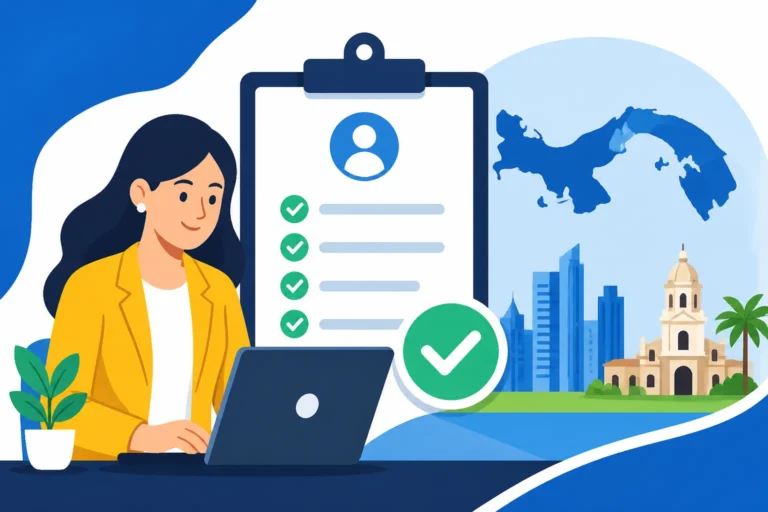
Here’s a general checklist for an individual RUC application for foreigners:
- Passport: Your valid passport (original and several copies of the main data page and your entry stamp).
- Residency Card (Cédula E): If you already have your Panamanian residency card (known as your cédula, often starting with an 'E' for foreigner), you'll need the original and copies. If you're applying for an RUC before your cédula is issued but after your residency has been approved, you might be able to use your resolution from immigration. This often applies if you're in the process of getting Permanent Residency in Panama.
- Proof of Address: A utility bill (electricity, water, or internet) in your name, showing your current Panamanian address. If it's not in your name, you might need a rental contract or a letter from the property owner.
- Proof of Income/Employment:
- For employees: A copy of your employment contract or a letter from your employer stating your position, salary, and that you are an employee.
- For self-employed: A brief description of your economic activity and a declaration that you will be generating income. Sometimes they might ask for evidence of this, such as a business plan or initial contracts.
- Letter of Request: A simple letter addressed to the DGI, requesting the assignment of an RUC, stating your name, passport number, and reason for needing the RUC (e.g., employment, self-employment). This needs to be in Spanish.
- Tax Forms: The DGI will provide specific forms (often Form 03-01 if applying in person) that you'll need to fill out. These are straightforward but require careful attention.
It’s always a good idea to check the official DGI website or call their office beforehand, as document requirements can sometimes be updated.
Here’s a simplified table for common scenarios:
| Applicant Type | Key Documents Required (Individual RUC) |
|---|---|
| Employed Expat | Valid Passport, Panamanian Residency Card (Cédula E), Proof of Address, Employment Contract/Letter from Employer, DGI Forms, Letter of Request |
| Self-Employed Expat | Valid Passport, Panamanian Residency Card (Cédula E), Proof of Address, Description of Economic Activity, DGI Forms, Letter of Request |
| Property Owner | Valid Passport, Panamanian Residency Card (Cédula E), Proof of Address, Property Title/Rental Agreement, DGI Forms, Letter of Request |
The Application Submission Process
Once your documents are in hand, it’s time to visit the DGI office. In Panama City, the main DGI office is a busy place, but generally well-organized. If you are outside the capital, you'll visit the regional DGI office.
- Arrive Early: Like most government offices in Panama, arriving early is always a good strategy to avoid long queues.
- Take a Number: Upon entry, find the ticket machine for the appropriate service. You'll likely be looking for "Registro de Contribuyentes" or similar.
- Wait for Your Turn: This is where that patience comes in handy.
- Submit Documents to the DGI Officer: When your number is called, approach the designated window. Hand over your originals and copies. The officer will review everything. This is often the moment of truth! They'll check if anything is missing or incorrect.
- Data Entry and Verification: If all is well, the officer will input your data into their system. They may ask you clarifying questions about your economic activity.
- Receive Your RUC Number: Typically, if your application is straightforward and all documents are correct, you will be assigned your RUC number on the spot. They might print a temporary document, or your RUC will simply be available in their system immediately. You'll also likely be registered with the DGI's online portal (e-Tax 2.0) at this point, which is crucial for How to File Your Annual Tax Return in Panama later on. It's wise to ensure you get your username and initial password for the e-Tax system before you leave.
Sometimes, especially for more complex corporate RUC applications, it might not be instantaneous, and you'll be asked to return in a few days. But for individuals, it's often a same-day affair.
After You Get Your RUC
Once you have your RUC, you’ll use it for a variety of financial and administrative tasks. This includes opening a Panamanian bank account, as many banks like [Banco General] or [Banistmo] will request your RUC as part of the "know your customer" process. You can find more about this in The Expat Guide to Opening a Bank Account in Panama. You’ll also need it for any formal declaration of income, property transactions, and certainly for your annual tax filings. Don’t lose this number; it’s fundamental to your financial life in Panama! If you're ever transferring money into or out of Panama for business or personal tax-related reasons, remember that platforms like Wise can often make the international transfer process much smoother and more transparent.
Common Pitfalls and Pro Tips for Expats Navigating the RUC Process
Let’s be honest, bureaucracy anywhere can be a pain, and Panama has its own flavor of it. Knowing some common stumbling blocks and how to navigate them can save you a world of frustration.
The Language Barrier and Cultural Nuances
Panama is a Spanish-speaking country, and while many officials in major cities might speak some English, the DGI process is primarily in Spanish. All your documents, from the request letter to the forms, will be in Spanish. If your Spanish isn't up to par, this can be a major hurdle. Don't be afraid to bring a trusted friend or, even better, a professional translator with you. I've seen countless expats get flustered because they didn't fully understand a question or a form instruction, leading to delays.
Furthermore, patience is a virtue here. The pace of administrative tasks in Panama can be slower than what you might be used to in your home country. Rushing or showing frustration often doesn't help; a polite, patient, and respectful demeanor goes a long way.
The Importance of a Panamanian Lawyer or Accountant
While it's possible to get your RUC on your own, especially if your Spanish is good and your case is simple (e.g., direct employment), many expats opt for professional assistance. A Panamanian lawyer or accountant specializing in expat affairs can be invaluable. They understand the exact requirements, the latest updates, and the nuances of dealing with the DGI. They can draft your letter of request, ensure all documents are correct, and even accompany you or handle parts of the submission process for you. This often speeds things up and reduces the risk of rejection due to small errors. For complex tax situations, engaging a local expert, perhaps through a platform like Taxes for Expats, is almost a necessity. They can also help you understand how your new RUC integrates with other obligations, like Understanding Social Security (CSS) Contributions in Panama.
Digital Registration and Follow-Up
In recent years, the DGI has moved towards more digital services with its e-Tax 2.0 platform. While initial RUC registration often still involves an in-person visit, managing your tax affairs afterward, including filing declarations and making payments, is largely done online. Make sure you leave the DGI office with confirmed login credentials for your e-Tax account. If you don't, getting access later can be another administrative challenge.
It's also important to understand that simply having an RUC isn't the end of your tax journey. It's the beginning. You'll need to use it regularly for various filings and declarations. Stay proactive, keep your records organized, and don't hesitate to seek advice if you're unsure about any aspect of your tax obligations. The DGI can impose significant fines for non-compliance, so it's always better to be safe than sorry. Remember, your RUC is the foundation upon which your compliant financial life in Panama will be built.
Disclaimer
The information provided in this guide is for general informational purposes only and does not constitute legal, financial, or tax advice. While we strive to keep the information up-to-date and accurate, laws and procedures in Panama can change. It is highly recommended to consult with a qualified Panamanian legal or tax professional for advice tailored to your specific situation before making any decisions related to your RUC or tax obligations in Panama.