Understanding Social Security (CSS) Contributions in Panama
Navigating the labyrinthine world of social security contributions in a new country can feel like trying to solve a Rubik's Cube blindfolded. Many expats moving to Panama find themselves scratching their heads over deductions for the Caja de Seguro Social, or CSS, wondering what it even is, why it's mandatory, and what benefits it actually provides. This guide is here to untangle that confusion, offering a realistic, in-depth look at CSS contributions in Panama, helping you understand your obligations and potential entitlements.
What is the Caja de Seguro Social (CSS) and Why Does It Matter to Expats?
When you first see that deduction on your Panamanian paycheck, it's natural to wonder, "What on earth is the CSS, and why am I paying into it?" For many of us, especially those from countries with vastly different social welfare systems, the Caja de Seguro Social (CSS) can seem like an enigma wrapped in red tape. But at its heart, the CSS is Panama's national social security system, a cornerstone of its public welfare, and it's something every legally working expat will inevitably encounter.
The Mandate of the CSS and its Core Services
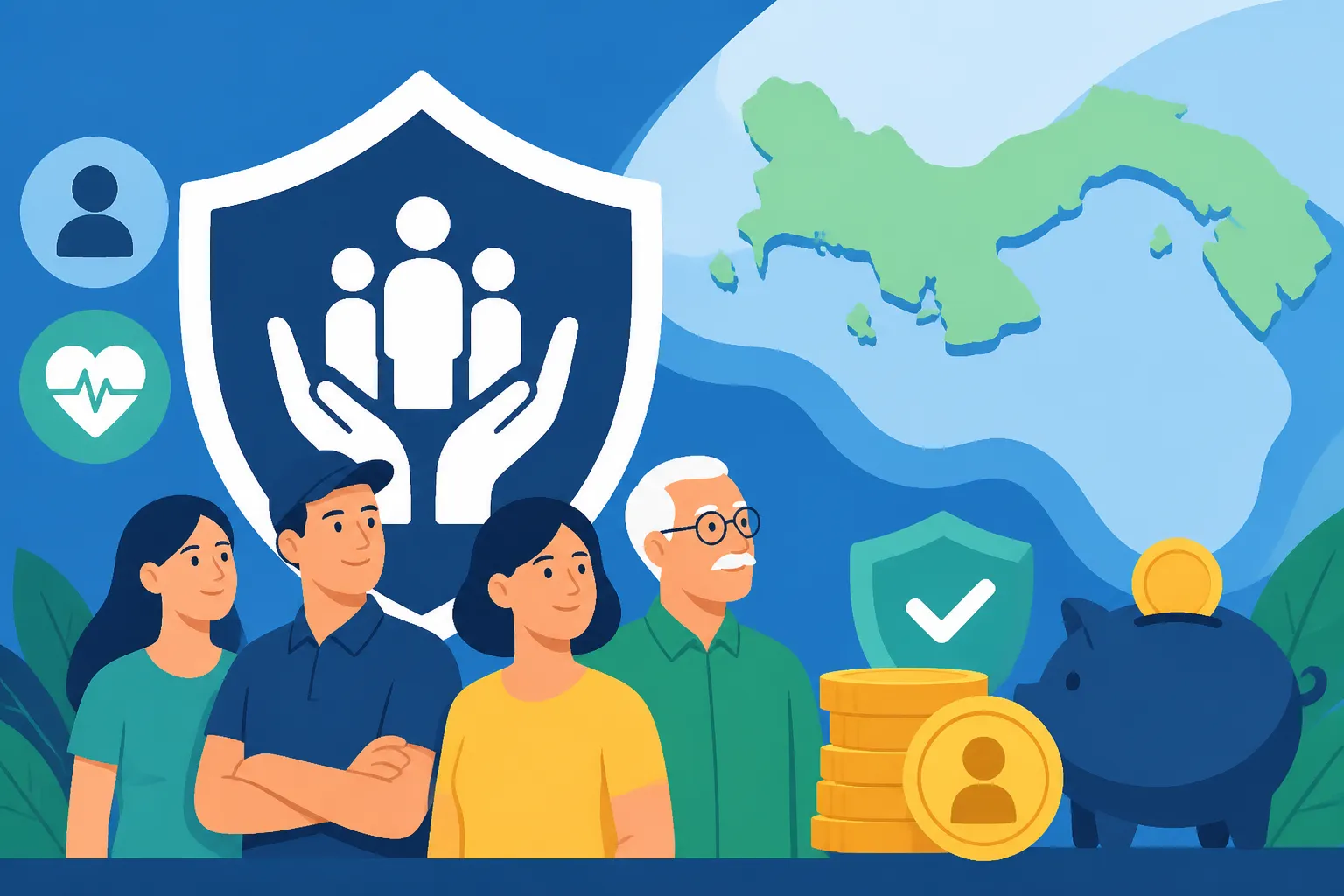
The CSS is essentially a state-run institution responsible for administering public health services, pensions, and other social welfare programs across Panama. Think of it as a comprehensive safety net designed to protect residents from various life risks. Its mandate is broad, covering everything from routine medical care to long-term retirement benefits, disability pensions, and even maternity leave support. When you're contributing to the CSS, you're not just paying a tax; you're technically buying into a system that provides fundamental protections. For expats, this often comes as a surprise, especially if they've already secured private health insurance or have retirement plans back home. The frustration is real – you might feel like you're paying twice for the same services, or for benefits you might never fully utilize during your time here.
The core services funded by CSS contributions include a network of public hospitals and clinics throughout the country, where registered contributors and their dependents can receive medical attention. It also manages the pension fund, ensuring that eligible retirees receive a monthly income. Beyond healthcare and pensions, the CSS covers occupational risks, providing compensation for work-related accidents or illnesses, and offers maternity benefits to expecting mothers, including paid leave and medical care. While the public healthcare system often faces challenges, particularly in terms of wait times and access to specialists compared to private options, it remains a vital service, especially outside of the major urban centers like Panama City, where private clinics are abundant.
The Role of Social Security in Panamanian Society
The CSS isn't just an administrative body; it's deeply ingrained in the social fabric of Panama. Established in 1941, it has grown to become one of the most significant institutions in the country, impacting millions of lives daily. Its role extends beyond merely collecting contributions and disbursing benefits; it's a key player in public health policy, labor law, and economic stability. For Panamanians, especially those without access to private healthcare or robust personal savings, the CSS represents a critical lifeline. It’s their primary access point for doctor visits, surgeries, and prescriptions.
For expats, understanding this societal context can help demystify why contributions are mandatory, regardless of your personal preferences for private care. It's less about individual choice and more about participating in the collective welfare system of your host country. While you might opt for the swift appointments and English-speaking doctors of hospitals like Punta Pacifica or Hospital Nacional for immediate needs, the CSS provides a foundational level of care that underpins the entire system. Moreover, your contributions, however small, play a part in sustaining this system for everyone. It's a fundamental aspect of working and living legally in Panama, even if the direct benefits for some expats might seem less tangible than for local residents.
Who Needs to Contribute to CSS in Panama?
One of the most pressing questions for any expat working in Panama is whether they actually need to contribute to the CSS. The short answer for most is a resounding "yes." Panama's social security system is largely mandatory for anyone engaging in formal employment within the country, but there are nuances, especially for the self-employed or those working remotely for foreign entities. It's crucial to understand your specific situation to ensure compliance and avoid any headaches down the line.
Employees and Employer Obligations
If you're an expat working for a Panamanian company or an international company with a registered presence and payroll in Panama, then CSS contributions are mandatory. Period. Your employer has a legal obligation to register you with the CSS from your first day of employment, and they are responsible for deducting your portion of the contributions directly from your salary. This deduction is not optional, even if you arrive with a comprehensive international health insurance plan or a hefty pension fund back home. It's simply part of the cost of being employed here.
The employer's responsibilities don't stop at deducting your share. They also contribute a significant portion themselves, covering different components of the social security system, such as old-age, disability, death, and sickness/maternity. This means that while you see a deduction on your payslip, your employer is actually putting in an even larger sum on your behalf. They handle the regular submission of these funds to the CSS, along with detailed reports of your earnings. This process ensures that your contributions are properly recorded, which is vital for any future eligibility for benefits, whether it's accessing public healthcare services or qualifying for a pension if you stay in Panama long-term. For a deeper dive into your overall tax responsibilities, our guide, "The Complete Guide to Taxes in Panama for Expats (2027)", offers more context.
Voluntary Contributions for the Self-Employed and Others
The situation gets a little more complex, and often more confusing, for expats who are self-employed, freelancers, or independent contractors in Panama. If you are generating income from a Panamanian source, even as a freelancer, you are generally expected to contribute to the CSS. The good news is that for these individuals, contributions are often on a voluntary basis, but "voluntary" here means you have the option to enroll and contribute, and it's highly recommended to do so for your own security, especially if your income is solely Panama-sourced. This is often done through the Direccion General de Ingresos (DGI) first, as part of registering your business or self-employed status.
To make voluntary contributions, you would typically register yourself with the CSS as an independent worker. This allows you to pay both the employee and employer portions of the contributions, securing your access to the public health system and building up your pension credits. For many self-employed expats, the decision to voluntarily contribute often boils down to a cost-benefit analysis. While it adds to your monthly expenses, it also provides a baseline of healthcare coverage and begins accumulating time towards a potential pension, which can be reassuring. For those looking to set up their own venture, our guide on "Self-Employment in Panama: Registering a Business and Going Independent (2027)" provides detailed information on business registration that often precedes CSS enrollment.
Exceptions and Special Cases
Not every expat in Panama is required to contribute to the CSS. One significant exception involves those who are legitimately working remotely for a foreign company and whose income is not sourced from Panama. Panama operates on a territorial tax system, which generally means that income generated outside of Panama is not subject to Panamanian income tax. While this is primarily a tax principle, it often extends to CSS contributions as well. If your employer is based entirely outside Panama and you're receiving payments into a non-Panamanian bank account, and crucially, you're not deriving any income from within Panama, you might not be obligated to contribute to the CSS. However, this is a complex area, and it's essential to seek professional legal and tax advice to confirm your specific situation, as misinterpretations can lead to penalties.
Another group often exempt includes certain visa holders who are not allowed to work, such as some retiree visa holders (Pensionado Visa) unless they decide to enter the workforce later. Tourists are, of course, not expected to contribute. The key distinction often lies in your legal residency and work status. If you hold a work permit and are legally employed, you will contribute. If you're here under a different visa category and not formally employed within Panama, your obligations might differ. Understanding "How Your Residence Status Affects Health Coverage in Panama" can provide more clarity on this. It's always best to consult with a local lawyer specializing in immigration and labor law to understand your specific requirements based on your visa, employment, and income sources.
Calculating Your CSS Contributions: A Detailed Breakdown
Understanding the exact percentages and how they are applied can be one of the most confusing parts of the CSS system. It's not just one lump sum deducted; it's a breakdown of contributions towards various social programs. The rates are periodically adjusted by the Panamanian government, so it’s always good to confirm the very latest figures, but generally, the structure remains consistent. This breakdown will help you make sense of those numbers on your payslip.
Employee Contribution Rates and Wage Base
As an employee, a portion of your gross salary is deducted for CSS contributions. These deductions are primarily allocated to two main areas: the Old-Age, Disability, and Death (IVM) fund and the Sickness and Maternity (EM) fund. The percentages are applied to your gross salary up to a certain maximum wage base, though for most employees, it will apply to their full salary unless they are earning exceptionally high amounts.
Currently, the employee contribution rates are:
- 9.75% for Old-Age, Disability, and Death (IVM)
- 2.00% for Sickness and Maternity (EM)
This means a total of 11.75% of your gross salary is deducted for CSS. For example, if your gross monthly salary is $2,000, you would contribute $195 for IVM and $40 for EM, totaling $235 per month. It's important to keep track of these deductions. While your employer handles the actual payment, ensuring these amounts are correctly deducted and paid on your behalf directly impacts your eligibility for future benefits. This is part of the broader system discussed in "Understanding Health Insurance Contributions Through the CSS in Panama".
Employer Contribution Rates and Additional Charges
Now, for the part you don't see directly deducted from your paycheck, but it's a significant cost for your employer: their contribution. Employers in Panama bear a larger share of the CSS burden. These contributions are in addition to your employee deductions and are calculated based on your gross salary.
The current employer contribution rates are:
- 12.25% for Old-Age, Disability, and Death (IVM)
- 7.00% for Sickness and Maternity (EM)
- 1.50% for Professional Risks (Riesgos Profesionales)
Adding these up, your employer contributes a total of 20.75% of your gross salary to the CSS. So, using our previous example of a $2,000 gross monthly salary, your employer would pay $245 for IVM, $140 for EM, and $30 for Professional Risks, totaling $415. This illustrates the substantial commitment employers make to the social security system. The "Professional Risks" component is particularly important, as it funds benefits for employees who suffer work-related injuries or illnesses, providing medical care and compensation during recovery.
The Difference Between Contribution Types (Health, Pension, etc.)
It's easy to see "CSS Contribution" as a single entity, but it's actually a combination of several funds, each serving a specific purpose. This segmentation is important because it dictates what benefits you might be eligible for down the line.
The main categories are:
- Old-Age, Disability, and Death (IVM): This is essentially the pension fund. The contributions you and your employer make here go towards ensuring you have an income in retirement, or if you become permanently disabled and unable to work. It also provides benefits to your dependents in the event of your death. The number of contributions (or "cuotas") you accumulate over your working life is crucial for determining your eligibility and the amount of your future pension.
- Sickness and Maternity (EM): These contributions are dedicated to funding the public healthcare system. This portion covers consultations, hospitalizations, surgeries, and medicines at CSS-affiliated facilities. It also covers maternity care, including prenatal care, childbirth, and postnatal care, as well as providing paid leave for new mothers.
- Professional Risks (Riesgos Profesionales): This component, paid solely by the employer, covers expenses related to work accidents and occupational diseases. It provides medical treatment, rehabilitation, and temporary or permanent disability benefits if you are injured or fall ill due to your job.
Here’s a summary table to make it clearer:
| Contribution Type | Employee Rate | Employer Rate | Total Rate | Purpose |
|---|---|---|---|---|
| Old-Age, Disability, Death (IVM) | 9.75% | 12.25% | 22.00% | Retirement pensions, disability benefits, survivor benefits for dependents |
| Sickness and Maternity (EM) | 2.00% | 7.00% | 9.00% | Public healthcare services (consultations, hospital, meds), maternity benefits |
| Professional Risks | 0.00% | 1.50% | 1.50% | Medical care and compensation for work-related accidents/illnesses |
| Total Combined Contribution | 11.75% | 20.75% | 32.50% | Comprehensive social security coverage |
Understanding this breakdown helps clarify where your money is going and what potential safety nets it creates for you and your family in Panama.
Navigating the CSS System: Registration, Payments, and Benefits
Dealing with a new country's bureaucracy is rarely straightforward, and Panama's CSS system is no exception. From getting registered to understanding how to access benefits, it can feel like a maze. However, with a bit of guidance, you can navigate it more effectively.
How to Register and Get Your CSS Card
For most expats employed by a Panamanian company, the registration process for CSS is largely handled by your employer. They are legally required to enroll you shortly after you begin working. You'll typically need to provide them with copies of your passport, your Panamanian cedula (if you have one), your work permit, and your visa. Once registered, the CSS will issue you a personal identification number (which might be the same as your cedula number or a unique CSS number) and eventually a CSS card. This card is your key to accessing public health services. Always ensure your employer provides you with proof of registration and that your contributions are being made.
If you're self-employed and choose to make voluntary contributions, the process is a bit more hands-on. First, you'll need to register as a self-employed taxpayer with the DGI (Direccion General de Ingresos) to get your RUC (Registro Único de Contribuyente), which is your tax identification number. This is crucial for formalizing your income. Once that's in place, you can approach the CSS directly to register as a voluntary contributor. You'll present your RUC, identification documents, and likely proof of income. It can be a bit of a bureaucratic dance, but it's manageable. You can find more specific guidance on this process in our article, "How to Register with the CSS (Caja de Seguro Social) in Panama".
Making Payments and Tracking Your Contributions
For employed expats, payment is seamless – your employer deducts it from your salary and remits it on your behalf. You should regularly check your payslips to confirm these deductions are occurring. It's also a good idea to periodically check with your employer or directly with the CSS to ensure your contributions are being properly credited to your account. This is particularly important for pension eligibility later on, as a missing "cuota" (contribution month) could impact your total.
For voluntary contributors, you are responsible for making your own payments, usually on a monthly basis. The CSS provides various methods for this, including online portals, direct debit, or payments at designated banks. It's essential to stay on top of these payments to maintain your eligibility for benefits. Many self-employed individuals find it beneficial to use services like Wise for managing their finances, particularly if they are dealing with income and expenses in multiple currencies. While Wise primarily helps with international money transfers and multi-currency accounts, it indirectly supports expats in managing their funds efficiently to ensure timely CSS payments. Keeping accurate records of all your payments is crucial. The DGI's online portal, which you'd use for your other tax filings, might also have some linked information regarding your employment status, so understanding "How to Register with the DGI (Direccion General de Ingresos) in Panama" is a good complementary step.
Understanding the Benefits of CSS
Once you're contributing to the CSS, you gain access to a range of benefits, which, while sometimes requiring patience, can be a crucial safety net.
- Healthcare Access: This is perhaps the most immediate and frequently used benefit. Your CSS card grants you access to public clinics and hospitals throughout Panama. You can receive general consultations, specialist referrals, emergency care, laboratory tests, surgeries, and prescription medications. The quality can vary, and wait times can be long, particularly for specialists or elective procedures. However, for basic care and emergencies, it's a fundamental resource. Our guide "How Panama's Health System Works: CSS and Private Care Explained (2027)" details more about what to expect.
- Pension Entitlement: For those who intend to stay in Panama long-term, your CSS contributions build towards a retirement pension. To qualify, you need to meet specific criteria, including a minimum number of contribution months (cuotas) and reaching the retirement age (currently 62 for men and 57 for women). The amount of your pension will depend on your average salary over your highest earning years and the total number of contributions.
- Maternity Benefits: Pregnant contributors are eligible for comprehensive maternity care through the CSS, including medical consultations, hospital services for childbirth, and a period of paid maternity leave, typically 14 weeks.
- Sick Leave and Disability Payments: If you become ill or suffer an injury that prevents you from working, the CSS provides financial support in the form of sick leave benefits, provided you meet certain contribution requirements. For more severe, long-term conditions, disability pensions are also available.
It’s important to manage your expectations. While the CSS provides essential services, many expats still choose to supplement their coverage with private health insurance for faster access, more personalized care, and often English-speaking medical professionals. For a comprehensive comparison, check out "Public vs Private Healthcare in Panama: What Expats Need to Know".
Common Expat Concerns and Practical Advice
Living as an expat in Panama often means juggling different systems and expectations, and CSS contributions are no different. It’s normal to have concerns, especially when you’re used to different social welfare models. Let’s address some of the most frequent worries and offer practical advice.
Balancing CSS with Private Health Insurance
One of the biggest conundrums for many expats in Panama is the mandatory nature of CSS contributions alongside the desire for private health insurance. Let's be real: while the CSS provides a vital public service, the Panamanian public healthcare system can be challenging to navigate. Wait times for appointments, especially with specialists, can be extensive, and the facilities, while functional, might not always offer the same level of comfort or technology as private hospitals like Hospital Punta Pacifica or Clínica Hospital San Fernando. This is why a vast majority of expats who can afford it choose to invest in private health insurance.
However, your CSS contributions remain mandatory if you are formally employed in Panama, regardless of whether you have private insurance. Think of it this way: your CSS contributions are fulfilling your legal obligation and supporting the national healthcare infrastructure, while your private insurance is giving you the premium, expedited care you prefer. Many expats use the CSS for very basic needs, like certain vaccinations or routine check-ups if wait times are reasonable, and rely on their private plan for anything requiring immediate attention, specialist care, or better facilities. It’s a dual system approach. If you're weighing your options, our guide on "How to Choose Private Health Insurance in Panama (2027)" can help you select a plan that complements your CSS coverage.
Pension Portability and International Agreements
Here's where many expats face a significant challenge: pension portability. Unfortunately, Panama does not have bilateral social security agreements with most major expat-sending countries like the United States, Canada, the UK, or European Union nations. This means that if you contribute to the CSS for a few years and then decide to move back to your home country or another nation, those contributions are generally not transferable to your home country's social security or pension system. They effectively remain in the Panamanian system.
This can be a tough pill to swallow, as it means the contributions you've made, particularly the IVM portion for old-age and disability, might not directly benefit you if you don't stay in Panama long enough to meet the minimum requirements for a Panamanian pension. The threshold for qualifying for a pension in Panama typically involves a significant number of contribution months. For those who foresee a shorter-term stay in Panama, this can feel like a financial loss. It underscores the importance of reviewing your long-term financial and retirement plans with a professional who understands international tax and social security implications. Firms like Taxes for Expats specialize in helping individuals navigate these cross-border complexities, ensuring you understand the full scope of your financial situation, both in Panama and your home country.
Seeking Professional Guidance
Given the complexities of immigration, labor laws, and social security in a foreign country, trying to figure everything out on your own can lead to mistakes and unnecessary stress. This is where professional advice becomes invaluable.
- Legal Counsel: For anything related to your work permit, visa, employment contract, or clarifying your obligation to contribute to CSS, a Panamanian immigration and labor lawyer is your best ally. They can provide accurate, up-to-date information specific to your residency status and employment situation, ensuring you remain compliant with Panamanian law. They can also assist if you encounter any disputes with an employer regarding CSS contributions. Our general guide on "The Complete Guide to Working in Panama as a Foreigner (2027)" touches on many aspects where legal advice is paramount.
- Tax Advisors: While CSS contributions are distinct from income tax, they are intrinsically linked to your employment and income generation. A local tax advisor or an international firm like Taxes for Expats can help you understand how your CSS contributions interact with your overall tax obligations in Panama and your home country. This is especially crucial for self-employed individuals or those with complex income structures, who need to consider both Panamanian territorial taxation and potential reporting requirements back home. They can clarify how CSS contributions might be deductible for tax purposes or how they impact your overall financial planning.
Investing in professional guidance can save you headaches, potential penalties, and financial losses in the long run. It's not just about understanding the rules; it's about making informed decisions for your life as an expat in Panama.
Disclaimer
The information provided in this guide is intended for general informational purposes only and does not constitute legal, financial, or medical advice. While we strive to provide accurate and up-to-date content, laws, regulations, and procedures in Panama can change rapidly. Expats should consult with qualified Panamanian legal, tax, and healthcare professionals for advice tailored to their specific situation.