Understanding the School System (Public, Private, International) in Panama
Moving to Panama with children immediately brings up one of the biggest questions on every parent's mind: what about school? It's not just about finding a school; it's about navigating a completely unfamiliar system, often in a new language, while trying to ensure your children adapt and thrive. The choices can feel overwhelming, from understanding the local public options to deciphering the nuances of private and international institutions. This guide is here to walk you through Panama's diverse school system, helping you make an informed decision for your family without the usual expat headaches.
Navigating Panama's Educational Landscape as an Expat
When you first arrive in Panama, the sheer variety of schooling options can be daunting. You're not just looking for a school; you're looking for a community, a fit for your child's learning style, and a place that supports their emotional well-being through a major life change. It’s a completely different ballgame than what many of us are used to back home. Panama offers a spectrum of educational environments, each with its own advantages and challenges, and understanding them is the first step to making the right choice.
The Initial Culture Shock and System Overview
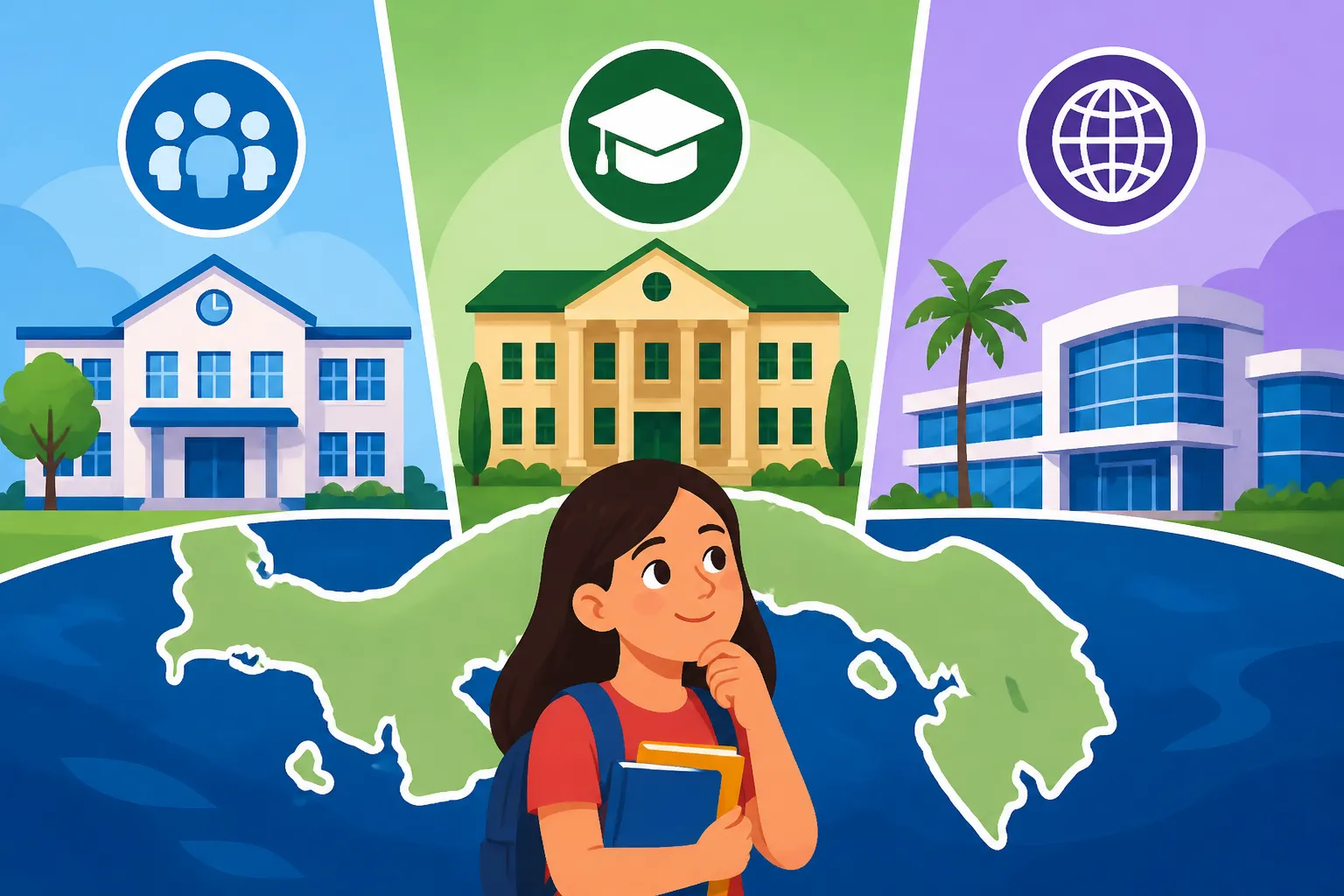
Let's be real, the Panamanian education system isn't always laid out in neat, easy-to-understand brochures. It requires a bit of digging, a lot of asking around, and a good dose of patience. The initial culture shock isn't just about adapting to the tropical climate or the pace of life; it extends to how schools operate. You'll quickly discover three main categories: public schools, local private schools (many of which are bilingual), and international schools. Each serves different needs, budgets, and educational philosophies, and what might be a perfect fit for one expat family could be entirely unsuitable for another.
The public school system, overseen by the Ministry of Education (MEDUCA), provides education for the vast majority of Panamanian children. While it's the most accessible financially, it presents significant hurdles for many expat families, primarily due to language and curriculum. Then you have the burgeoning private school sector, which varies wildly in quality and approach. Some are excellent local bilingual schools, aiming to provide a stronger academic foundation while integrating some English instruction. Finally, the international schools cater specifically to the expat community, offering familiar curricula and English-language instruction at a premium. The key is to avoid making assumptions based on your home country's system and really dive into what's available here.
Deciphering the Panamanian Academic Calendar and Language
One of the first practical considerations that often surprises newcomers is the academic calendar. Unlike many Western countries, the school year in Panama typically runs from late February or early March through early December, with a long summer break over December, January, and February. This can be a huge adjustment, especially if your children are used to a September start or if you're planning visits back home. It means a mid-year move can be particularly tricky, as your child might be starting a new school halfway through its academic year, potentially missing critical material or struggling to catch up with their peers.
Language is, without a doubt, the single biggest factor influencing an expat child's school experience. The primary language of instruction in Panamanian public schools and most local private schools is Spanish. While some private schools boast "bilingual" programs, the level of English instruction can vary significantly. In many cases, "bilingual" might mean a few English classes a week, rather than a full English-immersion curriculum. For children who are not fluent in Spanish, this can be an enormous barrier, not just to learning but also to making friends and integrating socially. It’s a challenge that needs to be addressed head-on, either through intensive Spanish lessons prior to enrollment or by selecting a school with robust English as a Second Language (ESL) support.
The Public School System in Panama: An Authentic Experience
Choosing a public school in Panama often comes from a desire for full cultural immersion, a limited budget, or simply a belief that local is best. For some families, especially those with younger children who are quick language learners or those committed to a long-term, deep integration into Panamanian society, public schools can be a viable, even enriching, option. However, it’s crucial to go into this with open eyes and a realistic understanding of what public education entails here.
What to Expect from Public Schools
The public school system in Panama operates under the guidance of MEDUCA, the Ministry of Education. The curriculum is designed to meet national standards, focusing on core subjects like Spanish, mathematics, social studies (with a strong emphasis on Panamanian history and culture), and some science. While the intent is to provide a comprehensive education, the reality on the ground can vary significantly from one school to another, even within the same district of Panama City or across different provinces like Chiriquí.
Teacher qualifications are generally good, but resources often fall short of international standards. You might find larger class sizes, fewer technological aids, and less access to specialized programs for students with learning differences. Facilities can range from decent to quite basic, and extracurricular activities might be limited compared to private options. The biggest hurdle for expat children, as mentioned, is the language. Instruction is almost entirely in Spanish, and while teachers are often supportive, dedicated ESL programs are rare in public schools. This means a child without a strong Spanish foundation will likely struggle academically and socially in the initial months, if not longer.
On the flip side, enrolling your child in a public school offers unparalleled cultural immersion. They'll quickly pick up colloquial Spanish, make Panamanian friends, and gain a profound understanding of local customs and traditions. It's a truly authentic experience that can foster resilience and adaptability. Plus, the cost is minimal, primarily covering uniforms, books, and basic supplies. However, be prepared for potential disruptions, such as teacher strikes, which can sometimes lead to school closures or altered schedules, impacting learning continuity.
Enrollment Process and Practicalities for Foreigners
Enrolling your child in a public school in Panama involves navigating the local bureaucracy, which, as many expats know, requires patience and persistence. The process isn't always clearly signposted, and it often depends on the specific school and even the individual administrator you encounter. Generally, you'll need a range of documents, including your child's birth certificate, passport (and copies of both), their vaccination records, and academic transcripts from their previous school. These foreign documents often require legalization or an apostille, and then an official translation into Spanish by a certified public translator in Panama. This can add both time and expense to the process. For a deeper dive into document requirements, you might want to read about How to Get Your Documents Apostilled for Panama Immigration.
You'll also need proof of residence, usually a utility bill, and potentially a local medical certificate for your child. It’s advisable to start the enrollment process well in advance of the new academic year, typically in January or early February, as schools can fill up, and the bureaucratic steps can take time. Finding a school in your desired area is often a matter of visiting the schools directly or asking local contacts for recommendations. It can be challenging to get clear information over the phone, so showing up in person is often the most effective approach. Be prepared for a few visits and to potentially provide additional documentation as requested.
Private Schools in Panama: A Wide Spectrum of Options
For many expat families, private schools offer a middle ground between the full immersion of public schools and the familiar, but costly, environment of international schools. The private school sector in Panama is incredibly diverse, ranging from small, locally run institutions to large, well-established schools with strong academic reputations. This variety means that parents have more choices, but it also means that due diligence is absolutely essential. You can find options that cater to different budgets and educational philosophies, so it’s not a one-size-fits-all situation.
Exploring Different Types of Private Institutions
Within the private school landscape, you'll generally find a few distinct types:
- Local Bilingual Private Schools: These are perhaps the most common choice for expat families who want a good quality education that retains a strong Panamanian cultural component but with significant English instruction. These schools often follow the Panamanian curriculum, accredited by MEDUCA, but integrate a high percentage of English language classes, sometimes aiming for 50/50 instruction in core subjects. They can be an excellent option for children who are learning Spanish but benefit from a bilingual environment, bridging the gap between full immersion and solely English-speaking settings. Examples include some well-regarded institutions in Panama City and even regional centers like David.
- Religious/Denominational Schools: Panama has a strong Catholic tradition, and many excellent private schools are run by religious orders. These schools often emphasize strong values, discipline, and community service alongside a rigorous academic program. While many are predominantly Spanish-speaking, some have robust bilingual programs. They can offer a very supportive and structured environment for children, though they may also have stricter uniform codes and behavioral expectations.
- Specialized Private Schools: While less common for the general expat population, there are also a handful of private schools that focus on specific educational philosophies (e.g., Montessori, Waldorf) or academic strengths (e.g., arts, STEM). These can be fantastic for children with particular talents or learning styles, but their availability is more limited, and they might require a more significant search to find.
When evaluating these schools, pay close attention to the actual ratio of English to Spanish instruction, the qualifications of their teachers, the resources available (libraries, labs, sports facilities), and the school's overall atmosphere. Don't just take their "bilingual" claim at face value; ask for specifics and observe classes if possible.
Costs, Curriculum, and Accreditation
The costs associated with private schools in Panama are considerably higher than public schools but generally more affordable than international schools. You can expect a range of fees:
- Registration/Enrollment Fee: A one-time or annual fee to secure a place, often ranging from a few hundred to over a thousand dollars.
- Monthly Tuition: This is the main expense, typically ranging from $200 to $800+ per month, depending on the school's reputation, facilities, and academic level.
- Uniforms: Most private schools require uniforms, which can add a few hundred dollars per child initially.
- Books and Supplies: Annual costs for textbooks and school supplies.
- Transportation: Many private schools offer bus services, which is an additional monthly fee.
- Extracurriculars: Optional activities like sports, music, or art lessons might incur extra charges.
In terms of curriculum, most local private schools follow the Panamanian national curriculum but may augment it with additional programs, particularly in English language arts, science, or technology. Accreditation is typically through MEDUCA. Some of the more established bilingual private schools might also seek international affiliations or accreditations to enhance their offerings and prepare students for higher education abroad, though this is less common than in full international schools. It’s always wise to inquire about these details to ensure the school aligns with your long-term educational goals for your child, especially if you foresee them applying to universities outside of Panama.
International Schools in Panama: The Familiar Path for Many Expats
For many expat families, especially those on temporary assignments or with older children, international schools represent the most straightforward and comfortable option. These schools are specifically designed to cater to a global student body, often following curricula that are recognizable worldwide and offering a high level of English-language instruction. While they come with a higher price tag, they often provide a smoother transition for children and greater peace of mind for parents.
Why Expats Often Choose International Schools
The primary reason expats flock to international schools is simple: familiarity and consistency. These schools typically offer globally recognized curricula such as the International Baccalaureate (IB) Programme, American curriculum, or British curriculum, meaning that children can transition seamlessly if the family moves to another country. English is usually the primary language of instruction, though many offer excellent Spanish programs, allowing children to become truly bilingual.
Beyond academics, international schools foster a diverse and multicultural environment. Your child will likely be in classes with children from dozens of different nationalities, which can be an incredibly enriching experience, broadening their worldview and developing cross-cultural communication skills. They often boast excellent facilities, including sports fields, art studios, and advanced technology labs, along with a wide array of extracurricular activities such that students can continue hobbies or discover new passions. For families, the strong parent communities and clear communication channels in English can also be a huge comfort, making it easier to integrate into the school community. This can be particularly helpful during those initial months when you're also figuring out things like How to Choose Between Public and Private Hospitals in Panama or setting up your new home.
Key International Schools and Their Offerings
Panama City is home to the majority of international schools, reflecting its status as a hub for multinational corporations and international organizations. Some of the most prominent ones include:
- International School of Panama (ISP): Often considered one of the top choices, ISP offers an American-based curriculum and is accredited by the Southern Association of Colleges and Schools (SACS). It provides the full IB Diploma Programme for its high school students and boasts extensive facilities, including sports complexes and arts centers.
- Balboa Academy: Another highly regarded American curriculum school, Balboa Academy is located near the former Canal Zone area. It focuses on college preparatory education and is known for its strong academic program and extracurricular offerings.
- Metropolitan School of Panama (MET): An IB World School offering the Primary Years, Middle Years, and Diploma Programmes. MET is known for its modern facilities and emphasis on inquiry-based learning and global citizenship.
- Crossroads Christian Academy: Offers an American curriculum with a Christian foundation. It’s often praised for its supportive community and strong moral values integrated into education.
- King's College, The British School of Panama: Follows the British curriculum, offering IGCSEs and A-Levels, preparing students for universities worldwide. It provides a distinct British educational experience, including school-specific traditions and house systems.
Each of these schools has a unique ethos, fee structure, and admissions process. It’s crucial to visit them, speak to current parents, and understand which one aligns best with your family's values and your child's academic needs. Many also offer excellent programs for students who need additional English language support to help them transition.
Application Process and Associated Costs
Applying to an international school in Panama typically involves a multi-step process. You'll usually need to submit an application form, your child's previous academic records (transcripts, report cards), letters of recommendation, and passport copies. Many schools require an entrance assessment or interview to determine academic readiness and English proficiency. It's not uncommon for these schools to have waiting lists, especially for certain grade levels, so it’s advisable to apply as early as possible. Remember to allow time for document preparation, including getting previous academic records officially translated and apostilled if required.
The costs, as you might expect, are substantial. Here’s a general breakdown, though exact figures vary widely by school (and are subject to change):
| Fee Type | Typical Range (USD) | Notes |
|---|---|---|
| Application Fee | $100 – $300 (non-refundable) | Paid when submitting the initial application. |
| Enrollment Fee | $1,000 – $4,000 (one-time or annual, sometimes refundable) | A significant fee paid upon acceptance to secure a spot. Can be annual or a one-time charge, sometimes partly refundable upon withdrawal with sufficient notice. |
| Annual Tuition | $12,000 – $25,000+ | The primary cost, typically paid in annual, bi-annual, or monthly installments. Varies by grade level, with high school usually being more expensive. For more detailed insights, check out How Much Are International School Fees in Panama City?. |
| Capital Fee | $1,000 – $5,000+ (one-time, non-refundable) | Some schools charge a capital fee to contribute to infrastructure development and maintenance. |
| ESL Support | $1,000 – $3,000+ per year (if needed) | Additional fees for English as a Second Language programs, which can be mandatory if your child doesn't meet proficiency requirements. |
| Technology Fee | $200 – $500 per year | Covers use of school technology, devices, and online learning platforms. |
| Uniforms | $200 – $500 (initial purchase) | Required for most international schools; costs depend on the number of items purchased. |
| Books/Supplies | $300 – $800 per year | Textbooks, digital licenses, and specific school supplies. |
| Transportation | $1,000 – $2,500 per year (optional) | If using the school bus service. Given Panama City traffic, this can be a worthwhile expense to save parents time. |
| Lunch Program | $800 – $1,500 per year (optional) | If your child participates in the school's cafeteria lunch program. |
| Extracurriculars | Varies widely | Optional activities like sports teams, music lessons, or specialized clubs. |
These costs can add up quickly, so it’s essential to factor them into your overall The Complete Guide to Cost of Living in Panama for Expats (2026). Remember that these figures are approximate and can change, so always consult the specific school’s most current fee schedule.
Making the Right Choice: Factors to Consider
Deciding on the right school for your child in Panama is one of the most significant decisions you'll make as an expat parent. There's no single "best" option, as what works for one family might be entirely unsuitable for another. It really boils down to balancing your child's needs, your family's budget, and your long-term goals for living here.
Language, Curriculum, and Future Plans
The first and most critical consideration is language. If your child is very young and you plan on staying in Panama for many years, immersing them in a Spanish-speaking environment (public or local private) could lead to true bilingualism, a valuable asset. However, for older children or those with limited Spanish exposure, an English-speaking international school might prevent academic and social struggles. It's about assessing their current proficiency and their capacity to adapt.
Next, think about the curriculum. Are you looking for a Panamanian curriculum, which provides a strong foundation in local culture and prepares students for Panamanian universities? Or do you prefer an internationally recognized curriculum (like IB, American, or British) that offers greater flexibility for university applications worldwide and easier transitions if you move to another country? Your family's future plans play a huge role here. If you envision returning to your home country or moving to another expat destination, an international curriculum often simplifies the process of transferring credits and ensuring academic continuity. However, if Panama is your long-term home, a local curriculum can deepen integration.
For more guidance on broader residency considerations, you may want to look at Understanding How to Move to Panama Legally from Abroad (2027).
Budget, Location, and School Culture
Let's talk money, because schooling in Panama can be a substantial expense. Public schools are virtually free, private schools offer a wide range from moderate to significant costs, and international schools are at the very top of the financial ladder. It's essential to be realistic about what your family can comfortably afford without straining your finances, especially considering all the other costs of setting up life here.
Location is another critical factor, particularly in Panama City where traffic can be notoriously bad. A short commute can make a huge difference in your child's daily life and your own. Many parents choose their residential area based on school proximity, which is why resources like The Best Places to Live in Panama for Expats: A Complete Guide (2027) can be invaluable. Consider whether you'll rely on school transport or if you'll be driving; if the latter, remember that getting your Panamanian Driver's Licence and understanding the local roads is key. Having reliable mobile data, perhaps through an eSIM from a provider like Airalo, is non-negotiable for parents here, whether it's for coordinating school pickups or checking grades online. It helps you stay connected and navigate your new surroundings.
Finally, don't underestimate the importance of school culture. Does the school's philosophy align with your family's values? Is it a nurturing environment, or more academically rigorous? What's the class size like, and how do teachers interact with students? Does the school offer a wide range of extracurricular activities that your child is interested in? These softer factors can have a profound impact on your child's happiness and overall success at school.
Beyond the Classroom: Support and Integration
Enrolling your child is just the first step. For expat children, successful integration often extends beyond the classroom walls and requires additional support systems, both from the school and the family. This is where the holistic approach to education really comes into play in Panama.
English as a Second Language ESL Support
For children coming from non-Spanish speaking backgrounds, access to quality English as a Second Language (ESL) support is paramount. While international schools almost universally offer robust ESL programs, the availability and quality can vary significantly in local private schools. Public schools, as mentioned, rarely have dedicated ESL support, placing the burden of language acquisition almost entirely on the child through immersion.
When evaluating schools, specifically ask about their ESL programs. How are students assessed for language needs? What kind of individualized or small-group support is provided? How long does a typical ESL program last? What is the cost, if any? A good ESL program can be the difference between a child struggling to keep up and one quickly thriving in their new academic environment. Some schools even have specific "newcomer" programs designed to help expat children adjust culturally as well as linguistically.
Extracurricular Activities and Parental Involvement
Extracurricular activities are not just optional add-ons; they are vital for expat children's social integration and overall well-being. Sports, art clubs, drama groups, and other activities provide opportunities for children to make friends outside the academic pressure of the classroom. They can also offer a sense of continuity if your child was involved in similar activities back home. International and many private schools in Panama offer a wide array of options, from competitive team sports to creative arts and community service projects.
Parental involvement also plays a crucial role. Many international and private schools have active Parent-Teacher Associations (PTAs) or similar organizations that provide a fantastic way for parents to connect, share experiences, and support the school community. Being involved can help you understand the school culture better, meet other expat parents facing similar challenges, and feel more connected to your child's new life. Effective communication between parents and teachers is key, especially in a new system. Regular parent-teacher conferences, online portals for grades and assignments, and accessible school staff can all contribute to a smoother experience. When planning your move, consider services like Sirelo to help compare moving companies, ensuring all your family's belongings, including those precious school supplies, arrive safely, allowing you to focus on getting involved in the school community right away.
Disclaimer
The information provided in this guide is for general informational purposes only and does not constitute professional advice. While we strive to provide accurate and up-to-date information, educational policies, school fees, and immigration regulations in Panama are subject to change. We recommend verifying all critical details directly with the relevant schools, the Panamanian Ministry of Education (MEDUCA), and legal professionals specializing in immigration for the most current and personalized advice.