What Is Dependent Residency in Panama?
Moving your whole life to a new country like Panama is a massive undertaking, and bringing your family along adds a whole new layer of complexity. One of the most common questions expats have, right after "How do I get residency?", is "How do I get my spouse, children, or even parents residency too?" This guide will meticulously break down what dependent residency in Panama truly entails, who qualifies, the intricate application process, and what life looks like once your family is settled.
Understanding Dependent Residency in Panama
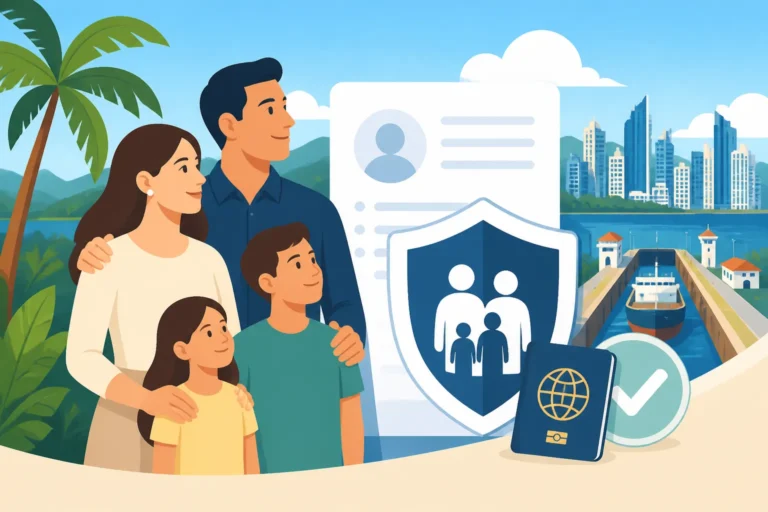
When you, as the main applicant, secure a residency visa in Panama, whether it's through the Friendly Nations Visa, Pensionado Visa, or another category, you gain the right to live here long-term. But what about the people who rely on you? That’s where dependent residency comes into play. It’s essentially a way for your immediate family members to gain their own legal residency status based on your approved primary application. It sounds straightforward, but as with most things administrative in Panama, there are specific nuances and strict requirements you absolutely need to be aware of.
What Exactly is Dependent Residency?
Dependent residency isn't a standalone visa category; rather, it's an extension of the main applicant's immigration status. Think of it as a piggyback visa. Once your primary residency application is approved (or often, applied for concurrently), your eligible family members can apply for their own residency permits linked to yours. This means their legal status in Panama is tied directly to your ability to maintain your primary residency. If, for instance, you lose your primary residency, your dependents would likely lose theirs too, unless they qualify independently under another category. This interconnectedness is crucial to understand from the outset. It underscores the importance of a stable primary residency and consistent compliance with immigration regulations. Many expats find great relief in knowing their family is legally recognized, avoiding the stress of constantly worrying about short-term tourist visas or overstaying.
Who Qualifies as a Dependent?
The Panamanian immigration system has clear, albeit sometimes rigid, definitions of who can be included as a "dependent." Generally, this includes your spouse, minor children, and adult children with certain conditions. In some specific cases, parents might also qualify, but this is less common and usually tied to particular visa types with higher financial thresholds. It's not a free-for-all; you can't just bring any relative. The relationship must be legally verifiable, and in most instances, there needs to be a clear line of financial dependency. For example, a cousin or an aunt, no matter how close, would typically not qualify under a standard dependent residency application. Understanding these boundaries early will save you a lot of time and potential heartache.
Key Eligibility Requirements for Each Dependent Type
Each type of dependent – spouse, child, or parent – comes with its own set of specific documents and conditions. While there are overarching requirements for all, paying close attention to these individual nuances is critical for a smooth application process. Don't assume that just because you're approved, everyone else automatically gets a rubber stamp.
Adding Your Spouse or Partner
Including your spouse in your residency application requires a legally recognized marriage certificate. This document must be recent (usually within six months to a year, though this can vary depending on the immigration officer's interpretation) and apostilled or authenticated by the Panamanian consulate in the country where the marriage took place. If your marriage certificate is older, you might need to get a new certified copy issued by the relevant authority in your home country and then apostilled.
The Panamanian immigration authorities are quite particular about verifying the authenticity of marriage certificates to prevent fraudulent applications. They want to see a clear, official record. For common-law partnerships, the path is a bit more complex. Panama does recognize common-law relationships, but you'll need a notarized declaration of cohabitation, often backed by evidence of living together for a certain period (usually five years or more), such as joint utility bills, shared bank accounts, or even property deeds. This declaration must be signed by both partners before a Panamanian public notary. It’s an extra step and requires more documentation, so be prepared for a deeper dive into your relationship history if you’re not formally married. When considering moving all your household goods, remember that reputable international movers like Sirelo can help manage the logistics, which is one less thing to worry about during this document-heavy phase.
Including Your Children in the Application
Children can generally be included in a dependent residency application if they are under 18 years old. You'll need their birth certificates, also apostilled or authenticated and translated into Spanish by a certified public translator in Panama. For children aged 18 to 25, there's a specific condition: they must be enrolled full-time in a university or higher education institution, proving their continued financial dependency. You'll need official enrollment letters and transcripts to demonstrate this.
If you have children over 25 who have a certified disability and are still financially dependent on you, they might also qualify. This requires medical certificates and often an assessment by Panamanian medical professionals, making it a more involved process. Keep in mind that for many visa categories, stepchildren are also considered, provided you can demonstrate legal custody or parental authority and financial dependency. It's not just about biological ties; legal and financial responsibility are key.
Considering Parents as Dependents
Including parents as dependents is less common and often restricted to specific residency programs, typically those with higher investment requirements, like the Qualified Investor Visa, or certain categories that allow for a broader definition of family unit. The Pensionado Visa, for example, only explicitly allows for spouses and children, not parents. For the programs that do allow it, you’ll need their birth certificates, proof of their financial dependency on you, and often a declaration of responsibility where you commit to their financial upkeep and medical care. This can include bank statements, notarized letters of support, and evidence of regular financial transfers. The authorities want to be absolutely sure that your parents will not become a financial burden on the state. It’s a significant commitment and requires substantial documentation to prove.
General Requirements for All Dependents
Beyond the specific documents for each family member, there are universal requirements for all dependents. These typically include:
- Passport Photos: Several recent passport-sized photos meeting Panamanian specifications.
- Police Records/Background Checks: Each dependent aged 18 and over will need a police certificate from their country of origin and any country they've lived in for the past two years, apostilled/authenticated, and translated. These are crucial and must be up-to-date.
- Health Certificate: A medical examination conducted by a licensed Panamanian doctor.
- Affidavit of Financial Solvency: The primary applicant must demonstrate sufficient financial means to support all dependents. This usually means an additional income requirement for each dependent added. For example, if the main applicant needs to show $1,000/month, adding a spouse might require showing $1,200/month, and each child adding another $100-$250, depending on the visa category.
- Bank Reference Letter: A letter from your bank, confirming your account is in good standing.
- Originals and Copies: Always have both the originals and multiple clear copies of every single document. You'd be surprised how often they ask for an extra copy of something you thought was already covered!
Remember, every document that isn't originally in Spanish must be translated by a certified public translator in Panama. Do not try to do these translations yourself or use a non-certified translator; immigration will reject them.
Navigating the Application Process for Dependent Residency
The journey to secure dependent residency can feel like a labyrinth of paperwork, appointments, and waiting. It’s a process that demands patience, meticulous organization, and, crucially, professional legal assistance. Trying to do this alone is a recipe for frustration.
Gathering and Preparing Essential Documents
This is arguably the most time-consuming and critical phase. Every document needs to be perfect. As mentioned earlier, birth certificates, marriage certificates, police records, and financial statements are just the beginning. The apostille process alone can take weeks or even months, depending on your home country's administrative efficiency. An apostille is an international certification that legalizes a document for use in foreign countries that are part of the Hague Apostille Convention. Panama is a signatory, which simplifies things immensely compared to countries that aren't. However, if your home country is not a signatory, you will need the document authenticated by the Panamanian consulate in that country.
Then comes the translation. Finding a reputable, certified public translator in Panama is key. Your immigration lawyer can usually recommend several. This isn't just a simple word-for-word translation; it's a legal process that ensures the translated document is recognized by Panamanian authorities as a true and accurate reflection of the original. Imagine flying all the way to Panama, only to have your application stalled because your birth certificate wasn't properly translated – it happens more often than you'd think!
The Indispensable Role of a Panamanian Immigration Lawyer
I cannot stress this enough: do not attempt to navigate the Panamanian immigration system without an experienced, reputable Panamanian immigration lawyer. They are not just an expense; they are an investment. They know the constantly changing laws, the unwritten rules, the specific preferences of individual immigration officers, and how to troubleshoot inevitable issues. They will guide you on exactly which documents you need, how to prepare them, and when to submit them.
Your lawyer will also represent you and your family at the National Immigration Service (Servicio Nacional de Migración). This means dealing with the often-long queues, the bureaucratic back-and-forth, and ensuring all deadlines are met. When you're trying to figure out how to get your documents apostilled for Panama immigration, or how to sponsor your spouse and children for residency in Panama, a good lawyer makes all the difference. While the overall process to get your Cedula (Residency ID) in Panama still takes time, having a lawyer prevents many common mistakes that lead to costly delays.
Estimated Timelines and Costs
The timeline for dependent residency applications mirrors that of the primary applicant's visa. Generally, you can expect the provisional residency process to take anywhere from 6 to 12 months, and then moving to permanent residency can take another year or two, depending on the visa category. The processing times can fluctuate wildly based on the volume of applications, staffing at the immigration office, and even public holidays. Patience is truly a virtue here.
Costs also vary. Beyond your lawyer's fees (which can range from $2,000 to $5,000+ per applicant, depending on the complexity and the law firm), you'll have government fees for each application (currently around $1,000 for the initial application, plus additional fees for the Cedula and other stamps). Factor in the costs of document collection, apostilles, and translations, which can easily add several hundred to over a thousand dollars per person. This is why having a clear understanding of the overall cost and timeline of the Panama residency process is essential for financial planning.
| Dependent Type | Key Document Requirement | Age Limit/Condition | Additional Proof |
|---|---|---|---|
| Spouse | Marriage Certificate (Apostilled/Authenticated) | N/A | Financial solvency of main applicant, notarized declaration if common-law |
| Children (Minor) | Birth Certificate (Apostilled/Authenticated) | Under 18 | Financial solvency of main applicant |
| Children (Adult) | Birth Certificate (Apostilled/Authenticated) | 18-25, enrolled full-time in university | University enrollment letters/transcripts, financial solvency of main applicant |
| Children (Disability) | Birth Certificate (Apostilled/Authenticated) | Any age, with certified disability | Medical certificates, proof of financial dependency, financial solvency of main applicant |
| Parents | Birth Certificate (Apostilled/Authenticated) | N/A (requires specific visa type, typically higher investment or explicit allowance) | Proof of financial dependency on applicant, notarized declaration of support, financial solvency of main applicant |
Note: All foreign documents must be apostilled/authenticated and translated into Spanish by a certified public translator in Panama.
Life as a Dependent Resident: Rights, Benefits, and Limitations
Once your dependent family members receive their provisional or permanent residency, they gain certain rights and responsibilities. It’s important to understand these fully, especially regarding work and access to local services, to ensure a smooth transition into Panamanian life.
Working Rights for Dependents in Panama
This is a critical point that many expats misunderstand. Unlike the primary applicant (especially if they have a work-permit-granting visa like Friendly Nations), dependents do not automatically receive work permits. A dependent residency simply grants the right to live legally in Panama. To work, each dependent aged 18 or older typically needs to apply for their own separate work permit. This usually requires a job offer from a Panamanian company and adherence to the country's strict labor laws regarding foreign workers.
Panama has specific quotas for foreign employees, and securing a work permit can be challenging. This means that while your spouse might have residency, they may not legally be able to work without an additional application and approval process. It's a significant consideration for families where both partners intend to work. Therefore, it's vital to research the work rights of different residency types in Panama and plan accordingly. If your spouse or adult children plan to contribute financially, they need to explore their own work permit options or consider paths like self-employment or remote work for foreign companies, keeping in mind the tax implications in Panama.
Accessing Healthcare and Education
One of the major benefits of dependent residency is that your family members gain access to Panama's public healthcare system, the Caja de Seguro Social (CSS), if you as the primary applicant are employed and contributing. However, many expats, myself included, opt for private healthcare due to shorter wait times, more modern facilities, and English-speaking staff. It’s worth looking into private health insurance in Panama, especially options like Cigna Global, which offers comprehensive coverage for expat families and can provide peace of mind in a foreign medical system.
For education, children with dependent residency can enroll in Panamanian schools, both public and private. Public schools are free, but instruction is entirely in Spanish, and resources can be limited. Most expat families choose international or private schools, which offer bilingual programs or curricula aligned with their home country’s educational standards. However, these come with significant tuition fees. Understanding the school system (Public, Private, International) in Panama is crucial for families with children.
Maintaining Your Dependent Residency Status
Maintaining dependent residency requires adherence to immigration rules, primarily linked to the main applicant’s status. If the primary applicant's residency is revoked or expires without renewal, the dependent’s residency is also at risk. Generally, all residents, including dependents, are expected to spend a certain amount of time in Panama (often 183 days a year, though this can vary by visa category). Extended absences without proper justification can lead to challenges when it's time to renew.
Renewing your family's residency in Panama usually involves submitting updated documents, including new police records (if applicable), health certificates, and proof of ongoing financial solvency. It's not a one-and-done process; it's an ongoing commitment to remaining legally compliant. Your lawyer will be invaluable during these renewal periods, helping you gather the necessary paperwork and manage the submissions. It’s a continuous relationship with the immigration authorities, so staying informed and organized is paramount.
Disclaimer
Please remember that I am an expat blogger sharing personal experiences and general information. Immigration laws and procedures in Panama can change frequently and are subject to interpretation. This guide should not be considered legal advice. Always consult with a qualified Panamanian immigration lawyer for personalized advice regarding your specific situation and before making any immigration decisions.