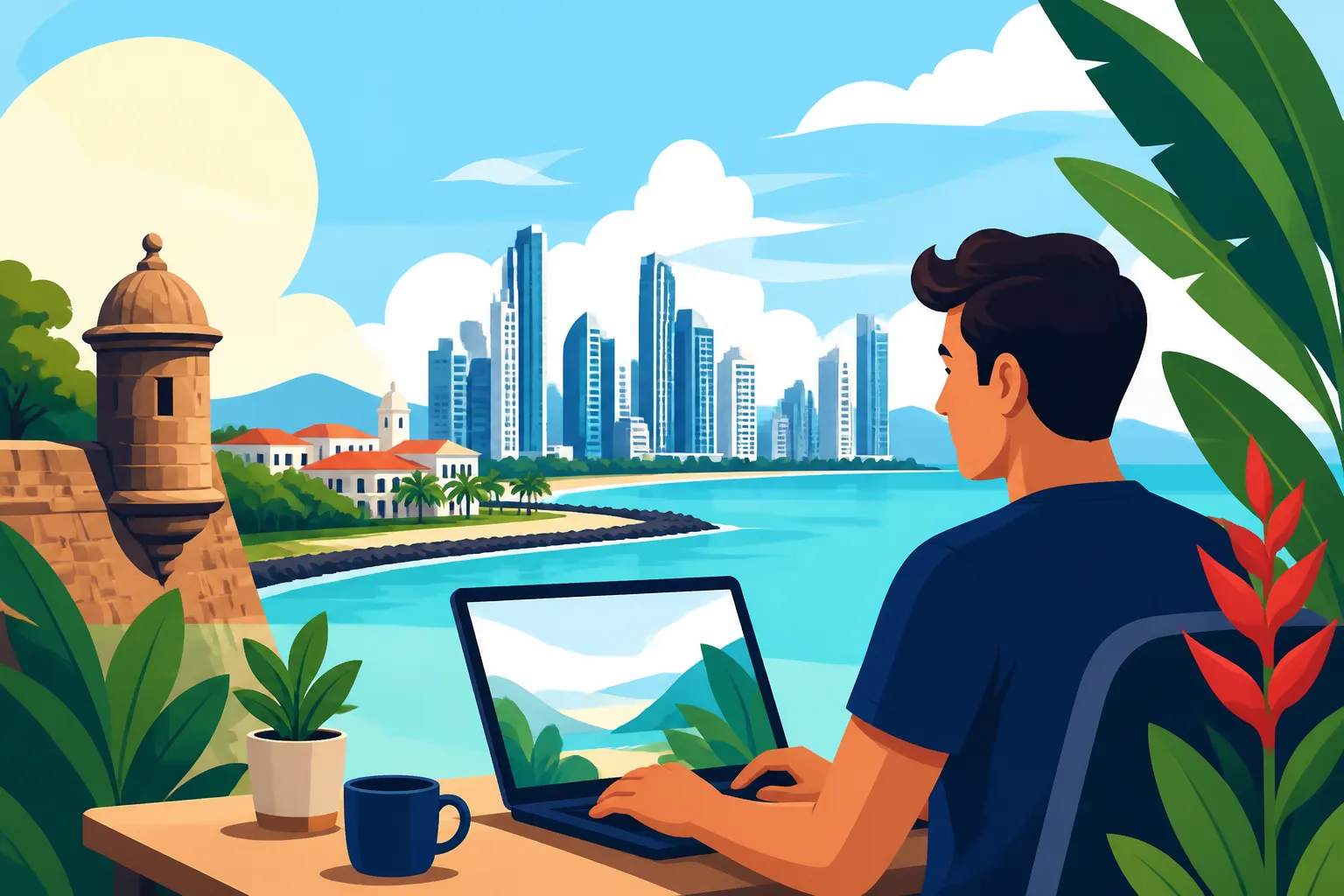
Working Remotely from Panama: The Definitive Expat Guide (2027)
The dream of working remotely from a tropical paradise like Panama often conjures images of pristine beaches and endless sunshine. However, beneath that idyllic facade lies a complex web of immigration rules, tax obligations, and logistical challenges that can quickly turn a dream into a bureaucratic nightmare. This comprehensive guide is here to untangle that web, providing a realistic, no-nonsense roadmap for expats looking to establish a successful and sustainable remote work life in Panama.
Understanding Panama's Remote Work Landscape for Expats
When you first consider working remotely from Panama, it's easy to get caught up in the romantic notion of laptop-by-the-beach. But Panama, like any country, has its own unique set of rules, cultural nuances, and infrastructure realities that are crucial for any digital nomad or remote worker to understand. It's not just about finding a good Wi-Fi signal; it's about legally integrating into the country while maintaining your professional life.
The Allure of Panama for Digital Nomads
Panama truly is an attractive destination for remote workers for several compelling reasons. For starters, the climate is warm year-round, offering a welcome escape from colder climes. The cost of living, especially outside of Panama City, can be significantly lower than in many Western countries, allowing your savings to stretch further. Imagine fresh, inexpensive tropical fruit, affordable local eateries, and a generally laid-back pace of life. Geographically, its central location and robust international airport (Tocumen) make it a convenient hub for travel throughout the Americas and beyond, which is a big plus if your job requires occasional trips or you just love exploring.
Furthermore, Panama City itself is a modern, cosmopolitan capital boasting impressive skyscrapers, world-class dining, and a vibrant arts scene. Outside the city, you have diverse landscapes from the cool mountains of Boquete to the Caribbean vibes of Bocas del Toro and the Pacific beaches. This variety means you can really tailor your living environment to your preferences. The use of the U.S. dollar as its official currency also simplifies financial transactions tremendously, eliminating currency exchange headaches for many expats. It's easy to see why so many of us have been drawn here.
Legal Status and Visa Options for Remote Workers
This is where things can get a bit sticky if you're not properly informed. Many new arrivals initially enter on a tourist visa, which typically grants a stay of 90 to 180 days, depending on your nationality. While it might seem convenient to simply extend your stay or do "visa runs" to neighboring countries, this is not a sustainable or legal long-term strategy for remote work. Working on a tourist visa, even if your employer is abroad and you're not "taking a local job," can be considered illegal by Panamanian immigration authorities.
The Panamanian government has recognized the growing trend of remote work, and they've been introducing options to cater to this demographic. However, navigating these options requires diligent research and, often, the help of a local immigration lawyer. The goal is to secure a legal status that allows you to reside in Panama long-term without violating immigration laws, ensuring peace of mind and the ability to travel freely in and out of the country. For a broader overview of all your options, take a look at our guide: The Complete Guide to Panama Visas and Immigration for Expats (2026).
Key Considerations Before You Pack Your Bags
Before you even start looking at flights, there are a few critical factors to weigh. First, honestly assess your financial situation. While Panama can be affordable, setting up a new life, dealing with visa applications, and handling initial expenses can be substantial. You need a solid financial cushion. Second, evaluate your work. Does your employer allow you to work from a different time zone? How will time differences impact your schedule and team collaboration? Panamanian work culture, especially concerning punctuality, can be quite different from what you might be used to, so be prepared for a more flexible approach to time.
Language is another huge one. While many people in Panama City, especially in business and tourism, speak English, venturing outside the capital will quickly require at least basic Spanish skills. Even in the city, administrative tasks, dealing with utility companies, or going to local markets will be far smoother with some Spanish under your belt. Consider investing in some Spanish lessons through platforms like iTalki before you arrive; it will make a world of difference. Finally, research specific areas to live. Panama City offers urban convenience, while places like Boquete provide a cooler climate and a tight-knit expat community. Each area has its pros and cons regarding internet speed, cost of living, and access to services.
Navigating Visas and Residency for Remote Work
This is perhaps the most crucial section for any expat considering a long-term remote work setup in Panama. Getting your legal status sorted is not just a formality; it's the foundation of your life here, dictating everything from your ability to open a bank account to accessing public services. Don't underestimate the Panamanian bureaucracy; it can be a slow, paper-heavy process, so patience and meticulous preparation are key.
The Tourist Visa Trap and Why It's Not a Long-Term Solution
When you first arrive in Panama, you'll typically be granted a tourist visa, which generally allows you to stay for 90 or 180 days, depending on your nationality. For a quick vacation or a temporary scouting mission, this is perfectly fine. However, many expats make the mistake of thinking they can simply work remotely on this visa indefinitely. They might try to do "border runs" to Costa Rica or Colombia every few months to get a new stamp. While some people get away with this for a while, it is explicitly against Panamanian immigration law to work—even remotely for a foreign company—on a tourist visa.
The risks associated with this approach are significant and can lead to serious headaches. You could be denied re-entry, fined, or even deported. If you get caught, not only will your remote work dream be over, but you could also face difficulties entering other countries in the future. Moreover, operating without proper legal status limits your ability to establish a normal life in Panama. You might struggle to open a local bank account, get local services, or even get a local driver's license. It’s simply not a sustainable or stress-free way to live and work.
Exploring Residency Options: Friendly Nations, Pensionado, and More
For those serious about making Panama their remote work base, obtaining legal residency is the only way to go. Panama offers several compelling visa programs that can lead to permanent residency, each with its own requirements.
One of the most popular is the Understanding the Friendly Nations Visa in Panama (2027). This visa is available to citizens of a specific list of countries deemed "friendly" to Panama, and it offers a relatively straightforward path to residency. Historically, you could apply by either investing in real estate, having a Panamanian work contract, or demonstrating economic solvency by opening a bank account and depositing a certain amount of funds. The rules for this visa have seen some changes over time, so it's vital to get the most current information. Typically, it starts with provisional residency and then converts to permanent residency after a certain period.
Another excellent option, particularly for those over 18 with a guaranteed lifetime pension or annuity, is The Expat Guide to the Pensionado (Retiree) Visa in Panama (2027). This is one of the world's best retirement visas, offering a host of discounts on everything from medical expenses to entertainment and airfare. The income requirement is quite reasonable, and it allows for permanent residency, making it an attractive choice for retirees who also want to continue working remotely part-time. While primarily for retirees, it doesn't preclude working remotely, as long as your income requirements for the visa are met from your pension.
Other options exist too, such as the Qualified Investor Visa, which requires a substantial investment in real estate or a local business, and the Self-Economic Solvency Visa. For more detailed information on each, including specific financial and documentation requirements, always consult with a reputable Panamanian immigration lawyer. They will be able to assess your individual situation and recommend the best path forward, saving you countless hours of frustration and potential missteps.
The Digital Nomad (Short Stay) Visa: A Game Changer?
In a significant move to embrace the remote work phenomenon, Panama introduced its own Digital Nomad Visa, officially known as the "Short Stay Visa for Remote Workers," which came into effect in 2021. This visa allows eligible remote workers to live and work in Panama for an initial period of nine months, with the possibility of a one-time renewal for another nine months, totaling 18 months. This is a fantastic option for those who want to "try out" Panama before committing to a longer-term residency path.
To qualify for the Digital Nomad Visa, you generally need to demonstrate that you work for a company outside of Panama, earn at least $3,000 USD per month (or $5,000 USD if including dependents), have health insurance valid in Panama, and have a clean criminal record. The application process is typically handled through the National Immigration Service, often with the assistance of a Panamanian lawyer. While it doesn't lead directly to permanent residency, it provides a legitimate, stress-free way to experience remote life in Panama without the tourist visa worries. This visa explicitly acknowledges and legitimizes remote work for foreign companies, which is a huge step forward and a clear indicator of Panama's welcoming stance towards digital nomads.
Setting Up Your Remote Workspace: Connectivity and Infrastructure
Reliable internet and a comfortable workspace are non-negotiables for remote workers. Panama has come a long way in its infrastructure, especially in metropolitan areas, but expectations need to be tempered with a dose of reality, particularly if you plan to live outside the main cities.
Internet Speed and Reliability Across Panama
In Panama City, particularly in modern apartment buildings and commercial districts, you can expect excellent internet speeds and reliability. Fiber optic internet is widely available from providers like Cable Onda (now Tigo), +Móvil (formerly Cable & Wireless), and Liberty (formerly Cable & Wireless Business). Many apartment buildings are already wired for fiber, making setup relatively easy. You can often get speeds ranging from 100 Mbps to well over 500 Mbps, which is more than sufficient for video conferencing, large file transfers, and streaming. This is typically comparable to what you'd find in many developed nations.
However, as you move away from the capital or into more rural areas, the story can change. In popular expat destinations like Boquete or Coronado, you'll still find decent internet, often through a combination of fiber, DSL, or satellite options, but speeds might be lower and outages, while infrequent, can happen more often. Providers like Cable Onda/Tigo and +Móvil usually offer the best coverage. It's crucial to check with neighbors or local expat groups about internet service in any specific area you're considering. Always budget for a backup plan, whether that's a mobile hotspot, a second internet provider if available, or being close to a coworking space that has redundant internet connections. You might want to refer to our guide on The Expat Guide to Setting Up Utilities (Electricity, Water, Internet) in Panama for more details.
Coworking Spaces and Networking Opportunities
For many remote workers, the isolation of working from home can be a real challenge. Thankfully, Panama City has a growing number of modern coworking spaces that offer not just reliable internet and comfortable desks, but also a fantastic opportunity for networking. Places like Workings, Spaces, and Regus have multiple locations across the city, particularly in upscale neighborhoods like Obarrio, Costa del Este, and San Francisco. These spaces typically offer various membership options, from hot desks to private offices, often including amenities like meeting rooms, coffee, and printing services.
Beyond the practical benefits, these coworking spaces are melting pots for entrepreneurs, digital nomads, and local professionals. They provide a structured environment that can boost productivity and offer a valuable community aspect, helping you combat loneliness and share experiences with like-minded individuals. Outside Panama City, dedicated coworking spaces are less common, but some hotels or cafes in expat-heavy areas might offer suitable work environments. Don't underestimate the power of these places for building your social and professional network in a new country.
Essential Tech Setup and Power Considerations
When setting up your remote workspace in Panama, consider a few practical tech essentials. Power fluctuations, while not an everyday occurrence, can happen, especially during the rainy season or in older buildings. Investing in a good UPS (Uninterruptible Power Supply) for your laptop and modem is a smart move to protect your equipment and prevent data loss during brief power blips. Surge protectors for all your electronics are also highly recommended.
Panama uses Type A and B electrical outlets, which are the same as in the United States and Canada (two flat parallel pins, or two flat parallel pins with a grounding pin). If you're coming from Europe or other regions, you'll need plug adapters. Voltage is 120V at 60Hz, so most electronics designed for North American standards will work fine. Air conditioning is a must for comfort in most parts of Panama, especially Panama City, so factor that into your electricity usage and budget. Lastly, ensure your laptop and phone are unlocked if you plan to use local SIM cards, which are highly affordable and offer good value for data.
Tax Implications for Remote Workers in Panama
This is arguably one of the most attractive aspects of working remotely from Panama for many expats, but it's also one of the most misunderstood. Panama operates under a territorial tax system, which can have significant benefits for those earning foreign-sourced income. However, "territorial tax" isn't a blanket exemption for all income, and understanding the nuances is critical to ensure you remain compliant with Panamanian law and avoid any nasty surprises.
Panama's Territorial Tax System Explained
Panama's tax system is based on the principle of territoriality. In simple terms, this means that only income generated within the geographical borders of Panama is subject to Panamanian income tax. Income earned from sources outside of Panama is generally not taxed by the Panamanian government, regardless of whether you are a resident or a citizen. This is a huge draw for remote workers whose clients or employers are based in other countries. For a deep dive, check out our guide on How Panama's Tax System Works: Territorial Taxation Explained (2027).
For a remote worker, if your employer is in the US, Europe, or anywhere else outside Panama, and you are being paid into an account outside Panama, or even into a Panamanian account but for work performed for a foreign entity with no Panamanian clients, that income is typically considered foreign-sourced. This is why many digital nomads find Panama financially appealing. However, it's absolutely crucial to distinguish between foreign-sourced and Panamanian-sourced income. If you start taking on local clients, earning rental income from a Panamanian property, or engaging in business activities that generate revenue from within Panama, that income will be subject to local taxes.
Understanding Your Tax Obligations as a Remote Expat
Even with the territorial tax system, your tax obligations as a remote expat in Panama aren't entirely non-existent. While your foreign-sourced income might be exempt from Panamanian income tax, you may still have other tax responsibilities. For example, if you register a local business or become self-employed to offer services within Panama, you will need to register with the DGI (Direccion General de Ingresos – Panama's tax authority) and pay income tax on that locally-sourced income. Additionally, if your local business exceeds certain thresholds, you might also be subject to ITBMS (Impuesto de Transferencia de Bienes Muebles y Servicios), which is Panama's equivalent of VAT or sales tax.
Another consideration is your tax residency status in your home country. Even if Panama doesn't tax your foreign income, your home country might still consider you a tax resident and expect you to declare and pay taxes on your worldwide income. This is especially true for citizens of countries like the United States, which taxes its citizens based on citizenship, not just residency. Therefore, understanding your tax obligations in both Panama and your country of origin is paramount. It’s a complex area, and one where professional advice is indispensable.
Navigating International Tax Compliance
Given the complexities of international taxation, especially when combining Panama's territorial system with your home country's rules, it's highly advisable to seek professional guidance. A qualified tax advisor who specializes in expat taxation and understands both Panamanian and international tax laws can help you navigate this maze. Many expats turn to firms like Taxes for Expats to ensure they are compliant in their home country while maximizing the benefits of Panama's tax system. They can help you understand concepts like the Foreign Earned Income Exclusion (for US citizens) and potential double taxation treaties, ensuring you don't accidentally run afoul of tax authorities.
Moreover, if you plan to stay long-term and obtain permanent residency, you might eventually be required to get a RUC (Registro Único de Contribuyente), which is Panama's tax ID number, even if you're not paying income tax on your foreign earnings. This is often necessary for various administrative procedures, like opening a corporate bank account or registering a business. Being proactive and seeking expert advice on these matters from the outset will save you a lot of stress and potential financial penalties down the line. Our comprehensive guide, The Complete Guide to Taxes in Panama for Expats (2027), provides even more depth on these topics.
Managing Your Finances and Banking as a Remote Worker
Financial management in a new country can be tricky, and Panama is no exception. While the use of the US dollar simplifies currency matters, opening a bank account and smoothly handling international transactions require a solid understanding of local banking practices and regulatory requirements.
Opening a Bank Account in Panama
This is one area where expats often face significant hurdles. Panamanian banks, in line with international anti-money laundering regulations, have become increasingly stringent about opening accounts for foreigners, especially for non-residents or those without a clear local economic tie. Don't expect to walk into a bank branch with just your passport and walk out with an account in an hour. It simply doesn't happen that way anymore. For a full breakdown, see The Expat Guide to Opening a Bank Account in Panama.
You will typically need a host of documents, including your passport, a second form of ID, proof of residency (a visa or cedula), a utility bill to prove your local address, and often, letters of reference from your previous bank and a character reference from a lawyer or established business. Critically, you'll need to demonstrate the source of your funds, which usually means providing employment letters, pay stubs, or business registration documents from your foreign employer or company. Banks like Banco General and Banistmo are popular choices and generally have expat-friendly services, but the process can still take weeks or even months. Having a lawyer assist you can significantly streamline the process and increase your chances of success.
Receiving International Payments and Currency Exchange
Since Panama uses the US dollar, receiving payments from a US-based employer or client is relatively straightforward. You can have funds wired directly to your Panamanian bank account, and there are typically no currency conversion fees. However, if your income is in another currency (Euros, Pounds, etc.), you will need to consider exchange rates and potential fees. It's often more efficient to use international money transfer services like Wise (formerly TransferWise) or Xoom to convert your foreign currency into USD and then transfer it to your Panamanian account at a favorable rate, rather than letting your bank handle the conversion.
For those with foreign-sourced income, it’s worth thinking about how you manage your funds to maintain the integrity of your territorial tax status. While you can certainly receive foreign-sourced income directly into a Panamanian account, some expats prefer to keep a portion of their earnings in an international bank account or with an online payment platform (like Payoneer or PayPal) to manage their finances globally. This strategy, combined with careful record-keeping, helps to clearly differentiate between any locally-sourced income and your untaxed foreign earnings.
Cost of Living and Budgeting for Remote Life
One of the big draws of Panama is its potentially lower cost of living compared to North America or Europe, but this depends heavily on your lifestyle and location. Panama City can be surprisingly expensive, especially for housing in desirable areas like Costa del Este or Punta Pacifica. Rent for a modern, well-located one-bedroom apartment in the city can range from $800 to $1,500+ USD per month. Outside the capital, in places like David or Chitre, rents can be considerably lower. For instance, a comfortable one-bedroom apartment in David might go for $400-$700. Our guide on The Complete Guide to Cost of Living in Panama for Expats (2026) offers a more detailed breakdown.
Utilities, including electricity (especially with heavy AC use), water, and internet, can add another $150-$300+ per month. Groceries can be affordable if you shop at local markets for produce, but imported goods and specialty items in large supermarkets can be pricey. Transportation, especially using public options like the Metro or Metrobus, is very cheap, but owning a car comes with its own set of expenses (gas, insurance, maintenance). Creating a detailed budget based on your expected income and desired lifestyle is crucial before you move, factoring in initial setup costs like deposits, lawyer fees, and visa application expenses.
Daily Life and Community for Remote Expats
Beyond the logistics of visas, taxes, and internet, successfully working remotely from Panama is also about integrating into daily life and finding your community. The experience can be incredibly rewarding, but it requires an open mind and a willingness to adapt.
Finding Your Tribe: Expat Communities and Social Life
Panama has vibrant and welcoming expat communities, especially in popular areas like Panama City, Boquete, Coronado, and Pedasi. These communities are invaluable resources for new arrivals, offering practical advice, social events, and a sense of belonging. Online forums, Facebook groups (search for "Expats in Panama City" or similar for your specific area), and local meetups are excellent ways to connect. Many expats gather for coffee, happy hours, or organize activities like hiking, book clubs, or volunteer work.
Beyond digital connections, participating in local activities is a great way to meet people. Join a gym, take a dance class, or explore local art workshops. You'll find a mix of people from all over the world, as well as Panamanians who are keen to practice their English and learn about other cultures. Don't limit yourself to just expat circles; making local friends will enrich your experience immensely and provide deeper insights into Panamanian life and culture.
Adapting to Panamanian Culture and Language
Panamanian culture is a beautiful blend of indigenous, Spanish, and Afro-Caribbean influences, resulting in a lively, family-oriented, and often laid-back society. Expect a slower pace of life, often referred to as "Panamanian time," where punctuality is sometimes treated more as a suggestion than a rule. This can be frustrating for those accustomed to highly efficient, time-sensitive cultures, so deep breaths and patience are essential. Customer service, particularly in government offices or utility companies, might not always be what you're used to, but a friendly demeanor and a bit of Spanish can go a long way.
Speaking of Spanish, while English is prevalent in certain business sectors and tourist areas of Panama City, particularly for younger generations, Spanish is the official language. Learning at least conversational Spanish is not just polite; it's empowering. It allows you to navigate daily life more easily, interact authentically with locals, and truly immerse yourself in the culture. Programs like iTalki can help you get started with online lessons, or you can find local language schools upon arrival. Even basic phrases for ordering food, asking directions, or handling small transactions will significantly improve your daily experience and avoid misunderstandings.
Healthcare and Well-being for Remote Workers
Access to quality healthcare is a major concern for many expats, and thankfully, Panama offers a good mix of public and private options. The private healthcare system, particularly in Panama City, is excellent, with modern hospitals like Hospital Punta Pacifica and Hospital Nacional providing state-of-the-art facilities and English-speaking doctors. Costs for private care are significantly lower than in the US, but still require either private health insurance or out-of-pocket payments. For comprehensive coverage, consider private international or local health insurance.
For day-to-day ailments, farmacias (pharmacies) are abundant, and pharmacists can often diagnose minor issues and recommend over-the-counter or even prescription medications without a doctor's visit. Public healthcare, provided by the Caja de Seguro Social (CSS), is available to those who contribute to the system (typically through formal employment), but it generally involves longer wait times and fewer amenities than private options. Mental health services are also available, and you can learn more about finding support in our guide: How to Access Mental Health Services in Panama as an Expat. Prioritizing your physical and mental well-being is crucial when adjusting to a new country and remote work lifestyle.
Legal and Administrative Hurdles: What to Expect
Even with all the benefits Panama offers, the administrative side of things can test the patience of even the most seasoned expat. It's a rite of passage, in a way, but being forewarned is definitely forearmed.
Dealing with Bureaucracy: Patience is Your Best Friend
Navigating Panamanian bureaucracy can feel like trying to run through quicksand. Things move slowly, often involve multiple visits to the same office, and require extensive paperwork. Documents that need to be apostilled or translated, forms that need to be filled out precisely, and long queues are all common occurrences. The National Immigration Service (SNM) and the DGI are prime examples of places where your patience will be thoroughly tested. This isn't necessarily due to inefficiency, but rather a different approach to administrative processes.
It’s often a system that relies heavily on manual processing and multiple layers of verification. The best approach is to come prepared with every document imaginable, make multiple copies, and always maintain a polite, respectful attitude. Getting frustrated or angry will rarely expedite the process and can often make things harder. Think of it as an exercise in Zen and an opportunity to practice your Spanish.
Hiring a Local Lawyer: A Prudent Investment
For almost all significant legal and administrative processes in Panama, from obtaining your visa and residency to opening a bank account or buying property, hiring a reputable local lawyer is not just recommended, it's virtually essential. While it adds to your initial costs, a good lawyer will save you immense amounts of time, stress, and potential errors. They understand the intricacies of Panamanian law, the specific requirements of various government agencies, and the unwritten rules of the bureaucratic game.
A lawyer can prepare and submit your documents correctly, represent you at government offices, and keep you informed of your application's progress. They act as your advocate and guide through a system that can be opaque to outsiders. When choosing a lawyer, look for one with experience working with expats and good references. This upfront investment is often the difference between a smooth transition and a prolonged headache.
Other Administrative Essentials (Driver's License, etc.)
Once you have your residency sorted, there are other administrative tasks that will make your daily life smoother. Getting your Cedula, Panama's national identification card for residents, is a major milestone. This card acts as your primary ID and is required for countless transactions, from opening bank accounts to signing leases and accessing certain services. Read our guide on How to Get Your Cedula (Residency ID) in Panama for a detailed process.
If you plan on driving, you'll eventually need to obtain a Panamanian driver's license. While many foreign licenses are valid for a certain period after your arrival, getting a local one is a must for long-term residents. This process involves a written test (in Spanish!), a practical driving test, and some administrative paperwork, typically handled by SERTRACEN, the transit authority. Other essentials include setting up utility accounts in your name (electricity, water, internet) for your rental property, which often requires your Cedula and a copy of your lease. Each of these steps contributes to cementing your life here.
Practical Tips for a Successful Remote Work Life in Panama
Living and working remotely in Panama is an adventure, but like any adventure, it benefits from good planning and smart strategies. Here are some final tips to ensure your remote work journey in Panama is as successful and enjoyable as possible.
Time Management and Productivity in a Tropical Paradise
One of the biggest challenges for remote workers in a beautiful place like Panama is balancing work with the allure of a tropical lifestyle. It's easy to get distracted by the beach, the vibrant city life, or the ever-present call for an afternoon coffee. Effective time management and strict self-discipline are crucial. Establish a dedicated workspace, whether it's a home office, a coworking space, or a quiet corner of a cafe. Stick to a consistent work schedule as much as possible, respecting your clients' or team's time zones.
Leverage productivity tools and techniques that work for you. Block out focus time, take regular breaks, and compartmentalize your day. The key is to consciously separate work time from leisure time to avoid burnout and maintain a healthy work-life balance. Remember, you moved here to enjoy Panama, so make sure your work structure allows you to do just that, without compromising your professional responsibilities.
Staying Safe and Secure
Panama is generally a safe country, but like any urban environment, Panama City has its share of petty crime. Common sense precautions go a long way: be aware of your surroundings, especially in crowded areas or at night; avoid flashing expensive jewelry or electronics; and use reputable taxi services or ride-sharing apps. Certain neighborhoods are best avoided after dark, so do your research or ask trusted locals for advice.
For your digital security, always use a VPN (Virtual Private Network) when connecting to public Wi-Fi, especially if you're handling sensitive work information. Be cautious about phishing scams and unsolicited emails. Physically secure your laptop and other valuable electronics, particularly if you're working from cafes or shared spaces. Having a personal emergency plan, including important contact numbers and knowing the local emergency services number (911), is also a good practice.
Embracing the Adventure
Moving to Panama and working remotely is a significant life change, and it comes with its share of challenges, frustrations, and unexpected twists. But it's also an incredible opportunity for personal growth, cultural immersion, and creating a truly unique lifestyle. Embrace the differences, learn from the challenges, and celebrate the small victories, like successfully navigating a government office or ordering a meal entirely in Spanish.
Be open to new experiences, try local foods, explore the diverse landscapes, and make an effort to connect with both expats and Panamanians. The true richness of living in Panama lies in its people, its culture, and its natural beauty. If you approach it with flexibility, patience, and a sense of adventure, working remotely from Panama can be one of the most fulfilling chapters of your life.
Disclaimer
The information provided in this guide is intended for general informational purposes only and does not constitute legal, tax, or financial advice. Immigration laws, tax regulations, and other administrative processes in Panama are subject to change and vary based on individual circumstances. It is essential to consult with qualified Panamanian legal, tax, and financial professionals for advice tailored to your specific situation. We are not responsible for any actions taken based on the information presented herein.