The Expat Guide to Setting Up Utilities (Electricity, Water, Internet) in Panama
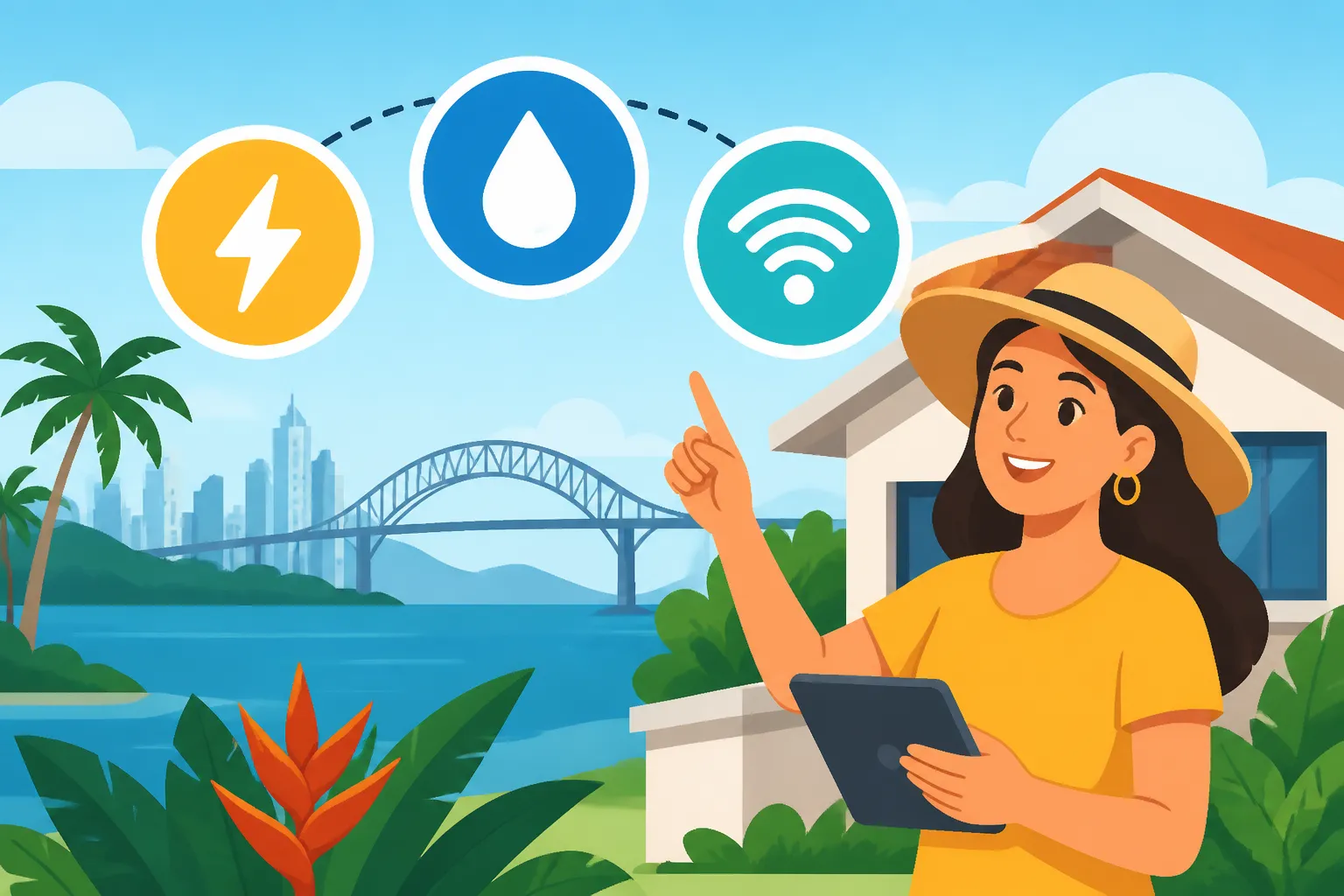
Moving to Panama, whether for a new job, retirement, or just a change of scenery, brings with it a vibrant culture and stunning scenery. But let's be real, beneath the tropical charm lies a bureaucratic landscape that can make even the simplest tasks, like setting up electricity, water, or internet, feel like an Olympic sport. Many expats arrive here feeling overwhelmed by the sheer amount of paperwork, the language barrier, and the often-unpredictable processes. This guide is designed to demystify the utility setup in Panama, walking you through the ins and outs of getting your new home connected so you can focus on enjoying your Panamanian life.
Understanding the Panamanian Utility Landscape
When you first arrive, it’s easy to assume that setting up your home essentials will be as straightforward as it was back home. You fill out a form online, maybe make a quick call, and poof, you’re connected. Here in Panama, however, it’s a different beast entirely. You're entering a system that, while functional, operates at its own pace and with its own set of rules, often demanding a generous dose of patience and a stack of photocopies.
The Initial Shock: Acknowledge the Bureaucracy
Let's start with a little dose of reality: Panama’s administrative systems can be… well, let's just say they're unique. For many expats, the sheer amount of paperwork required for even basic services, coupled with processes that often feel opaque and the ever-present language barrier, can be incredibly frustrating. You might walk into an office with what you think are all the necessary documents, only to be told you need one more obscure paper, or that the person you need to speak with isn't in today. This isn't a reflection of you; it's simply how things operate here, and validating that frustration is important. You're not alone in feeling like you're constantly jumping through hoops.
It’s not always a single, streamlined portal for everything either. Unlike countries where you can easily manage all your utility accounts from a single online dashboard or app, here in Panama, you’ll likely be dealing with separate entities for electricity, water, and internet, each with its own procedures, online systems (if they have them), and customer service quirks. This can mean juggling multiple appointments, remembering different account numbers, and sometimes, taking a deep breath and mentally preparing for a waiting game. Embrace the phrase "tranquilo, tranquilo" – slowly, slowly – because rushing things rarely helps, and can often just lead to more stress.
Key Utility Providers and Their Reach
To begin navigating this system, it helps to know who the main players are. Understanding who provides what service and where can save you a lot of headache. While some areas might have slightly different smaller providers, these are the big ones you'll most likely encounter:
When it comes to electricity, Panama is primarily served by two major distributors. Naturgy (formerly known as Gas Natural Fenosa) typically covers the Panama Oeste region, which includes popular expat areas like Coronado, Gorgona, and parts of the interior. Then there's ENSA, which handles Panama Metro, Darién, and Colón, encompassing Panama City and its surrounding metropolitan areas. You won't get a choice between the two; your location dictates which company serves you. Both have been making strides with online portals and apps, but for initial connections or complex issues, a visit to their physical office often remains the most effective (and sometimes, the only) route.
Water service across the vast majority of the country is the sole domain of IDAAN (Instituto de Acueductos y Alcantarillados Nacionales). As a state-run entity, IDAAN holds a monopoly, which unfortunately often translates to a customer service experience that leaves much to be desired. Many expats find IDAAN to be the most challenging utility to deal with, frequently citing issues like inconsistent billing, slow response times for repairs, and sometimes, inexplicable service interruptions. It's a universal struggle, so don't feel singled out if you experience it.
For your internet and phone services, you'll generally be choosing between a few key players. Cable & Wireless, operating under the brand name Más Móvil, is a prominent provider for both mobile and home internet services, often offering competitive packages. Tigo (which acquired the operations of Telefónica Movistar in Panama) is another major contender, especially strong in mobile services and expanding its fiber optic internet footprint. Then there's Liberty, which recently took over what was formerly Cable Onda, and offers a comprehensive suite of internet, TV, and landline services. Each has its own coverage areas and service quality, so it's wise to ask neighbors or local community groups about their experiences in your specific area. Smaller mobile-only providers like Digicel also exist, but for integrated home internet, the first three are your primary options.
Navigating Electricity Setup in Panama
Electricity is undoubtedly one of the first utilities you'll need sorted. Imagine moving into your dream Panamanian home, only to find yourself plunged into darkness once the sun sets because you didn't account for the administrative process. It's a common oversight for newcomers. Whether your new place is a brand-new build or an existing rental, getting that power connected requires a structured approach.
Getting Your New Home Connected or Transferring Service
The process of getting electricity can vary slightly depending on whether you're moving into a place that already had power (and you're just transferring the account) or if it's a completely new installation. For an existing connection, the good news is that the infrastructure is already there, but you still need to transfer the account into your name. For this, you’ll need a robust "Panamanian file" of documents. This typically includes a copy of your passport and your residency visa or cédula (Panamanian ID card). If you're renting, you'll need a copy of your signed rental agreement. If you own the property, bring a copy of the property title. Critically, if you're transferring service, try to get a copy of the last electricity bill from the previous tenant or owner. This proves there was an active connection.
Your first step will often be a visit to the nearest Naturgy or ENSA office, depending on your location. While both companies are working towards more digital solutions, for foreigners making their initial connection, an in-person visit is often still the most reliable way to ensure all documents are properly presented and questions answered. Be prepared for potential queues, and remember to bring all your documents – originals and several photocopies. You'll fill out a request form, which might be in Spanish, so having a basic grasp of the language or a local friend to assist can be immensely helpful. The representative will process your request, and if everything is in order, they'll typically give you an estimated timeframe for activation, which can range from a few days to a week or two, depending on demand and complexity.
Moving into a brand new construction can be a bit more involved, as it might require a new meter installation and connection to the grid for the very first time. In this scenario, you'll need the same personal identification documents, plus proof of property ownership and, potentially, an electrical inspection certificate from the municipality (though often the developer handles this part for new homes). The process will start at the utility company's office, but the installation might take longer, as it involves dispatching a technical crew. It’s crucial to initiate this as soon as possible after taking possession of your property. If you're buying a new home, your real estate agent or lawyer can often guide you through the initial steps, as they are familiar with the local development processes.
Understanding Your Electricity Bill and Payment Options
Once you’re connected, the next step is understanding your monthly bill. Panamanian electricity bills can look a bit different from what you're used to. They typically include a breakdown of your consumption in kilowatt-hours (kWh), a fixed charge, and various taxes and surcharges. Don't be surprised to see line items for things like "Aporte para Electrificación Rural" (contribution for rural electrification) – these are standard and part of the overall cost. The bill will clearly state your account number, due date, and the total amount owed. Keep these bills, especially when you Understanding Water and Utility Bills in Panama, as they are often required as proof of address for other services.
Paying your electricity bill is generally quite convenient, as both Naturgy and ENSA offer multiple options. You can pay directly through their respective mobile apps or online portals using a credit card or ACH transfer from a local Panamanian bank account. Many expats find linking their bills to their local bank account for auto-debit the easiest way to avoid late fees and service interruptions, once they've navigated The Expat Guide to Opening a Bank Account in Panama. For those who prefer in-person payments, you can settle your bill at most major banks like Banco General or Banistmo, at the customer service desks of large supermarkets such as Super 99 or El Rey, or at designated utility payment centers. Always ensure you get a receipt, whether digital or physical, and hold onto it!
Dealing with Power Outages and Service Issues
Power outages are a fact of life in Panama, particularly during the rainy season when heavy downpours, strong winds, and lightning can damage infrastructure. They can range from a brief flicker to several hours without power. While they can be annoying, they're usually temporary. Both Naturgy and ENSA have systems for reporting outages and checking service status. You can typically call their customer service lines, use their mobile apps, or even check their social media channels (like Twitter/X) for updates, as they often post information in Spanish about affected areas.
Preparation is key for dealing with these inevitable disruptions. Investing in good quality surge protectors for all your electronics is non-negotiable, as power fluctuations can damage sensitive equipment. For internet, a UPS (Uninterruptible Power Supply) for your modem and router can keep you connected for a short while during an outage. Many expats also keep a "power outage kit" ready, complete with flashlights, battery-operated fans, and fully charged power banks for phones. If you have significant or repeated issues with your service, document everything – dates, times, and how long the outage lasted – as this information can be useful if you ever need to formally complain or seek compensation, though the latter is rare.
Water Service with IDAAN: A Test of Patience
Ah, IDAAN. For many expats, this is where the real "Panamanian experience" of utility setup truly begins. Unlike the private electricity companies, IDAAN is a government entity, and its services often come with their own set of unique challenges that can test the limits of your patience.
Connecting to IDAAN: The Necessary Bureaucracy
Connecting your water service with IDAAN often feels like stepping back in time. While some progress has been made with online services in recent years, for initial hook-ups or transfers, you will almost certainly need to visit one of their regional offices. And let me tell you, this isn't a quick stop. Expect queues, sometimes long ones, and remember that "expedited service" is a concept that doesn't always translate smoothly here. The documents required are very similar to what you needed for electricity: your passport, residency visa or cédula, and either your rental agreement or property title. If you're moving into a newly constructed home, you'll also need construction permits and possibly an occupancy certificate.
The sheer volume of paperwork and the multi-step process can be daunting. You might find yourself shunted from one window to another, needing different stamps or signatures. A common frustration is the lack of clarity; what one IDAAN employee tells you, another might contradict. This is where having a local friend or a reputable Panamanian lawyer assist can be incredibly valuable. They understand the nuances, the "who to ask" and the "how to ask" that can significantly smooth the process. Be prepared for several visits, and always bring multiple copies of all your documents, because you never know what they might ask for on any given day. Remember, the goal is to leave the office with a clear understanding of the next steps and, ideally, a reference number for your service request.
Decoding Your Water Bill and Making Payments
Once your water service is active, your IDAAN bill will eventually arrive. These bills can sometimes be a mystery. While ideally they're based on meter readings, in many areas, particularly older neighborhoods or buildings, the billing might be based on an estimated flat rate or average consumption. This can lead to situations where your usage doesn't seem to correlate with the amount you're being charged. You might also notice that the bills don't always arrive like clockwork, which can be problematic if you're trying to pay on time.
Payment options for IDAAN are similar to electricity. You can pay through the online portals of most major Panamanian banks, or in person at bank branches like Banco General or Banistmo. Some payment collection centers and supermarkets also accept IDAAN payments. It’s absolutely critical to pay your IDAAN bill on time. Unlike electricity, where a late payment might just incur a fee, IDAAN is notorious for quickly cutting off service for non-payment. Reconnecting water service can be an even more arduous and frustrating process than the initial connection, involving additional fees and significant delays. So, set up reminders, use auto-pay if comfortable, and always keep those payment receipts! For a deeper dive, check out our guide on Understanding Water and Utility Bills in Panama.
Tackling Water Shortages and Low Pressure
Just like power outages, water shortages and low pressure are not uncommon issues in certain parts of Panama, especially during the dry season (roughly December to April) or in areas experiencing rapid development. You might wake up some mornings to find no water coming out of the tap, or just a trickle. This can be due to scheduled maintenance, pipeline repairs, or simply insufficient supply to meet demand in your area. Again, while frustrating, it's a common experience.
Reporting these issues to IDAAN can sometimes feel like shouting into a void. Their customer service lines can be difficult to get through, and response times for repairs can be slow. However, it's still important to report it, as consistent reporting can sometimes lead to action, or at least help them understand the scope of the problem. Many expats in affected areas invest in home solutions like large water storage tanks (often seen on rooftops or beside houses) and booster pumps to ensure a consistent supply and adequate pressure. It's also a good idea to chat with your neighbors; they'll often be the first to know about planned outages or specific local issues, and might have their own workarounds. Community solidarity can be a real blessing when dealing with IDAAN's quirks.
Getting Connected: Internet and Mobile Phone Services
In today’s connected world, reliable internet and mobile phone service aren’t luxuries, they’re necessities. Whether it's to stay in touch with family back home, manage your finances, or simply stream your favorite shows after a long day of navigating Panamanian life, getting connected quickly and efficiently is paramount.
Choosing Your Internet and TV Provider
When it comes to home internet and TV, your main options in Panama will typically be Cable & Wireless (Más Móvil), Tigo, and Liberty (formerly Cable Onda). Each provider has its strengths and weaknesses, and their coverage and service quality can even vary from neighborhood to neighborhood. For instance, one provider might have excellent fiber optic coverage in a particular Panama City high-rise, while another offers better speeds in a specific expat community in the interior. It’s always a smart move to ask your new neighbors or local expat groups which provider they use and what their experience has been like. You can often find excellent advice in community forums, which helps you choose the best provider based on real-world experiences.
These companies frequently offer attractive bundles that combine internet, cable TV, and sometimes a landline phone service. Often, bundling these services can be more cost-effective than purchasing them individually. When you visit their sales offices (found in most major shopping malls) or check their websites, they'll present you with various package options based on internet speed (e.g., 100 Mbps, 300 Mbps, 1 Gbps) and the number of TV channels. Be sure to clarify the exact terms, monthly fees, and any installation charges. The installation process usually involves scheduling a technician visit, which can sometimes have a lead time of several days to a couple of weeks, so plan accordingly. Getting ahead of this is key, as you don't want to be without internet when you're trying to How to Set Up Internet and Mobile Service in Panama.
Setting Up Mobile Phone Service
For mobile phone service, the process is generally much simpler. You have the same main players: Más Móvil, Tigo, and Digicel. For immediate connectivity upon arrival, the easiest route is to purchase a prepaid SIM card. These are readily available at kiosks in Tocumen Airport, in all major supermarkets, pharmacies like Arrocha, and any mobile phone store. All you typically need is your passport to register the SIM. With a prepaid plan, you top up your balance as needed, either online, through an app, or at various retail locations. This is a great way to get started and allows you to use your phone immediately for calls, texts, and mobile data without the commitment of a contract.
If you plan to stay long-term, a postpaid contract might be more economical and convenient. For a postpaid plan, you’ll generally need your passport, your Panamanian residency cédula (if you have it), proof of address (a utility bill often suffices), and sometimes a bank statement or proof of income. The requirements can be a bit stricter than prepaid, but you'll get a monthly bill and a set amount of data, calls, and texts. For those first few days or weeks before you're fully set up with a local SIM or during transit, a global eSIM provider like Airalo can be a lifesaver. You can download an eSIM before you even land, ensuring you have data access for navigation, communication, and looking up local information right from the moment you step off the plane. This bypasses the immediate need to find a local SIM and gives you breathing room to choose the best long-term option. Our guide on How to Choose a Mobile and Internet Provider in Panama dives deeper into the pros and cons.
Troubleshooting Connectivity Issues
Even with the best providers, you might encounter slow internet speeds, intermittent outages, or other connectivity issues. This is a normal part of life here, just like anywhere else, but it can be particularly frustrating when you're relying on that connection for everything. Your first line of defense should always be the provider's official customer service channels. Many now have WhatsApp numbers, dedicated apps, or online chat features, which can sometimes bypass the language barrier more effectively than a phone call.
When contacting customer service, be prepared to be persistent. It might take several attempts or follow-ups to get an issue fully resolved. If you're struggling with Spanish, try to have a translator app ready, or ask a Spanish-speaking friend for help. Many technicians dispatched for home visits might not speak English. Documenting the problem (screenshots of speed tests, dates and times of outages) and keeping records of your interactions with customer service can be invaluable if the problem escalates or recurs. Sometimes, the issue might even be with your own router or devices, so a quick reset or check of your equipment can often solve minor glitches.
Other Essential Utilities and Services
Beyond the big three of electricity, water, and internet, there are a few other services that contribute to a comfortable and functional home in Panama. Thinking about these early on can help you integrate smoothly into your new environment.
Waste Management and Recycling
Waste collection in Panama is primarily managed by the Autoridad de Aseo Urbano y Domiciliario (AAUD), a municipal entity responsible for residential and urban waste. Generally, waste collection fees are either incorporated into your property tax bill if you own your home, or occasionally a small separate fee is included in your monthly maintenance (HOA) fees if you live in an apartment or gated community. In some rural areas, a small, separate monthly fee is charged directly. The collection schedule varies widely by neighborhood, so it's essential to find out your specific pickup days from neighbors, your landlord, or your building administration. Typically, you'll place your bagged trash out on the curb on the designated days.
Recycling, unfortunately, is still a developing concept in many parts of Panama. While major cities like Panama City have seen growth in private initiatives and some commercial recycling points, comprehensive curbside recycling programs are not yet widespread. You'll find a few dedicated recycling drop-off points for plastics, paper, and glass in specific areas, often organized by NGOs or private companies. Some expat communities, particularly in the interior like Boquete or Coronado, have more robust community-driven recycling efforts. If recycling is important to you, you'll need to research local options in your specific area. Don’t expect the same level of recycling infrastructure you might be used to back home, but there are growing efforts to improve it.
Gas and Propane Services
For most residential properties in Panama, natural gas pipelines are not common. Instead, cooking and water heating typically rely on propane gas (referred to locally as gas licuado or tanque de gas). You'll usually have a refillable propane tank, often a large, red cylinder, located outside your home or on a balcony. When the tank runs low, you can either exchange it for a full one at local mini-supermarkets, hardware stores (ferreterías), or call a distributor like Tropigas or Panagas for home delivery. Delivery services are quite convenient; you just call their number, and a truck will usually arrive within a few hours to exchange your empty tank for a full one. You typically pay cash upon delivery.
If your building has centralized gas, this will usually be managed through your building’s administration, and a gas charge will be included in your monthly HOA fees. However, this is less common than individual propane tanks. It's crucial to understand how your specific property handles gas, especially for safety. Always ensure proper ventilation around propane tanks, and if you ever smell gas, turn off the tank and contact your provider immediately. Safety around these tanks is paramount, and it's something many expats might not have encountered in their home countries.
Home Security and Monitoring
Depending on where you live in Panama, home security can be an important consideration. While many areas are safe, crime can occur, just like in any major city or developing country. Many apartment buildings in Panama City come with 24/7 security guards and controlled access, offering a good baseline level of safety. For standalone homes, especially in quieter neighborhoods or rural areas, additional security measures might be advisable.
Options for home security include traditional alarm systems, CCTV cameras, and professional monitoring services. Companies like SASA Seguridad or the security arm of providers like Liberty offer various packages that can be integrated with your home internet. These services often provide 24/7 monitoring, rapid response in case of an alarm, and smartphone apps for remote viewing and control of your security system. It's a personal choice based on your comfort level and the specifics of your location, but it's certainly something to factor into your "settling in" checklist. Talking to neighbors about local security concerns and recommendations can provide valuable insight.
Practical Tips for Expats Navigating Utilities
Navigating the utility landscape in Panama can feel like an endless series of small battles. But with the right mindset and a few strategic approaches, you can emerge victorious, or at least less stressed. These tips come from years of personal experience and the shared wisdom of the expat community.
The Power of Persistence and a Good Lawyer
One of the biggest lessons you'll learn as an expat in Panama is the importance of paciencia. Things move at their own rhythm here, and that rhythm is often slower than what you might be accustomed to. Don't expect instant solutions or immediate callbacks. You might need to make multiple visits to the same office, speak to several different people, or call customer service repeatedly. The key is polite persistence. Be firm but respectful, and always keep a calm demeanor. Getting angry or frustrated often makes the process even harder. If you feel like you're hitting a brick wall, step away, regroup, and try again another day with a fresh perspective.
For more complex situations, especially if you’re buying property or facing a significant dispute that you can't resolve through regular channels, consulting a reputable Panamanian lawyer is not just recommended, it's essential. They understand the legal framework, know the right people to contact, and can often cut through red tape that would otherwise halt your progress. For instance, when dealing with How to Complete the Property Purchase and Title Process in Panama, a good lawyer is indispensable. They can clarify your rights, translate complex documents, and represent your interests when you're feeling overwhelmed. Don't underestimate the value of professional legal guidance in this country.
Documentation is King: Keep Everything!
If there's one piece of advice I can give you about dealing with anything administrative in Panama, it’s this: document, document, document! This isn't just about keeping your original documents safe; it's about making and keeping multiple photocopies of absolutely everything. Your passport, your visa, your cédula, your rental agreement, your property title, every utility bill, every payment receipt, every service request form, every email confirmation – keep it all. Make digital copies too, stored securely in the cloud or on a USB drive.
I've learned to carry what I call my "Panamanian file" – a small accordion folder filled with copies of all my essential documents. You never know when you'll be asked for a copy of your passport or a utility bill as proof of address, even for things that seem unrelated. Having everything organized and easily accessible will save you countless trips home or frantic searches. This meticulous record-keeping is your best defense against administrative mix-ups and your clearest path to proving your history with any service provider.
Embrace Technology (When It Works)
While Panama's bureaucracy can feel old-school, many service providers are increasingly adopting technology to make things easier. Both Naturgy and ENSA have mobile apps that allow you to check your bill, report outages, and even make payments. Your internet and mobile providers like Más Móvil, Tigo, and Liberty also have apps for managing your accounts, checking data usage, and paying bills. Embracing these digital tools, despite their occasional glitches, can often save you a trip to a physical office. For more on this, check out our guide on How to Pay Your Utility Bills in Panama.
Online banking with a local Panamanian bank (like Banco General or Banistmo) is also incredibly useful for managing and paying your utility bills automatically or manually from the comfort of your home. You can schedule recurring payments, review past transactions, and generally keep a tighter leash on your finances. When you're trying to communicate with service providers who might not speak English, translation apps like Google Translate can be invaluable. Don’t be afraid to pull out your phone and type in what you need to say. Additionally, remember that platforms like Sirelo can be excellent resources for expats, offering advice and even connecting you with services that can help with the complexities of relocation, including utility setup. Leveraging all available technology, while understanding its limitations, is part of successfully integrating into Panamanian life.
Here's a quick overview of the main utility providers:
| Utility Service | Primary Providers | Typical Payment Options | Common Issues for Expats |
|---|---|---|---|
| Electricity | Naturgy (West), ENSA (East/Metro) | Online, Banks, Supermarkets | Initial connection, power outages, inconsistent billing details. |
| Water | IDAAN | Online (banks), Banks | Slow response, inconsistent billing, water shortages, low pressure. |
| Internet/TV | Cable & Wireless (Más Móvil), Tigo, Liberty | Online, Banks, Service Centers | Installation delays, variable speeds, customer service language barrier. |
| Mobile Phone | Más Móvil, Tigo, Digicel | Prepaid top-up, Postpaid (banks) | Postpaid requirements, coverage in rural areas. |
| Propane Gas | Tropigas, Panagas | Cash on delivery, Supermarkets | Coordinating delivery, understanding tank sizes. |
| Waste Mgmt. | AAUD (Municipal) | Included in property tax/HOA | Irregular collection schedules, limited recycling options. |
Disclaimer
Please remember that while this guide offers comprehensive advice based on current information and common expat experiences in Panama, utility services, regulations, and processes can change. It is always advisable to verify the most up-to-date requirements directly with the service providers or consult with a local professional such as a real estate agent, lawyer, or relocation specialist when setting up your utilities in Panama.