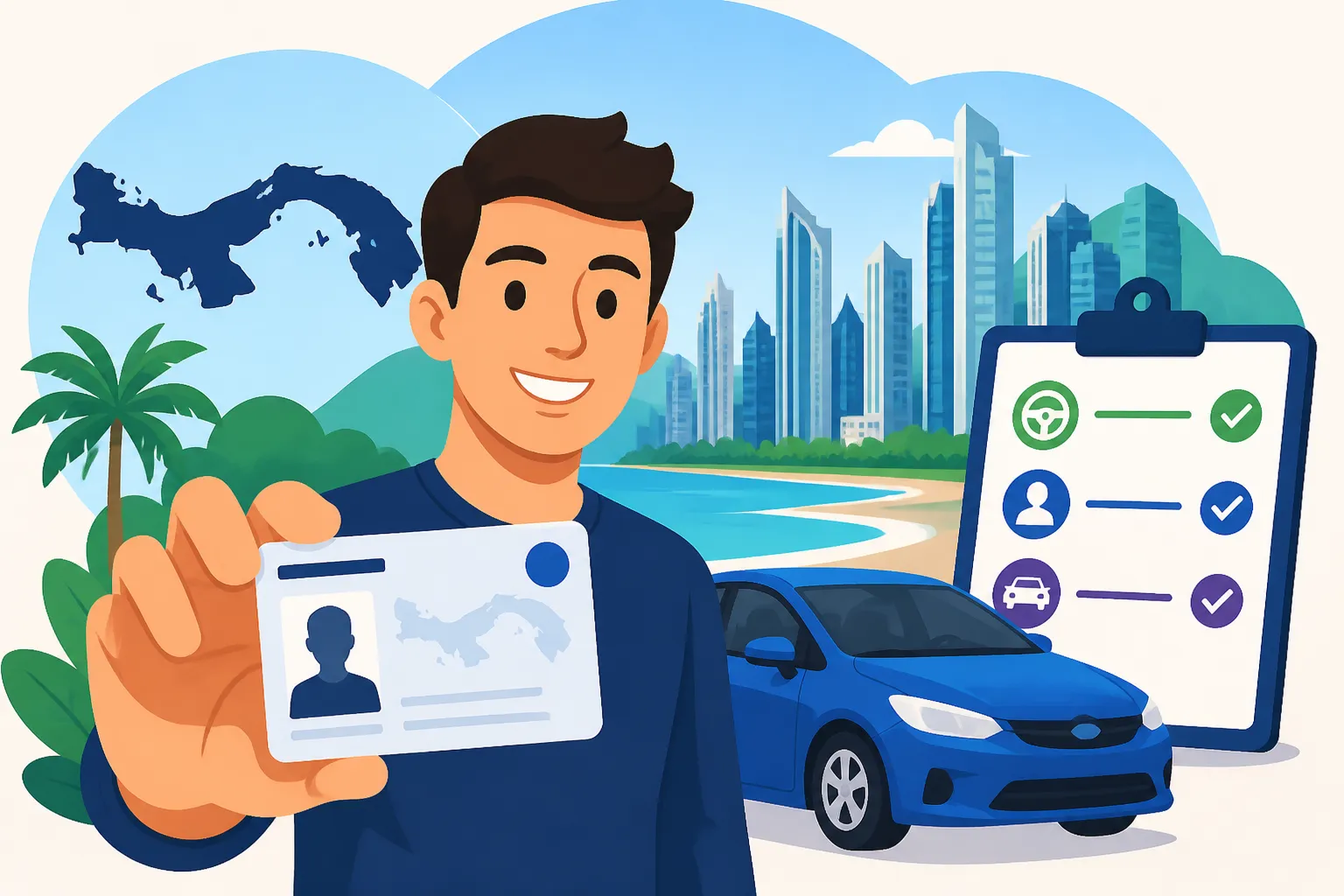
How Do I Get a Driving Licence with My Residency in Panama?
Oh, the Panamanian driving license! This is one of those administrative hurdles that can feel like a real rite of passage when you first move here, isn't it? After you’ve jumped through all the hoops for your residency, getting that local license might seem like a small thing, but it’s crucial for truly settling in and feeling independent. You’re not alone if the thought of dealing with another government office makes you want to lie down in a dark room. This guide is going to walk you through exactly how to get your Panamanian driving license once you have your residency, demystifying the process step by step, so you can hit the road with confidence.
Navigating Your Driving Privileges as a New Resident
When you first arrive in Panama with your shiny new residency, it’s natural to wonder about driving. Can you just keep using your home country’s license forever? The short answer is, unfortunately, no. While tourists usually get a grace period of 90 days to drive on their foreign license, once you establish residency and get your cédula, the rules change. Your foreign license is generally valid for only 90 days from your last entry into Panama. After that, legally, you need a Panamanian license. Ignoring this can lead to fines, headaches with police stops, and complications with insurance if you ever get into an accident.
It's a critical step towards full integration. Think of it this way: your Panamanian driver's license, alongside your cédula, becomes another essential piece of identification here. It tells local authorities you're a long-term resident, you've gone through the proper channels, and you understand the local traffic laws (or at least, you're expected to!). Plus, relying solely on taxis or buses can be limiting, especially outside Panama City. Having your own wheels means freedom to explore the interior, run errands, and truly experience all that Panama has to offer, from the bustling city streets to the tranquil beaches and highlands. You'll want to review your options for transportation in the city in our guide on The Expat Guide to Public Transport in Panama, but for true freedom, a car and local license are key.
The Initial Grace Period and Why It Changes with Residency
For tourists, Panama's law allows driving with a foreign license for up to 90 days from the date of your last entry stamp in your passport. This is a pretty standard allowance in many countries. However, once you become a resident, hold a cédula, and are seen as permanently established, that 90-day window from your tourist entry becomes less clear. Immigration officials and transit police can, and often do, interpret the 90-day rule strictly from the date of your residency approval, or even from your very first entry if you didn't leave and re-enter.
The core reason for this shift is that residents are expected to comply with national regulations. You're no longer a temporary visitor; you're part of the system. This means adhering to local requirements for identification, which includes a local driver's license. From an insurance perspective, too, having a valid Panamanian license is paramount. Many local insurance providers will require it, and if you're ever in an accident without one, your claim could be denied, leaving you with substantial costs.
Why a Panamanian License is More Than Just a Permit to Drive
Beyond legal compliance, a Panamanian driver's license serves several practical purposes. Firstly, it often acts as a secondary form of ID alongside your cédula. When you need to pick up a package, open a bank account, or even just buy a beer, showing your Panamanian license confirms your identity and age in a universally recognized format here.
Secondly, it simplifies interactions with traffic police. Panama's traffic enforcement can be a bit… nuanced. Having a local license demonstrates you've gone through the proper channels, potentially easing any minor infractions or misunderstandings. It shows you're not just passing through. It's part of the fabric of your new life here, like understanding How Panama's Health System Works: CSS and Private Care Explained (2027) or knowing how to set up your utilities. The more local documentation you have, the smoother your day-to-day life becomes.
The Step-by-Step Process to Convert Your Foreign Licence
Alright, let's get down to brass tacks. Converting your foreign license to a Panamanian one isn't rocket science, but it is a process that requires patience, attention to detail, and often, multiple visits. The main authority you'll be dealing with is the Autoridad del Tránsito y Transporte Terrestre (ATTT) through its service centers, known as SERTRACEN.
The good news is that Panama usually allows you to homologate or validate your existing foreign driver's license, meaning you often won't have to retake driving tests (unless your home country doesn't have a reciprocal agreement or your license isn't easily verifiable). Most major countries' licenses are eligible for this.
Step 1: Gathering Your Core Documents and Official Translations
Before you even step foot in a SERTRACEN office, you need to have your ducks in a row. The document requirements are specific, and missing even one detail can send you home to start over.
- Your Valid Foreign Driver's License: This must be current and in good standing. Make sure it hasn't expired!
- Your Passport: The original, along with a photocopy of the main biodata page and the page with your last entry stamp into Panama.
- Your Panamanian Cédula (Residency ID): Original and a clear photocopy. This is non-negotiable for residents. If you're still waiting for your permanent cédula and only have a provisional one, bring that along with any supporting immigration documents. You can learn more about this in How to Get Your Cedula (Residency ID) in Panama.
- Apostilled or Authenticated Driving Record/History from Your Home Country: This is often the trickiest part. Panama requires official verification that your license is legitimate and you have a clean driving record.
- Apostille: If your home country is a signatory to the Hague Apostille Convention (like the USA, UK, Canada, Australia, most of Europe), you'll need to obtain an Apostille on your driving record. This is typically done through your country's Secretary of State or equivalent authority.
- Authentication: If your country is not a signatory, you'll need to get your document authenticated by the Panamanian Consulate in your home country, and then sometimes by the Ministry of Foreign Affairs in Panama. This adds another layer of bureaucracy and time.
- Translation: If your driving record is not in Spanish, it must be translated by an officially recognized public translator in Panama. Do not try to do this yourself or use an unofficial translator; it will be rejected. This is often an additional cost, usually ranging from $20-$50 per page, and can take a few days.
- Proof of Blood Type: Panama requires your blood type to be on your license. If it's not on your current license or a readily available medical record, you'll need to get a quick blood test here in Panama. Many clinics and even some pharmacies offer this for a small fee (around $5-$10). They'll give you a small card or certificate.
Once you have your foreign license, passport, cédula, apostilled/authenticated driving record (translated if necessary), and proof of blood type, you are ready for the next steps. Remember, if you’re organizing your move to Panama, services like Sirelo can often provide guidance on the document requirements for international relocations, although specific driving license rules are highly local.
Step 2: The Medical Examination (Visual and Auditory)
Before heading to SERTRACEN, you need a medical certificate confirming your vision and hearing are adequate for driving. You can get this done at one of the many clinics near SERTRACEN offices, or at a private clinic. It's a quick, straightforward process:
- Eye Test: You'll read letters off a chart.
- Hearing Test: They might whisper numbers or use a simple audiometer.
- General Check-up: They'll confirm you don't have any obvious medical conditions that would impair your driving.
This exam costs around $10-$20 and you'll receive a certificate immediately. It’s usually valid for a few months, so don’t get it too far in advance of your SERTRACEN visit.
Step 3: Visiting SERTRACEN for Verification and Processing
This is where the rubber meets the road, so to speak. Head to your nearest SERTRACEN office. The main ones in Panama City are usually quite busy. Go early in the morning to avoid the longest queues.
- Information Desk: First, you'll usually stop at an information desk where they'll quickly review your documents to ensure you have everything. This is a crucial filter; if anything is missing, they'll tell you to get it before proceeding.
- Document Submission & Verification: You’ll be directed to a counter to submit your complete set of documents. They will scrutinize your foreign license, passport, cédula, the apostilled driving record, medical certificate, and blood type proof. They’ll likely make copies and return your originals. They will verify your foreign license with their system or through international databases, which is why the apostille is so critical.
- Fingerprints and Photo: Once your documents are approved, you’ll be asked to provide fingerprints and have your photo taken for the new license. This is standard procedure.
- Payment: You'll pay the fee for the license issuance. As of early 2024, a standard Class C (private vehicle) license costs around $40, but this can change, so always budget a bit more.
- Signature: You'll sign an electronic pad to confirm the details.
The entire process at SERTRACEN can take anywhere from a couple of hours to half a day, depending on the queue and the efficiency of the staff that day. Be prepared to wait, and bring something to read or do on your phone.
Step 4: Receiving Your Panamanian Driving Licence
If all goes well, and your documents are verified and processed, you should receive your new Panamanian driving license on the same day! It’s usually printed right there. Double-check all the details on the card – your name, cédula number, and license class – before you leave the counter. If there are any errors, it's much easier to get them corrected on the spot.
Congratulations! You’re now officially ready to drive in Panama. Remember to always carry your license, cédula, and vehicle registration documents with you when driving.
Essential Documents and Preparations for SERTRACEN
Navigating bureaucracy in Panama means being meticulous. Any missing paper, an un-apostilled document, or an unofficial translation can set you back significantly. Let’s dive deeper into what makes or breaks your application.
The Importance of a Clean Driving Record and its Authentication
Your driving record from your home country is perhaps the most scrutinized document next to your passport and cédula. Panama wants to ensure you don’t have a history of serious offenses that would make you a risk on their roads.
- What to Request: You typically need an official driving record or abstract that shows your license status, issue date, expiration date, and any infractions or points. This is usually obtained from your Department of Motor Vehicles (DMV) or equivalent.
- The Apostille vs. Authentication Headache: This is where many expats hit a snag. As mentioned, an Apostille certifies the authenticity of a document for use in another country that is also part of the Hague Convention. If your country isn't, you're looking at a longer, two-step authentication process. It's vital to research this for your specific home country before you even move. Plan for this well in advance, as obtaining an Apostille can take several weeks or even months, especially if you're doing it from abroad. Trying to manage this remotely can be a logistical challenge. Think of it like organizing your entire relocation; preparation is key. You might consider professional services like those that help with Understanding How to Move to Panama Legally from Abroad (2027) to ensure all your pre-move documents are in order.
The Medical Exam: More Than Just a Formality
While the medical exam is quick, it’s not just a box-ticking exercise. It's a fundamental requirement to ensure road safety.
- Where to Go: You’ll find many small clinics conveniently located near SERTRACEN offices. They cater specifically to this service. Ask around or use Google Maps for "exámenes médicos para licencia de conducir Panama." Most private hospitals or larger clinics can also do this, but they might be more expensive.
- What the Doctor Looks For: They're not doing a full physical. It's primarily about:
- Visual Acuity: Can you see clearly enough to drive? If you wear glasses or contact lenses, make sure to bring them. Your license will note if corrective lenses are required.
- Auditory Acuity: Can you hear well enough to react to horns or emergency vehicles?
- Basic Physical Coordination: Are there any obvious physical impediments?
- Blood Type: This is often done at the same location if you don't have proof. They'll do a quick finger prick.
- Cost and Validity: Expect to pay around $10-$20 for the exam. The certificate usually has a validity period (e.g., 3 months), so don't get it too far ahead of your SERTRACEN visit.
A little tip for peace of mind: while the medical exam for your license is basic, if you're setting up a new life, it's always good to consider comprehensive health coverage. Some expats opt for international health insurance providers like Cigna Global to ensure they have excellent care for more serious medical needs, should they arise in Panama. This is separate from the license requirement, but an important part of overall expat preparedness.
Navigating the Language Barrier and Panamanian Customer Service
Let's be realistic: while Panama is an international hub, Spanish is the official language. While you might find English speakers at SERTRACEN, especially in Panama City, it's not guaranteed.
- Bring a Spanish Speaker: If your Spanish isn't strong, bring a Panamanian friend, colleague, or even hire a translator for your visit to SERTRACEN. This can dramatically reduce stress and misunderstandings.
- Patience is a Virtue: Panamanian bureaucracy can operate at its own pace. Lines can be long, and processes can seem inefficient. Go in with a positive attitude and plenty of patience. Getting frustrated won't speed anything up.
- Be Polite and Respectful: A little "Buenos días" and "Por favor" goes a long way. Panamanian customer service, like in many cultures, responds well to politeness and respect.
Remember, this isn't just about documents; it's about navigating a new system. The more prepared you are mentally and practically, the smoother the journey will be.
Tips for a Smooth Experience and What Comes Next
You've done the hard work, gathered the papers, and braved the government offices. What else should you keep in mind to make this process as painless as possible?
Common Pitfalls to Avoid
Even with a detailed guide, a few things can still trip up expats. Forewarned is forearmed!
- Expired Documents: Double-check all expiration dates – your foreign license, passport, and even the medical certificate. An expired document means an automatic rejection.
- Unofficial Translations: As mentioned, only official Panamanian public translators are accepted. Don't try to save a few bucks by using an online service or a friend who speaks Spanish. The ATTT staff will spot it.
- Incomplete Apostille/Authentication: Ensure your driving record's authentication is exactly what Panama requires. Sometimes people get an Apostille for the wrong document or miss a step in the multi-stage authentication process. Call your local Panamanian embassy or consulate well in advance to confirm the specific requirements for your country.
- Missing Photocopies: Always bring copies of everything, even if you think they won't be needed. It saves a trip to a nearby fotocopiadora if the SERTRACEN office doesn't have one or it's out of order.
- Assuming Your Home Country's Rules Apply: This is a big one. Panama has its own way of doing things. What was acceptable back home might not be here. Be prepared to adapt.
What to Do If You Encounter Issues
It's Panama, so chances are you might hit a minor snag or two. Don't panic.
- Ask for Clarification: If you're told a document is wrong or missing, politely ask exactly what is needed and where you can get it. Write it down if necessary.
- Remain Calm: Raising your voice or getting visibly angry will not help. It's often counterproductive.
- Seek Assistance: If you're really stuck, consider hiring a local facilitator or lawyer. While many expats manage this process themselves, sometimes a professional who knows the ins and outs can save you a lot of time and frustration. This is especially true if your situation is complex, or if you had issues with your initial immigration process (like detailed in The Complete Guide to Panama Visas and Immigration for Expats (2027)).
What Happens After You Get Your License?
Once you have your Panamanian driving license in hand, you’re good to go! But don't forget these important points:
- Always Carry It: When driving, your Panamanian license and your cédula are essential. Keep them on you.
- Learn the Local Rules: Panamanian traffic laws might differ from what you’re used to. Familiarize yourself with local signage, right-of-way rules, and common driving practices. For instance, Panamanians often use their hazard lights to indicate they are stopping or driving slowly, which can be confusing initially.
- Insurance: Ensure your vehicle insurance is valid and up-to-date. As a resident with a Panamanian license, you’re in a much stronger position for insurance claims.
- Renewal: Pay attention to the expiration date on your new Panamanian license. It will usually be valid for a few years, but you’ll need to renew it before it expires. The renewal process is typically simpler than the initial conversion.
Getting your Panamanian driving license is a significant step toward feeling truly at home and independent in Panama. It might test your patience, but once it’s done, you’ll have one less thing to worry about and one more piece of the puzzle of expat life in this vibrant country. Drive safely, mi amigo!
Disclaimer
The information provided in this guide is intended for general informational purposes only and does not constitute legal, financial, or professional advice. While we strive to keep the information up-to-date and accurate, regulations and procedures in Panama can change frequently. Expats are strongly advised to consult with relevant Panamanian authorities (such as the ATTT/SERTRACEN, immigration services, or a local lawyer) for the most current and specific advice pertaining to their individual circumstances. We do not assume any liability for decisions made based on the information provided herein.