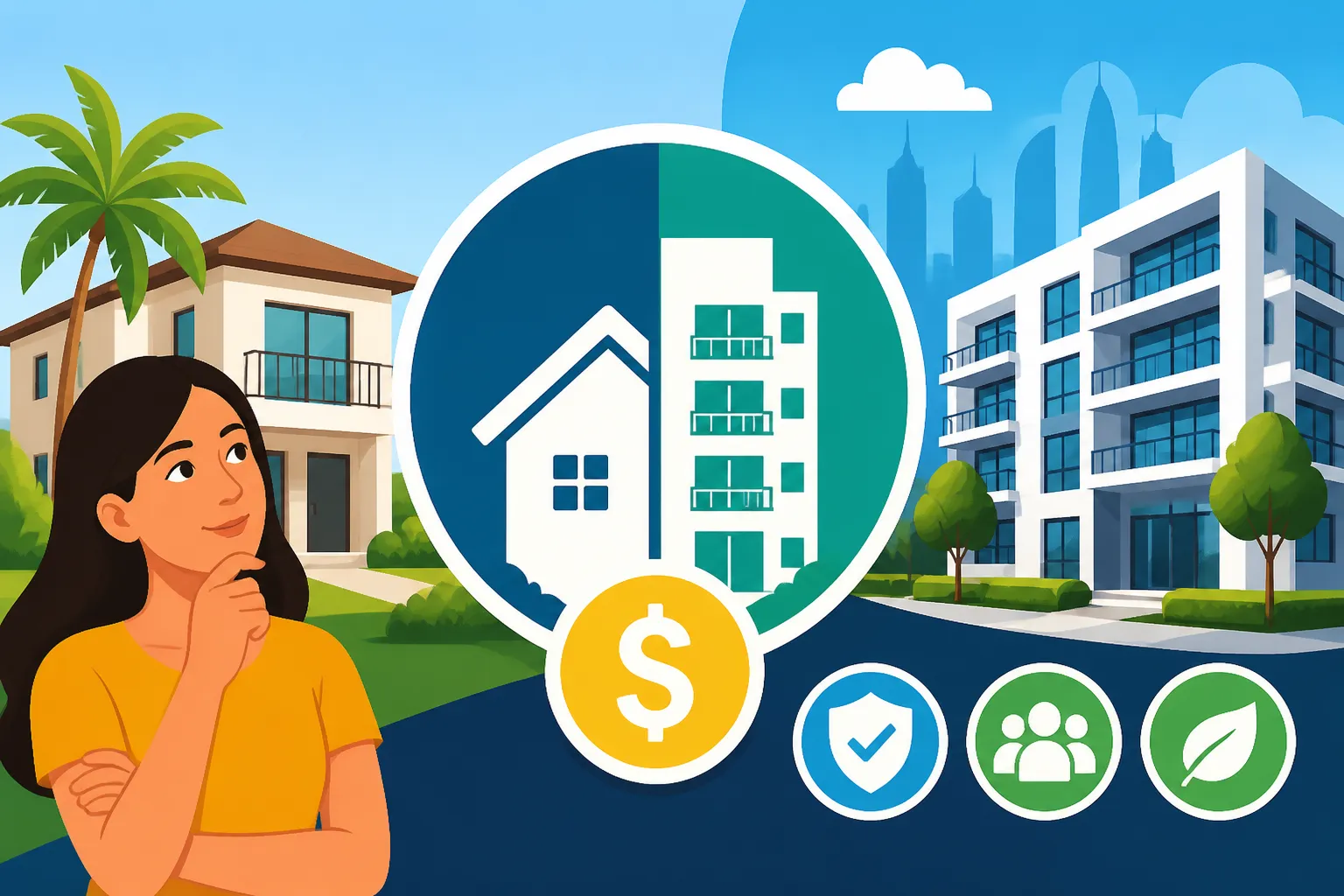
Understanding HOA and PH (Propiedad Horizontal) Fees in Panama
Ah, the joys of moving to a new country! Just when you think you’ve got a handle on the purchase price or monthly rent, you stumble upon those ever-present, sometimes mysterious, HOA or Propiedad Horizontal (PH) fees. It's a common expat frustration, feeling like there's always another expense lurking around the corner, especially when the terminology isn't quite the same as back home. This comprehensive guide is here to demystify PH/HOA fees in Panama, helping you understand what they are, what they cover, and how to navigate them without tearing your hair out.
What Are PH/HOA Fees and Why They Exist in Panama
When you buy or rent an apartment in a high-rise, a townhouse in a gated community, or even a unit in certain commercial plazas in Panama, you're not just paying for your individual space. You're becoming part of a collective, a shared living arrangement that requires coordinated management and funding to maintain common areas and services. This is where Propiedad Horizontal (PH) and Homeowners' Association (HOA) fees come into play – they are the lifeblood of these communities.
Defining Propiedad Horizontal (PH) in Panama
In Panama, the legal concept of Propiedad Horizontal, often shortened to PH, is similar to what many North Americans or Europeans call a condominium or strata title. It's not just about apartments in a tall building; it can also apply to horizontal developments, like rows of townhouses or individual homes within a secure, managed community. The key is that while you own or rent your specific unit, there are shared elements – walls, roofs, elevators, swimming pools, security gates, gardens, and infrastructure – that are jointly owned and managed by all residents.
Imagine moving into a beautiful tower in Costa del Este or a charming gated community in Boquete. Your individual apartment is yours, but the lobby where you greet guests, the gym where you work out, the pool where you cool off, and the roads leading to your door are all collective assets. The PH legal structure ensures that these shared assets are properly maintained and funded, creating a framework for community living that protects everyone's investment. Without this structure, you'd have chaos, with no one responsible for the shared roof that's leaking or the pool that's turning green.
The Role of the Administration and Homeowners' Associations
Every Propiedad Horizontal in Panama must have an administration. This administration, often overseen by a Board of Directors elected by the property owners, is responsible for the day-to-day management of the common areas. Think of them as the orchestrators of your community's well-being. They hire staff, manage budgets, ensure compliance with the building's regulations (the Reglamento de Copropiedad), and address resident concerns.
The Homeowners' Association (HOA) essentially refers to this collective body of property owners within a PH regime. While the term "HOA" might not be as commonly used in official Panamanian Spanish as "administración" or "Junta Directiva" (Board of Directors), the function is identical. Their primary goal is to preserve property values, maintain common amenities, and foster a harmonious living environment. This means ensuring that the building is clean, secure, and that all facilities are in good working order. For expats, understanding the structure and communication channels of your building's administration is paramount, even if it means brushing up on your Spanish or finding a helpful local.
Why These Fees Are Essential for Community Living
Let's be real, nobody loves paying extra fees. But PH/HOA fees are genuinely essential for modern, multi-unit community living. They're not just an arbitrary charge; they are the financial engine that keeps the entire property running smoothly and protects your investment. Without these pooled funds, common areas would fall into disrepair, security would lapse, and amenities that drew you to the property in the first place would cease to function.
Consider a high-rise building. The elevators need regular maintenance, the roof needs repairs after a tropical downpour, and the facade needs cleaning. The swimming pool demands chemicals and cleaning, and the gym equipment requires servicing. All these things cost money, and individual owners cannot be expected to foot the bill every time something breaks. The fees ensure a continuous flow of funds for these necessities, contributing directly to the quality of life and the long-term value of your property. They transform a collection of individual units into a cohesive, well-managed home. For a deeper dive into overall expenses, you might want to read our guide on The Complete Guide to Cost of Living in Panama for Expats (2026).
What's Typically Included (and Not Included) in Your PH/HOA Fees?
One of the biggest mysteries for new residents is figuring out precisely what their monthly PH fees cover. It's rarely a one-size-fits-all answer, as the specifics can vary significantly depending on the building, its age, and the amenities it offers. However, there are some universal categories of expenses that these fees are designed to manage.
Common Area Maintenance and Utilities
This is usually the biggest chunk of your PH fees. It covers the upkeep and operational costs of everything outside your private unit but within the property's boundaries. Think about it: the pristine lobby you walk through, the manicured gardens, the sparkling swimming pool, and the fully equipped gym didn't just appear by magic; they require constant attention and resources.
Included here are services like daily cleaning of hallways, lobbies, and amenity spaces; landscaping for green areas; maintenance and repairs for shared infrastructure such as elevators, water pumps, generators, and fire safety systems. Also, the electricity and water bills for all common areas, like hallway lighting, pool pumps, and security lighting, fall under this category. So, while your personal electricity bill for your apartment is separate (and you can learn more about that in How to Set Up Electricity in Your Panama Home), the power for the common gym lights or the swimming pool pump is covered by your PH fee. It’s a collective effort to keep everything looking good and functioning properly.
Security, Cleaning, and Administrative Costs
Beyond physical maintenance, a significant portion of PH fees goes towards services that enhance daily living and safety. Security, for instance, is a major concern for many expats in Panama, and manned gates or lobby security personnel are a common feature in many PH properties. These security services, whether it's a team of guards or a comprehensive CCTV system monitored by staff, are funded by your monthly contributions.
Then there are the cleaning crews who keep common areas spotless, waste management services that ensure timely trash collection from designated areas, and pest control for the entire building. Don't forget the administrative side of things: the salary of the building manager, who often acts as the primary point of contact and oversees all operations; accounting and legal fees for managing the property's finances and ensuring compliance; and general office supplies. If you're a tenant, your landlord will typically factor these fees into your rent, and it's a good idea to confirm this detail when signing your rental agreement, which is covered in depth in How to Sign a Rental Contract and Pay a Deposit in Panama.
Reserve Funds for Major Repairs and Upgrades
This is perhaps the most crucial, yet often overlooked, component of PH fees. A well-managed Propiedad Horizontal will always allocate a portion of the monthly fees to a "reserve fund" or "contingency fund." This fund is essentially a rainy-day savings account for the property, designed to cover large, infrequent expenses that aren't part of the regular operating budget.
Think of things like replacing the roof, overhauling old elevators, repainting the entire building exterior, upgrading the gym equipment, or repairing a major structural component. These are significant capital expenditures that can cost tens or even hundreds of thousands of dollars. Without a healthy reserve fund, the only way to pay for these necessary projects would be through a "special assessment," where all owners are suddenly asked to pay a large, lump sum. A robust reserve fund protects owners from these sudden financial shocks and ensures the long-term viability and attractiveness of the property.
How PH/HOA Fees Are Calculated and Set in Panama
Understanding how PH fees are determined can feel like cracking a secret code. It’s not just a random number pulled out of a hat; there’s a process, albeit one that can sometimes be opaque to the uninitiated. Knowing the factors involved can empower you to ask the right questions and better predict your long-term housing costs.
Factors Influencing Fee Amounts
Several key factors come into play when calculating PH fees. Primarily, the size of your unit often dictates your share. Most PH regimes in Panama operate on a pro-rata basis, meaning the larger your apartment or property within the complex, the larger your percentage of ownership in the common areas, and consequently, the higher your monthly fee. A 150 square meter apartment will almost certainly have higher fees than a 75 square meter one in the same building.
Beyond size, the number and type of amenities significantly impact costs. A building with multiple swimming pools, a cinema room, a massive gym, a full-service spa, tennis courts, and 24/7 concierge will naturally have much higher operational and maintenance costs than a simpler building with just a lobby and a small social area. The age of the building is another crucial factor; older buildings often require more maintenance and repairs, leading to higher fees or more frequent special assessments. The location can also play a role, as labor costs for staff and service providers can vary between, say, a prime Panama City neighborhood and a smaller town.
The Annual Budgeting and Approval Process
Every year, the building's administration, often in conjunction with the Board of Directors, prepares an annual budget. This budget is a detailed breakdown of all anticipated expenses for the coming year, covering everything from electricity for common areas and security salaries to garden maintenance contracts and contributions to the reserve fund. This financial blueprint is then presented to all property owners at an annual general meeting (Asamblea General de Propietarios).
At this meeting, owners have the opportunity to review, discuss, and vote on the proposed budget and the corresponding PH fees for the next period. This is your chance to voice concerns, ask for clarifications, and understand where your money is going. If you're planning to buy property in Panama, asking for the last couple of years' budgets and meeting minutes is a fantastic piece of due diligence. This provides invaluable insight into the financial health of the building and the likelihood of future fee increases or special assessments. For more on property acquisition, consult How to Buy Property in Panama as a Foreigner: The Full Guide (2027).
Understanding Special Assessments
While monthly PH fees cover routine operational expenses and contribute to the reserve fund, sometimes unforeseen circumstances or large-scale, non-budgeted projects arise that require additional funding. This is where "special assessments" come in. These are one-time charges levied on all property owners to cover specific, often significant, expenses.
For example, a sudden catastrophic event like a major flood requiring extensive repair to common areas, an unexpected structural issue, or a large, essential upgrade (like replacing a critically failed elevator system) that the existing reserve fund cannot fully cover might trigger a special assessment. These assessments must usually be approved by a majority vote of the owners at a general meeting. While they are a necessary mechanism for addressing urgent needs, they can be a significant financial burden, especially if the building's reserve fund is poorly managed or non-existent. It’s why thoroughly researching a building's financial history and reserve fund balance is so vital before you commit to purchasing property, as discussed in How Much Does It Cost to Buy an Apartment in Panama City?.
Common Challenges and Important Considerations for Expats
As an expat, navigating PH/HOA fees can come with its own set of unique hurdles. It's not just about the money; it's about understanding the system, overcoming language barriers, and sometimes dealing with less-than-ideal management practices. Being aware of these challenges can help you prepare and mitigate potential headaches.
Unforeseen Increases and Lack of Transparency
One of the most common frustrations for both locals and expats is when PH fees seem to increase without clear justification. You might suddenly see a higher bill, and the explanation, if one is even provided, can be vague or difficult to understand. This lack of transparency can erode trust and leave residents feeling powerless.
Sometimes, increases are perfectly legitimate – rising costs of labor, utilities, or insurance can necessitate a budget adjustment. However, without a clear, detailed breakdown of where every extra cent is going, it's hard to accept. Expats often struggle to get clear answers, sometimes due to a language barrier, but also because Panamanian administrative styles can differ from what they're accustomed to. It’s important to remember that you have a right to financial information as a property owner. If you're a tenant, while your landlord pays the PH fees, any significant increase could impact your rent upon renewal, making a comprehensive understanding of The Complete Guide to Cost of Living in Panama for Expats (2026) even more important.
Language Barriers and Communication Issues
Let's face it, trying to understand complex financial documents, legal regulations (Reglamento de Copropiedad), or even heated debates at an annual general meeting is challenging enough in your native language. Doing it in Spanish, especially if you're not fluent, can feel like an impossible task. Most PH administrations operate entirely in Spanish, from official notices on the bulletin board to detailed financial reports.
This language barrier can lead to significant communication breakdowns. You might miss important announcements about planned maintenance, rule changes, or upcoming votes on budgets or special assessments. This isn't just an inconvenience; it can directly affect your wallet and your rights as a resident. While many Panamanians in service industries speak some English, the level of technical Spanish required for PH administration is often quite high. Having a trusted bilingual friend or a lawyer review crucial documents can be a lifesaver. For staying connected and aiding communication, handy tools like Airalo, offering eSIMs for various countries, can be a great help when you're out and about trying to communicate with building staff or even just using translation apps.
Dealing with Delinquencies and Debt
Unfortunately, not every property owner diligently pays their PH fees on time. Delinquencies, or unpaid fees, are a persistent problem in many Propiedad Horizontal communities, and they directly impact the quality of services for everyone else. When a significant number of owners fall behind on payments, the administration faces a budget shortfall.
This shortfall can lead to cuts in essential services, such as fewer security guards, less frequent cleaning, delayed maintenance, or even a halt in contributions to the reserve fund. The well-paying residents end up subsidizing those who don't pay, leading to understandable resentment and a decline in the overall property value. While Panamanian law allows for legal action to collect overdue fees, the process can be slow and expensive. It's a tough situation, and it highlights the importance of asking about the building's delinquency rate when you're doing your research, especially if you're trying to find a [Trusted Landlord in Panama City].
Tips for Managing and Understanding Your PH/HOA Fees
Don't let the potential complexities of PH fees deter you from enjoying life in Panama. With a proactive approach and a bit of savvy, you can navigate these waters successfully. The key is to be informed, engaged, and prepared.
Due Diligence Before Buying or Renting
This cannot be stressed enough: do your homework before you sign anything! Whether you're planning to rent or buy, ask for detailed information about the building's PH fees. Don't just ask for the current monthly amount; request the full annual budget for the current year and the previous one or two years. Look for trends in increases.
Even more critically, ask to see the minutes from the last few annual general meetings. These documents reveal a treasure trove of information about ongoing issues, proposed projects, and how engaged the community is. Inquire about the balance of the reserve fund – a healthy fund is a strong indicator of good management and financial stability. Finally, ask about the delinquency rate; if a large percentage of owners are behind on their payments, it's a red flag. A good real estate agent, like those you might find recommendations for when learning How to Find a Reliable Real Estate Agent in Panama, should be able to help you obtain these documents. If you’re moving from abroad, using a service like Sirelo could also help you research different areas and their associated living costs before you even step foot in Panama.
Participating in Community Meetings and Staying Informed
Once you're a resident, don't be a passive observer. Attend the annual general meetings, even if you need a translator to help you understand. These meetings are where crucial decisions are made, budgets are approved, and issues are discussed. Your presence and your vote matter. If attending in person isn't feasible, ensure you know how to access meeting minutes and important notices.
Many buildings use WhatsApp groups or email lists for announcements. Make sure you're on these communication channels. If language is a barrier, try to befriend a local resident who can help you understand key information, or consider hiring a professional translator for important documents. The more informed you are, the better equipped you'll be to understand and influence decisions that directly affect your living situation and your finances.
Budgeting for PH/HOA Costs (and Potential Surprises)
When calculating your monthly expenses in Panama, it's easy to overlook or underestimate PH fees. Don't make that mistake! These fees are a non-negotiable part of living in a Propiedad Horizontal property. Always factor them into your overall budget, and consider them as important as your rent or mortgage payment.
Furthermore, it's wise to budget for potential "surprises," like special assessments. While a well-managed building with a robust reserve fund should minimize these, they can still happen. Having a small contingency in your personal savings specifically for unforeseen housing costs related to your building can provide peace of mind. This kind of diligent budgeting is key to understanding your true Cost of Living for a Single Person in Panama City or family expenses.
| Expense Category | Typical Inclusion in PH/HOA Fees | Examples | Your Separate Responsibility |
|---|---|---|---|
| Utilities | Common Areas | Hallway lights, pool pumps, gym AC | Electricity, water for your unit |
| Maintenance & Repairs | Common Areas & Infrastructure | Elevator servicing, roof repairs, pool cleaning | Repairs inside your unit |
| Staffing | Security, Cleaners, Admin | Security guards, building manager, cleaning crew | Domestic helper (for your unit) |
| Amenities | Operational Costs | Gym equipment maintenance, social area upkeep | Personal gym memberships (outside building) |
| Insurance | Building Structure & Common Areas | Fire, flood, liability for common property | Contents insurance for your unit |
| Administrative | Accounting, Legal | Management company fees, legal advice for building | Personal legal/accounting fees |
| Reserve Fund Contribution | Future Major Repairs | Funds for future roof replacement, elevator overhaul | Personal savings for emergencies |
Legal Framework and Your Rights as a Property Owner/Tenant
Panama has specific laws governing Propiedad Horizontal properties, designed to protect the rights and responsibilities of both the administration and the residents. Understanding this legal framework is paramount, especially if you encounter disputes or feel your rights are being infringed upon.
Panama's Propiedad Horizontal Law (Law 31 of 2010)
The primary legal framework governing Propiedad Horizontal in Panama is Law 31 of 2010. This law replaced older legislation and aims to modernize the regulations for these types of properties. It outlines everything from how a PH regime is constituted, to the rights and obligations of the owners, the functions of the administration, and the rules for general assemblies.
This law dictates how common areas are managed, how decisions are made, and how disputes should be resolved. For example, it specifies that an annual general assembly of owners must be held, outlines quorum requirements for voting, and details how special assessments can be levied. While the law provides the overarching structure, each individual PH property also has its own Reglamento de Copropiedad (Co-ownership Regulation), which is a detailed set of rules specific to that building or complex. This Reglamento cannot contradict Law 31 but elaborates on its principles for the specific property. It's an important document to review, especially if you are considering buying property and want to understand the ins and outs of Understanding Property Ownership and the Market in Panama (2027).
Your Rights and Responsibilities as a Resident
As a property owner or, in many cases, a tenant, you have certain rights within a PH regime. You have the right to be informed about the administration's activities, to receive financial statements, and to attend and participate in general assemblies (if you are an owner). You also have the right to use common areas and amenities as per the established rules, and to expect that the administration will maintain these areas in good condition.
However, with rights come responsibilities. Your primary responsibility is to pay your PH fees on time. Failure to do so can result in late fees, interest charges, and eventually, legal action. You are also expected to abide by the rules set forth in the Reglamento de Copropiedad, which might cover things like pet policies, noise regulations, and restrictions on renovations. Understanding these rules helps maintain harmony within the community and protects the collective investment.
Resolving Disputes and Seeking Recourse
Even in the best-managed PH properties, disputes can arise. These might involve disagreements with the administration over an expense, conflicts with neighbors over noise or use of common areas, or concerns about the quality of services. When such issues occur, it's crucial to know the proper channels for resolution.
Typically, the first step is to communicate directly with the administration, in writing if possible, to explain your concern. If that doesn't yield a satisfactory result, you might escalate the matter to the Board of Directors. For more serious or persistent issues, Panamanian law provides mechanisms for recourse. The Ministry of Housing and Territorial Planning (MIVIOT) often has departments responsible for overseeing PH regulations and can act as a mediator or provide guidance. In some cases, legal action through Panamanian courts may be necessary, but this is usually a last resort due to the time and cost involved. It's always advisable to seek legal counsel from a Panamanian lawyer familiar with real estate and PH law if you find yourself in a significant dispute.
Disclaimer
The information provided in this guide is intended for general informational purposes only and does not constitute legal, financial, or real estate advice. Laws and regulations in Panama are subject to change, and specific situations may vary. Always consult with qualified local professionals, such as attorneys, real estate agents, and financial advisors, for advice tailored to your individual circumstances before making any decisions related to property or PH fees in Panama.