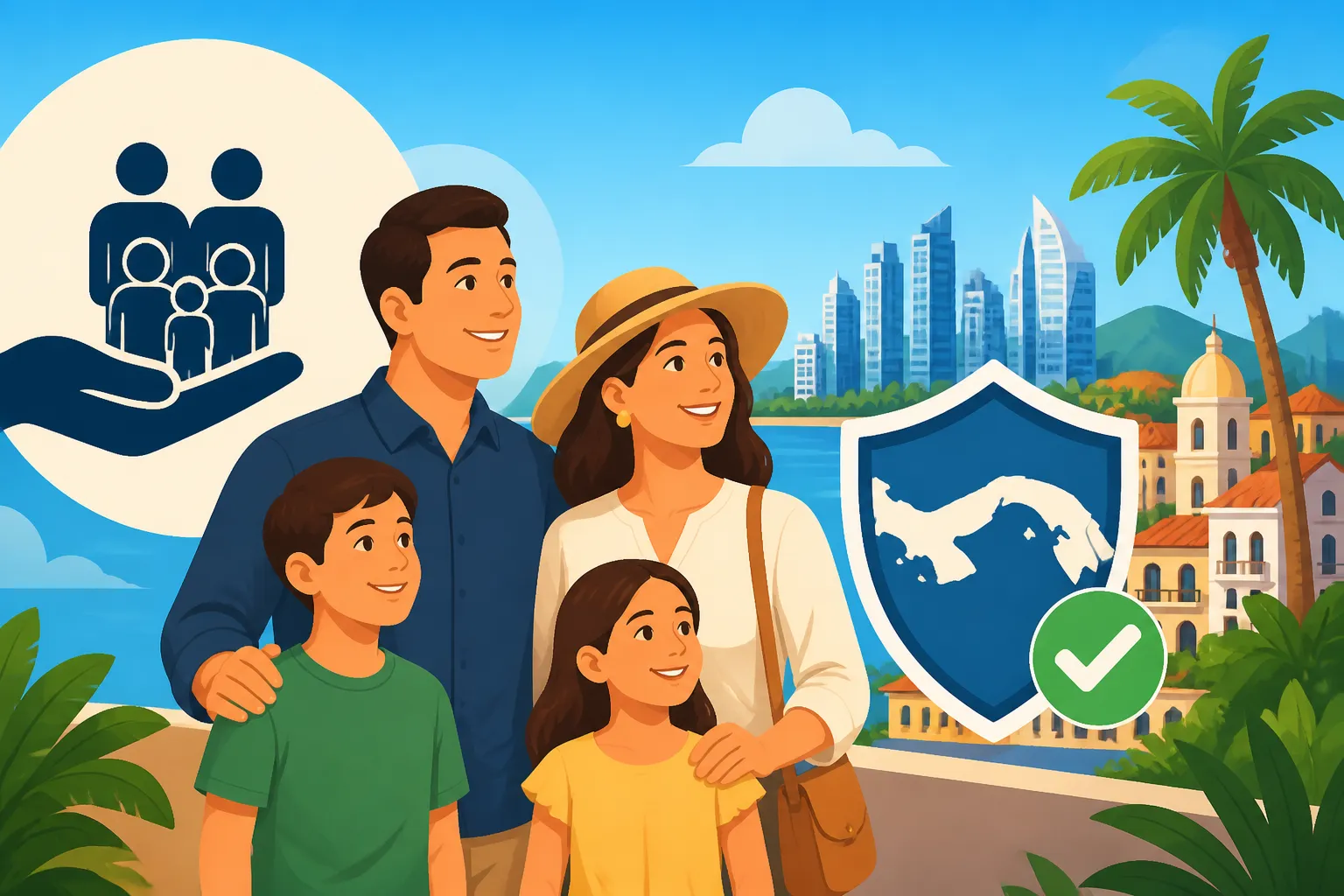
Can I Bring My Whole Family on Residency to Panama?
Moving to a new country is an adventure, but bringing your entire family along can feel like navigating a labyrinth blindfolded. Many expats wonder if Panama's residency programs genuinely extend to their loved ones, from spouses to children, and even sometimes parents. This comprehensive guide will walk you through the various pathways available for securing residency for your whole family in Panama, detailing the processes, requirements, and what to expect every step of the way.
Navigating Family Residency in Panama: The Basics for Expats
When you first dream of moving to Panama, you're likely picturing yourself enjoying the vibrant culture, the beautiful scenery, or perhaps the appealing tax structure. But for most, that dream isn't complete without their family by their side. The good news is, Panama's immigration system does have provisions for family reunification under various residency categories. However, it's not always as straightforward as ticking a box, and understanding the nuances is key.
The Principle of Dependent Residency
At its heart, the concept of "dependent residency" in Panama means that if you, as the main applicant, qualify for a specific residency program, your immediate family members can often apply alongside you or shortly after you, leveraging your status. This is a huge relief for many, as it avoids the headache of each family member needing to meet separate, complex primary requirements. Your residency essentially creates an umbrella under which your dependents can find their legal footing in the country.
However, it's crucial to understand that their status is, well, dependent on yours. If your primary residency is not maintained, it can impact their status. This means staying on top of renewals and adhering to all immigration laws is paramount not just for yourself, but for your entire family. Imagine settling into life in Panama, the kids loving their new school, and then realizing a critical document was missed for your own renewal, jeopardizing everyone's future here. It’s a terrifying thought, which is why meticulous planning and professional legal guidance are practically non-negotiable.
Who Qualifies as a Dependent?
Panamanian immigration law generally defines dependents quite strictly, primarily focusing on the nuclear family. Typically, this includes your spouse and children under a certain age. For most programs, children must be under 18. However, there are often provisions for children up to 25 if they are full-time university students and financially dependent on you. Proving this financial dependency and student status usually involves submitting official university enrollment letters and bank statements.
In some specific cases, you might be able to sponsor parents, but this is less common and often requires a higher income threshold from the main applicant, along with concrete proof of their financial dependency. The criteria can vary significantly between different visa types, so it's not a one-size-fits-all answer. For instance, the Pensionado Visa has specific allowances for dependents, which might differ from a Friendly Nations Visa application. It's essential to consult with an experienced immigration lawyer to confirm the exact dependent categories and age limits applicable to the specific visa you are pursuing.
Different Residency Pathways for Families
Panama offers several residency programs, each with its own set of requirements and benefits, and each handles family inclusion slightly differently. The most common pathways for expats looking to bring their families include the Friendly Nations Visa, the Pensionado (Retiree) Visa, and various Qualified Investor programs. Each of these has its own charm and challenges. For a broader overview of all your options, take a look at our comprehensive guide on The Complete Guide to Panama Visas and Immigration for Expats (2027).
Choosing the right pathway really depends on your individual circumstances – your nationality, your source of income, and your long-term goals. For example, if you're a retiree with a steady pension, the Pensionado Visa might be your best bet. If you come from one of the "friendly nations" and plan to work or invest here, that visa could be ideal. Don't rush into a decision; understand all the nuances before committing. This initial choice will dictate the ease and speed with which your family can join you.
Popular Residency Programs and Their Family Provisions
Let's dive deeper into the specific residency programs that are most commonly used by expats bringing their families to Panama. Each has distinct advantages and specific requirements for dependents. Understanding these differences is crucial for a smooth application process.
The Friendly Nations Visa and Your Loved Ones
The Friendly Nations Visa is one of the most popular routes for many expats, particularly those looking to work or establish a business in Panama. If you are a citizen of one of the roughly 50 countries deemed "friendly" by Panama, this visa provides a relatively streamlined path to permanent residency. But what about your family? The good news is that the Friendly Nations Visa is very accommodating for dependents.
You, as the main applicant, must demonstrate economic solvency, usually through a job offer from a Panamanian company or by establishing a Panamanian corporation and depositing a certain amount of capital (typically $10,000 to $20,000) into a local bank account. Once your application is underway, your spouse and children under 18 (or up to 25 if studying full-time) can be included as dependents. Each dependent will need their own set of documents, including a passport, birth certificates (apostilled), marriage certificate (apostilled for spouse), and a clean criminal record for those 18 and over. While the process itself isn't terribly complicated, collecting and apostilling all these documents can be a logistical headache. We've compiled a detailed resource on Understanding the Friendly Nations Visa in Panama (2027) that delves into the specifics of this program.
The Pensionado Visa for Retiree Families
For those of you looking to retire in Panama, the Pensionado Visa is an absolute gem, and it also extends its benefits to your family. This visa is designed for individuals who receive a lifetime pension or annuity, offering a host of attractive discounts on everything from medical services to entertainment. The primary requirement is a guaranteed lifetime pension of at least $1,000 USD per month.
If you wish to include your spouse, you'll need to demonstrate an additional $250 per month in pension income for them, bringing the total to $1,250. For each child, there's usually an additional, smaller income requirement. This is one of the most stable and advantageous visas for retirees because it doesn't require renewal; it's a permanent residency. This permanence is a huge plus for families, offering long-term stability without the annual stress of renewals. You can read more about it in The Expat Guide to the Pensionado (Retiree) Visa in Panama (2027). Just remember, proving that guaranteed lifetime income is key, and the Panamanian government is quite strict on this.
Qualified Investor Visas and Family Inclusion
Panama also offers several Qualified Investor programs, often referred to as "Golden Visas," designed for individuals willing to make a significant investment in the country. These can include investments in real estate, fixed-term deposits in Panamanian banks, or investments in the Panamanian stock market. The investment thresholds for these programs are generally higher than other visas, often starting from $300,000 for real estate or $500,000 for bank deposits.
The upside, particularly for families, is that these visas often provide a faster route to permanent residency and typically allow for the inclusion of spouses and children without much additional financial burden beyond the main investment. For example, buying property in Panama through the Qualified Investor Program is a path many choose. This can be a great option if you have the capital and want to secure your family's future in Panama relatively quickly. It’s a significant financial commitment, of course, but for some, the accelerated timeline and comprehensive family inclusion make it worthwhile. Remember that these programs are geared towards substantial investment, so they are not for everyone, but they do offer robust family benefits.
The Nitty-Gritty: Documents, Application, and Costs for Dependents
Alright, now that we've covered the general pathways, let's get down to the brass tacks: what you actually need to do to get your family's residency approved. This is where many expats hit their first real wall, not because it’s impossible, but because it requires meticulous attention to detail and patience.
Essential Documents for Dependent Applications
The document requirements can feel overwhelming, but they are fairly standard across most residency programs for dependents. You’ll need to gather a stack of papers for each family member. Here’s a general list, but always confirm with your lawyer, as specifics can change:
- Passport: A valid passport for each family member, with at least six months validity remaining. You’ll need multiple copies of every page.
- Birth Certificates: Original birth certificates for all children, apostilled or legally authenticated by the Panamanian Consulate in the country of issuance.
- Marriage Certificate: For your spouse, an original marriage certificate, also apostilled or authenticated.
- Police Records/Criminal Background Check: For dependents aged 18 and over, you’ll need a federal-level police record from their country of origin and any country they have resided in for the past five years. These also need to be apostilled. This is critical and often takes the longest to obtain.
- Medical Certificate: A health certificate from a licensed Panamanian doctor (this is usually done once you arrive in Panama).
- Eight Passport-Sized Photos: Make sure they meet Panamanian immigration standards (usually white background, no glasses, neutral expression).
- Letter of Responsibility: A notarized letter from the main applicant stating that they take full financial responsibility for their dependents.
- Proof of Financial Solvency: While the main applicant's proof covers the primary requirement, you may need to show additional funds for each dependent as stipulated by the specific visa type.
- Proof of Relationship: Beyond birth and marriage certificates, be prepared for additional requests if immigration needs further verification.
Gathering and apostilling these documents can be a lengthy process. It's often recommended to start this before you even move to Panama. Services like Sirelo can help coordinate the logistical nightmare of moving your life and family, but the paperwork falls squarely on your shoulders or your lawyer's. For a deeper dive into these requirements, see Understanding Document and Apostille Requirements for Panama Immigration.
The Step-by-Step Application Process
Once you have your documents in hand, the application process for dependents generally mirrors your own, but it's typically submitted alongside or immediately after your primary application.
- Engage a Panamanian Immigration Lawyer: This isn't optional, it's a requirement by Panamanian law. Your lawyer will be your guide, translator, and advocate throughout the entire process. They will review all your documents, submit them to the National Immigration Service, and follow up on your behalf.
- Submit Applications: Your lawyer will file all the necessary paperwork for you and your dependents at the immigration office. This usually involves multiple visits.
- Temporary Residency (if applicable): Initially, your family might receive a provisional or temporary residency card. This allows them to reside legally in Panama while their permanent application is processed. This is typically valid for one or two years.
- Permanent Residency: After the temporary phase, and if all conditions are met, your family will move to permanent residency status. This usually involves another round of paperwork and appointments.
- Cedula Issuance: Once permanent residency is approved, each family member will receive their Panamanian ID card, known as a cédula. This is your official identification and proof of residency in Panama.
The entire process, from initial submission to receiving permanent residency, can take anywhere from 6 months to over a year, depending on the visa category and current processing times at the immigration office. Patience is truly a virtue here. For a detailed roadmap, check out How to Get Residency in Panama: The Full Guide (2027).
Understanding Fees and Timelines
The financial aspect of securing family residency can catch some expats off guard. Beyond the costs associated with the main applicant's visa, there are additional government fees and legal fees for each dependent.
Government Fees (per dependent, approximate):
| Fee Type | Amount (USD) | Notes |
|---|---|---|
| Immigration Application Fee | $250 | Paid to the National Immigration Service |
| Repatriation Deposit | $800 | A refundable deposit, usually required for certain nationalities/visas |
| Cedula Card Fee | $50 | For the physical ID card |
| Visa Validation Fee | $50 | For stamping the visa into the passport |
| Medical Exam | $50 – $100 | Cost of local medical exam in Panama |
| Police Record Translation | Varies | If needed, local translation costs for foreign documents |
Please note: These are approximate figures and can change. Always confirm current fees with your immigration lawyer.
Legal Fees: This is where the bulk of the cost often lies. Immigration lawyers typically charge a flat fee for the main applicant, and then a reduced fee for each additional dependent. These fees vary widely based on the complexity of your case and the lawyer's reputation, but expect to pay several thousand dollars for a family application. It’s an investment, but a good lawyer ensures everything is done correctly, minimizing delays and potential denials.
Timelines: As mentioned, the process is not quick. Expect initial temporary residency in 3-6 months, and permanent residency following that, often taking another 6-12 months. During the temporary phase, you and your family can live in Panama legally, but international travel may have restrictions until permanent residency and cédulas are issued. This is a common point of frustration for families eager to visit friends and relatives back home.
Essential Considerations Beyond Immigration
Getting the visa is just the beginning. Once your family is legally here, you'll want to ensure they are set up for success in other areas, particularly health and daily living.
- Health Insurance: While Panama has a public healthcare system, most expats opt for private insurance, especially with a family. Finding a comprehensive international health insurance plan like Cigna Global can provide peace of mind, covering everyone from routine check-ups to emergencies. The public system, the Caja de Seguro Social (CSS), is generally accessible for residents who are employed and contribute, but it often involves longer wait times and can be less convenient than private options. Having robust private coverage for your family, especially if you have young children, is highly recommended. For more information, check out our guide on Health Insurance in Panama: Private and International Options Explained.
- Schooling: If you have children, schooling will be a major consideration. Panama offers a range of options, from public schools (where Spanish is the language of instruction) to private bilingual schools and international schools. The cost and availability vary greatly. Researching schools before you arrive is crucial, as popular international schools often have waiting lists.
- Cost of Living: While Panama can be more affordable than many Western countries, the cost of living for a family can quickly add up, especially if you opt for international schools and private healthcare. Create a realistic budget, factoring in rent, utilities, groceries, transportation, and leisure activities for everyone. Our resource on The Complete Guide to Cost of Living in Panama for Expats (2026) can give you a clearer picture.
- Cultural Adjustment: Moving is tough on everyone, but especially on kids. Be prepared for a period of adjustment. Encourage language learning, explore local attractions, and help them build new friendships. Your proactive support can make all the difference in their transition.
Maintaining and Renewing Family Residency in Panama
Getting residency approved is a huge milestone, but it's not a set-it-and-forget-it situation, especially in the initial years. You need to understand how to maintain your status and what future steps might be involved.
Staying Compliant with Immigration Rules
Once you and your family have your residency cards and cédulas, the most important thing is to abide by Panamanian immigration laws. This means:
- Respecting Stay Limits: For initial temporary residencies, be mindful of any travel restrictions or minimum stay requirements within Panama to maintain your status. While permanent residency offers more flexibility, it's always wise to stay informed.
- Timely Renewals: For temporary visas, you'll need to renew them before they expire. Your lawyer should keep track of this, but it's ultimately your responsibility. Missing a renewal deadline can lead to complications, fines, or even losing your residency status.
- Updating Information: If there are any significant changes in your family's circumstances – a new address, a change in marital status, or a child reaching an age limit – inform your immigration lawyer so they can advise on any necessary updates with the immigration office.
- Adhering to Visa Conditions: Ensure you continue to meet the conditions of your specific visa. For example, if you obtained a Friendly Nations Visa through employment, you must maintain that employment or another qualifying economic activity. If it was through a bank deposit, that deposit generally needs to remain.
Staying on top of these rules can feel like a chore, but it prevents stressful situations down the line. It's a small price to pay for the peace of mind that comes with legal status for your entire family in a foreign country. Our guide on Understanding How to Maintain Your Permanent Residency in Panama offers further insights.
Renewing Your Family's Residency
The renewal process for family members typically follows that of the main applicant. If you're on a visa that requires periodic renewals (like an initial temporary visa), your dependents will renew theirs at the same time. The process usually involves:
- Submitting Updated Documents: This might include new police records if a dependent has turned 18, updated financial solvency proofs, and current passport copies.
- Paying Renewal Fees: Government and legal fees will again apply for each renewal.
- Immigration Appointments: Another visit to the immigration office will be necessary for photo taking, fingerprinting, and potentially an interview.
Remember that any changes in your family's situation, such as a child aging out of dependent status, will need to be addressed during renewal. For example, if your child turns 26 and is no longer a full-time student, they may need to find their own pathway to residency. This is why it’s important to think long-term about your family’s immigration strategy. For specific advice on this, you might find How to Renew Your Residency in Panama helpful.
Long-Term Outlook: Towards Permanent Residency and Citizenship
Most expat families initially obtain some form of temporary or provisional residency. The ultimate goal for many is often permanent residency, which offers greater stability and freedom. Many Panamanian visa programs, such as the Friendly Nations Visa and the Qualified Investor Visa, lead directly to permanent residency after an initial period (often one to two years of temporary status). The Pensionado Visa usually grants permanent residency from the outset.
Once your family has achieved permanent residency, the path to Panamanian citizenship might become a consideration for some. Panama typically allows naturalization after five years of continuous permanent residency. This means that if you and your children have lived in Panama as permanent residents for this period, they may become eligible to apply for Panamanian citizenship. This would grant them a Panamanian passport and all the rights of a Panamanian citizen, though Panama does not generally recognize dual citizenship. This is a big step and one that requires careful thought and further legal consultation, as the process is quite rigorous and involves demonstrating strong ties to Panama, including language proficiency and knowledge of Panamanian history and culture. For more on this, consider exploring our guide to Panamanian Citizenship: How to Naturalise After Residency (2027).
Disclaimer
Please remember that immigration laws and procedures in Panama can change, and individual situations vary greatly. The information provided in this article is for general guidance only and should not be considered legal advice. It is absolutely essential to consult with a qualified Panamanian immigration lawyer for personalized advice regarding your family's specific residency application.