How Do I Enrol My Child in School in Panama?
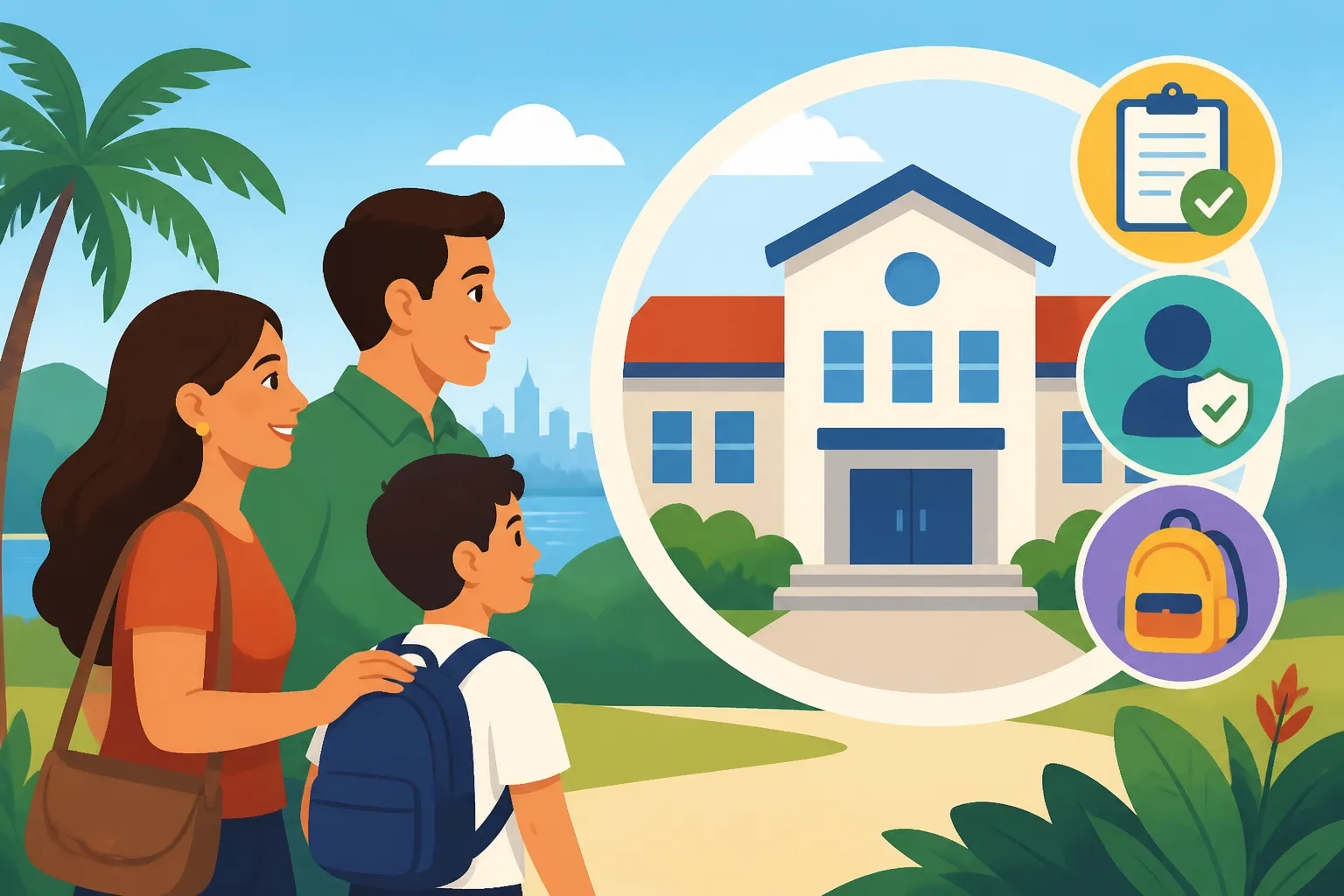
Oh, the joys and bewildering challenges of moving abroad with kids! One of the biggest stressors, right after figuring out where you'll actually sleep, is undoubtedly getting the little ones settled into a school. You're trying to navigate a new country, a new language, and a completely different education system, all while trying to ensure your child feels secure and happy. This guide is here to untangle the complexities of enrolling your child in school in Panama, offering a realistic, step-by-step approach to make this transition as smooth as possible for your whole family.
Understanding Panama's Education Landscape for Expat Families
When you first arrive in Panama, the education system can feel like a labyrinth. It’s not just about finding a school, but finding the right school that fits your child's needs, your family's budget, and your long-term plans in this vibrant country. Unlike many places where the public system is a straightforward option, for expats in Panama, the choice often comes down to weighing the unique benefits and drawbacks of public, private, and international institutions.
Public vs. Private vs. International Schools
Let's break down the typical choices you'll encounter. Each has its own flavor, its own set of expectations, and definitely its own price tag.
Public Schools:
Panama's public school system, or escuelas públicas, is funded by the government and generally offers free education. This can be an attractive option for families on a tighter budget, and it provides an immersive cultural experience for children. Your child will be surrounded by local Panamanian children, learning Spanish rapidly and integrating into the local community. However, there are significant considerations. The curriculum is entirely in Spanish, and the teaching methods might differ substantially from what your child is used to. Class sizes can be large, resources might be limited compared to private options, and the academic rigor, particularly in subjects like English, may not meet international standards. For many expat families, especially those with older children not yet fluent in Spanish, the language barrier and curriculum differences can be formidable hurdles. It's often a better fit for younger children who are still highly adaptable and whose parents are committed to a full immersion experience.
Private Schools:
Panama has a thriving private school sector, offering a wide range of options that vary greatly in quality, cost, and educational philosophy. These schools often combine a Panamanian curriculum with some English instruction, or even offer fully bilingual programs. They tend to have smaller class sizes, better facilities, and more resources than public schools. You’ll find religiously affiliated schools, secular institutions, and schools that cater to specific educational approaches. The main advantage here is a bridge between the Panamanian culture and a more familiar learning environment. Many Panamanian middle and upper-class families choose private schools, so your child will still interact with local children, but often those from families with a more international outlook. However, the costs can start to add up, and while they might offer English as a subject, the primary language of instruction is usually Spanish. This means your child will still need a solid grasp of Spanish to truly thrive.
International Schools:
For many expat families, especially those with children who will eventually return to their home country's education system or transfer to other international schools globally, international schools are often the preferred choice. These schools, such as the International School of Panama (ISP), Crossroads Christian Academy, or Colegio Brader, typically follow curricula like the International Baccalaureate (IB), American, or British systems. The primary language of instruction is usually English, with Spanish offered as a second language. This ensures continuity in education, familiar teaching methodologies, and often easier transitions for children moving from one international environment to another. They boast excellent facilities, a diverse student body, highly qualified international teachers, and a wide array of extracurricular activities. The major drawback, of course, is the cost. How Much Are International School Fees in Panama City? is a question every expat parent asks, and the answer often ranges from significant to eye-watering. These schools are designed to cater to the transient nature of expat life, offering a high-quality, globally recognized education. For a deeper dive into the broader picture, check out our comprehensive guide, Schools and Education in Panama: A Complete Guide for Expat Families.
Key Considerations for Expat Parents
Choosing a school isn't just about the curriculum; it's about finding a nurturing environment where your child can flourish. As an expat parent, you're looking for a delicate balance.
Location and Commute: Panama City, in particular, can have challenging traffic. A fantastic school across town might mean a two-hour round trip daily, which can be exhausting for both children and parents. Consider schools in areas like Clayton, Costa del Este, or Santa Maria for international options, keeping in mind how they align with your chosen residential area. For families looking outside the capital, options are more limited but exist in places like Boquete or Coronado. This often ties into your broader decision about How Do I Find Family-Friendly Areas in Panama City.
Curriculum and Accreditation: If you plan for your child to continue their education in a specific system (e.g., American universities, British A-levels), ensuring the school offers that curriculum and is accredited by relevant international bodies (like Cognia for US schools or CIS/NEASC) is crucial. This ensures their qualifications will be recognized globally.
Language of Instruction: While immersion is great, if your child is entering a school where they don't understand the teacher or their classmates, it can lead to frustration, academic struggles, and social isolation. Be realistic about their Spanish proficiency versus the school's primary language. Many international schools offer intensive English (ESL) or Spanish (SSL) programs to help children catch up.
Costs Beyond Tuition: Tuition is just the beginning. Factor in registration fees, annual enrollment fees, books, uniforms, technology fees (laptops, iPads), extracurricular activities, field trips, transportation, and school lunches. These can significantly inflate the total annual cost. We explore this in more detail in Understanding the Cost of International and Private Schools in Panama.
Extracurricular Activities: A well-rounded education includes activities outside the classroom. Look for schools that offer sports, arts, music, drama, and clubs that align with your child's interests. This helps them build friendships, develop new skills, and feel connected to the school community.
School Culture and Values: Does the school’s philosophy align with your family's values? Is it a competitive or nurturing environment? What is the parent involvement like? Visiting schools and speaking with current parents can provide invaluable insights into the school's true culture.
The Step-by-Step Enrolment Process
Once you've narrowed down your choices, the real fun begins: navigating the actual enrolment process. This can be quite bureaucratic, and patience is definitely a virtue here. Give yourself ample time, ideally starting this process several months before your desired start date, especially for popular international schools with waiting lists.
Gathering Required Documents
This is perhaps the most critical and often the most frustrating part. Panamanian schools, particularly international ones, have strict requirements for documentation. Get these in order early to avoid unnecessary delays.
Here’s a typical checklist of what you’ll need:
- Child's Birth Certificate: An original, apostilled or legalized by the Panamanian consulate in your home country, and officially translated into Spanish by a public translator in Panama.
- Child's Passport: Copy of the biometric page and any relevant visa/residency stamps.
- Child's Visa or Residency Card: Copy of your child's current Panamanian visa or temporary/permanent residency card. Without legal residency or an active visa process, enrolment in most schools can be problematic.
- Parents' Passports: Copies of the biometric page and any relevant visa/residency stamps.
- Parents' Visa or Residency Cards: Copies of your current Panamanian visa or temporary/permanent residency cards.
- Academic Records: Official transcripts or report cards from the last 2-3 years of schooling. These often need to be apostilled or legalized and officially translated into Spanish. For older students, proof of completed grades is essential.
- Health Records: Up-to-date vaccination records (the Panamanian Ministry of Health has a specific vaccination schedule, so check for equivalency), a recent medical examination report from a Panamanian doctor, and any relevant medical history or allergies.
- School Application Form: Duly completed.
- Passport-Sized Photos: Recent photos of your child (and sometimes parents).
- Recommendation Letters: Some international schools might request letters of recommendation from previous teachers or school administrators.
- Proof of Address: A utility bill or rental contract in Panama.
The Apostille Headache: I can't stress this enough: apostilles are your best friend and worst enemy. If your home country is part of the Hague Apostille Convention, you'll need to get your official documents (like birth certificates and academic records) apostilled before you arrive in Panama. If your country is not, you'll need to go through a more complex legalization process at the Panamanian consulate. Once in Panama, these documents will then need to be translated by an official public translator, sometimes called a traductor público autorizado, who is certified by the Panamanian government. This process can be time-consuming and costly, so factor it into your relocation budget and timeline. For more details on this often-confusing process, refer to How to Get Your Documents Apostilled for Panama Immigration.
Application and Admissions Procedures
Once your documents are in order, the actual application process is relatively straightforward, but again, can vary by school.
- Initial Inquiry & Application Form: Most schools have an online inquiry form or a downloadable application package. Fill this out thoroughly and submit it with the initial required documents (often copies at this stage).
- Application Fee: Expect to pay a non-refundable application fee, typically ranging from $100-$500 for international schools.
- Entrance Exams/Assessments: For private and international schools, especially for children entering higher grades, an entrance exam or assessment is common. This evaluates their academic proficiency in subjects like English, Math, and sometimes Spanish. For younger children, it might be a play-based assessment to gauge social and developmental readiness.
- Interviews: Many schools will require an interview with your child, and often with both parents. This is an opportunity for the school to understand your family's expectations, your child's personality, and for you to ask any remaining questions. It’s also a chance to assess language proficiency.
- School Tours: If you’re in Panama, schedule visits to the schools. This is invaluable for getting a feel for the environment, meeting teachers, and seeing the facilities firsthand. For those still overseas, many schools offer virtual tours.
- Offer of Admission: If accepted, you’ll receive an official offer, usually with a deadline for acceptance and payment of the registration fee.
- Registration and Enrollment: Upon accepting the offer, you’ll pay the registration fee (which can be a substantial amount, often several thousand dollars for international schools) and submit all original, apostilled, and translated documents. This finalizes your child's spot.
Timelines for admission can be quite varied. Some international schools have rolling admissions but limited spots, meaning you might end up on a waiting list. Others have specific application windows, particularly for the academic year starting in August/September (which is common for international schools) or March (for public and some private schools following the Panamanian calendar). Being prepared and applying early is key to securing a place in your preferred institution. You can find more targeted information on this in our guide, How to Enrol Your Child in a School in Panama.
Practical Tips and Navigating Challenges
Enrolling your child is one thing; helping them thrive once they're there is another. The transition to a new country and school can be tough, and as parents, your support is paramount.
Language and Cultural Adaptation
One of the biggest hurdles for expat children, beyond the school curriculum itself, is adapting to a new language and culture.
Embrace Spanish: Even if your child attends an English-speaking international school, life in Panama happens in Spanish. Encourage them to learn basic phrases, watch local TV, and interact with Spanish-speaking friends. Many international schools offer robust Spanish language programs, and taking extra private lessons can make a huge difference in their confidence and integration.
Acknowledge Their Feelings: Moving is hard. Your child might miss old friends, feel overwhelmed, or struggle with the new environment. Validate their feelings, listen actively, and reassure them that these feelings are normal. Creating stability at home with routines can help immensely.
Patience and Persistence: Language acquisition and cultural adaptation don't happen overnight. It can take several months, or even a year, for a child to truly feel comfortable. Celebrate small victories, like making a new friend or understanding a new word.
Costs, Fees, and Financial Planning
Let's talk money, because education in Panama, especially at the international level, is a significant investment. As mentioned, tuition is just one piece of the puzzle.
Annual Costs Beyond Tuition:
- Registration/Enrollment Fees: A one-time or annual fee to secure the spot, separate from tuition.
- Books and Materials: Often purchased separately or included in a materials fee.
- Uniforms: Most private and international schools require uniforms, which can be purchased from specific suppliers and need replacing as children grow.
- Technology Fees: Contributions for IT infrastructure, or the requirement to purchase a specific device (e.g., a MacBook or iPad).
- Extracurricular Activities: While some basic clubs might be included, specialized activities like advanced sports, music lessons, or certain trips often incur additional costs.
- Transportation: School bus services are usually optional and come with an extra charge. Consider whether you'll drive your child or rely on school transport.
- Lunch: Cafeteria plans are usually optional, or your child might bring their own packed lunch.
To give you a clearer picture, here’s a simplified comparison of costs and features for different school types. Remember these are general estimates and can vary wildly.
| Feature | Public Schools | Private Local Schools | International Schools |
|---|---|---|---|
| Tuition (Annual) | Free | $2,000 – $8,000+ | $10,000 – $25,000+ |
| Language | Predominantly Spanish | Mostly Spanish, some bilingual options | Predominantly English, strong Spanish programs |
| Curriculum | Panamanian Ministry of Education | Panamanian, sometimes with international elements | IB, American, British (internationally recognized) |
| Facilities | Basic | Good, varied by school | Excellent, state-of-the-art |
| Class Size | Large | Medium to Large | Small to Medium |
| Expat Integration | Full immersion, requires strong Spanish | Mixed, good for cultural integration with some support | High expat population, tailored for international needs |
| Additional Fees | Minimal (some materials) | Books, uniforms, activities, transport | Extensive (enrollment, books, tech, activities, transport, trips) |
For a broader perspective on what your family budget might look like, our guide on The Complete Guide to Cost of Living in Panama for Expats (2026) offers valuable insights. When it comes to school-specific costs, another helpful read is How Much Does It Cost to Send My Child to School in Panama?.
Settling In and Community Support
Beyond the school gates, building a supportive community is vital for both your child and your family.
Engage with the School Community: Join parent-teacher associations (PTAs) or attend school events. This is a fantastic way to meet other parents, many of whom will also be expats, and build a support network. Other parents can offer invaluable advice on everything from playdates to local resources.
Explore Expat Groups: Panama, especially Panama City, has a vibrant expat community. Online forums and social media groups (like 'Expats in Panama' on Facebook) are excellent resources for asking questions, sharing experiences, and finding local connections. These groups often organize meet-ups and events.
Leisure Activities: Encourage your child to join sports clubs, art classes, or other youth activities outside of school. This helps them develop new friendships and interests beyond their immediate school environment, aiding their overall integration. There are many great options for kids in areas like Costa del Este or Clayton.
Stay Connected: During those initial weeks and months, you'll be coordinating a lot, and often needing to research schools on the go. Having reliable mobile data is a lifesaver. Consider getting an eSIM from a provider like Airalo, which allows you to stay connected without fiddling with physical SIM cards. It’s perfect for navigating unfamiliar streets and coordinating school visits.
Professional Moving Assistance: The entire process of moving, finding housing, and settling children into school can be incredibly overwhelming. Using reputable moving services, like those you can find through platforms like Sirelo, to handle your household goods can alleviate a huge amount of stress. It frees you up to focus on the emotional and logistical aspects of getting your kids settled. Their services can simplify the process, whether you're bringing a few boxes or an entire household. If you’re still planning your move, consider reading The Complete Guide to Moving to Panama: Your First 90 Days (2027) for a broader understanding of the initial adjustment period.
Enrolling your child in school in Panama is a significant undertaking, but with careful planning, thorough research, and a good dose of patience, it’s entirely manageable. Your child will soon be thriving in their new academic and social environment, making friends, and embracing the unique experience of growing up in Panama.
Disclaimer
The information provided in this guide is intended for general informational purposes only and does not constitute legal, financial, or educational advice. While we strive to provide accurate and up-to-date information, regulations and procedures in Panama can change. It is highly recommended to consult with relevant authorities, educational institutions, and professional advisors (such as lawyers or education consultants) for specific advice tailored to your individual circumstances.