Can I Drive in Panama on a Foreign Licence?
One of the first things that pops into your head when you arrive in a new country like Panama, especially if you’re planning on staying for a while, is "Can I actually drive here on my current driver's license?" It’s a common worry, and the answer isn't always as straightforward as you'd hope. This guide will meticulously break down the rules, grace periods, and processes for foreign license holders in Panama, offering practical advice to get you confidently behind the wheel.
The Initial Grace Period for Foreign Licenses
When you first land in Panama, the immediate impulse might be to jump into a car and explore this beautiful country. And for a short while, you absolutely can use your foreign driver's license. But don't let that initial freedom lull you into a false sense of long-term security; there are strict limitations.
Understanding the 90-Day Rule
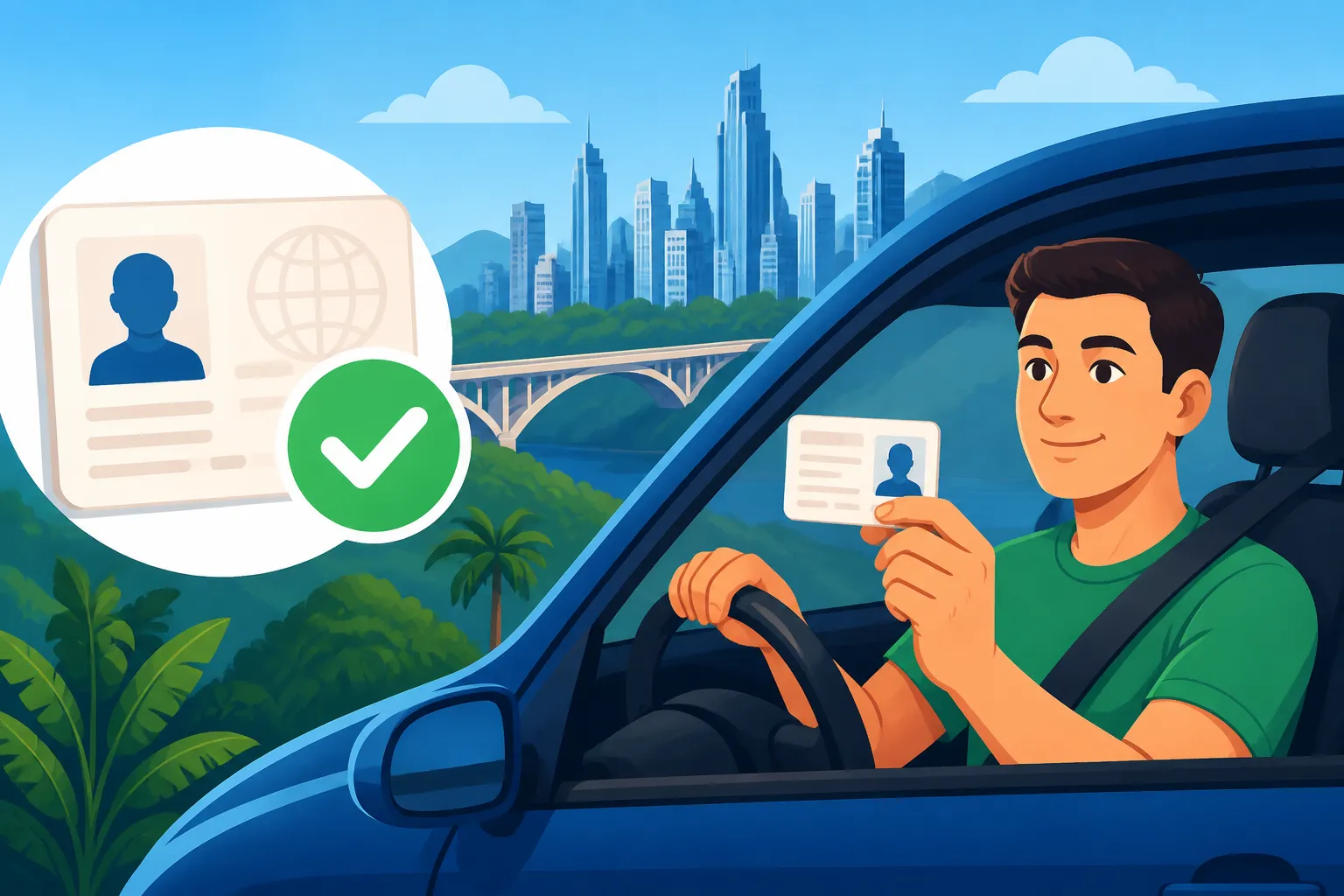
Panamanian law is quite clear for newcomers: as a tourist, you can legally drive in Panama for up to 90 days using your valid foreign driver's license. This grace period is directly tied to your tourist visa stamp in your passport, or for some nationalities, your automatic visa-free entry stamp. The clock starts ticking the moment you enter the country. It's a fantastic convenience for those on short visits, allowing you to rent a car and navigate Panama City's bustling streets or explore the tranquil highlands of Boquete without immediate bureaucratic hurdles.
However, this rule is often a point of confusion for expats who are in the process of applying for residency. Many mistakenly believe that because they are "in process" for a visa, they are no longer just tourists and therefore exempt from the 90-day limit. Unfortunately, the Panamanian authorities, specifically the Autoridad del Tránsito y Transporte Terrestre (ATTT), view it quite literally: if your passport stamp indicates a tourist entry, you are treated as a tourist for driving purposes for those initial 90 days. This means carrying your physical foreign license, your passport with the entry stamp, and often, an International Driving Permit (IDP) is highly recommended, though not always legally required, it can smooth things over with a less-than-familiar traffic officer.
What Happens After 90 Days?
Once that 90-day window slams shut, your foreign driver's license is no longer legally valid for driving in Panama. This is where many expats get caught out, sometimes unknowingly. If you're pulled over by a traffic police officer (often referred to as a "transito") after this period, driving with an expired foreign license can lead to fines, your vehicle being impounded, and a whole lot of unnecessary stress and expense. I've heard countless stories from friends who thought they could "get by" for a few extra weeks or even months, only to regret it deeply. The fines can be hefty, and the process to retrieve an impounded vehicle is a bureaucratic maze that nobody wants to navigate.
Beyond the legal ramifications, there are practical difficulties. Imagine being in an accident, even a minor fender bender, and your insurance company discovers you were driving illegally. This could invalidate your policy, leaving you personally liable for damages and medical expenses. It’s a risk that simply isn't worth taking. For anyone planning on residing in Panama, understanding and respecting this deadline is paramount. It’s a clear signal that the time has come to either extend the validity of your foreign license through official channels or begin the process of obtaining a Panamanian one. This shift from temporary visitor to long-term resident comes with new responsibilities, and ensuring your driving status is legal is high on that list.
Requirements for Driving with a Foreign License Beyond 90 Days
So, the 90 days are up, and you’re still here, still needing to get around. What now? Panama does offer a lifeline, a way to extend the validity of your foreign license, but it's exclusively for those who are actively pursuing residency. This is where the labyrinthine world of Panamanian bureaucracy truly begins to unveil itself.
The 'Prorroga' or Extension Process
If you've initiated a residency application, Panama allows you to apply for a prórroga, essentially an extension, that will enable you to continue driving on your foreign license while your residency application is pending. This is a crucial step, as it bridges the gap between your initial 90-day tourist period and the moment you receive your official Panamanian ID (cedula) and can exchange your license. The documents required for a prórroga can be a bit daunting: you'll need your valid foreign driver's license, your passport with your current visa stamp, and crucially, a letter from your Panamanian immigration lawyer confirming your residency application is in process with the National Immigration Service. You'll also likely need proof of address, such as a utility bill.
The process usually involves a visit to the ATTT (Autoridad del Tránsito y Transporte Terrestre) office or one of its authorized service centers, such as SERTRACEN. Be prepared for a wait, as these offices are often busy. You'll fill out forms, present your documents, and pay a fee. It's essential that all your documents are up-to-date and correctly formatted. Any discrepancies can lead to delays or rejection. This is where having a good immigration lawyer who can guide you through the specifics and provide the necessary supporting letters is invaluable. Remember, this isn't a permanent solution; it's a temporary reprieve that aligns your driving legality with your immigration status.
The Role of the Residence Visa
Your residence visa status is the golden key here. Without a pending or approved residence visa, you simply cannot get a prórroga. The Panamanian authorities want to ensure that those extending their driving privileges are genuinely committed to becoming legal residents. This means that if you're on an extended tourist stay or some other temporary arrangement that isn't a direct path to residency, you'll need to consider alternatives, such as using public transport or relying on ride-sharing services. For those moving to Panama, understanding How Your Residence Status Affects Health Coverage in Panama and other administrative aspects is crucial.
Once your residence visa is approved and you receive your cedula (the Panamanian identification card), you're no longer eligible for the prórroga. At this point, you're expected to move directly to exchanging your foreign license for a Panamanian one. The prórroga is merely a bridge; your cedula signifies you've crossed to the other side of legal residency, and with it comes the expectation of fully integrating into the Panamanian system, including obtaining a local driver's license. The smooth transition from prórroga to a permanent Panamanian license is a testament to careful planning and staying on top of your immigration process.
| Document Type | Required for 90-Day Tourist Driving | Required for Prórroga (Residency Pending) | Required for License Exchange (Resident) | Notes |
|---|---|---|---|---|
| Foreign Driver's License | Yes, original | Yes, original | Yes, original (for exchange) | Must be valid and unexpired. |
| Passport | Yes, original | Yes, original | Yes, original (with Cedula) | Must have valid entry stamp/visa. |
| International Driving Permit (IDP) | Recommended, not legally required | Not typically required | Not typically required | Useful for language barriers, though some officers may not be familiar. |
| Immigration Lawyer's Letter | No | Yes, confirming residency application | No | Essential for proving "in-process" residency status for the extension. |
| Proof of Residency Application | No | Yes, official documentation | No (Cedula suffices) | Receipt or copy of application from Immigration. |
| Panamanian Cedula | No | No | Yes, original | The official Panamanian ID, indicating permanent residency. |
| Medical Certificate | No | No | Yes | Obtained from ATTT-approved clinics, includes vision, hearing, blood type. |
| Blood Type Certificate | No | No | Yes | Can be part of the medical certificate or separate. |
| Apostilled/Authenticated License | No | No | Yes, for certain countries/cases | Check specific country requirements. |
| Payment for Fees | No (unless for traffic violations) | Yes | Yes | Fees apply for extensions, medical exams, and license issuance. |
The Process of Obtaining a Panamanian Driver's License
Eventually, the goal for any long-term expat who wants to drive is to get a Panamanian driver's license. This isn't just about legality; it simplifies many aspects of daily life, from dealing with local authorities to car insurance. The process itself can vary slightly depending on whether you're exchanging an existing foreign license or starting from scratch.
Exchanging Your Foreign License for a Panamanian One
For most expats from countries with reciprocal agreements, exchanging your existing license is the most common route. This means you won't have to go through the full theoretical and practical driving tests again, which is a huge relief for many! The key is having your residency approved and your Panamanian cedula in hand. You'll need your valid foreign driver's license, which in some cases might need to be apostilled or authenticated by the Panamanian consulate in your home country, or by the Ministry of Foreign Affairs in Panama if done locally. This step is crucial to verify the authenticity of your foreign document.
Next, you'll need to undergo a series of medical evaluations at an ATTT-authorized clinic. These typically include a vision test (often requiring you to identify colors and read from a chart, sometimes in Spanish), a hearing test, and a basic medical check-up to ensure you're fit to drive. They'll also verify your blood type, which is usually stamped directly onto your Panamanian license. Once you have your medical certificate, along with your cedula, passport, and foreign license, you can head to a SERTRACEN office. There, you'll complete some paperwork, have your fingerprints taken, and get your photo snapped. If all goes well, you walk out with your brand-new Panamanian driver's license, usually valid for four years. For more details on this, you can look into How to Exchange or Use a Foreign Driver's Licence in Panama.
Applying for a Brand New Panamanian License
If your country doesn't have a reciprocal agreement with Panama, or if your foreign license has expired and cannot be easily renewed, you might find yourself in the position of applying for a brand-new Panamanian license. This is a more involved process, akin to what a Panamanian citizen would go through as a first-time driver. It involves both a theoretical (written) exam and a practical (driving) exam. The theoretical exam covers Panamanian traffic laws, road signs, and safe driving practices. Study materials are available, often in Spanish, so brushing up on your Spanish driving vocabulary is a good idea.
Once you pass the theoretical test, you'll then need to take a practical driving test. This usually involves demonstrating your ability to maneuver a vehicle, park, and follow traffic laws under the watchful eye of an ATTT examiner. For this, you'll need to provide a vehicle for the test. Many driving schools in Panama offer packages that include practice sessions and use of their vehicle for the exam, which can be incredibly helpful. This route can feel more daunting, especially with the language barrier and unfamiliar testing procedures, but it's a perfectly achievable goal with preparation. Remember, the investment of time and effort now will save you countless headaches down the road.
Practical Considerations and Common Pitfalls for Expats
Navigating the Panamanian driving landscape involves more than just understanding the laws; it's about adapting to a new culture, being prepared for administrative quirks, and knowing your responsibilities. Expats often face unique challenges that can make the process feel overwhelming.
Documentation and Translation Challenges
One of the most persistent headaches for expats is the strict requirement for accurate and properly authenticated documents. When your foreign driver's license or other official papers need to be submitted to Panamanian authorities, they often demand an "apostille." An apostille is a certification from your home country that authenticates the origin of a public document. If your country is a signatory to the Hague Apostille Convention, you get an apostille; if not, you might need a more involved legalization process through the Panamanian embassy or consulate in your home country, followed by authentication by Panama's Ministry of Foreign Affairs.
Beyond authentication, many documents may need to be officially translated into Spanish by a certified public translator in Panama. This isn't a task for just any bilingual friend; it requires a professional whose translation is recognized by Panamanian institutions. Trying to cut corners here almost always results in rejection and delays. Finding a reputable translator can be a bit of a hunt, but asking your immigration lawyer or other expats for recommendations can save you a lot of grief. Platforms like Sirelo, which focuses on relocation services, can sometimes offer guidance on documentation requirements or connect you with resources.
Navigating Panamanian Driving Culture and Road Rules
Driving in Panama is, shall we say, an experience. It's often fast-paced, assertive, and sometimes unpredictable, especially in urban centers like Panama City. Defensive driving isn't just a good idea; it's essential for survival. Traffic lights are often mere suggestions for some, and the concept of personal space on the road is very different from what you might be used to. Lane discipline can be fluid, and turn signals are frequently optional. Navigating roundabouts, known as rotondas, can be particularly challenging.
Out on the highways, particularly the Pan-American Highway, you'll encounter everything from fast-moving cars to slow-moving trucks, pedestrians, and even animals. Heavy rains, common during the wet season, can quickly turn roads into treacherous rivers, requiring extra caution. Understanding the specific Driving in Panama: Licences, Registration and Rules for Expats is key, but equally important is understanding the unwritten rules of the road. Patience, quick reflexes, and an awareness of your surroundings will serve you well. Don't be afraid to take a few lessons from a local driving instructor to get a feel for the rhythm of Panamanian traffic before venturing out on your own.
Car Insurance and Legal Responsibilities
Driving legally in Panama also means having the right insurance. Third-party liability insurance is mandatory for all vehicles. This covers damages or injuries you might cause to another person or their property in an accident. Without it, you're looking at severe financial and legal repercussions. Beyond the basic mandatory insurance, it's highly advisable to opt for comprehensive coverage, especially if you have a newer or more valuable vehicle. Panamanian roads and traffic can be tough on cars, and accidents, unfortunately, are a common occurrence.
When an accident does happen, knowing what to do is paramount. The first step is to ensure everyone's safety, then call the transit police (104 or 911 for emergencies) and your insurance company immediately. Do not move your vehicle unless absolutely necessary for safety, as police need to assess the scene. Take photos, exchange information with the other driver, and make sure a police report is filed. Even a seemingly minor incident can become complicated, particularly if there are language barriers or differing interpretations of what occurred. Having a reliable insurance provider, like those you can find when researching How Much Is Car Insurance in Panama, and knowing their emergency contact numbers will be a huge relief in a stressful situation. It’s also wise to consider what to do in an Emergency Medical Care in Panama: What Every Expat Needs to Know situation. For general relocation needs, tools like Airalo can help ensure you have connectivity for emergencies.
Disclaimer
Please remember that immigration laws and traffic regulations in Panama can change. While I strive to provide the most accurate and up-to-date information based on my experience and research, this guide is for informational purposes only and does not constitute legal advice. Always consult with a qualified Panamanian immigration lawyer or the appropriate government authorities (like the ATTT or National Immigration Service) for personalized advice regarding your specific situation.