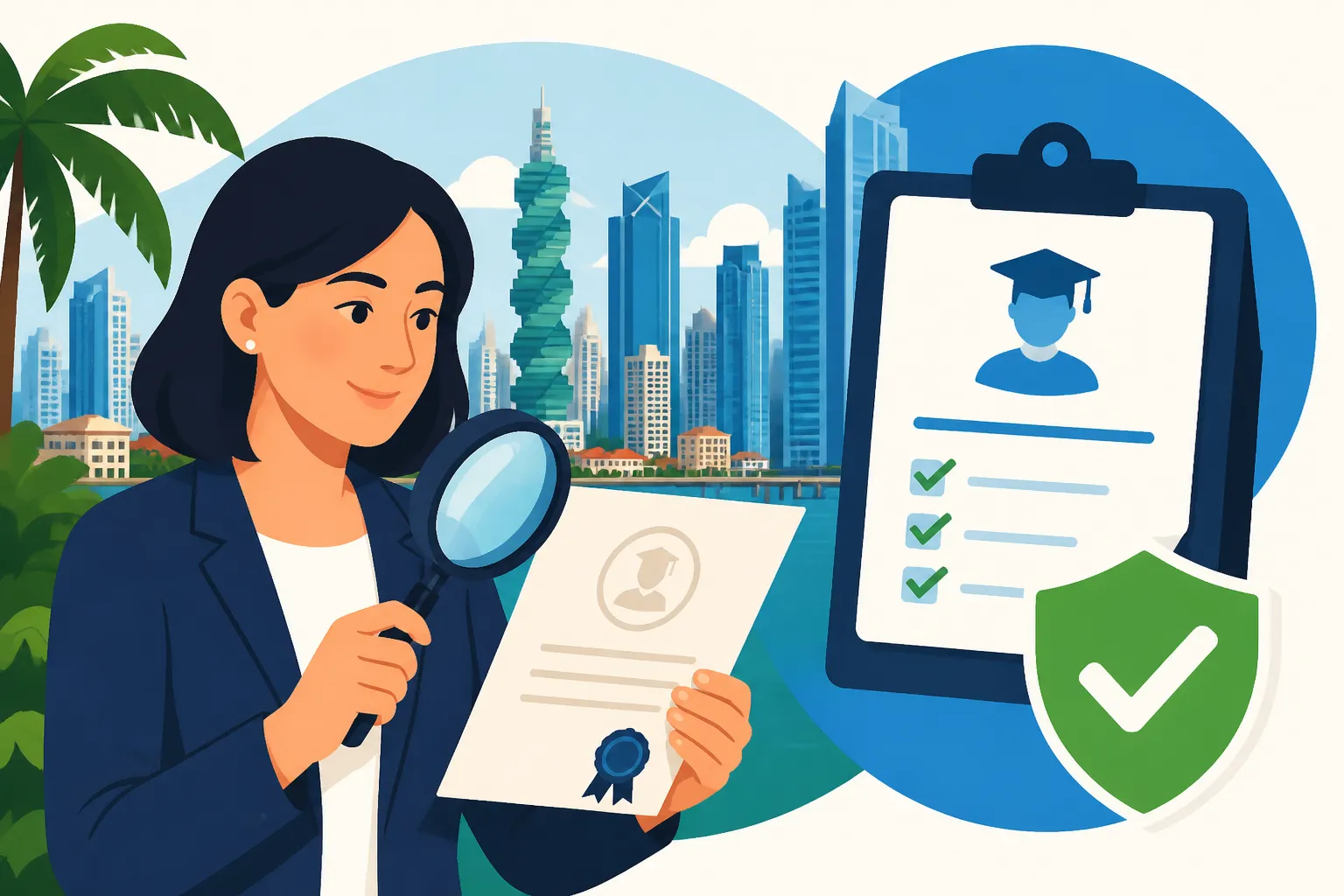
How to Validate Professional Credentials in Panama
Arriving in Panama, many of us expats quickly realize that our hard-earned professional qualifications from back home aren't automatically a golden ticket here. It's a rude awakening to discover that what took years of study and practice might not be immediately recognized, creating frustrating hurdles for your career. This guide will meticulously walk you through the often-complex process of validating your professional credentials in Panama, offering realistic advice and practical steps to navigate the bureaucracy.
The Indispensable Need for Credential Validation in Panama
You've spent years honing your craft, earning degrees, and gaining professional certifications in your home country. You arrive in Panama, eager to contribute, only to hit a bureaucratic brick wall: your credentials, as impressive as they are, might not hold official weight here. This isn't just a minor inconvenience; for many professions, it's an absolute requirement to legally practice. Panama has a robust system in place to protect its local workforce, ensure quality standards, and regulate who can perform specific professional services. Ignoring this vital step can lead to significant setbacks, from being unable to legally work in your chosen field to facing legal repercussions.
Protecting the Panamanian Professional Landscape
One of the primary reasons for strict credential validation is the protection of the local professional landscape. Panama, like many nations, aims to ensure that its citizens have ample opportunities in skilled professions. By requiring foreign credentials to be validated, the government can control the influx of foreign professionals and maintain a balance in the job market. This isn't about excluding foreigners outright, but rather about integrating them in a structured way that supports national interests and professional standards. For instance, a local Panamanian engineer who has spent years studying at a national university and understands local building codes would find it unfair if a foreign engineer could simply walk in and practice without proving their equivalency.
It's a system designed with good intentions, but for us expats, it often feels like an endless maze of paperwork and waiting. Many of us have felt that familiar pang of frustration, trying to explain to an official what seems like a perfectly legitimate qualification from a reputable university. This isn't just a paper-pushing exercise; it's a fundamental part of how the country manages its professional sectors.
Legal Requirements and Professional Practice
For many regulated professions, the legal requirement to validate your credentials is non-negotiable. Think about doctors, lawyers, engineers, architects, accountants, and even certain teaching roles – these professions have specific regulatory bodies or "Consejos Técnicos" that oversee their practice. Without their stamp of approval, you simply cannot legally work in these fields. Attempting to do so could result in fines, deportation, or even legal action.
Let's take a hypothetical example: imagine you're a seasoned architect from Canada. You've designed stunning buildings and overseen complex projects. You find a fantastic opportunity with a Panamanian firm. However, before you can even touch a blueprint, the relevant architectural board in Panama will require your qualifications to be recognized and, in many cases, for you to pass a local equivalency exam or fulfil additional requirements. They need to be sure that your education and experience align with Panamanian standards, especially concerning local building codes, safety regulations, and environmental laws. This isn't just about translating a diploma; it's about ensuring compatibility with the entire local professional ecosystem. For this reason, understanding what your specific field demands is the very first, and most crucial, step.
Navigating Panama's Professional Recognition System: Key Institutions
The journey to validate your professional credentials in Panama often feels like navigating a labyrinth, mainly because different professions are governed by different institutions. There isn't a single, all-encompassing office where you can get everything sorted; instead, you'll be dealing with various government bodies, university departments, and professional councils. Knowing who's responsible for what is half the battle won.
The Ministry of Education and National Universities
For many academic degrees, particularly those not tied to a specific professional board, your first stop might be the Ministry of Education (MEDUCA) or one of Panama's national universities. The University of Panama (Universidad de Panamá) and the Technological University of Panama (Universidad Tecnológica de Panamá – UTP) are often central figures in the recognition of foreign academic degrees.
If your qualification is a general academic degree, say a Bachelor of Arts in Literature or a Master's in Business Administration (MBA) that isn't directly leading to a regulated profession, these institutions will assess the equivalency of your foreign degree to a Panamanian one. This process involves a detailed review of your transcripts, course descriptions, and the curriculum of your foreign university. They want to ensure that the content and rigor of your studies meet their benchmarks. Imagine bringing in your university transcript, only to have them meticulously compare each course to what a Panamanian student would study. It can be a slow, painstaking process, requiring patience and meticulous organization of your documents. You might even need to get letters from your former university detailing course hours and content. For further information on this process, you may find our guide on How to Get Your Foreign University Degree Recognised in Panama helpful.
Specific Professional Boards and Councils
For regulated professions, things get a bit more specialized. Panama has a range of "Consejos Técnicos" (Technical Councils) or similar regulatory bodies for specific fields. These are the gatekeepers, and their approval is mandatory to legally practice.
For example:
- Medical Professionals (Doctors, Nurses, Dentists): You'll typically be dealing with the Ministry of Health (MINSA) and its associated technical boards. They'll scrutinize your medical degree, internship hours, and specialized training. Often, they require extensive documentation and sometimes even a revalidation exam, especially for doctors and surgeons, to ensure you meet Panama's specific health protocols and standards.
- Engineers and Architects: The Consejo Técnico de Ingeniería y Arquitectura (CTIA) is your port of call. They verify engineering and architectural degrees, ensuring compliance with local construction laws, materials standards, and safety regulations. You can expect a deep dive into your curriculum and potentially a requirement to demonstrate knowledge of local codes.
- Lawyers: This is arguably one of the most protected professions in Panama. The legal system is based on civil law, which can differ significantly from common law systems. As such, the Supreme Court of Justice and the National Bar Association (Colegio Nacional de Abogados) oversee the validation of foreign law degrees. It's extremely rare for a foreign law degree to be fully recognized without substantial additional study or a full revalidation of the entire degree at a Panamanian university, effectively meaning you might have to re-do much of your legal education locally.
- Accountants: The Junta Técnica de Contabilidad (Technical Accounting Board) regulates the accounting profession. They will assess your accounting degree and professional certifications to ensure they align with Panamanian accounting principles and tax laws. Given the nuances of local tax codes, understanding the intricacies of Panama’s tax system is crucial here. Resources like Taxes for Expats could be invaluable for navigating the financial landscape once you are practicing.
Each of these bodies has its own specific set of requirements, forms, and timelines. It's not a one-size-fits-all process, and the level of scrutiny can vary immensely. Always start by identifying the correct professional body for your field and consulting their official guidelines, which can sometimes be found on their websites, though often a visit in person is the most reliable way to get the most up-to-date information.
Step-by-Step Guide to Validating Your Credentials
The path to getting your professional credentials recognized in Panama can feel daunting, but breaking it down into manageable steps makes it a lot less intimidating. Think of it as a marathon, not a sprint, and remember that meticulous preparation is your best friend.
Document Gathering and Preparation
This is the foundational stage, and it requires extreme attention to detail. Any missing or incorrect document can send you back to square one, prolonging the entire process.
First and foremost, you'll need all your academic certificates, diplomas, and official transcripts. Don't just bring the pretty certificate; the transcripts detailing every course you took, the grades you received, and the number of credit hours are absolutely critical. Most Panamanian institutions will require a detailed curriculum or course descriptions from your previous university to understand the content of your studies. If your university provides a syllabus for each course, gather those too.
Then comes the "apostille" or "legalization" step. Panama is a signatory to the Hague Apostille Convention. This means that if your home country is also a signatory, you'll need to get an Apostille stamp on your original documents. This certifies the authenticity of your documents for international use. If your country is not part of the Hague Convention, your documents will need to be "legalized" by the Panamanian consulate in your home country and then by the Ministry of Foreign Affairs in Panama. This step must be completed before you even think about submitting documents locally. Many expats find this particular step the most time-consuming and frustrating, as it's entirely dependent on the efficiency of agencies in your home country.
Finally, all your documents will need to be translated into Spanish by an official public translator authorized in Panama. This is not a job for your bilingual friend or a cheap online service. These translations must be certified. You can usually find a list of authorized translators on the website of the Ministry of Foreign Affairs or by asking at local law firms. The cost of these translations can add up, especially for extensive transcripts and course descriptions, so budget accordingly.
Application Submission and Review Process
Once your documents are gathered, apostilled/legalized, and officially translated, you can begin the application process itself. This typically involves submitting your dossier to the relevant professional board, university, or ministry, as identified in the previous section.
The application usually starts with filling out specific forms provided by the institution. Be prepared to provide copies of your passport, residency visa, cédula (once you have one), and sometimes even a police clearance certificate from your home country and Panama. You'll likely pay an application fee at this stage, which can vary significantly depending on the profession and institution.
After submission, your documents will enter a review phase. This is where patience truly becomes a virtue. The review can take months, sometimes even over a year, depending on the volume of applications, the complexity of your qualifications, and the specific board. During this time, the board or university will assess the equivalency of your foreign education to Panamanian standards. They may request additional information, interviews, or even a period of supervised practice or specific coursework if they deem there are gaps in your training. For instance, an engineer might be asked to take a course on Panamanian seismic building codes, or an accountant might need to demonstrate knowledge of local tax regulations. This is a common point of frustration for many, as the process is often opaque, and proactive follow-up is almost always necessary. Don't be afraid to call, visit, and politely inquire about the status of your application.
Potential Exams and Additional Requirements
For some professions, particularly those involving public safety or health, simply having your degree recognized isn't enough. You might be required to pass an equivalency or revalidation exam. This is very common in fields like medicine, where the board needs to ensure you are up-to-date with local medical practices, diseases prevalent in the region, and the specific legal framework of healthcare in Panama.
These exams are usually administered in Spanish and can be quite rigorous. They are designed to test your practical knowledge in a Panamanian context, not just your theoretical understanding. If an exam is required, the institution will usually provide details on the syllabus and registration process. You may also be required to complete a period of supervised practice, such as an internship or residency, in a Panamanian institution to familiarize yourself with local practices. This is often the case for medical and legal professionals.
For example, a foreign nurse might have her degree recognized, but still be required to undertake a short supervised placement in a Panamanian hospital to prove competency in the local healthcare system before receiving full licensure. Always clarify these potential additional steps early in your inquiry process, as they can significantly impact your timeline and plans. Understanding these specific requirements will give you a clearer picture of your overall journey to legally practice in Panama.
Overcoming Common Hurdles in the Validation Process
Even with the clearest roadmap, the journey of validating your professional credentials in Panama is almost guaranteed to present a few bumps, if not full-blown roadblocks. Expats often share similar tales of frustration, and knowing what to expect can help you prepare and persevere.
Language Barriers and Bureaucratic Maze
Perhaps the most universally acknowledged hurdle is the language barrier. While many professionals in Panama City, especially in international business or healthcare settings, speak English, the administrative process is almost entirely in Spanish. From understanding complex legal forms to communicating with officials who may not be accustomed to dealing with foreigners, a lack of proficiency in Spanish can significantly slow you down and lead to misunderstandings. Even if you consider yourself conversational, the specific jargon used in official documents and bureaucratic processes can be a challenge.
Beyond language, the Panamanian bureaucracy itself is legendary. It’s not uncommon for different offices to provide conflicting information, for rules to change without clear public announcement, or for processing times to extend far beyond official estimates. Documents can get "lost" (or misplaced), and what seems like a straightforward request can turn into a multi-day saga. This can be incredibly disheartening, especially if you’re used to more streamlined, digitally-enabled government services in your home country.
To navigate this, consider investing in intensive Spanish lessons. Platforms like iTalki can connect you with Panamanian tutors who can not only improve your language skills but also offer cultural insights into how to approach official matters. Hiring a local assistant or a reputable lawyer specializing in professional validation can also be a game-changer. While an added expense, their familiarity with the system, connections, and ability to advocate on your behalf in Spanish can save you immense time and stress. This is often an area where trying to save money can end up costing you more in the long run, both financially and emotionally.
Document Discrepancies and Incomplete Information
Another frequent stumbling block revolves around documentation. You might have an impeccably organized file, but the Panamanian institutions might have a slightly different expectation of what constitutes an "official" document. For example, some might require a specific type of seal, or a separate letter from your university registrar even if the information is already on your transcript. They might question the accreditation of your foreign university if it's not widely recognized internationally, or if they can't easily verify it through their own channels.
A common scenario involves course descriptions: you might provide a general catalog description, but the board demands a detailed syllabus for each course, outlining learning objectives and credit hours precisely. If your old university doesn't keep such detailed records, or if it's difficult to obtain them years later, you could face significant delays or even rejection.
To mitigate this, anticipate every possible requirement. When requesting documents from your home country, ask for the most comprehensive and detailed versions possible. If a document is vague, consider proactively getting an affidavit or supplementary letter from your former institution clarifying the information. When in doubt, it's always better to over-prepare with documentation than to be caught short. Regular, polite follow-ups with the specific government agency processing your documents are crucial. Sometimes, a quick clarification can prevent a document from sitting in a "pending" pile for weeks. Remember, an incomplete application is usually put aside, and it's up to you to ensure it's complete and accurate by their standards.
Alternative Paths for Expats: Working Without Full Validation
While full professional validation is often the ideal goal, it's not always feasible or necessary for every expat in Panama. For some, the time, cost, and bureaucratic hurdles simply outweigh the benefits, especially if their long-term plans aren't tied to practicing their specific profession in Panama. Thankfully, there are several alternative avenues for expats to work and thrive here, even without a fully validated professional license.
Non-Regulated Roles and Consulting
Many professional fields are not as strictly regulated as medicine, law, or engineering. For instance, if you have a background in marketing, IT, human resources, or general business management, you might find ample opportunities without needing your degree formally validated by a specific technical board. These roles often fall under general business or administrative categories, where a university degree is valued for its general academic merit rather than specific licensure. Employers in these sectors are usually more interested in your practical experience, skills, and portfolio than in a Panamanian government stamp of approval on your diploma.
Another excellent avenue is consulting. Many foreign companies with operations in Panama, or even local businesses looking for international expertise, are open to hiring consultants on a project basis. In this scenario, your foreign qualifications are typically accepted as proof of expertise, and you operate more as an independent contractor or business service provider rather than a fully licensed professional within the Panamanian system. This offers flexibility and often allows you to leverage your high-level skills without getting bogged down in the intricacies of local validation. You could be offering business development advice to a local startup, or marketing strategy to a multinational, all based on your proven track record from your home country. For those looking at independent work, understanding How to Register as a Self-Employed Taxpayer in Panama will be essential.
Teaching English and Other Specialized Skills
Teaching English as a foreign language (TEFL) is a popular route for many expats, particularly if you have a university degree, regardless of its field. While some international schools may require specific teaching certifications and degree validation, many language academies and private tutors are more flexible. Your native English fluency and a TEFL certificate are often sufficient. This allows you to earn an income, integrate into the local community, and build your life in Panama while exploring other long-term career options. Finding How to Find English Teaching Jobs in Panama could be a great starting point for many.
Beyond English, if you possess other specialized skills that are in demand but not heavily regulated, you might find opportunities. This could include graphic design, web development, content writing, or specialized technical training. The digital economy has opened up numerous possibilities for skilled individuals to work for Panamanian companies or clients without needing to jump through the traditional validation hoops. Your portfolio and demonstrable skills often speak louder than a piece of paper in these fields.
Remote Work for Foreign Companies
Perhaps the most straightforward alternative, if your circumstances allow, is to continue working remotely for a foreign company. With the rise of digital nomads and the increasing acceptance of remote work globally, many expats choose to live in Panama while maintaining employment with a company based in their home country or another international location.
Under Panama's territorial tax system, income earned outside of Panama from foreign sources is generally not subject to Panamanian income tax. This is a huge draw for many. If your job is for a company not registered in Panama and your work is performed remotely, your foreign professional credentials remain relevant to your employer abroad, and you bypass the entire Panamanian validation process. You simply need to ensure you have the correct residency visa that allows for remote work and manage your tax obligations in your home country. For detailed information on this, our guide on Working Remotely from Panama: The Definitive Expat Guide (2027) delves into the specifics. This option provides a fantastic way to enjoy life in Panama without the often-stressful process of local credential validation.
Maintaining Your Professional Status in Panama
Once you've successfully navigated the intricate process of validating your professional credentials in Panama, the journey isn't entirely over. Maintaining your professional status is just as important as obtaining it, ensuring you remain in good standing and can continue to practice without interruption. This involves understanding renewal processes, continuous education requirements, and adhering to local professional ethics.
Renewals and Registrations
Just like your residency visa or driver's license, your professional registration in Panama often comes with an expiry date. The frequency of renewal can vary greatly depending on your specific profession and the governing technical board or ministry. For some, it might be an annual renewal, while for others, it could be every few years.
The renewal process typically involves submitting updated personal information, proving you're still a resident of Panama, and paying a renewal fee. You may also be required to provide a Paz y Salvo, which is a certificate from the tax authority (DGI) confirming you have no outstanding tax debts, and potentially a criminal background check from Panama. Always mark your renewal dates prominently on your calendar and start the process well in advance. Panamanian bureaucracy can take time, and you don't want to find yourself unable to practice because your registration has lapsed. Failing to renew on time can lead to fines, temporary suspension of your right to practice, or even having to go through a partial re-validation process.
For example, a licensed engineer might need to renew their registration with the CTIA every five years, submitting proof of residency, a tax clearance certificate, and a nominal fee. Doctors and other health professionals might face more frequent renewals, along with stricter requirements for continuous professional development. Keeping track of these dates is crucial, and a proactive approach will save you a lot of headaches in the long run.
Continuing Professional Development
Many professional bodies in Panama, particularly for regulated fields, require continuous professional development (CPD) or continuing education units (CEUs) to maintain your license. This is a global standard aimed at ensuring professionals stay current with the latest advancements, best practices, and regulatory changes in their respective fields.
Your professional board will likely have specific requirements regarding the number of hours or credits you need to accrue over a certain period. These can often be fulfilled through attending approved seminars, workshops, conferences, or specialized courses, either locally in Panama or internationally. Some boards might even accept online courses from accredited institutions. It's vital to keep meticulous records of all your CPD activities, including certificates of attendance and course outlines, as you'll need to submit these as proof during your renewal process.
For instance, an accountant in Panama might be required by the Junta Técnica de Contabilidad to complete 40 hours of approved CPD every two years, which could include courses on new tax laws, auditing standards, or financial reporting. Similarly, a medical professional might need to regularly attend medical conferences or specialized training to keep their skills and knowledge up-to-date with MINSA guidelines. Embracing continuous learning not only helps you meet these requirements but also ensures you remain competitive and proficient in your chosen profession within Panama's evolving landscape. This commitment to ongoing education is a hallmark of dedicated professionals, regardless of where they practice.
Disclaimer
The information provided in this guide is for general informational purposes only and does not constitute legal, financial, or professional advice. While we strive to provide accurate and up-to-date information, the laws, regulations, and procedures in Panama can change rapidly and may vary depending on individual circumstances and specific professions. We strongly recommend consulting with a qualified Panamanian attorney, a professional validation specialist, or the relevant professional board directly for advice tailored to your situation. Relying solely on the information presented here is at your own risk.