What Happens If My Panama Residency Application Is Denied?
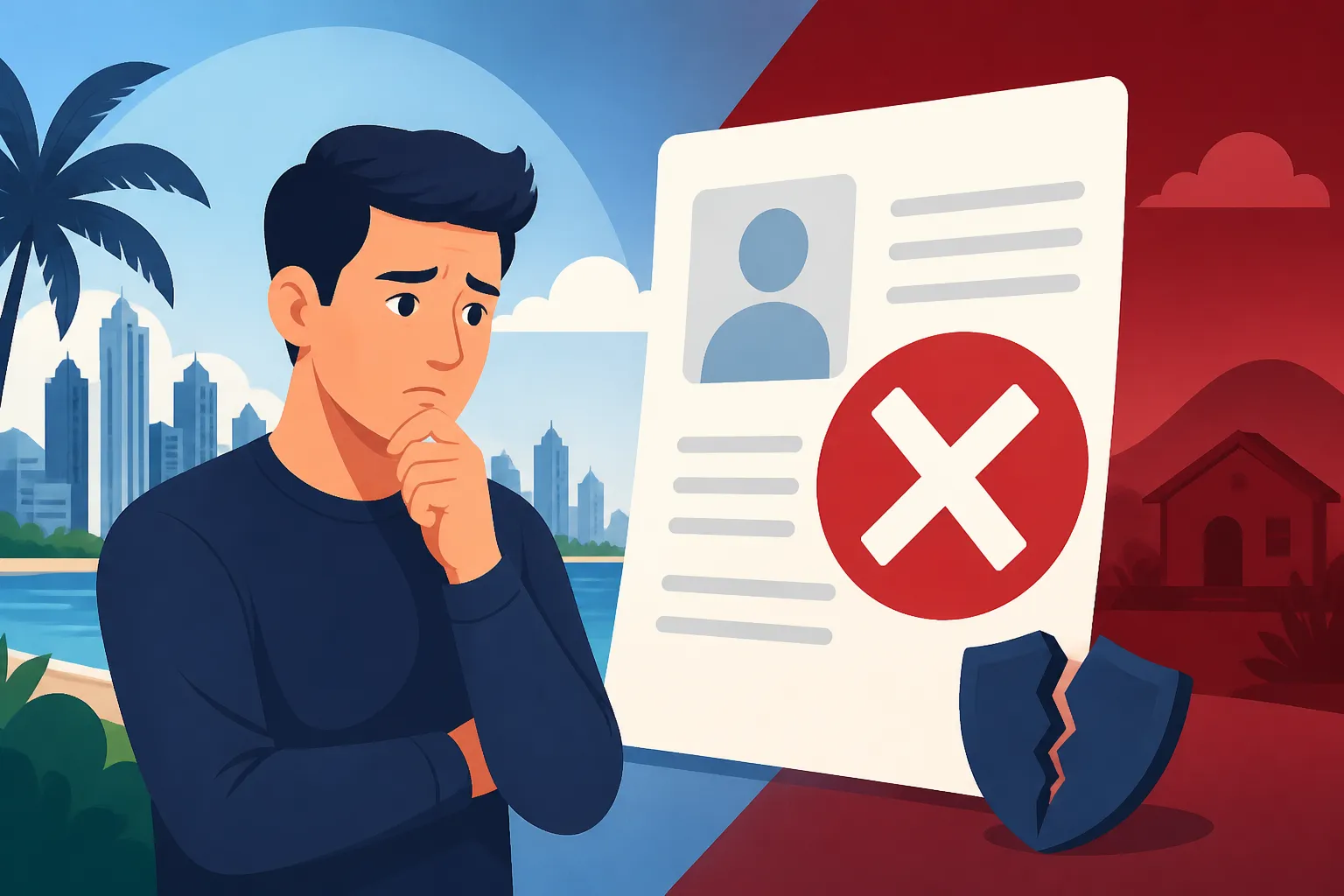
Okay, let's talk about something that can feel like a real punch to the gut: getting that official notice that your Panama residency application has been denied. After all the paperwork, the waiting, the hopes, it’s a truly disheartening experience, and I've seen countless expats go through that gut-wrenching moment. You've poured your time, energy, and often a considerable amount of money into making Panama your home, and then… denied. It feels like the rug has been pulled out from under you. This guide is here to walk you through exactly what happens when your Panama residency application is denied, what steps you can take next, and how to navigate this challenging situation with as much clarity and grace as possible.
Understanding the "Why": Common Reasons for Residency Denial in Panama
First things first, you need to understand why your application was denied. The Panamanian immigration authorities (Servicio Nacional de Migración) don't just deny applications on a whim; there's always a reason, even if it's not immediately obvious to you. Getting to the bottom of this "why" is the absolute crucial first step in deciding your next move. Without this understanding, any action you take might be wasted effort.
Incomplete or Incorrect Documentation
This is probably the most common culprit, and it’s surprisingly easy to fall victim to, even with the best intentions. Panama’s immigration system is notoriously bureaucratic and detail-oriented. A missing signature, an expired passport copy, a document that wasn't properly apostilled or authenticated, or even a date format discrepancy can lead to a denial. For instance, if you submitted your police record but it expired before your application was fully reviewed, or if a bank statement was missing a specific stamp they required, that could be enough.
Imagine you applied for the Pensionado Visa, presenting bank statements to prove your monthly income. If the bank statements didn't clearly show consistent deposits over the required period, or if they weren't certified by the bank in the precise manner Migración demands, your application could be rejected. The smallest oversight can derail an otherwise solid application. This is why having a deep understanding of what documents do I need for Panama residency? is paramount right from the start.
Financial Insufficiency or Doubts
Many residency visas, especially those for retirees or investors, have specific financial requirements. If your financial proof doesn't meet the minimum threshold, or if there are inconsistencies that raise red flags, your application will be denied. This isn't just about having the amount of money; it's also about proving its source and stability.
For example, the Friendly Nations Visa requires proof of economic solvency. If your business plan or employment contract, or bank account statements, don't convincingly demonstrate sufficient and stable income to support yourself (and any dependents) in Panama, your application could face rejection. They want to ensure you won't become a burden on the state, and if your financial documents present any ambiguity, they're likely to err on the side of caution. It's not enough to have the money; you must prove it in the specific ways they require.
Criminal Record or Security Concerns
This is a serious one. When you apply for residency, you’re always required to submit a police certificate from your country of origin and any country where you've lived for a significant period. If this background check reveals a criminal record that is deemed a risk by Panamanian authorities, your application will almost certainly be denied. Even minor offenses from years ago can sometimes cause issues, depending on their interpretation.
Beyond official records, security concerns can also arise from other sources. Perhaps there were discrepancies in your personal information that raised suspicions, or an issue during the interview process, however rare that is for initial applications. While less common, any perceived threat to public safety or national security will lead to an immediate denial. This is why getting your documents apostilled for Panama immigration, especially police records, correctly and promptly is so critical.
Failure to Meet Specific Visa Category Requirements
Panama offers various residency pathways, each with its own set of unique criteria. If you applied for a visa category that you simply don't qualify for, a denial is inevitable. This often happens when expats misunderstand the nuances of a particular visa.
Let's say you applied for the Friendly Nations Visa, assuming your nationality qualified you, but you didn't have a solid economic activity or employment contract to present. Or perhaps you thought you qualified for the Pensionado (Retiree) Visa but your pension income didn't meet the minimum monthly requirement, or you were too young. Each visa type, whether it’s the residency through real estate investment or the new Digital Nomad (Short Stay) Visa, has very specific boxes you need to tick. A failure to tick even one of those boxes will lead to a denial. This underscores the importance of fully understanding the details of your chosen visa category before you even begin to apply.
Initial Steps After Receiving a Denial Notification
So, you've received the dreaded news. Take a deep breath. Panic won't help, but swift, informed action will. This isn't necessarily the end of your Panamanian dream, but it does mean a pivot in strategy.
Reviewing the Official Notification
The first and most critical step is to thoroughly read your denial letter. Don't just skim it; absorb every word. This document will officially state the reason(s) for the denial. It might be vague, or it might be very specific. Pay close attention to any clauses or articles of Panamanian immigration law that are cited. These references are key because they point directly to the specific legal basis for your rejection.
If the letter states "documentation incomplete," you need to cross-reference your submitted file with the requirements of your visa category and try to pinpoint exactly what was missing or incorrect. If it refers to "economic solvency," then you need to reassess your financial proofs. This letter is your roadmap for what went wrong, and consequently, what needs to be fixed. Don't assume anything; work purely from the information provided in that official communication.
Seeking Legal Counsel: Your First Priority
I cannot stress this enough: your very next call should be to an experienced immigration lawyer in Panama. Trying to navigate the appeals or reapplication process yourself after a denial is like trying to perform surgery on yourself – it's ill-advised and often ends badly. An immigration lawyer who specializes in Panamanian law will be able to:
- Interpret the denial letter: They can decipher the legal jargon and understand the true implications of the cited laws.
- Identify the precise flaws: With their experience, they can often quickly spot exactly where your application fell short.
- Advise on the best course of action: Whether an appeal or a new application is preferable, they can guide you.
- Represent you: They can formally interact with Migración on your behalf, which is invaluable.
Think of it this way: your lawyer is not just a representative, but a strategic partner. They know the ins and outs of the system, the unwritten rules, and the most effective ways to present your case. This is absolutely why you need a Panamanian lawyer for residency applications, and even more so when facing a denial. Don't try to save money here; a good lawyer can save you countless headaches and potentially years of delay.
Understanding Timelines and Deadlines
Time is often of the essence after a residency denial. There are strict deadlines for filing appeals (reconsideration requests) and for your legal stay in Panama. Your denial letter should specify the timeframe within which you can appeal. Missing this deadline means you've forfeited your right to appeal, leaving reapplication as your only pathway forward.
Furthermore, a denial might impact your current immigration status. You might have been operating under a provisional visa or an extended tourist stay while your application was pending. With a denial, that provisional status might be revoked, and you might have a limited period (e.g., 30 days) to either leave the country, rectify your status, or file an appeal. Your lawyer will clarify your exact legal status and the implications for your stay. Ignoring these deadlines can lead to overstaying your visa, which carries penalties and can complicate future re-entry or residency attempts.
Your Options: Appealing the Decision or Reapplying
Once you've understood the "why" and consulted with your lawyer, you'll generally have two main strategic paths: appealing the decision or reapplying entirely. Each has its own merits and considerations.
The Appeals Process: Reconsideration (Recurso de Reconsideración)
If your lawyer believes the denial was based on an error by Migración, a misunderstanding, or a rectifiable oversight (like a missing document that you actually do have, or an easily clarified financial statement), an appeal might be your best bet. In Panama, this is usually called a Recurso de Reconsideración.
The appeals process typically involves submitting a formal written request to the National Immigration Service, outlining why you believe the decision should be overturned. This is where your lawyer's expertise is invaluable. They will draft a compelling legal argument, attach any new or clarified documentation, and present it within the strict legal timeframe. For example, if your application was denied because a police certificate was deemed "expired" but you had actually submitted a valid, new one just days before the decision, your lawyer can present evidence of this, arguing that the denial was based on incorrect information available to the reviewer.
The downside of appeals is that they can be lengthy, often taking several months, and there's no guarantee of success. However, if the denial was genuinely an administrative error or a fixable issue, it can be a quicker route than starting from scratch, especially if you had a strong initial case. It’s about convincing the same authorities to change their minds, which requires a very precise and well-supported argument.
Reapplying with a Strengthened Application
For many, reapplying is the more straightforward, albeit sometimes longer, path. This is especially true if the denial was due to a fundamental flaw in your initial application that cannot be easily "appealed" away. Perhaps you truly didn't meet the financial requirements, or your chosen visa category simply wasn't the right fit. In this scenario, you would essentially start the entire application process again, but this time with all the lessons learned.
This might involve:
- Choosing a different visa category: If the Friendly Nations Visa didn't work, perhaps you qualify for the Qualified Investor (Golden Visa) Programme in Panama or a specific employment-based visa if you secure a job.
- Gathering stronger documentation: If financial solvency was an issue, you might need to save more money, get more consistent bank statements, or secure a more substantial pension.
- Addressing all prior deficiencies: Your lawyer will help you meticulously review the original denial reasons and ensure every single point is robustly addressed in the new application.
The advantage here is that you're presenting a fresh case, free from the initial flaws. The disadvantage is that it can be a lengthy process, akin to applying for residency from inside Panama for the first time, and you will incur all the associated costs again, including government fees and legal fees. However, it often offers a higher chance of success if the initial application had significant, unappealable weaknesses.
Exploring Other Visa Avenues
Sometimes, the best approach after a denial isn't to fight the old battle but to find a completely new one. Panama has a variety of visas, and your personal circumstances might have changed or you might discover a better fit.
For instance, if your Pensionado Visa was denied due to insufficient income, perhaps you could explore business opportunities that would qualify you for an investor visa, or find an employer who could sponsor a work permit. Or, if you initially applied for the Friendly Nations Visa but realize you truly don't have a strong economic link, perhaps it's worth seeing if you qualify to sponsor your spouse for residency in Panama if they have a stronger case, and then apply as a dependent.
This exploration phase with your lawyer is crucial. It’s about being flexible and creative within the confines of Panamanian immigration law. Don't get fixated on just one type of visa; Panama has pathways for various situations. Your lawyer can provide you with information on different options, such as the requirements for permanent residency in Panama.
What Happens If You Need to Leave Panama?
A denial can force a difficult decision, especially if your legal stay in Panama is tied to your residency application. It’s important to understand your obligations and plan accordingly to avoid any issues that could jeopardize future immigration attempts.
Understanding Your Legal Stay Period
When your residency application is denied, your status in Panama reverts to what it was before the application, or a new, limited period might be granted for you to regularize your situation or depart. If you were on a tourist visa when you applied, your legal tourist stay might have expired long ago. While your residency application was pending, you were usually allowed to remain in the country. However, once denied, that grace period typically ends.
Your denial letter or your immigration lawyer will clarify how long you have to legally remain in Panama. This could be as little as 30 days to arrange your departure, or it might be longer if you file an appeal that maintains your provisional status. Overstaying your legal period in Panama can lead to fines, difficulties exiting the country, and a potential ban on re-entry, making it much harder to How to Move to Panama Legally from Abroad in the future. Always adhere strictly to the dates given by Migración.
Planning Your Departure
If an appeal isn't viable or successful, or if you decide to reapply from outside Panama, you'll need to plan your departure. This involves:
- Booking your flight: Ensure you leave before your legal stay expires.
- Closing bank accounts: If you opened a local bank account, make arrangements to transfer your funds out.
- Tying up loose ends: If you rented a place, ensure your rental agreement is properly terminated and you receive your deposit back. Sell or ship any belongings. For shipping, companies like Sirelo can be incredibly helpful in finding reliable movers to manage your relocation logistics, whether it's just a few boxes or an entire household.
Here's a quick comparison of your options:
| Action | Pros | Cons | Best Suited For |
|---|---|---|---|
| Appeal (Recurso) | Potentially quicker than reapplication; maintains current legal status. | No guarantee of success; can be lengthy; success depends on Migración's error or easily rectifiable issue. | Cases where denial clearly resulted from an administrative error, misinterpretation by Migración, or a minor, easily corrected documentation oversight. |
| Reapply | Fresh start; higher chance of success if initial flaws are addressed. | Requires starting from scratch (documents, fees, waiting); may need to leave Panama and re-enter. | Cases with fundamental flaws in the initial application (e.g., didn't meet core requirements, significant missing documents) or if you want to switch visa categories. |
| Seek New Visa Type | Opens up new possibilities if current path isn't a good fit. | Requires thorough research and potentially different qualifications; new costs and timelines. | When your original chosen visa simply isn't suitable for your situation, or if new opportunities (like employment) arise. |
| Depart Panama | Avoids overstaying and associated penalties; allows time to strategize. | Requires you to leave the country; disrupts immediate plans; may incur costs for storage, travel, etc. | If no immediate appeal/reapplication is viable, or if you need time to regroup, gather resources, or pursue other options. |
Considering a Re-entry Strategy
If your ultimate goal is still to reside in Panama, planning your re-entry is just as important as planning your departure. This might mean:
- Consulting with your lawyer: They can advise on the appropriate time to reapply and if there are any restrictions on your re-entry (e.g., if you overstayed previously).
- Gathering new documentation: If financial proof was an issue, you might need several months of new, consistent bank statements. If a police record was the problem, you’d need to ensure any issues are fully resolved or clarified.
- Considering a different visa: As discussed, a new approach might be necessary.
- Health Insurance: Before you consider any re-entry or new application, make sure your health insurance in Panama: Private and International Options Explained is completely up to date. Providers like Cigna Global offer comprehensive plans that can cover you whether you're in Panama or back in your home country while you wait. Having that peace of mind is invaluable, especially during such a stressful period.
Remember, a denial isn't necessarily a permanent "no." It's often a "not yet," or "not this way." With careful planning, sound legal advice, and a clear understanding of the process, you can still achieve your dream of living in Panama.
Disclaimer
The information provided in this guide is for general informational purposes only and does not constitute legal or immigration advice. Panamanian immigration laws and procedures can be complex and subject to change. It is essential to consult with a qualified Panamanian immigration lawyer for personalized advice regarding your specific situation.