What Is the Salary for an English Teacher in Panama?
Moving to Panama with the dream of teaching English can be incredibly exciting, filled with visions of tropical breezes and vibrant culture. However, like many things as an expat, the reality of salaries can be a bit more nuanced than the rosy pictures online. If you're wondering "What is the salary for an English teacher in Panama?", you've come to the right place. This guide will walk you through the realistic earnings you can expect, the factors that influence your paycheck, and practical tips for making your teaching career here work for you.
What to Expect from an English Teaching Salary in Panama
Let's cut right to it: teaching English in Panama isn't typically a path to striking it rich, especially if you're coming from a high-income country. However, it absolutely can provide a comfortable, fulfilling life, particularly when paired with a reasonable cost of living. The range of salaries can vary wildly, from barely enough to cover rent to a genuinely good living, depending on a host of factors we'll explore.
Average Pay Ranges: A Realistic Look
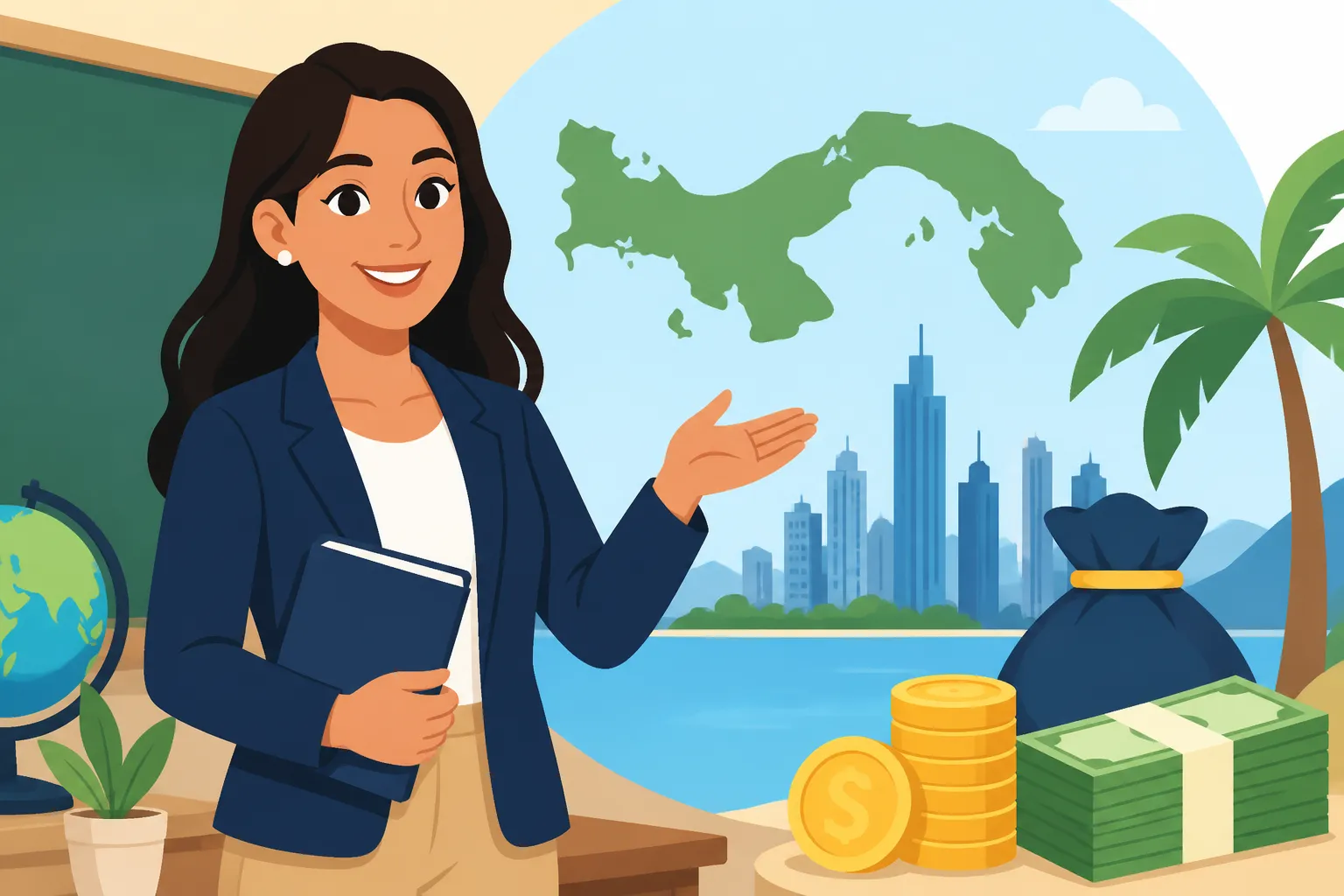
When you start digging into English teaching salaries in Panama, you'll find a broad spectrum. A new teacher with a basic TEFL certificate and no prior experience might find entry-level positions in private language academies or smaller schools starting anywhere from $700 to $1,200 USD per month. This is often enough to cover basic living expenses, especially if you're living outside of the most expensive areas of Panama City. However, it won't leave much room for luxuries or extensive savings.
For those with more experience, a bachelor's degree, and perhaps a more advanced teaching certification, opportunities in reputable private schools can offer salaries in the range of $1,200 to $2,000 USD per month. These positions often come with better benefits, such as health insurance or even housing allowances, which can significantly improve your overall financial picture. International schools, which are often the holy grail for expat teachers, typically offer the highest compensation, with salaries for qualified and experienced teachers ranging from $2,000 to $3,500 USD per month or even more, sometimes including additional perks like flights, accommodation assistance, and tuition for dependent children. These schools tend to attract teachers with specific subject specializations and international curricula experience.
It’s crucial to understand that these figures are gross salaries, meaning before any deductions for local taxes or social security contributions. Panama's tax system operates on a territorial basis, meaning generally only income sourced within Panama is taxed. However, understanding your obligations is key, and resources like those offered by The Complete Guide to Taxes in Panama for Expats (2027) can be incredibly helpful.
Factors That Influence Your Earning Potential
Your monthly take-home pay as an English teacher in Panama isn't a fixed number; it's a dynamic figure influenced by several key factors. Understanding these can help you strategize your job search and career development.
First, your qualifications and experience are paramount. A university degree, especially in education or a related field, combined with a recognized TEFL, TESOL, or CELTA certification, will open more doors and command higher salaries. The more robust your academic and professional background, the better your chances of securing a well-paying position. If you've been teaching for several years, particularly in accredited institutions, you'll naturally be more attractive to top-tier schools. A freshly minted TEFL certificate might get your foot in the door at a language institute, but it won't land you a job at an international school, which often requires a full teaching license from your home country and a few years of classroom experience.
Next, the type of school or institution you work for makes a massive difference. We've already touched on this, but it bears repeating:
- Private Language Academies: These are often the easiest places for new teachers to get hired. They offer flexible hours and cater to students of all ages and levels, from business professionals to young learners. Salaries are generally on the lower end, often paid hourly.
- Panamanian Private Schools: Many private Panamanian schools offer bilingual programs, and they often look for native English speakers. These roles typically offer more stable, full-time contracts and better benefits than language academies, but salaries can still vary widely.
- International Schools: These are usually the most sought-after positions. They teach a curriculum (e.g., American, British, International Baccalaureate) entirely in English, often to expat children and affluent Panamanian families. They demand highly qualified, often certified, teachers and offer competitive international-level salaries and benefits packages. Examples include the International School of Panama or Balboa Academy.
- Universities: While less common for general English teaching, some universities might hire native speakers for specific English programs or departments. These roles typically require a Master's degree.
Finally, location within Panama plays a significant role. Teaching in Panama City will generally offer higher salaries due to the greater concentration of international schools and language academies, as well as the higher cost of living. However, your expenses will also be significantly higher. If you're willing to venture outside the capital to places like David, Santiago, or even the expat hub of Boquete, salaries might be slightly lower, but your cost of living could be dramatically reduced, leading to a better quality of life and potentially more savings. For instance, renting an apartment in Boquete is often far less than in the most popular neighborhoods of Panama City.
Making Ends Meet: Salary vs. Cost of Living in Panama
Understanding your potential income is only half the battle; the other half is knowing how far that income will stretch against Panama's cost of living. It's a common expat frustration to see a seemingly decent salary only to realize local expenses eat a larger chunk than anticipated. Panama City, especially, can be surprisingly expensive in certain aspects, while other regions offer a much more budget-friendly lifestyle.
Where Your Money Goes: A Breakdown of Expenses
Let's get down to the nitty-gritty of typical monthly expenses for an English teacher in Panama, assuming a moderate lifestyle. This isn't just about rent; it's about everything from your morning coffee to your weekend adventures.
- Accommodation: This will likely be your biggest expense. In Panama City, a decent one-bedroom apartment in a safe, central neighborhood (like El Cangrejo, Marbella, or San Francisco) could range from $700 to $1,200+ USD per month. Outside the city, say in David or Santiago, you might find a similar apartment for $400 to $700 USD. Shared accommodation can drastically reduce this cost, often to $300-$500 per month. You can find more details on what to expect in How Much Does It Cost to Rent an Apartment in Panama City in 2026?.
- Utilities: Expect to pay for electricity, water, gas, and internet. Electricity can be high due to constant air conditioning use, potentially ranging from $80 to $200 USD+ depending on usage and apartment size. Internet and mobile phone plans are generally affordable, around $40-$70 USD for a good package.
- Groceries: If you cook at home and buy local produce, groceries can be quite reasonable, perhaps $200-$400 USD per month for a single person. Imported goods, however, are significantly more expensive.
- Transportation: In Panama City, the Metro and Metrobus systems are very affordable. A Metro pass is cheap, and rides cost around $0.35. Taxis and ride-sharing apps like Uber are also reasonably priced for short distances. If you buy a car, factor in petrol, insurance, and maintenance, which will add up. Learn more about getting around in The Expat Guide to Public Transport in Panama.
- Dining Out & Entertainment: Panama City has fantastic restaurants, but eating out frequently can quickly deplete your budget. A meal at a mid-range restaurant might be $15-$30, while local fondas offer delicious, cheap meals for $5-$10. Movie tickets, gym memberships, and weekend trips will, of course, add to this category.
- Health Insurance: If your employer doesn't provide it, you'll need private health insurance. While public healthcare exists, many expats opt for private care. Monthly premiums can range from $50 to $150 USD+ depending on age, coverage, and provider. Understanding Health Insurance in Panama: Private and International Options Explained is crucial.
Let's put this into a rough table for a single person living in Panama City vs. a smaller city:
| Expense Category | Panama City (USD/month) | Smaller City (USD/month) |
|---|---|---|
| Rent (1-bed apt) | $700 – $1,200 | $400 – $700 |
| Utilities | $120 – $250 | $80 – $150 |
| Groceries | $250 – $400 | $200 – $350 |
| Transport | $50 – $150 | $30 – $100 |
| Dining/Social | $200 – $500 | $100 – $300 |
| Health Insurance | $80 – $150 | $50 – $100 |
| Total Estimated | $1,400 – $2,650 | $860 – $1,700 |
As you can see, an entry-level salary of $1,000 might be tight in Panama City but could be manageable, even comfortable, in a smaller town.
Strategies for Stretching Your Teaching Income
Living within your means and potentially saving money as an English teacher in Panama often requires a bit of savvy and adaptability. It's about embracing local life and being strategic with your spending.
One of the most effective ways to stretch your income is to live like a local. This means foregoing imported foods at the supermarket in favor of fresh, local produce from mercados (markets), which are much cheaper. Eating at local fondas or street food stalls instead of touristy restaurants can save a significant amount. Instead of rushing to buy all new furniture, consider finding second-hand items or opting for a furnished apartment to start.
Public transportation in Panama City is excellent and affordable. Embrace the Metro and Metrobus rather than relying solely on taxis or Uber, which, while convenient, add up over time. If you're outside the city, explore local bus routes or consider a scooter for efficient, low-cost travel.
Another smart move is to budget meticulously. Track your expenses for the first few months to understand exactly where your money is going. There are plenty of apps that can help with this. Setting a weekly or monthly budget for discretionary spending can prevent overspending and ensure you have enough for essentials and unexpected costs. Remember, even small, recurring costs can quickly add up. Understanding The Cost of Healthcare in Panama: A Complete Breakdown for Foreigners (2026) can help you budget for potential medical expenses.
Consider finding flatmates or sharing accommodation. Not only does this significantly reduce your rent and utility bills, but it can also be a great way to meet new people and build a support network in a new country. Many expat groups on social media are excellent resources for finding shared living situations.
Finally, be mindful of air conditioning. While essential in Panama's heat, running AC constantly will skyrocket your electricity bill. Use fans, open windows when possible, and only run the AC when truly necessary to keep those utility costs in check.
Beyond the Classroom: Boosting Your Income and Career
While a stable teaching job is great, many expats find that supplementing their income or actively seeking professional growth is key to thriving financially and professionally in Panama. The expat community here is resourceful, and there are ample opportunities if you know where to look.
Additional Earning Opportunities for Expats
Many English teachers in Panama leverage their skills beyond their primary contract to boost their earnings. Private tutoring is perhaps the most common and lucrative side hustle. Demand for English proficiency is high among Panamanian professionals, university students, and business people. You can charge anywhere from $15 to $30+ per hour for private lessons, depending on your experience, the student's needs, and your negotiation skills. Word-of-mouth is powerful here, but you can also advertise on expat social media groups or local community boards. Websites like iTalki are also great platforms for online tutoring, allowing you to reach students globally and set your own rates, often fitting around your main job schedule.
Online English teaching platforms are another fantastic way to earn extra money, especially if your primary job doesn't fill your entire day. Companies based in other countries often hire remote teachers, offering flexible hours and competitive rates. This can be particularly appealing if you prefer working from home and setting your own schedule. Just be mindful of time differences and ensure you have a stable internet connection.
Beyond teaching, consider if you have other transferable skills. Many expats find work in areas like content writing, social media management, translation services, or even offering tours. The burgeoning tourism industry, especially in areas like Bocas del Toro or Boquete, might offer seasonal work opportunities. If you're entrepreneurial, you might even consider starting your own small business, though this comes with its own set of administrative hurdles. For those looking to be self-employed, knowing How to Register as a Natural Person Business (Persona Natural) in Panama is a vital first step.
Advancing Your Teaching Career in Panama
If you envision a long-term teaching career in Panama, investing in professional development is crucial. Upgrading your qualifications can significantly increase your earning potential and open doors to more prestigious schools.
One of the most impactful steps is to pursue higher certifications. While a basic TEFL is a great start, a DELTA (Diploma in English Language Teaching to Adults) or a Master's degree in TESOL or Education can position you for lead teacher roles, curriculum development, or even management positions within language institutes or universities. For international schools, obtaining a teaching license from your home country (if you don't already have one) is almost always a requirement for higher-paying, full-time contracts.
Gaining specialized experience can also set you apart. For instance, becoming proficient in teaching Business English, exam preparation (like TOEFL or IELTS), or Young Learners can make you a more attractive candidate for specific programs or clients. Many schools are willing to pay more for teachers with niche expertise.
Networking within the expat and local teaching community is invaluable. Attend educational conferences, workshops, and teacher meet-ups. Not only can you learn about new teaching methodologies, but you'll also hear about job openings before they are widely advertised. Personal connections often lead to the best opportunities in Panama. Engaging with colleagues and school administrators can lead to mentorship and recommendations for advancement.
Finally, while often overlooked, learning Spanish will significantly enhance your experience and career prospects. While English is widely spoken in business and tourist areas, fluency in Spanish can help you connect more deeply with students, parents, and colleagues, understand the local educational system better, and even broaden your job search to schools that might require some level of Spanish for administrative tasks or communication with non-English speaking staff. Many locals appreciate the effort and it can improve your overall quality of life.
Navigating the Job Market and Legalities
Finding an English teaching job in Panama and ensuring you're working legally can feel like a maze. It requires patience and diligence, but with the right approach, it's entirely achievable.
Work Permits and Visa Considerations
This is perhaps the most critical aspect of working legally in Panama. As a general rule, you cannot work in Panama on a tourist visa. If you're serious about teaching here, you'll need a proper work permit and a corresponding residency visa. Employers are usually hesitant to hire someone who cannot legally work, as they face significant penalties.
There are several pathways to obtaining a work permit in Panama, but the most common for English teachers involves employer sponsorship. The 10% rule, where only 10% of a company's workforce can be foreign nationals, is a common hurdle. However, there are exceptions and specific visa categories that can apply:
- Friendly Nations Visa: If you're from one of the countries on Panama's "Friendly Nations" list (which includes the US, Canada, UK, Australia, and many European and Latin American countries), this is often a popular route to residency. Once you have provisional residency through this visa, you can then apply for a work permit. However, you generally need to establish economic ties, such as forming a company or having a job offer. Find out more about Understanding the Friendly Nations Visa in Panama (2027).
- Special Professional Visas: Panama has specific visa categories for certain professions, especially those deemed to be in demand. While "English teacher" isn't always on a priority list, schools, especially international ones, can often navigate the process for highly qualified candidates.
- Other Residency Visas: If you qualify for another type of residency (e.g., Pensionado Visa if you're a retiree, though this restricts work activities, or through marriage), you may then be able to apply for a work permit. Understanding How Your Residence Status Affects Health Coverage in Panama is also vital as your legal status impacts more than just employment.
The process of obtaining a work permit and visa can be time-consuming and often requires the assistance of a Panamanian immigration lawyer. Expect to gather numerous documents, many of which will need to be apostilled in your home country. This can take several months, so it's wise to start the process well in advance of your desired start date. Some schools, particularly larger international ones, may assist with or even cover the costs of your work permit application. However, smaller academies might not, leaving the burden and expense to you.
Where to Look for Teaching Jobs
The Panamanian job market for English teachers is dynamic, and you'll want to cast a wide net when searching for positions.
Online job boards are a great starting point. Websites like TEFL.com, Dave's ESL Cafe, and other international teaching job sites often list vacancies in Panama. Locally, platforms like Konzerta.com or even the job sections of major Panamanian newspapers (though less common for English teaching roles) might have listings. For international school jobs, specific sites like Search Associates, ISS (International Schools Services), or TIE Online are where these schools typically post their vacancies.
Direct applications to schools are highly recommended. Research international schools in Panama City, such as the International School of Panama, Balboa Academy, or Crossroads Christian Academy, and check their websites for career sections. Many private Panamanian schools also have bilingual programs, so look for schools like Colegio Brader, Panamerican School, or El Camino Academy. Don't be afraid to send a speculative application with your CV and cover letter even if they don't have an advertised vacancy.
Networking and expat groups are incredibly powerful in Panama. Join Facebook groups for expats in Panama or specific areas like Panama City Expats or Boquete Expats. Often, job openings are shared informally within these communities. Attend expat meet-ups or social events; you never know who you might meet who can connect you to an opportunity. Local language academies might also be willing to meet you in person, even if you just walk in with your CV. This shows initiative and helps you get a feel for the school's atmosphere.
Finally, consider volunteering or short-term contracts initially. While not ideal for salary, sometimes getting your foot in the door through a short-term or volunteer role can lead to paid positions once you've proven yourself and gained local experience. This can be especially useful for new teachers looking to build their CV in Panama. Just ensure you understand the legalities of even volunteer work for foreigners.
Disclaimer
The information provided in this guide is intended for general informational purposes only and does not constitute legal, financial, or immigration advice. While we strive to provide accurate and up-to-date information, circumstances in Panama can change rapidly. It is highly recommended to consult with qualified Panamanian legal, immigration, and financial professionals for advice tailored to your specific situation.