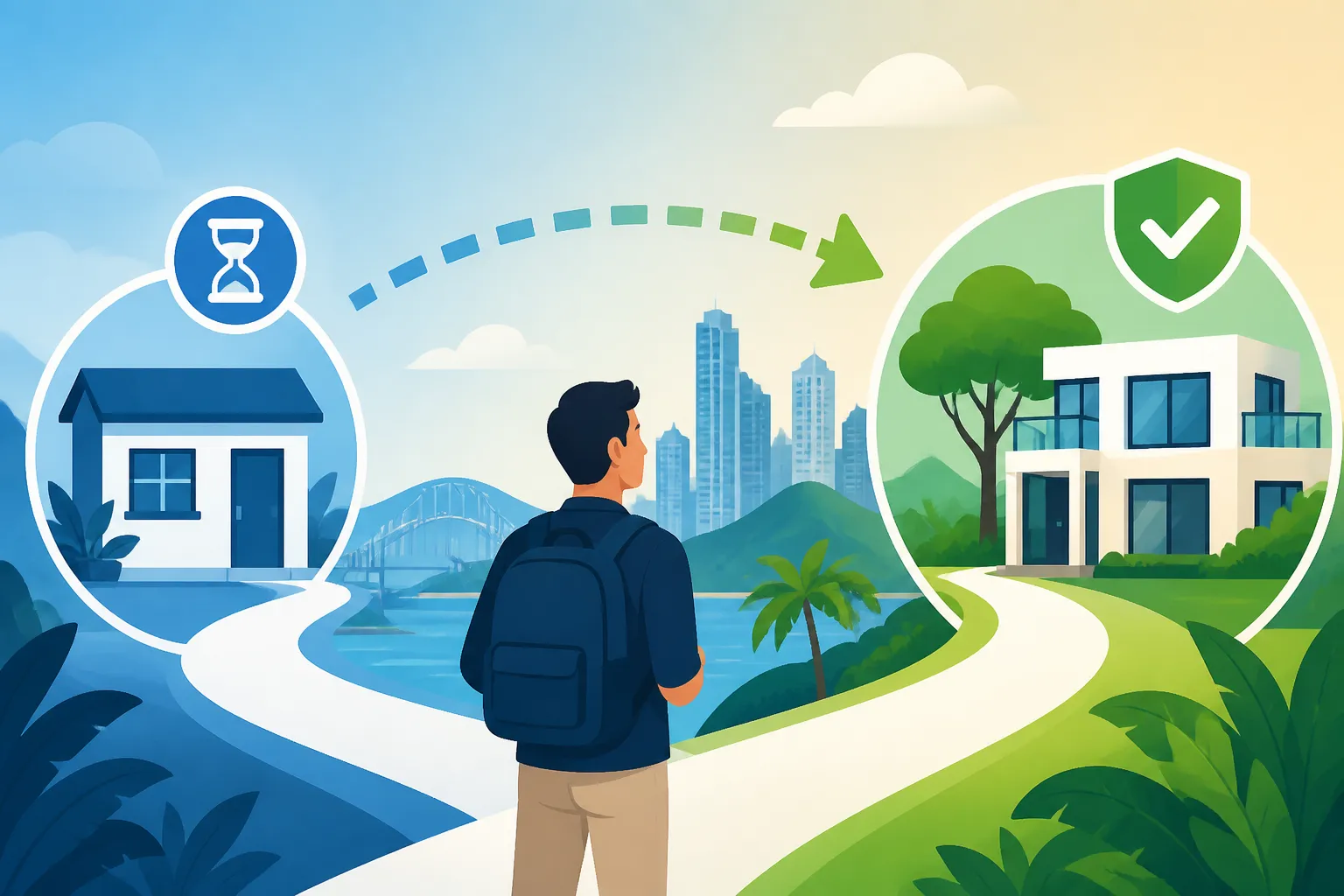
Understanding the Path from Temporary to Permanent Residency in Panama
Ah, the residency journey in Panama! It’s a path many of us expats have walked, and let me tell you, it often feels less like a straight road and more like a winding mountain trail with a few unexpected detours. The initial excitement of getting your temporary residency can quickly turn into a new set of questions: "What now? How do I make this permanent? Is there more paperwork?" This guide is here to demystify that transition, offering you a clear, empathetic roadmap from your temporary status to the stability of permanent residency in Panama.
The Initial Leap: Understanding Temporary Residency in Panama
Getting your foot in the door with temporary residency in Panama is a huge first step, and honestly, it’s a moment worth celebrating. But it’s crucial to understand what "temporary" truly means in the eyes of the Panamanian immigration authorities. It's not just a placeholder; it's a probationary period, a chance for both you and Panama to ensure you're a good fit for long-term integration. Many of us arrive here with dreams, and the immigration process can feel like a labyrinth, but knowing the initial categories helps immensely.
Common Temporary Residency Paths for Expats
When you first apply for residency in Panama, chances are you've fallen into one of a few common temporary categories. These paths are designed to attract different types of foreign residents, each with its own set of rules and, crucially, its own pathway to permanence. The most well-known are probably the Friendly Nations Visa and the Pensionado Visa.
For many, the Understanding the Friendly Nations Visa in Panama (2027) was the golden ticket. This visa historically allowed citizens from a specific list of countries to apply for permanent residency relatively quickly, often by proving economic solvency or a job offer. While the requirements have shifted over the years, becoming a bit more stringent, it still serves as a vital entry point for many professionals and entrepreneurs. You might have initially applied under this category by forming a corporation or securing employment here. The beauty of it, at least in its earlier iterations, was the directness of the path to permanence.
Then there's the beloved The Expat Guide to the Pensionado (Retiree) Visa in Panama (2027), which has long drawn retirees to Panama's warm climate and affordable living. This visa is primarily based on a guaranteed pension income, offering attractive benefits like discounts on various services. For Pensionados, the path to permanent residency is typically straightforward, often granted initially as permanent from the outset, assuming all conditions are met. This often makes it one of the less stressful routes for those who qualify, a definite relief compared to the hoops others jump through.
Other temporary visas might include those for professional reasons, such as a specific job contract that extends beyond a year, or potentially a student visa if you've come here for higher education. Each of these categories has a clear, albeit sometimes complex, process for renewal and eventually, a transition to permanent status. It’s vital to know which specific category you fall under because the requirements for moving forward will hinge entirely on that.
The Provisional Period: What to Expect
Once your temporary residency is approved, you’re usually granted a provisional period, often for one or two years. This isn't just a waiting period; it’s an active phase where you're expected to maintain your eligibility. For example, if you obtained your temporary residency through a job offer, you need to remain employed. If it was based on an investment, that investment must remain active.
During this provisional period, you might feel a bit like you’re living in limbo. Your residency card, your cédula, will clearly state "Provisional" or "Temporal." This means you'll have specific dates when you need to re-apply, renew, or submit additional documentation to either extend your temporary status or upgrade to permanent. It's not a set-it-and-forget-it situation, and I can tell you from personal experience, missing these deadlines can cause major headaches, including fines or even jeopardizing your status.
You'll also be getting accustomed to Panamanian bureaucracy during this time. Appointments with the National Immigration Service (SNM) can be challenging, involving long waits and multiple visits. It's during this phase that you'll truly appreciate the need for meticulous record-keeping and a proactive approach. Think of it as practice for the big league of permanent residency application.
Maintaining Your Temporary Status
Maintaining your temporary status is more than just keeping track of dates; it’s about diligently fulfilling the ongoing requirements of your specific visa type. For instance, if your temporary residency is employment-based, your employer will need to continue making your social security contributions to the Caja de Seguro Social (CSS), and you'll need to maintain your employment contract. Any change in employment typically requires notification to immigration and can impact your status. It’s not uncommon for expats to face anxiety around job stability during this period, especially if their residency hangs on it.
For those on investment-based visas, you'll need to ensure your investment remains valid and can be proven at the time of renewal or upgrade. This could mean maintaining a certain amount in a Panamanian bank account or retaining ownership of a specific property. Keep all receipts, bank statements, and legal documents in an organized fashion. Having a lawyer involved who specializes in immigration is not just a luxury; it's practically a necessity to guide you through these intricacies. They can often help navigate potential pitfalls, ensuring all your ducks are in a row.
Another critical aspect of maintaining your temporary status is abiding by the law. Any legal troubles, even minor ones, can severely jeopardize your ability to move to permanent residency. Panama, like most countries, expects foreign residents to be good citizens. This also includes adhering to tax obligations, such as filing your annual tax return with the DGI, even if your income is foreign-sourced and therefore not subject to Panamanian income tax under the territorial tax system. It all paints a picture of your commitment to living here.
Bridging the Gap: Requirements for Permanent Residency
Making the jump from temporary to permanent residency often feels like the final boss level in a video game – exciting, but with a lot of specific moves you need to get right. This isn’t a one-size-fits-all process; the path you take to permanent residency is largely dictated by the temporary visa you initially held. However, there are some universal truths and requirements that apply to almost everyone.
General Eligibility Criteria
Regardless of your initial temporary visa, there are a few foundational requirements that apply to nearly all applicants seeking permanent residency in Panama. First and foremost, you must have successfully completed your provisional period, which typically ranges from one to two years, depending on the visa category. You can't just skip straight to permanent status unless your initial visa was for permanent residency from the start (like some Pensionado visas). This means you’ve maintained your temporary status without issues, proving your commitment to residing in Panama.
Another crucial aspect is your criminal record, or rather, the lack thereof. You'll be required to provide a new police record from your home country (or country of last residence) and, often, a Panamanian police record, which you'll obtain locally from the Dirección de Investigación Judicial (DIJ). These documents must be apostilled or legalized by the Panamanian consulate in your home country. This is where attention to detail really matters; any discrepancies or issues here can cause significant delays. A criminal history, naturally, will be a major barrier.
Finally, demonstrating financial solvency is usually a given. Even if your initial visa didn't require a substantial deposit, proving you can support yourself and your dependents without becoming a burden on the state is a common thread. This might involve bank statements, proof of pension income, or continued employment. The specific amounts and forms of proof vary, but the underlying principle remains the same: show Panama you're here to stay and contribute.
Specific Requirements Based on Your Temporary Visa Type
Now, this is where the path diverges significantly. Your journey to permanent residency will largely be defined by the temporary visa that got you here.
If you came in on a Friendly Nations Visa, you generally transition to permanent residency after one year of temporary status, provided you meet the updated requirements. This used to be quite straightforward, often just needing proof of economic activity like a local company or a local job offer. After the changes in recent years, the emphasis shifted more heavily towards demonstrating actual economic activity or employment, making it less of a passive investment route. You might need to show consistent payroll records, tax filings for your Panamanian company, or an active employment contract. The idea is to prove you're genuinely integrated into Panama's economy.
For those on work-related temporary visas, the transition to permanent residency typically involves demonstrating continuous, legal employment for a specified period, often several years. Your employer’s willingness to continue sponsoring you and consistently making CSS contributions will be paramount. This might also involve specific quotas that Panamanian law places on foreign employees within a company, so always consult with your employer's legal team or an immigration lawyer.
Pensionados, as mentioned, often start with permanent residency. If, for some reason, they were granted temporary status, their transition would hinge on continued proof of receiving their qualifying pension income. This usually means providing updated bank statements showing regular deposits and possibly a letter from the pension-issuing institution. It’s a bit less demanding than other routes, which is one of the many perks of The Complete Guide to Panama Visas and Immigration for Expats (2027).
The Importance of Continuous Presence
One aspect that often trips up expats is the requirement for continuous presence in Panama. While not explicitly stated for all visa types, the immigration authorities generally expect you to have spent the majority of your temporary residency period physically present in the country. This isn't just about showing up for your renewals; it's about establishing genuine ties and making Panama your home.
If you've spent an excessive amount of time outside of Panama during your provisional period, it can raise red flags. Immigration officials might question your true intent to reside permanently. They look for patterns that suggest you are genuinely living and working (or retired) in Panama, not just using it as a convenient address for a visa. This is particularly relevant for those who might travel frequently for work or personal reasons.
While there isn't a strict "number of days" rule like some countries have, a general rule of thumb is to avoid being outside Panama for more than six consecutive months. Of course, individual circumstances and the discretion of immigration officials can vary, but it's always safer to demonstrate consistent presence. This includes accumulating utility bills, bank transactions, and other evidence of daily life that solidify your claim to Panama as your primary residence. When you're thinking about your move and what you'll need, companies like Sirelo can be incredibly helpful in planning the logistics of establishing your life here.
The Application Process: From Temporary to Permanent
Once you've fulfilled your provisional period and gathered all your thoughts (and courage!), it’s time to tackle the actual application for permanent residency. This phase can be daunting, but with the right preparation and a good understanding of the steps involved, it becomes much more manageable.
Gathering Your Documents: The Paperwork Marathon
Oh, the paperwork! If there's one thing expats in Panama learn, it's that documents are king. The shift from temporary to permanent residency demands a fresh collection of authenticated documents. You’ll need updated versions of almost everything you submitted for your temporary visa, and then some. This includes, but isn't limited to:
- Passport: A valid passport with at least six months' validity remaining, along with copies of all pages.
- Police Record: A new criminal record check from your country of origin or last residence, and a Panamanian police record. Remember, these often need to be apostilled or legalized. For a refresher, check out How to Get Your Documents Apostilled for Panama Immigration.
- Medical Certificate: A recent health certificate issued by a Panamanian doctor. This typically involves a simple check-up and blood work.
- Financial Proof: Bank statements, proof of pension, or employment letters demonstrating your economic solvency.
- Affidavits: Often, you'll need an affidavit of personal background from your home country.
- Marriage/Birth Certificates: If applying with dependents, their birth certificates and your marriage certificate (all apostilled/legalized) will be required.
- Photos: Passport-sized photos are a must, usually specific dimensions and background color.
My advice? Start early. Some documents, especially those from abroad, can take weeks or even months to obtain and get apostilled. Don’t wait until the last minute, or you’ll find yourself in a frantic race against the clock. Maintain a physical and digital copy of everything, neatly organized. Trust me, it’s worth the effort.
Navigating the Immigration Office (SNM)
The National Immigration Service (SNM) in Panama City is where all the magic (and sometimes frustration) happens. Expats often face long waits, confusing instructions, and unexpected demands from the officials there. The key is patience, politeness, and persistence. For a better understanding of the institution, you can refer to Understanding the Role of the National Immigration Service in Panama.
When you go to file your application, you'll need to submit everything through your Panamanian lawyer. Direct applications by individuals are generally not permitted for residency matters. Your lawyer will compile your dossier, ensure all documents are properly authenticated, and handle the submission. You will likely need to accompany your lawyer to the SNM for fingerprinting, photo-taking, and potentially an interview.
Be prepared for waiting times. Even with an appointment, things can run slowly. Bring a book, your phone, and a healthy dose of calm. Dress appropriately – remember, you're dealing with a government office. While the staff are generally professional, they appreciate a respectful demeanor and proper attire. Try to avoid going on Mondays or Fridays, which tend to be the busiest days.
Waiting Game: Processing Times and What to Do
Once your application is submitted, the waiting game begins. Processing times for permanent residency can vary widely, from a few months to over a year. There’s no exact science to it, and it largely depends on the volume of applications, the complexity of your case, and sometimes, the phase of the moon (it feels that way, anyway!).
During this period, you’ll typically be issued a temporary card or stamp in your passport, indicating that your application is en trámite (in process). This is crucial, as it allows you to remain legally in Panama even if your initial temporary residency would have otherwise expired. Make sure you understand the validity of this temporary status and what it allows you to do.
It’s tempting to call the SNM daily, but this usually won't speed things up and might just annoy them. Your lawyer will be your primary point of contact for updates. They have channels to check on the status of your application. While waiting, ensure you keep all your personal information up to date with your lawyer, including any changes in address or contact details. This is also a good time to review your health insurance. Having robust international coverage, perhaps with a provider like Cigna Global, can provide peace of mind while you're sorting out your long-term status, as you'll want to ensure continuous protection. Getting this sorted is part of How Your Residence Status Affects Health Coverage in Panama.
Life as a Permanent Resident: Rights, Responsibilities, and Renewal
Congratulations! You’ve made it. The moment you receive that permanent residency stamp and your shiny new cédula, it feels like a weight has been lifted. But while "permanent" sounds like the finish line, it’s actually a new phase with its own set of rights, responsibilities, and ongoing maintenance.
What Permanent Residency Means for You
Achieving permanent residency in Panama grants you a much greater sense of stability and belonging. No more worrying about annual renewals of your temporary status! You can live, work (if your visa allows, as some are specific), and travel in and out of Panama with far more ease. Your cédula (Panama ID card) is your official identification and serves as proof of your legal status. This is a game-changer for many day-to-day activities, from banking to signing contracts. You can learn more about this in How to Get Your Cedula (Residency ID) in Panama.
One of the most significant benefits is the peace of mind. You are no longer on a provisional clock. This allows you to truly embed yourself in the community, make long-term plans, and enjoy all that Panama has to offer without the constant hum of immigration worries in the back of your mind. It opens doors to more secure long-term investments, and you might find it easier to obtain loans or credit.
For many, permanent residency is also the stepping stone to eventual Panamanian citizenship, should you choose to pursue that path. Panama has specific requirements for naturalization, usually involving a certain number of years as a permanent resident, language proficiency, and other criteria. But that's a whole other adventure for another day!
Responsibilities and Maintaining Your Status
While permanent residency offers stability, it doesn't mean you can just disappear. You still have responsibilities to maintain your status. The most critical one is ensuring you don't abandon your residency. Panama generally expects permanent residents to maintain a connection to the country. While you have more freedom to travel, prolonged absences can lead to questions or even revocation of your status. The general guideline is to not be absent from Panama for more than two consecutive years. If you plan a longer absence, it's wise to consult with an immigration lawyer about specific procedures to protect your residency.
You also remain subject to Panamanian laws and tax regulations. While Panama operates on a territorial tax system (meaning foreign-sourced income is not taxed), you are still required to declare your worldwide income annually if you have any Panamanian-sourced income or if your professional activities generate income here. You’ll need to keep up with your local registrations and any other civic duties applicable to residents.
Remember that your cédula has an expiration date, just like a driver's license. You are responsible for renewing it before it expires. This is generally a much simpler process than your initial application, but it still requires attention to detail.
Renewing Your Permanent Residency Card (Cedula)
Your permanent residency status itself does not expire, but your cédula (the physical ID card) does. Typically, the first permanent cédula issued to foreigners is valid for five years, and subsequent renewals are for ten years. The process for renewal is relatively straightforward, especially compared to the initial application for permanent residency.
You'll need to visit the Tribunal Electoral (Electoral Tribunal), which is the agency responsible for issuing cédulas. You'll usually need your expiring cédula, your passport, and potentially an updated police record (though this is not always required for simple renewals of existing permanent residency). You'll fill out a form, have your photo and fingerprints taken, and pay a fee. For a deeper dive into this, see How to Renew Your Residency in Panama.
It's crucial to initiate the renewal process well before your cédula expires. While there might be a grace period, letting it lapse can lead to unnecessary complications, delays, and potential fines. Your renewed cédula will reflect your permanent resident status, signifying your continued legal right to reside in Panama. Keep your lawyer informed, especially for your first renewal, just to ensure you're not missing any new requirements that might have been introduced.
Common Hurdles and How to Overcome Them
No journey to permanent residency in Panama is without its bumps and detours. From navigating language barriers to dealing with unexpected bureaucratic demands, expats often encounter similar frustrations. Recognizing these hurdles in advance can help you prepare and mitigate their impact.
Language Barriers and Bureaucratic Delays
Let's be honest, unless you're fluent in Spanish, the language barrier is a significant hurdle. Panamanian government offices, including the SNM, primarily operate in Spanish. While some officials might speak a little English, you cannot rely on it, especially when dealing with complex legal or administrative matters. Misunderstandings can lead to errors, delays, and a lot of wasted time and effort. This is where having a reliable, Spanish-speaking lawyer is absolutely essential. They act as your translator and advocate, ensuring your voice is heard and understood correctly.
Beyond language, bureaucratic delays are simply a fact of life in Panama. "Mañana" can often mean "sometime next week or month," and "trámite" (process) can feel like an endless loop. This isn't unique to Panama; many developing nations operate with different timelines and administrative processes than what Western expats might be used to. The best strategy? Cultivate extreme patience. Expect things to take longer than you anticipate. Schedule appointments for important tasks early, leaving plenty of buffer time. Rushing or showing frustration rarely helps and can sometimes even hinder your process.
Unexpected Document Demands
Just when you think you have every single document apostilled, translated, and copied six times over, immigration might ask for something new or an updated version of something you just submitted. It's a common expat frustration. "Why didn't they ask for that before?" you might wonder, exasperated. Unfortunately, requirements can change without much notice, or a specific official might interpret a rule slightly differently.
My advice here is twofold: First, work with an experienced Panamanian immigration lawyer. They are usually up-to-date on the latest requirements and common requests, minimizing surprises. They can also push back or clarify if a request seems unreasonable. Second, maintain a comprehensive "residency binder" (or digital folder) with every single document you’ve ever had, including original apostilles, notarizations, and multiple copies. This way, if an unexpected document is requested, you might already have it or at least know exactly where to get it quickly. Being over-prepared is always better than being under-prepared when dealing with Panamanian immigration.
Seeking Professional Legal Assistance
This isn't just a recommendation; it's practically a mandate. While it's tempting to try and save money by navigating the system yourself, especially if you speak some Spanish, it’s a false economy. The complexities of Panamanian immigration law, the constantly evolving requirements, and the specific nuances of document preparation make professional legal assistance invaluable. For a comprehensive look into why this is so important, read Understanding Why You Need a Panamanian Lawyer for Residency.
A good immigration lawyer in Panama will:
- Know the latest regulations: They are up-to-date on changes to laws and procedures.
- Prepare your documents correctly: Ensuring everything is apostilled, translated, and notarized to the exact specifications.
- Represent you at the SNM: Handling submissions, follow-ups, and discussions with officials.
- Advise on potential issues: Foreseeing problems before they arise and offering solutions.
- Streamline the process: While it won’t be instant, their expertise can prevent unnecessary delays.
Ask for recommendations from other expats, check online reviews, and interview a few lawyers to find one you feel comfortable with. A reliable lawyer is your biggest asset in successfully moving from temporary to permanent residency and will make your entire experience significantly less stressful. It's an investment in your peace of mind and your future in Panama.
| Residency Type | Initial Status | Path to Permanent | Typical Timeline | Key Requirements for Transition |
|---|---|---|---|---|
| Friendly Nations | Provisional | After 1-2 years | 1-2 years Provisional | Proof of economic activity (employment, company, etc.) |
| Pensionado | Permanent | N/A | N/A (usually permanent from start) | Proof of $1,000+ monthly pension |
| Work Visas | Provisional | After 2-5 years | 2-5 years Provisional | Continuous employment, CSS contributions |
| Qualified Investor | Permanent | N/A | N/A (permanent from start) | Significant investment in real estate/securities |
Disclaimer
Please remember, I'm an expat blogger, not an immigration lawyer. While I strive to provide accurate and up-to-date information based on my experiences and research, immigration laws and procedures in Panama can change rapidly. The information in this guide is for informational purposes only and does not constitute legal advice. Always consult with a qualified Panamanian immigration attorney for personalized advice regarding your specific situation.