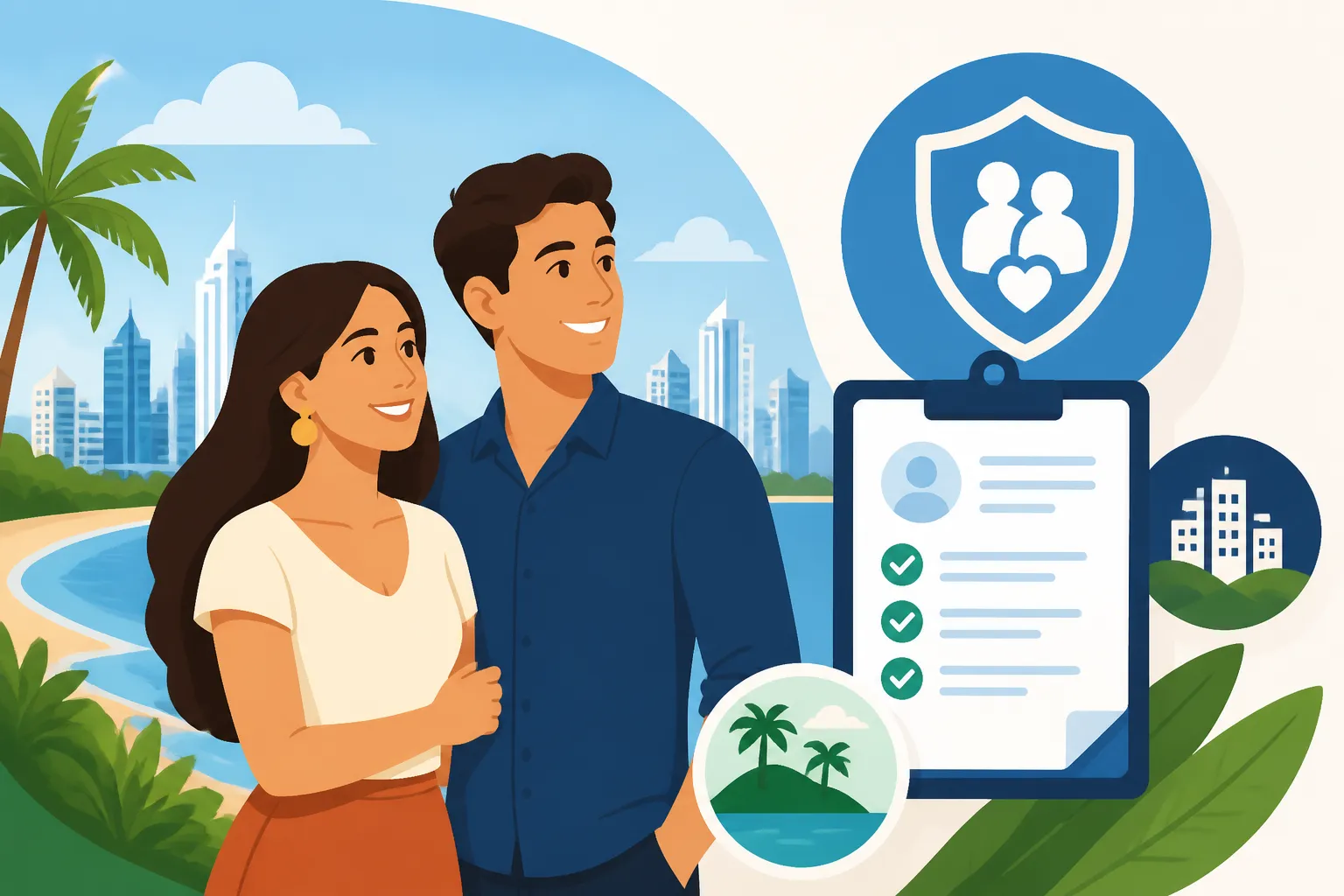
How Do I Sponsor My Spouse for Residency in Panama?
Moving to a new country is an adventure, but bringing your loved ones along can quickly turn that excitement into a bureaucratic maze. Many expats in Panama find themselves navigating the complex immigration system, not just for themselves, but for their spouses, wondering how to ensure their partner can legally live and thrive alongside them. This guide aims to demystify the process of sponsoring your spouse for residency in Panama, offering a realistic, step-by-step roadmap to make this crucial transition as smooth as possible.
Understanding the Panamanian Context for Dependent Visas
Panama is a welcoming country, but its immigration system can feel like a labyrinth, especially when you're trying to unite your family. The good news is that Panama does indeed offer pathways for dependents, including spouses, to obtain residency. However, it's not a "one-size-fits-all" solution. The specific path your spouse will take largely depends on your own residency status in Panama. This is a critical distinction that often catches newcomers off guard, assuming that once they are resident, their family simply follows suit with minimal paperwork. Oh, if only it were that easy!
Many expats initially come on a specific visa – perhaps The Expat Guide to the Pensionado (Retiree) Visa in Panama (2027) if they're retired, or the Understanding the Friendly Nations Visa in Panama (2027) if they're from one of the designated countries and working here. Each of these primary residency categories has its own set of rules and requirements for adding dependents, and they are not always interchangeable. This is why having a clear understanding of your own visa type and its provisions for family sponsorship is the absolute first step. It's not just about proving your marriage; it's about proving your legal anchor in Panama, and then extending that anchor to your spouse.
The Foundation: Your Residency Status
Before you can even think about sponsoring your spouse, your own residency status needs to be firmly established. This isn't a simultaneous process where you both apply for everything at once, although a good immigration lawyer might submit applications concurrently if the primary applicant's approval is imminent or guaranteed. In most scenarios, you, the primary applicant (the sponsor), must have already obtained your provisional or permanent residency in Panama. Trying to push a spouse's dependent application through before your own status is solidified is often an exercise in futility, leading to delays and frustration.
For example, if you applied for the Friendly Nations Visa, you'll first need to get your provisional residency approved, and perhaps even your permanent residency, before your spouse's dependent application can be submitted with confidence. The immigration authorities need to see that you are a legal resident first. This means proving your income, your legal presence, and your intent to reside in Panama. Once you have your own Cedula (Panamanian ID card), then you have a solid foundation upon which to build your spouse's application. This ensures that the primary resident has met all the requirements, and thus can genuinely 'sponsor' another individual.
Defining "Spouse" in Panamanian Law
Panamanian immigration law is quite clear on who qualifies as a "spouse" for the purposes of dependent residency. Generally, it refers to individuals who are legally married. This means you'll need a legitimate marriage certificate, properly apostilled or authenticated, from your country of origin. Unfortunately, common-law partnerships, no matter how long-standing or committed, typically do not qualify for direct dependent sponsorship under most Panamanian visa categories. This can be a harsh reality check for many expat couples who might have chosen not to legally marry in their home countries.
If you are in a common-law relationship, your partner might need to explore other residency options, such as qualifying independently for a Friendly Nations Visa, a self-economic solvency visa, or another category that suits their individual circumstances. It’s vital to clarify this with a Panamanian immigration lawyer upfront, as misunderstanding this point can lead to significant delays, rejections, and wasted time and money. Panama is a country that values traditional legal documentation, and marriage certificates are no exception.
Eligibility and Requirements for Sponsoring Your Spouse
Once your own residency is in order and you understand the foundational requirements, you can start gathering the necessary documentation for your spouse. This is where the real detail comes in, and believe me, Panama's immigration department (Servicio Nacional de Migración) loves its details. Missing even a seemingly small document can send you back to square one, or at least back to the end of a very long queue.
Documents from the Primary Resident (Sponsor)
As the sponsor, you're the linchpin of your spouse's application. You'll need to demonstrate to the Panamanian authorities that you are indeed a legal resident and capable of supporting your spouse. The list often includes:
- Copy of your Panamanian Cedula and Residency Card: This is proof positive of your legal status. Make sure it's valid and not expired!
- Copy of your passport: All pages, especially those with your entry stamps and personal data.
- Proof of financial solvency: This is critical. You need to show you can support your spouse without them becoming a burden on the state. This usually means bank statements (Panamanian banks are preferred), a work letter and salary slips if employed, or a sworn declaration of income if self-employed (along with tax returns). The specific amount required can vary, but generally, it involves demonstrating sufficient funds for both you and your dependent. Your lawyer can advise on the precise figures, which are subject to change.
- Letter of responsibility (Carta de Responsabilidad): A notarized letter where you formally state that you will take full financial responsibility for your spouse during their stay in Panama. This is a standard requirement for almost all dependent visas.
- Proof of current address: A utility bill in your name (electricity, water, internet) or a rental contract.
It's not just about ticking boxes; it's about painting a clear picture for the immigration authorities: "I am a legitimate resident, I have a stable life here, and I can support my family."
Documents from the Sponsored Spouse
Your spouse will also need a comprehensive set of documents, primarily focusing on identity, marital status, and a clean background. These often include:
- Original Passport: Valid for at least six months, with plenty of blank pages. And yes, they'll want to see the original, not just copies.
- Passport-sized photos: Usually 8 photos, often specific sizes like 2×2 inches, white background, no glasses, ears visible. Always have more than you think you need!
- Marriage Certificate: The original marriage certificate, issued by the appropriate authority in your country of marriage. This document must be apostilled in the country it was issued if that country is a signatory to the Hague Apostille Convention, or authenticated by the Panamanian Consulate in that country if not. This step is non-negotiable and often a major bottleneck. For a deeper dive, check out our guide on Understanding Document and Apostille Requirements for Panama Immigration and How to Get Your Documents Apostilled for Panama Immigration.
- Police Clearance Certificate: An original police or criminal record certificate from your spouse's country of origin, and any country where they have resided for more than two years in the last five years. This also must be apostilled or authenticated. It needs to be issued within the last six months of the application date.
- Medical Certificate: A certificate of good health, issued by a licensed Panamanian doctor, confirming your spouse is free of contagious diseases. This needs to be done in Panama shortly before submission.
- Sworn Declaration (Declaración Jurada): A legal statement signed by your spouse (usually before a notary in Panama) affirming various details, such as their intent to live in Panama and that they have no criminal record.
- Birth Certificate (if applicable for children, not directly for spouse but good to know): While not for the spouse, if you also plan to sponsor children, their birth certificates will be required, also apostilled.
Remember, every single foreign document that is not in Spanish must be officially translated by a certified public translator in Panama. This is another layer of cost and time, but it's absolutely mandatory.
The Role of a Panamanian Immigration Lawyer
Trying to navigate the Panamanian immigration system on your own is, to put it mildly, an exercise in masochism. This is especially true when it comes to dependent visas. A good Panamanian immigration lawyer is not just recommended; they are practically essential. They understand the nuances of the laws, the ever-changing requirements, the unwritten rules, and the correct order of operations. They will prepare all the necessary legal paperwork (like the letter of responsibility and sworn declarations), submit your application correctly, and follow up with the immigration authorities on your behalf.
Moreover, if there are any specific challenges with your case – perhaps a non-traditional marriage certificate, a complex income situation, or an issue with apostilles – a lawyer can advise you on the best course of action. They act as your shield and sword in this often-frustrating battle against bureaucracy. Their fees might seem substantial upfront, but the peace of mind and the successful outcome they provide are often priceless.
The Application Process: Step-by-Step for Spouse Sponsorship
Once you've gathered all the documents and ideally engaged a trusted lawyer, the actual application process begins. It's not a sprint; it's a marathon, and sometimes it feels like it's uphill both ways. Patience, dear expat, is your most valuable virtue here.
1. Initial Consultation and Document Review
Your immigration lawyer will start by reviewing all your documents. They'll ensure everything is correctly apostilled, translated, and within the validity period. This critical first step helps catch potential issues before the application even touches the desk of an immigration officer. They'll advise on any missing pieces or if a document needs re-obtaining due to age or format. This meticulousness can save months of delays later.
2. Submission to the National Immigration Service
With a complete package, your lawyer will formally submit the application to the Servicio Nacional de Migración in Panama City. This involves presenting all original documents, copies, and the required government fees. At this point, your spouse will usually receive a provisional stamp in their passport, indicating their application is in process. This stamp generally allows them to remain in Panama legally while their application is being reviewed. Do not confuse this with actual residency, however; it's merely a placeholder.
3. Interviews and Biometrics
Depending on the specific visa type and current immigration policies, your spouse might be called for an interview with an immigration officer. These are usually straightforward, confirming the details of the application and the legitimacy of the marriage. Both you and your spouse might be asked to attend. This is also when biometrics (fingerprints) are usually taken. Be prepared for potentially long wait times at the immigration office; it's a rite of passage for all expats in Panama. Bring a book, snacks, and lots of patience.
4. Application Processing and Approval
This is the longest part of the journey. The processing time can vary wildly, from a few months to over a year, depending on the immigration department's workload, the complexity of your case, and any new regulations. Your lawyer will be your main point of contact for updates, though direct communication from the immigration office is rare. They will monitor the status of the application and inform you when it's approved. Many expats find this waiting period the most stressful, as it's largely out of their hands. During this time, your spouse should not plan any international travel without consulting the lawyer, as leaving the country might complicate the provisional status.
5. Obtaining the Provisional or Permanent Residency Card
Once the application is approved, your spouse will receive their residency card. This will either be a provisional card (valid for a year or two, common for initial applications under some visas like Friendly Nations) or a permanent residency card. This card, along with their passport, is their official proof of legal residency in Panama.
Here’s a simplified table outlining key aspects:
| Aspect | Sponsor's Requirements | Spouse's Requirements | Key Documents | Estimated Timeline (Initial) |
|---|---|---|---|---|
| Residency Status | Must have established provisional or permanent residency | Applying for dependent status | Sponsor's Cedula, Residency Card, Passport | Sponsor's residency first |
| Financial Solvency | Demonstrate capacity to support spouse | Not directly required (covered by sponsor) | Sponsor's Bank Statements, Work Letter, Tax Returns | Continuous |
| Marital Proof | Legally married to spouse | Legally married to sponsor | Apostilled Marriage Certificate | Ongoing validity |
| Background Check | Not applicable for spouse's application | Clean criminal record | Apostilled Police Clearance Certificate (from all relevant countries) | Within 6 months of issue |
| Health Check | Not applicable for spouse's application | Good health, free of contagious diseases | Panamanian Medical Certificate | Within 3 months of issue |
| Legal Representation | Highly recommended, acts as primary contact | Highly recommended, part of the overall process | Power of Attorney for Lawyer | Throughout the process |
| Processing | N/A (primary resident) | Provisional stamp issued at submission | Passport with provisional stamp | 6-18 months (can vary) |
Disclaimer: Timelines are estimates and subject to change based on immigration department workload and policy updates. Always consult with a qualified Panamanian immigration lawyer.
Life After Approval: Cedula, Work Rights, and Renewals
Congratulations! Your spouse has successfully obtained their residency. But the journey doesn't quite end there. There are still a few crucial steps and considerations to keep in mind.
Obtaining the Cedula (Residency ID)
After the residency resolution is issued, your spouse will need to apply for their Cedula, which is the official Panamanian identification card. This process usually takes place at the Tribunal Electoral (Electoral Tribunal) offices. It involves taking another set of fingerprints and photos, and typically, it's a fairly quick process once the residency resolution is in hand. The Cedula is incredibly important; it’s not just an ID card but also your spouse's key to accessing various services, opening a bank account, and generally functioning as a resident in Panama. Think of it as truly cementing their place in Panamanian society. Our guide on How to Get Your Cedula (Residency ID) in Panama provides a comprehensive walkthrough.
Work Rights for Dependent Spouses
This is a common question, and the answer isn't always straightforward. In Panama, dependent visas often do not automatically grant work rights. This is a critical distinction many expats overlook. While your spouse can legally reside in Panama, they might not be legally permitted to work without obtaining a separate work permit.
For example, if you, the primary resident, hold a Friendly Nations Visa, your spouse’s dependent residency often needs a separate work permit application. This is a whole different bureaucratic beast, with its own set of requirements, fees, and processing times through the Ministry of Labor (MITRADEL). Some residency categories, like the Pensionado Visa, do not extend work rights to dependents at all. It's crucial to clarify this with your immigration lawyer. If your spouse intends to work, volunteer, or start a business, understanding the specific work rights associated with their dependent status is paramount. Don't assume anything; confirm everything. You can learn more about this in our article: Understanding the Work Rights of Different Residency Types in Panama.
Renewing Dependent Residency
If your spouse receives a provisional residency card, it will have an expiration date. Just like any other visa, it will need to be renewed to maintain legal status. The renewal process is generally less arduous than the initial application, but it still requires updated documents, such as proof of your ongoing residency, a current medical certificate, and potentially updated financial solvency proof. Your lawyer will guide you through this process. Don't let it lapse! Allowing a residency card to expire can lead to fines, complications, and even loss of status. Our article, How to Renew Your Residency in Panama, can offer more insights into this process.
Healthcare Considerations
While you're navigating the residency process for your spouse, don't forget about healthcare. Having your spouse legally residing in Panama means they'll also need access to medical care. While some private health insurance plans in Panama allow for family coverage, it's essential to understand the terms and conditions. Look into options like Cigna Global, which offers comprehensive international health insurance that can cover families in Panama. It’s always best to have private coverage, especially as an expat, even if you are eligible for the public system (CSS), which can have long wait times and varying standards. For detailed information, check out guides like How to Choose Private Health Insurance in Panama (2027) or The Complete Guide to Healthcare in Panama for Expats (2027).
Planning for Your Move and Beyond
Bringing your spouse, and potentially your entire family, to Panama is a significant life event. While this guide focuses on the immigration aspect, remember there are many other logistical elements to consider. From moving your belongings to understanding the local culture, having a solid plan will ease the transition. Platforms like Sirelo can be incredibly useful when planning your international move, helping you compare moving companies and manage the logistics of relocating your household. Taking the time to plan not just the paperwork but the entire lifestyle shift will make a huge difference in your spouse's (and your own) experience in Panama.
In essence, sponsoring your spouse for residency in Panama is a journey that requires diligence, patience, and often, professional legal assistance. It's a testament to your commitment to build a life together in this beautiful country. While the bureaucracy can be frustrating, the reward of having your loved one legally by your side makes every apostille and waiting period worth it.
Disclaimer
The information provided in this guide is for general informational purposes only and does not constitute legal, financial, or immigration advice. Panamanian immigration laws and procedures are subject to change without notice. Always consult with a qualified Panamanian immigration lawyer or other relevant professionals for advice tailored to your specific situation. Reliance on any information provided in this guide is solely at your own risk.