How Do I Prove My Income for the Pensionado Visa in Panama?
Oh, the Pensionado Visa! It sounds like such a dream, doesn't it? Panama beckons with its warm breezes and easier pace of life, but then you hit the paperwork. Suddenly, that tropical paradise starts to feel like a bureaucratic jungle, especially when you're trying to figure out how to definitively prove your income to the Panamanian authorities. It’s a common hurdle, believe me, and one that trips up many a hopeful expat. This guide is here to untangle the complexities, laying out exactly what kind of income is accepted and how to present it so your application sails through smoothly.
Understanding the Essence of Panama's Pensionado Visa
Let's be honest, Panama's Pensionado (or Retired Person's) Visa is one of the most attractive residency programs out there, and for good reason. It offers an incredible pathway to permanent residency for those looking to enjoy their golden years in a beautiful, vibrant country. But like any good thing, it comes with specific requirements that need to be met with precision. This isn't just about showing you have some money; it's about proving you have a guaranteed, lifelong, and sufficient income stream. The government wants assurance that you won't become a burden on the state, and that's fair enough.
Who Qualifies for this Golden Opportunity?
The Pensionado Visa is primarily designed for retirees, or those with a lifelong pension, from any country that has diplomatic relations with Panama. Beyond the crucial income requirement we'll dive into, you also need to be at least 18 years old. There are no upper age limits, which is fantastic! You'll also need a clean criminal record, proven by an apostilled police report from your country of origin and any country you've lived in for the past five years. And, of course, you’ll need a valid passport and all the usual personal documents, often requiring an apostille and translation. It's a comprehensive process, but the benefits, including significant discounts on various services in Panama, make it well worth the effort. For a deeper dive into the overall process, you might find our guide, The Expat Guide to the Pensionado (Retiree) Visa in Panama (2027), incredibly useful.
Why Income Proof is the Cornerstone of Your Application
Think of your income proof as the foundation of your entire Pensionado Visa application. Without solid, verifiable evidence that you meet the financial threshold, your application simply won't proceed. The Panamanian immigration authorities, specifically the National Immigration Service (SNM), are incredibly meticulous about this. They need to see that your pension or annuity isn't just a temporary windfall but a reliable, consistent source of funds that will support you indefinitely. This isn't about being rich; it's about being financially secure and demonstrating that self-sufficiency. Any ambiguity here, any missing document or inconsistent information, can lead to delays or even rejection, which is the last thing anyone wants after all the effort of moving to a new country.
The Nitty-Gritty: What Counts as Income for Your Pensionado Visa?
This is where many expats start to scratch their heads, and I get it. What exactly qualifies as "pension" in the eyes of Panamanian law? It's not always as straightforward as it seems, especially with the diverse types of retirement savings and annuities available globally. Let’s break down what the authorities are looking for.
Eligible Income Sources: Pensions, Annuities, and More
For the Pensionado Visa, the primary and most accepted forms of income are:
- Government Pensions: This is usually the easiest to prove. If you receive a state pension from your home country (e.g., Social Security from the US, Canada Pension Plan, UK State Pension), this is typically accepted without much fuss. The key is that it must be a lifelong pension.
- Private Company Pensions: Many people receive pensions from their former employers. As long as this pension is also lifelong and comes from a well-established company, it's generally accepted. Documentation here needs to clearly state its nature and duration.
- Annuities: If you have a private annuity that guarantees a fixed, lifelong monthly income, this can also qualify. Again, the "lifelong" aspect is critical. Investment accounts that might pay out periodically but aren't explicitly structured as a lifelong annuity usually won't cut it.
- Military Pensions: Veterans receiving lifelong pensions from their respective military services also qualify.
What often doesn't count? Income from rental properties, dividends from investments (unless they are part of a structured, lifelong annuity), or regular withdrawals from personal savings or investment accounts. The emphasis is strictly on pensions or annuities that pay out for the rest of your life. It’s not about your total net worth; it’s about that consistent, guaranteed monthly income. This distinction is paramount, so don't assume your healthy savings account alone will suffice. Our article, Understanding the Income Requirement for the Pensionado Visa in Panama, goes into more detail on this often-confusing aspect.
Navigating the Minimum Income Requirement
Currently, the minimum income requirement for the Pensionado Visa is $1,000 USD per month. This is for a single applicant. If you're applying with dependents, you'll need an additional $250 USD per month for each dependent. So, for a couple, that's $1,250 USD per month.
Now, while $1,000 a month might sound like a dream income in some parts of the world, remember that in Panama City, especially if you want to enjoy a comfortable lifestyle, it might feel a bit tight. Many expats find they need more, but this is the legal minimum to get your foot in the door. The income must be verifiable in US dollars or an equivalent currency that can be easily converted. Since Panama uses the US dollar as its official currency, this usually simplifies things, but if your pension is in another currency, be prepared for currency conversion documentation.
Joint Applications and Spousal Income
Good news for couples! You absolutely can apply for the Pensionado Visa together. As mentioned, the minimum income requirement for a couple is $1,250 USD per month. This income can come from one spouse's pension, or it can be a combined income from both spouses' pensions.
For example, if one spouse receives a pension of $900 USD per month and the other receives $350 USD per month, their combined $1,250 USD would meet the requirement. The key here is that both income sources must be lifelong pensions or annuities and properly documented. The SNM will examine each income stream individually to ensure it meets the "lifelong" criteria, even if it's contributing to a joint application. Make sure that all documents clearly indicate who the beneficiary of each pension is.
Gathering Your Evidence: Documents You'll Absolutely Need
This is where the rubber meets the road. Having the right income source is one thing; proving it beyond a shadow of a doubt is another. The Panamanian immigration authorities are sticklers for official documentation, so gather your papers meticulously. This process can be tedious, but getting it right the first time will save you immense headaches later on. When you're thinking about the big move, and perhaps even checking out companies like Sirelo to help with your relocation logistics, remember that getting these documents in order should be your top priority.
Official Statements and Certifications from Your Home Country
The backbone of your income proof will be official, government-issued or institution-issued statements from your home country. These documents must unequivocally state:
- The amount of your monthly income: This needs to be explicitly stated as a monthly figure.
- The source of the income: Is it a state pension, a private company pension, or an annuity?
- The lifelong nature of the income: This is crucial. The document must confirm that this income will be paid to you for the remainder of your life. Words like "lifelong," "for life," or "permanent" are what they're looking for.
- Your name as the beneficiary: The documents must clearly identify you as the recipient of this income.
Examples of these documents include:
- Official Social Security statements: For US applicants, a letter from the Social Security Administration detailing your monthly benefit and its lifelong status is perfect.
- Letters from pension administrators: If you have a private pension, obtain a certified letter from the pension fund or former employer’s HR department.
- Annuity statements: From your financial institution, clearly outlining the monthly payout and its lifelong guarantee.
These documents must be recent, usually issued within three to six months of your application date, to show current income status.
The All-Important Apostille and Consular Legalization Process
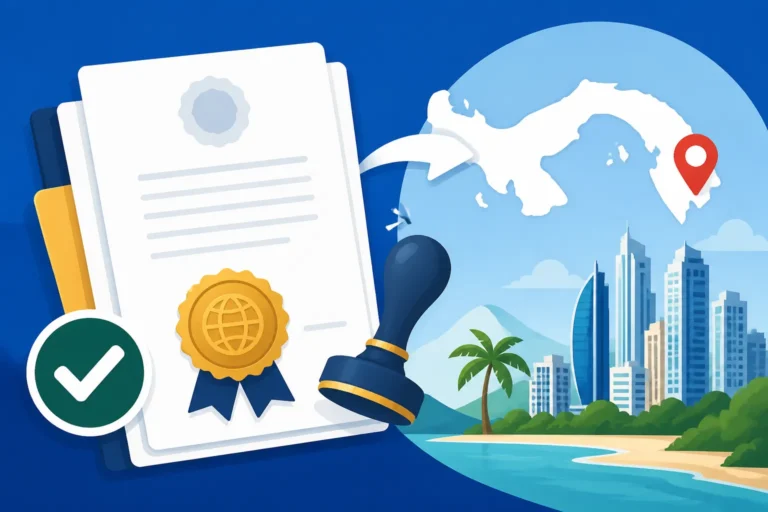
Here’s where many expats stumble, and it’s critical to get this right. Any official document issued in your home country that you intend to use for your Panamanian visa application must be either apostilled or legalized by a Panamanian consulate.
- Apostille: If your home country is a signatory to the Hague Apostille Convention (and most Western countries are), you'll need to get an apostille stamp on each original document. This stamp certifies the authenticity of the signature on the document and the capacity in which the person signing acted. It's essentially a universally recognized seal of approval.
- Consular Legalization: If your country is not a signatory to the Hague Convention, your documents will need to go through a more traditional consular legalization process. This usually involves getting the document authenticated by your country's foreign ministry, then by a Panamanian consulate in your country.
This step cannot be skipped. An apostille or legalization must be obtained before you arrive in Panama and before the documents are translated. These official seals prove to the Panamanian authorities that your foreign documents are legitimate. For a deeper understanding of this process, check out Understanding Document and Apostille Requirements for Panama Immigration and How to Get Your Documents Apostilled for Panama Immigration.
Sworn Declarations and Bank Verification in Panama
Once your foreign documents are apostilled or legalized, they will need to be officially translated into Spanish by a certified public translator in Panama. This is non-negotiable. Don't even think about bringing your own translation; it won't be accepted.
In addition to the foreign documents and their translations, your Panamanian lawyer will prepare a "Declaración Jurada" (Sworn Declaration) for you to sign. This is a sworn statement, made before a notary public in Panama, affirming that the documents you are presenting are true and correct, and that your stated income is indeed your lifelong pension or annuity.
Furthermore, it's often a good practice, and sometimes required by specific immigration officials, to open a local Panamanian bank account and transfer some funds into it. While your income source doesn't have to be in Panama (it almost certainly won't be for the Pensionado Visa), showing that you have an active local account can smooth the process. You might be asked for a bank reference letter from your new Panamanian bank, confirming your account status. Banks like Banco General or Banistmo are commonly used by expats.
Common Pitfalls and How to Avoid Them
The path to residency in Panama, while rewarding, is strewn with potential pitfalls. It's not always intentional; sometimes it's simply a misunderstanding of the local regulations or the expectations of the immigration officials. Being aware of these common mistakes can save you a lot of time, money, and frustration. This is where an experienced expat’s advice comes in handy.
The Currency Conundrum: USD is King
Panama uses the US Dollar as its official currency, alongside the Panamanian Balboa (which is pegged 1:1 to the USD). This is fantastic for expats from dollarized economies, as it eliminates currency exchange rate headaches. However, if your pension or annuity is paid in a different currency (e.g., Euros, CAD, GBP), you need to be very clear about the conversion.
Your official income verification documents should ideally state the amount in USD, or at least have a clear and consistent exchange rate used for conversion to USD. If your pension statement is in Euros, for example, your lawyer will help ensure that the translated and notarized documents reflect the USD equivalent based on an official, recent exchange rate. The immigration officials want to see that your income meets the $1,000 USD (or $1,250 USD for a couple) minimum unequivocally. Fluctuations in exchange rates can be a problem if your pension is just barely over the minimum in your local currency. Always aim for a bit more cushion if your income is in a non-USD currency.
Maintaining Your Income Stream: It's Not a One-Time Thing
Obtaining the Pensionado Visa isn't just about proving your income once and then forgetting about it. The "lifelong" aspect is critical, and the Panamanian government expects that income to continue. While you won't need to re-prove it annually in the same rigorous way, your permanent residency status is contingent on you maintaining the conditions under which it was granted.
This means you need to continue receiving that pension or annuity. If, for some unforeseen reason, your pension ceases or significantly drops below the minimum requirement, your residency status could be jeopardized. It's a rare occurrence for true lifelong pensions, but it's something to be aware of. Also, while not directly related to the visa, having reliable health insurance, such as through providers like Cigna Global, is always a smart move to protect your finances and well-being as a permanent resident.
The Critical Role of a Panamanian Immigration Lawyer
I cannot stress this enough: do not try to do this on your own. The Panamanian immigration system is complex, notoriously slow, and constantly evolving with subtle procedural changes. Even if you speak fluent Spanish, navigating the nuances of required documents, apostille processes, translations, and specific forms can be a nightmare.
A qualified and experienced Panamanian immigration lawyer is not just helpful; they are essential. They will guide you through every step, ensure your documents are correctly prepared, submitted, and followed up on. They know the current requirements, the specific language needed in official letters, and how to troubleshoot potential issues before they become major problems. They also act as your representative, saving you countless trips to various government offices, which can be an exercise in patience and frustration for anyone not used to the local bureaucracy. Finding a good lawyer is the single best investment you will make in your move to Panama, beyond perhaps the initial costs of actually getting here. For a detailed look at the financial aspects, consider reading How Much Does It Cost to Apply for Residency in Panama?.
Here's a quick overview of the essential documents:
| Document Type | Purpose | Key Details |
|---|---|---|
| Official Pension/Annuity Letter | Primary proof of lifelong, monthly income. | Must state monthly amount, source, lifelong nature, and your name as beneficiary. Recent (within 3-6 months). |
| Apostille or Consular Legalization | Verifies the authenticity of the foreign pension letter for Panamanian authorities. | Obtained in your home country. Essential before translation. |
| Certified Spanish Translation | Ensures all foreign documents are understood by Panamanian officials. | Must be done by a certified public translator in Panama. |
| Declaración Jurada (Sworn Declaration) | Your sworn statement, notarized in Panama, affirming the truthfulness of your income claims. | Prepared by your Panamanian lawyer. |
| Bank Reference Letter (Panama) | (Optional but Recommended) Shows financial activity and a local connection. | Confirms account existence and good standing with a local bank like Banco General or Banistmo. |
| Police Record from Home Country | Part of the general visa requirement, proving a clean criminal history. | Must be apostilled or legalized. Recent (within 6 months). |
| Photocopies of Passport (notarized) | Basic identification document. | All pages of your passport need to be notarized in Panama. |
| Medical Certificate (Panama) | A health certificate from a Panamanian doctor. | Obtained once in Panama, usually arranged by your lawyer. |
| Eight Passport-Sized Photos | Standard photos for various visa documents. | Specific requirements for size and background might apply, best to ask your lawyer. |
| Copy of Marriage Certificate (if applicable) | For dependent spouse applications, to prove marital relationship. | Must be apostilled or legalized and translated into Spanish by a certified Panamanian translator. |
| Copy of Birth Certificates for Dependents | For dependent children applications, to prove familial relationship. | Must be apostilled or legalized and translated into Spanish by a certified Panamanian translator. |
The process of moving to Panama and securing your residency is a journey, and gathering all the necessary documents for the Pensionado Visa's income requirement is arguably the most critical step. It demands patience, attention to detail, and a willingness to navigate a system that might feel unfamiliar. By understanding what counts as income, adhering to the strict documentation and legalization procedures, and crucially, partnering with a knowledgeable Panamanian lawyer, you'll dramatically increase your chances of a smooth, successful application. Once that's all done, you can truly start enjoying the Pura Vida! For a broader perspective on establishing your life here, check out Understanding How to Move to Panama Legally from Abroad (2027).
Disclaimer
The information provided in this guide is intended for general informational purposes only and does not constitute legal or financial advice. Immigration laws and requirements in Panama can change, and individual circumstances vary. It is essential to consult with a qualified Panamanian immigration lawyer or legal professional for advice tailored to your specific situation before making any decisions related to visas, residency, or financial planning.