Can I Stay in Panama After Finishing My Studies?
Oh, the bittersweet feeling of graduation! You've successfully navigated your studies in Panama, perhaps made some incredible friends, discovered your favorite fondas (local eateries), and even mastered the art of crossing Avenida Balboa during rush hour. Now, as the final exams fade into memory, a new question looms large: "Can I actually stay here?" It’s a completely valid and incredibly common query, fraught with a mix of hope and a healthy dose of anxiety about the unknown. This guide is going to walk you through the realistic pathways and potential hurdles of transitioning from a student visa holder to a longer-term resident in Panama, arming you with the knowledge to make informed decisions.
Understanding Your Student Visa's Limitations
First things first, let's talk about the elephant in the room: your student visa. While it was your golden ticket to experiencing life and education in Panama, it's inherently a temporary solution. It was granted for a specific purpose – your studies – and it has a definitive expiration date tied to the completion of your academic program. I know it's not what anyone wants to hear after years of hitting the books, but it’s crucial to understand this distinction: a student visa is not a direct or automatic pathway to permanent residency.
Think of it like this: your student visa gave you a temporary pass to a fantastic club. You got to enjoy the music, the atmosphere, and the company. But once the party's over, that pass expires, and you need a new type of membership if you want to keep coming back. Many expats before you have found themselves in this exact position, feeling a mix of gratitude for the experience and apprehension about what comes next. The Panamanian immigration authorities are generally strict about the terms of your visa. Overstaying your student visa, even for a short period, can lead to fines, deportation, and make it incredibly difficult to re-enter Panama or obtain any future visa or residency status. Trust me, you don't want to get on the wrong side of the National Immigration Service, so planning your next steps before your student visa expires is paramount.
The Temporary Nature of Student Status
Your student visa was specifically issued for the duration of your enrolment in an accredited educational institution in Panama. This means that once your graduation certificate is in hand, or your program officially concludes, your legal status as a student is essentially over. While there might be a small grace period depending on the exact terms of your visa (always check the fine print!), it's generally short – often just 30 to 90 days. This isn't really enough time to casually figure things out; it's barely enough to pack your bags, let alone secure a new, complex immigration status.
During your studies, you might have heard of other expats effortlessly living here, but remember, they likely came in on different visa types. For example, many professionals leverage the Friendly Nations Visa in Panama (2026), which is tied to economic activity, not education. Your situation is unique because your primary legal justification for being in Panama is ending. This means you need a new, solid reason to stay, backed by a different type of visa or residency. The good news is, there are options, but they require proactive planning and typically a Panamanian immigration lawyer.
Consequences of Overstaying Your Welcome
It’s tempting to just hang out a bit longer, especially if you’ve fallen in love with Panama (and who could blame you?). However, resisting this urge is critical. Overstaying your visa can lead to significant penalties. Fines typically start accruing from the day your visa expires, and they can be substantial, increasing with each day you remain illegally. Imagine having to pay a hefty fine just to leave the country, let alone apply for a new visa!
Beyond financial penalties, you could face a travel ban, preventing you from re-entering Panama for a certain number of years. In the worst-case scenario, you could be detained and deported. This not only causes immense stress and disruption but also creates a black mark on your immigration record that can affect future visa applications for any country. My advice? Start exploring your post-study options at least six months before your graduation date. Even if you don't have a concrete job offer or investment plan, understanding the requirements and timelines will put you in a much stronger position.
Exploring Residency Options After Your Studies
So, your student days are officially over, but your desire to stay in Panama is stronger than ever. Wonderful! Panama offers several avenues for foreigners to gain residency, but you’ll need to shift your mindset from "student" to "economic contributor" or "retiree." Each pathway has its own specific requirements, and few of them seamlessly transition from a student visa. This means you'll essentially be starting a new immigration application, much like a newcomer arriving in Panama for the first time.
Many expats find the process challenging, with layers of bureaucracy and often frustrating delays. But with persistence and the right legal guidance, it's absolutely achievable. You're going to need to get your ducks in a row – and by ducks, I mean a whole flock of documents, translations, and apostilles. This is where a good Panamanian lawyer becomes not just helpful, but truly indispensable.
The Friendly Nations Visa: A Popular Choice
For many former students, the Friendly Nations Visa (FNV) is one of the most viable and popular options. This visa is designed for citizens of 50 specific countries that have "friendly" economic and professional ties with Panama. The idea is to attract professionals and investors who can contribute to Panama’s economy. If your home country is on this list, you're already one step ahead!
To qualify for the FNV, you generally need to demonstrate an economic link to Panama. This can be achieved in a few ways:
- Employment: Securing a job with a Panamanian company. This is where your post-study job search becomes critical. The company must be legally established in Panama, and you'll need an employment contract.
- Property Investment: Investing a certain amount in Panamanian real estate. This is often a larger financial commitment, typically requiring a minimum investment of $200,000 in a titled property.
- Company Formation: Establishing a Panamanian corporation and proving economic activity. This means setting up a business and demonstrating that it's operational and contributing to the local economy.
The FNV first grants you provisional residency for two years, after which you can apply for permanent residency. This is a significant advantage over many other visa types. However, remember the 'economic link' – this visa isn't just about showing up; it's about actively participating in Panama's economy.
Work Permits and Employer Sponsorship
While the FNV often requires an economic activity like employment, a direct work permit is a separate beast. If you're not from a "friendly nation" or if your plan is solely to be employed by a Panamanian company, a work permit is what you'll need. This is often more challenging to secure than the FNV because Panamanian labor laws are designed to protect local employment. There’s generally a 10% limit on foreign workers within a company, and the employer must demonstrate that a Panamanian citizen or resident couldn't fill the role.
This means you need an employer who is willing to go through the often-complex and lengthy process of sponsoring your work permit. They will need to provide various documents, including justifications for hiring a foreigner. Many small and medium-sized businesses in Panama are reluctant to undertake this bureaucratic burden unless you possess highly specialized skills that are truly in demand and not easily found locally. If you manage to secure a job offer, make sure your potential employer is fully aware of their obligations and the process involved in sponsoring a work permit. For a deeper dive into this, you might find our guide on How a Work Permit and Employer Sponsorship Work in Panama very useful.
Other Residency Pathways
While less common for recent graduates, it's worth knowing about other options. The Pensionado Visa (Retiree Visa) offers fantastic benefits, but it requires proof of a lifetime pension of at least $1,000 per month. Unless you've had an incredibly lucrative student career, this is likely a future goal rather than an immediate option. However, if you're looking at long-term plans, understanding The Expat Guide to the Pensionado (Retiree) Visa in Panama (2027) could be a smart move.
Then there's the Qualified Investor Visa (also known as Panama's Golden Visa). This route requires a significant investment, typically starting from $300,000 in real estate, or other specific investments like a securities portfolio or a fixed-term deposit. While it grants immediate permanent residency, the capital requirement usually puts it out of reach for most recent graduates.
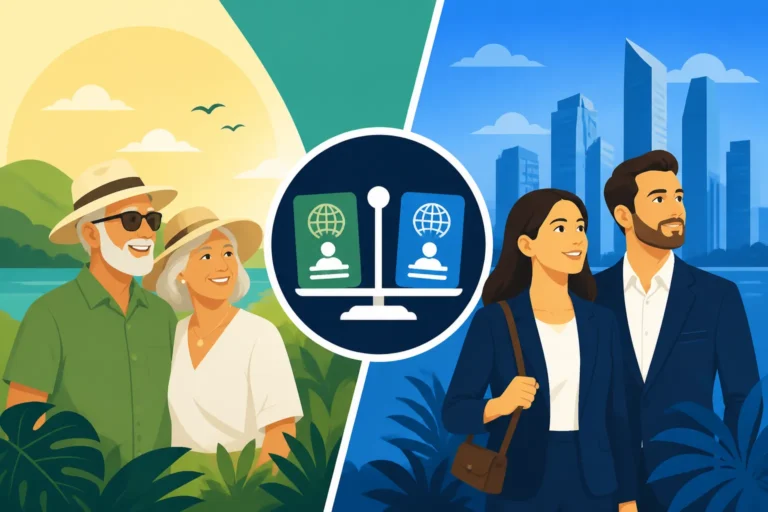
Here’s a quick comparison of the most relevant post-study residency pathways:
| Residency Option | Primary Requirement | Initial Status | Path to Permanent Residency | Key Advantage | Key Challenge |
|---|---|---|---|---|---|
| Friendly Nations Visa | Economic activity (job, business, property) | Provisional (2 yrs) | Yes, after 2 years | Broad eligibility for many nationalities; flexible options | Requires an active economic link, can be complex |
| Work Permit Sponsorship | Employer in Panama willing to sponsor; job offer | Temporary (1-6 yrs) | No direct path to PR | Allows you to work legally for a specific employer | Panamanian labor laws favor locals; employer burden |
| Qualified Investor Visa | Significant investment ($300k+ in real estate/etc.) | Permanent | Immediate | Direct path to permanent residency; fast | High capital requirement |
| Pensionado Visa | Lifetime pension of $1,000 USD/month | Permanent | Immediate | Excellent benefits for retirees | Requires a verifiable, consistent pension income |
No matter which path you consider, the process will require meticulous documentation. Make sure all your personal documents – birth certificates, marriage certificates (if applicable), police records from your home country and Panama – are up-to-date, apostilled, and professionally translated into Spanish. This is not a step to skimp on, as errors here can cause significant delays. You can learn more about this by reading How to Get Your Documents Apostilled for Panama Immigration.
Navigating the Job Market and Work Permits
One of the most common aspirations for students wanting to stay in Panama is, naturally, to find a job. But transitioning from a student to a working professional, especially as a foreigner, adds layers of complexity that locals don’t face. Panama's job market, while growing, has specific nuances for expats, and it's essential to understand them.
I've seen many bright-eyed graduates struggle here, not because they aren't qualified, but because they didn't anticipate the specific hurdles related to immigration and local hiring practices. It's not just about finding a job; it's about finding a job that also facilitates your legal right to work and reside in the country.
The Realities of Finding Employment as a Foreigner
Let's be blunt: securing a job in Panama as a foreigner can be tough. The Panamanian Constitution and labor laws prioritize Panamanian citizens for employment. As mentioned earlier, there are strict quotas on the number of foreign employees a company can hire (usually 10% of the regular workforce and 15% for specialized technical staff). This means a company needs a compelling reason to hire you over a local candidate.
Your best bet lies in specialized fields where there's a shortage of local talent, or in multinational companies that operate under different labor agreements. Think about areas like:
- Logistics and Maritime: Given the Panama Canal and its robust shipping industry.
- Finance and Banking: Panama City is a regional financial hub.
- Multinational Headquarters: Many international corporations have regional offices here.
- Specific IT or Tech roles: If you have niche tech skills.
- English Teaching: Especially at international schools, though salaries may vary significantly.
Networking is king in Panama. While online job boards exist, many positions are filled through personal connections. Attend industry events, join expat groups (both online and in-person), and leverage platforms like LinkedIn. Don't be shy about reaching out to contacts you made during your studies or internships. Consider adapting your CV for the Panamanian market, highlighting relevant skills and any Spanish proficiency. Our guide on The Expat Guide to Finding a Job in Panama (2027) offers excellent strategies.
Work Permit vs. Residency with Work Authorization
This is a crucial distinction that often confuses people.
- Work Permit: This is a standalone document that allows you to work for a specific employer. It does not automatically grant you residency. If your work permit is tied to an employer, and that employment ends, your work permit typically becomes invalid, and you’ll need to leave the country or secure a new one. The duration of work permits can vary, usually from one to six years, and they often need to be renewed.
- Residency with Work Authorization: Certain residency visas, like the Friendly Nations Visa or other professional visas, come with inherent work authorization once you've been granted provisional or permanent residency. This means your right to live and also work in Panama is tied to your residency status, not just a specific job. This offers far more flexibility. If you lose one job, your residency doesn't immediately become invalid, giving you time to find new employment. This is a far more stable position for long-term living.
If your goal is to stay and work long-term, aiming for a residency pathway that includes work authorization (like the FNV through employment or company formation) is generally more advantageous than relying solely on an employer-sponsored work permit. For a comprehensive overview of the different classifications and requirements, check out The Complete Guide to Working in Panama as a Foreigner (2027).
Entrepreneurship and Self-Employment
Another exciting option, particularly if you have an entrepreneurial spirit, is to start your own business or become self-employed. The Friendly Nations Visa, for instance, allows for this. You can register as a natural person business (persona natural) or form a Panamanian corporation, demonstrate economic activity, and use this as your basis for residency.
This route offers incredible freedom but comes with its own set of challenges, including navigating Panamanian business registration, taxation, and legal requirements. If you choose this path, you'll need a solid business plan and capital to get your venture off the ground. But if you have a viable idea and are prepared for the initial legwork, it can be a rewarding way to secure your long-term future in Panama. You'll need to understand how to register with the DGI (Panama's tax authority) and possibly register for ITBMS (VAT) if your business meets certain thresholds. Our guide on How to Register as a Self-Employed Taxpayer in Panama can provide some initial insights.
Practical Steps and Common Pitfalls
Alright, so you've graduated, you're pumped about staying, and you've got a clearer idea of your potential pathways. Now, let’s talk brass tacks: the actual how and what to avoid. This process isn't for the faint of heart, but with the right preparation and mindset, you can navigate it successfully.
One common frustration expats face is the slow pace of bureaucracy. Things rarely happen quickly here, and patience is more than a virtue—it’s a necessity. Don’t expect instant answers or rapid processing times. Always factor in extra time, and then add some more for good measure.
The Importance of a Good Immigration Lawyer
I cannot stress this enough: do not attempt to navigate the Panamanian immigration system without a qualified and reputable immigration lawyer. This isn't like renewing a driver's license; it's a complex legal process with many nuances, specific requirements, and potential pitfalls that only an experienced local lawyer will understand. They will guide you through:
- Choosing the right visa: Based on your specific situation, nationality, and goals.
- Document preparation: Ensuring all your documents are correctly authenticated, apostilled, translated, and presented in the required format.
- Submission and follow-up: Filing your application and diligently following up with immigration authorities.
- Legal representation: Representing you in any necessary hearings or interviews.
A good lawyer is worth their weight in gold. They’ll save you time, stress, and potentially costly mistakes. Ask for recommendations from other expats, check online reviews, and interview a few different lawyers before making a choice. Make sure they specialize in immigration law and have experience with your specific type of case.
Essential Documentation and Apostilles
Regardless of the residency pathway you choose, you'll need a comprehensive set of documents. This typically includes:
- Original birth certificate
- Original marriage certificate (if applicable)
- Police record from your country of origin (and potentially from any country you've lived in for the past five years)
- Police record from Panama (obtained once you're legally in the country)
- Copies of your passport (all pages, not just the data page)
- Numerous passport-sized photos
- Bank statements (to prove financial solvency)
- Proof of economic activity (employment contract, company registration, property titles, etc.)
- Medical certificate from a Panamanian doctor
Every single foreign document will need to be apostilled in your home country (if your country is part of the Hague Apostille Convention) or legally authenticated by the Panamanian consulate in your country. After that, they must be translated into Spanish by an official public translator in Panama. This is a non-negotiable step, and skipping it or using an unofficial translator will cause your application to be rejected. This entire process, including the costs and timelines, is a significant part of the overall journey to obtaining permanent residency in Panama.
Financial Planning and Maintaining Status
Securing residency isn't a one-time fee; it's an investment. Be prepared for legal fees, government application fees, translation costs, and the general cost of living while your application is pending. Ensure you have sufficient funds to support yourself during this transition period. Many residency applications require proof of economic solvency, so having a healthy bank balance is crucial.
Also, once you obtain a new residency status, you’ll need to understand the requirements for maintaining it. For instance, some visas require you to spend a certain amount of time in Panama each year, or to renew your residency card periodically. Failing to adhere to these rules can lead to the loss of your precious residency status. Always keep track of expiration dates for your cedula (residency ID) and ensure you initiate renewal processes well in advance.
Finally, think about your health coverage. Your student health insurance likely expires with your student visa. You’ll need to secure new coverage. Many expats opt for private health insurance in Panama, or international plans like those offered by Cigna Global, to ensure comprehensive care. Don't leave this to the last minute; a medical emergency without coverage can be financially devastating. As you plan your finances and future, remember that moving your belongings, or even just some sentimental items, can be streamlined using international movers. Companies like Sirelo can help you compare options and plan your logistics, whether you're bringing more of your life to Panama or moving on. Understanding The Cost of Healthcare in Panama: A Complete Breakdown for Foreigners (2026) will also be vital as you settle into your new resident life.
In summary, staying in Panama after finishing your studies is absolutely possible, but it demands diligence, proactive planning, and realistic expectations. It's a fresh start on a new immigration pathway, but with the right approach, Panama can remain your home for the long haul.
Disclaimer
The information provided in this guide is for general informational purposes only and does not constitute legal, financial, or immigration advice. Panamanian laws and regulations, particularly concerning immigration, are subject to change. It is essential to consult with a qualified Panamanian immigration attorney and other relevant professionals for advice tailored to your specific situation before making any decisions related to your residency or legal status in Panama.