What Is the Difference Between the Pensionado and Friendly Nations Visa in Panama?
Oh, the infamous Panamanian visa maze! If you're scratching your head trying to figure out the difference between the Pensionado Visa and the Friendly Nations Visa, you're certainly not alone. It's one of the most common points of confusion for anyone dreaming of making Panama their new home. Believe me, I've seen countless expats get tangled up trying to navigate these options, and it's completely understandable. This guide is here to untangle that knot, breaking down the nuances of each so you can confidently choose the path that’s right for your Panamanian adventure.
Understanding Panama's Residency Landscape: Why These Two Visas Dominate
Panama has always been attractive to foreigners, and for good reason – the vibrant culture, beautiful scenery, and relatively affordable cost of living are huge draws. But actually making the move and setting up residency? That’s where the administrative hurdles can feel like climbing Volcán Barú in flip-flops. Two of the most popular and often confused pathways to legal residency in Panama are the Pensionado (Retiree) Visa and the Friendly Nations Visa. They both lead to residency, but they're designed for very different people with distinct life situations. Understanding these core differences is absolutely crucial before you even start gathering documents.
When I first moved here, I heard whispers of both, and it took a lot of digging and talking to local lawyers to really grasp who each visa was intended for. It’s not always as straightforward as it seems on paper, and the rules, especially for the Friendly Nations Visa, have seen some significant shifts over the years. This guide isn't just about listing requirements; it's about giving you the real-world context you need. Many people, especially those who use services like Sirelo to help them with the logistics of their big move, also look for clear guidance on their legal status, which is why getting this right from the start is so important.
The Pensionado Visa: Panama's Golden Ticket for Retirees
Let's start with the Pensionado Visa, often lauded as one of the best retirement programs in the world. This isn't just a residency permit; it's a lifestyle package designed specifically for those living on a pension or retirement income. Panama truly rolls out the red carpet for its retirees, recognizing the value they bring to the economy and society.
Who is the Pensionado Visa For? Eligibility and Income Requirements
At its heart, the Pensionado Visa is for, well, pensioners. That means individuals who can demonstrate a guaranteed, lifelong monthly pension or retirement income. The key here is "lifelong" – it needs to be an income that continues indefinitely, not just for a few years. This income can come from a government, a private company, the military, or an international organization.
The minimum income requirement currently stands at $1,000 USD per month. If you're applying with a dependent (like a spouse), you’ll need an additional $250 per month for that dependent. So, for a couple, that's $1,250 per month. If you bought property in Panama valued at $100,000 or more, you could potentially qualify with just $750 per month in pension income, which is a nice little bonus for those who planned to invest in their Panamanian dream home anyway. This income must be proven with official documents, usually translated and apostilled or authenticated. Think bank statements, pension letters, and official certifications. It sounds simple, but gathering all the right paperwork from abroad can be a bureaucratic marathon.
The Perks and Realities of the Pensionado Lifestyle
The Pensionado Visa isn't just about getting residency; it's about the benefits that come with it. And boy, are there benefits! Panama truly values its retirees, offering a host of discounts that can make daily life significantly more affordable. These include:
- 25% discount on airline tickets and public transport.
- 25% discount on utility bills (electricity, water, telephone).
- 20% discount on prescription medications.
- 15% discount on medical and dental consultations, and hospital services.
- 15% discount on optical services.
- 20% discount on professional and technical services.
- 50% discount on entertainment activities like movies, concerts, and sports events.
- 25% discount on restaurant meals.
- 25% discount on hotel stays Monday through Thursday, and 15% on weekends.
- 1% reduction in interest rates on home mortgages for homes used as primary residences.
These aren't just small savings; they add up significantly over time, making Panama a very attractive place for those on a fixed income. Imagine saving a quarter on every restaurant meal, or getting a chunk off your electricity bill every month – it really helps stretch your dollar.
However, there are a few realities to keep in mind. While the Pensionado Visa grants you permanent residency, it generally does not grant you the right to work in Panama. This is a crucial distinction. It's for retirees who are done with the daily grind. Also, while the benefits are fantastic, sometimes you need to explicitly ask for them, and sometimes establishments "forget." A friendly reminder, often in Spanish, can go a long way. If you're curious about the specifics of this program, you can dive deeper into The Expat Guide to the Pensionado (Retiree) Visa in Panama (2027). It’s truly a comprehensive overview.
Navigating the Application Process for the Pensionado Visa
The application process for the Pensionado Visa, like most Panamanian immigration procedures, involves a fair bit of paperwork and patience. You'll need documents proving your identity, your clean criminal record, and, most importantly, your guaranteed pension income. All foreign documents must be apostilled or authenticated by a Panamanian consulate in your home country and then translated into Spanish by a certified public translator in Panama.
It’s highly recommended to work with a reputable Panamanian immigration lawyer. While it adds to the cost, a good lawyer will ensure all your documents are correctly prepared and submitted, saving you countless headaches and potential delays. The process involves submitting your application to the National Immigration Service, attending an interview (sometimes waived), and eventually receiving your temporary residency card, followed by the permanent one. The initial process can take several months, so factor that into your planning. And remember, considering how much you're shipping your life here, looking into services like those offered by Sirelo can make the physical move much smoother, while your lawyer handles the legalities.
The Friendly Nations Visa: A Gateway for Working-Age Expats
Now, let's pivot to the Friendly Nations Visa, which has been a cornerstone for many working-age expats moving to Panama. Unlike the Pensionado, this visa is not about retirement; it's about integrating into the Panamanian economy and society.
Who is the Friendly Nations Visa For? Eligibility and Business Aspect
The Friendly Nations Visa is designed for citizens of specific countries that Panama considers "friendly" and with whom it maintains economic, professional, or investment ties. The list of friendly nations has changed a few times, so it’s vital to get the most up-to-date information. As of my last check, it includes most of North America, Europe, Australia, and many South American countries.
To qualify, applicants generally need to demonstrate one of three things:
- Economic Solvency for Employment: Get an employment contract from a Panamanian company. This is the most straightforward way, but finding a company willing to sponsor your visa can be challenging if you don't already have connections or specialized skills.
- Professional Solvency: Establish a Panamanian company and register it in the Public Registry, becoming a shareholder or director. You would then need to demonstrate economic solvency through this company by engaging in professional or economic activities. This often involves a capital contribution (historically $5,000 to a Panamanian bank account, though this specific amount isn't always officially mandated for the visa itself, it's a common practice to demonstrate solvency).
- Real Estate Investment: Invest in real estate in Panama with a minimum value (this specific route often aligns with the Qualified Investor Visa, but sometimes FNV applicants use real estate as proof of solvency).
The key takeaway here is that the Friendly Nations Visa requires you to contribute to the Panamanian economy. It’s not a passive residency; it’s for those looking to work, do business, or invest. This is a stark contrast to the Pensionado, which explicitly limits work rights.
Benefits and Current Landscape
The biggest benefit of the Friendly Nations Visa is that it provides a path to permanent residency in Panama, and crucially, it grants the right to work. This is what makes it so appealing to younger expats and professionals. Once you have your provisional residency, you can apply for a work permit, allowing you to legally pursue employment or operate your business in Panama. This is a game-changer for many who want to build a new life and career here.
However, the landscape for the Friendly Nations Visa has seen some significant changes over the past few years. Originally, it was quite easy to qualify by simply opening a Panamanian bank account with a minimum deposit and forming a Panamanian corporation, even without actively operating a business. This led to a lot of people getting residency without genuinely contributing to the local economy.
In 2021, the government tightened the rules. Now, just having a bank account isn't enough. You must actively demonstrate your economic ties to Panama, either through a genuine employment contract, by actively running a business, or by making a significant real estate investment. This change has made the visa more robust but also more challenging for some applicants. If you’re considering this route, I highly recommend reading Understanding the Friendly Nations Visa in Panama (2027) for the most current requirements.
The Application Journey for the Friendly Nations Visa
The application process for the Friendly Nations Visa is quite similar in terms of documentation to the Pensionado. You’ll need:
- Passport and additional photos.
- Clean criminal background check from your country of origin.
- A health certificate from a Panamanian doctor.
- Proof of economic solvency (employment contract, business registration documents, bank statements).
- Affidavit of personal background.
- Certified check for immigration and repatriation fees.
Again, foreign documents need to be apostilled or authenticated and translated. The process is handled by the National Immigration Service, often with the help of a Panamanian lawyer. You'll first get a temporary residency, and after a certain period (usually two years), you can apply for permanent residency. This is a detailed journey, and it's easy to miss a step if you’re not familiar with the system. You'll likely need to spend a minimum of two to three visits to the immigration office (Servicio Nacional de Migración) or your lawyer's office to get everything sorted. While you’re waiting for your final residency, you might be wondering Can I Work in Panama While Waiting for My Residency?, which is a common concern among new arrivals. The short answer is usually no, not legally, until your work permit is processed after your temporary residency is approved.
Key Differences and Why It Matters
Let’s lay out the fundamental differences between these two visa programs. This is where the rubber meets the road, helping you see which path truly aligns with your life goals.
Eligibility Criteria at a Glance
The most obvious distinction lies in who these visas are for.
- Pensionado Visa: Strictly for retirees with a guaranteed, lifelong pension income. Age is a de facto factor, as most people with pensions are older, but there's no official minimum age if you already receive a pension.
- Friendly Nations Visa: For citizens of specific "friendly" countries who intend to be economically active in Panama, whether through employment or business ventures. There's no age restriction, making it suitable for professionals and entrepreneurs.
This fundamental difference means that if you’re under 50 and still planning to work, the Pensionado isn't an option unless you're one of those rare birds with an early, lifetime pension. Conversely, if you're looking for an easy retirement with discounts, the Friendly Nations Visa won't offer you those specific benefits.
Financial Requirements: A Deeper Dive
The financial requirements are another major point of divergence.
- Pensionado Visa: A fixed, verifiable monthly pension of at least $1,000 USD (or $750 with a $100k+ property purchase). This income must be entirely passive and proven to be lifelong.
- Friendly Nations Visa: This requires demonstrating economic solvency through active participation in the Panamanian economy. This means either an employment contract, establishing a Panamanian company and showing business activity, or making a significant investment. The exact "liquid capital" you need to show in a local bank can vary, but generally, a few thousand dollars is expected to cover initial costs and prove solvency if establishing a business.
The nature of the income is key: passive and proven for Pensionado; active and contributing to the local economy for Friendly Nations. This makes a huge difference in how you prepare your financial documentation.
Work Rights and Lifestyle Implications
Perhaps the most significant difference for many aspiring expats is the right to work.
- Pensionado Visa: Generally does not grant the right to work. It’s for those who are retired. Any income earned in Panama could jeopardize your visa status.
- Friendly Nations Visa: Grants the right to apply for a work permit once temporary residency is approved. This allows you to legally work for a Panamanian company or operate your own business.
This difference dictates your lifestyle choices. If you plan to simply relax and enjoy your retirement, the Pensionado is perfect. If you’re looking to continue your career or start a new venture, the Friendly Nations Visa is your go-to. For a detailed look at the general residency process that applies to both, check out How to Get Residency in Panama: The Full Guide (2027).
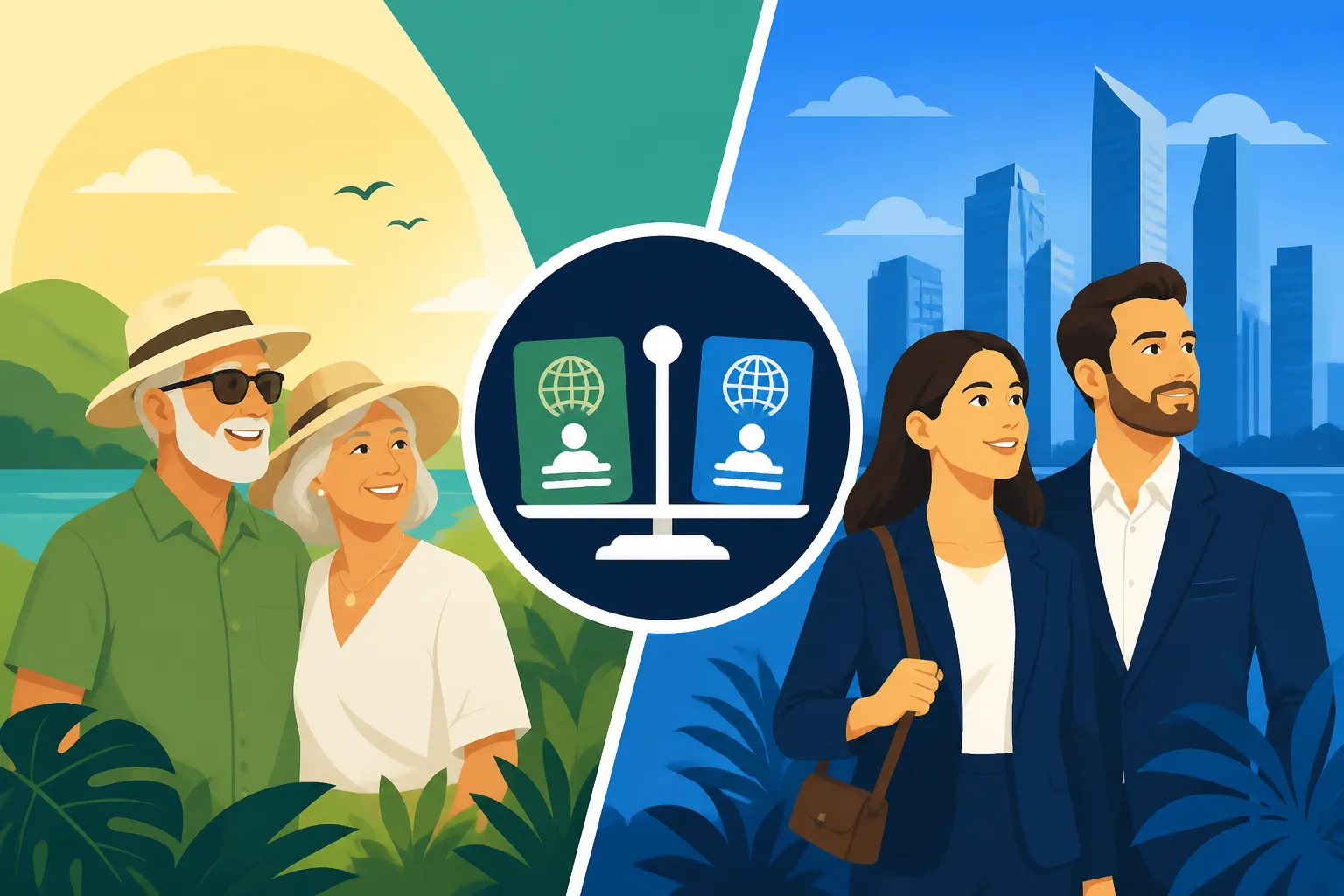
Here's a quick comparison table to help visualize these differences:
| Feature | Pensionado Visa | Friendly Nations Visa (FNV) |
|---|---|---|
| Primary Applicant | Retirees with lifelong pension | Citizens of specific "friendly nations" |
| Minimum Income | $1,000 USD/month pension ($750 w/$100k property) | Varies; demonstrable economic solvency (employment/business) |
| Nature of Income | Passive, lifelong pension | Active income from employment or business in Panama |
| Right to Work | Generally NO | YES (with separate work permit application) |
| Special Discounts | YES (significant discounts on various services) | NO |
| Target Age Group | Typically older individuals | Any age, typically working-age professionals/entrepreneurs |
| Path to Permanent Res. | Direct Permanent Residency (after initial approval) | Provisional -> Permanent Residency (usually after 2 years) |
| Primary Goal | Retirement, enjoying Panama's benefits | Economic integration, working, doing business in Panama |
Choosing Your Path: Which Visa is Right for You?
Deciding between these two powerful residency options really boils down to your personal circumstances, financial situation, and long-term goals in Panama. It’s not a one-size-fits-all answer, and what works for your friend might not be the best fit for you.
Considering Your Age and Income Source
The most straightforward filter is your age and source of income.
- If you’re retired or nearing retirement, and receive a guaranteed, lifelong pension: The Pensionado Visa is likely your best bet. The financial requirements are clear, and the benefits are truly exceptional, designed to make your retirement income go further. Many expats who chose this route rave about the savings. You can literally save hundreds of dollars a month just by using your Pensionado card.
- If you’re of working age, want to work or start a business in Panama, and are a citizen of a friendly nation: The Friendly Nations Visa is the path you should explore. This is particularly true if you have skills in demand in Panama's growing sectors like logistics, finance, or tourism, or if you plan to launch your own venture. Panama's business environment, especially in areas like the Panama Pacifico Special Economic Area, offers incentives, and having the right to work is non-negotiable for most.
Future Plans: Citizenship and Family
Think about your long-term vision. Both visas can eventually lead to Panamanian citizenship through naturalization, typically after five years of permanent residency. However, the path and required documents for maintaining that permanent residency can vary slightly.
- For families: Both visas allow you to include dependents (spouse, children). For the Pensionado, you just need to show an additional $250 per dependent. For the Friendly Nations, ensuring your family members are part of your business or employment plan, or demonstrating sufficient funds for their support, is key. If you are bringing your loved ones, understanding Family and Dependent Residency in Panama: Bringing Your Loved Ones is essential.
- For travel: Both residency types allow you to travel in and out of Panama freely, though you'll need to maintain your residency status by not spending too much time outside the country (typically, leaving for more than two consecutive years could jeopardize your permanent residency, though this can vary).
Seeking Professional Guidance
I cannot stress this enough: do not try to navigate the Panamanian immigration system on your own. The rules are complex, they change, and the process is bureaucratic. A reputable Panamanian immigration lawyer is not an expense, but an investment that will save you immense stress, time, and potential costly mistakes. They can:
- Help you determine the best visa for your specific situation.
- Guide you through gathering and authenticating all necessary documents (apostilles, translations, etc.).
- Represent you at the immigration office and handle all submissions.
- Advise you on current laws and any recent changes.
While there are costs associated with any residency application, including government fees and legal fees, think of it as purchasing peace of mind. For an idea of what to expect, check out How Much Does It Cost to Apply for Residency in Panama?. And, when considering your move, reliable international health insurance is paramount. A provider like Cigna Global can offer comprehensive coverage that works in Panama and worldwide, ensuring you're protected no matter where life takes you.
A Final Word of Advice
Moving to a new country is exhilarating, but it’s also challenging. The administrative side, like figuring out your visa, can be the most daunting part. I've been there, and I know the frustration of dealing with processes that feel unnecessarily slow or complex. But Panama is worth it. The key is to be patient, meticulous with your paperwork, and to seek expert help. Whether you're planning a serene retirement or an exciting new career chapter, choosing the right residency path from the start will set you up for success in this beautiful country.
Disclaimer
The information provided in this guide is for general informational purposes only and does not constitute legal or professional advice. Immigration laws and requirements in Panama can change frequently. It is essential to consult with a qualified Panamanian immigration attorney for advice tailored to your specific situation before making any decisions related to residency or visas.