How Do I Access My Medical Records in Panama?
One of the many things that can catch you off guard when you first move to Panama, or even after you've been here for a while, is just how different seemingly simple administrative tasks can be. Needing to access your medical records, whether for a new doctor, an insurance claim, or even for personal continuity of care, can quickly turn into a bureaucratic maze. This guide is here to walk you through the realistic steps and challenges you'll face when trying to get your medical history in Panama, offering practical advice born from years of navigating this system as an expat.
Understanding Panama's Medical Record Landscape
Let's be real, the healthcare system in Panama isn't always a smooth, digitally integrated experience like some of us might be used to back home. It's a blend of old-school paper trails and pockets of modern technology, which means getting your hands on your medical records can vary wildly depending on where you received treatment.
The Mix of Paper and Digital Records
Panama's healthcare system, as outlined in our broader guide on How Panama's Health System Works: CSS and Private Care Explained (2027), is a fascinating mix. On one end, you have the gleaming, state-of-the-art private hospitals, especially in Panama City, that are often equipped with advanced digital record-keeping systems. These facilities, like Hospital Punta Pacifica or Hospital Nacional, have made significant strides in adopting electronic health records, allowing for easier, though not always instant, access to your information. They understand the need for efficiency, and often, with the right approach, you can get what you need.
However, venture outside these major private institutions, or into the public sector run by the Caja de Seguro Social (CSS), and you'll quickly find yourself in a world where paper charts still reign supreme. Many smaller clinics, local health centers, and even some departments within larger public hospitals still rely heavily on physical files. This isn't necessarily a bad thing, but it means that if you've had treatment in a variety of places, your medical history might be scattered across different formats and locations. For expats, this can be particularly frustrating, as you're likely jumping between different providers trying to find the best fit, meaning your records are even more dispersed. It's crucial to understand this duality from the outset to manage your expectations.
Who Owns Your Medical Records in Panama?
This is a fundamental question, and thankfully, the answer generally aligns with international standards: you, the patient, have the right to access your own medical information. Panamanian law, like many other countries, upholds patient privacy and confidentiality. Your medical records are considered confidential and belong to you, even if the physical file is held by the clinic or hospital. This means that healthcare providers are legally obligated to provide you with copies of your records upon request.
However, while the right to access is clear, the process of exercising that right can be convoluted. Doctors and clinics are generally good about patient confidentiality, but the administrative procedures to actually get those records can be cumbersome. It’s not always as simple as logging into a patient portal and downloading a PDF. There’s usually a formal request process, sometimes involving specific forms, identification, and even a waiting period. It's not that they don't want to give you your records; it's often more about navigating the established, sometimes slow-moving, administrative channels. Understanding that this is your right gives you a stronger footing when making your requests, even if you have to be persistent.
Practical Steps to Access Your Medical Records
Now that we've set the stage, let's get into the nitty-gritty of how you actually go about requesting your medical records in Panama. Remember, patience and politeness go a long way here, even when bureaucracy tests your limits.
Requesting Records from Private Hospitals and Clinics
Private healthcare in Panama, particularly in bustling Panama City, is generally more efficient and accustomed to dealing with expat requests. If you've been treated at facilities like Hospital Punta Pacifica, Hospital Nacional, or Clínica Paitilla, the process will likely be more streamlined.
First, your best bet is to call or visit the medical records department (often called Archivos Médicos or Historias Clínicas) of the specific hospital or clinic where you received treatment. You’ll usually need to fill out a formal request form. Be prepared to present your identification – your passport, your Panamanian cédula if you have one, or even a driver's license can work. They need to verify that you are, indeed, the patient. They might also ask for the specific dates of your treatment or the name of the doctor you saw, so having that information handy will speed things up. It's not uncommon for there to be a small administrative fee for copying or printing your records, especially if it’s a substantial file. The processing time can vary, but generally, private facilities aim to provide records within a few days to a week. If you're an English speaker and struggling with the Spanish forms or explanations, don't hesitate to ask if there's an English-speaking staff member or bring a Panamanian friend to help translate. They usually appreciate the effort.
Obtaining Records from Public Healthcare Facilities (CSS)
Ah, the Caja de Seguro Social (CSS). Navigating the public health system can be a different beast entirely, as many expats discover when trying to understand Public vs Private Healthcare in Panama: What Expats Need to Know. If your medical treatment was through a CSS hospital or clinic, brace yourself for a potentially longer, more involved process. The CSS system, while providing essential services, is known for its bureaucracy and often slower pace compared to private options.
The process is similar in principle to private hospitals: you'll need to go to the Archivos Médicos department of the specific CSS facility. However, be prepared for longer queues, less consistent English-speaking staff, and potentially more stringent requirements. You’ll definitely need your cédula if you're registered with the CSS, and possibly other forms of ID. It’s a good idea to bring all relevant documents, including any previous appointment slips or medication prescriptions. The processing time here can be significantly longer, sometimes weeks, especially if the records need to be retrieved from an older, paper-based archive. Persistence is key, and it often helps to have a local Panamanian accompany you or make the initial inquiry on your behalf. They understand the nuances of the system and can sometimes cut through the red tape more effectively. For more details on this system, check out How to Register with the CSS (Caja de Seguro Social) in Panama.
Requesting Records from Individual Doctors or Specialists
This is often the easiest scenario, especially if you've developed a good relationship with your doctor or their administrative staff. Many private doctors, particularly specialists, operate from smaller, independent clinics. If your medical records are primarily with one such doctor, a direct request is usually all it takes.
You can often simply call the doctor's office and explain that you need copies of your records. They might ask you to come in person to sign a release form and verify your identity, or they might be able to email them to you directly, especially if they use an electronic system. For smaller clinics, they might just print them out on the spot, sometimes for a nominal fee to cover printing costs. If you're consulting a new specialist, it’s always a good idea to proactively ask your previous doctor to send your records to the new one, though this isn't always foolproof and a direct patient request is often more reliable. This is also where having a personal connection and trust with your doctor really pays off.
Navigating Common Challenges and Best Practices
Living in Panama is an adventure, but it also comes with its share of unique challenges, especially when it comes to administrative tasks. Accessing your medical records is no exception.
Language Barriers and Bureaucracy
Let's face it, Panama runs on Spanish. While many people in the expat-dense areas of Panama City and Boquete speak English, the deeper you go into official processes, the more you'll encounter a need for Spanish. This is particularly true in the medical records departments of public institutions. The forms will be in Spanish, the instructions will be in Spanish, and the staff might not speak English. This can be incredibly frustrating, especially when you're dealing with sensitive health information.
Beyond language, Panamanian bureaucracy has its own rhythm. Things often move slowly, and what might seem like a straightforward request can involve multiple trips, different counters, and unexpected requirements. You might be asked for a photocopy of a document you thought you wouldn't need, or told to come back "tomorrow" without a clear reason. Validating these frustrations is important, because you're not alone in feeling them! My best advice here is always to bring a trusted Panamanian friend, colleague, or even a lawyer if it’s a particularly complex or sensitive matter. Their presence can not only bridge the language gap but also help navigate the unwritten rules and accelerate the process. A little help from a local can save you hours, if not days, of headaches.
Digital vs. Paper: Creating Your Own Health Passport
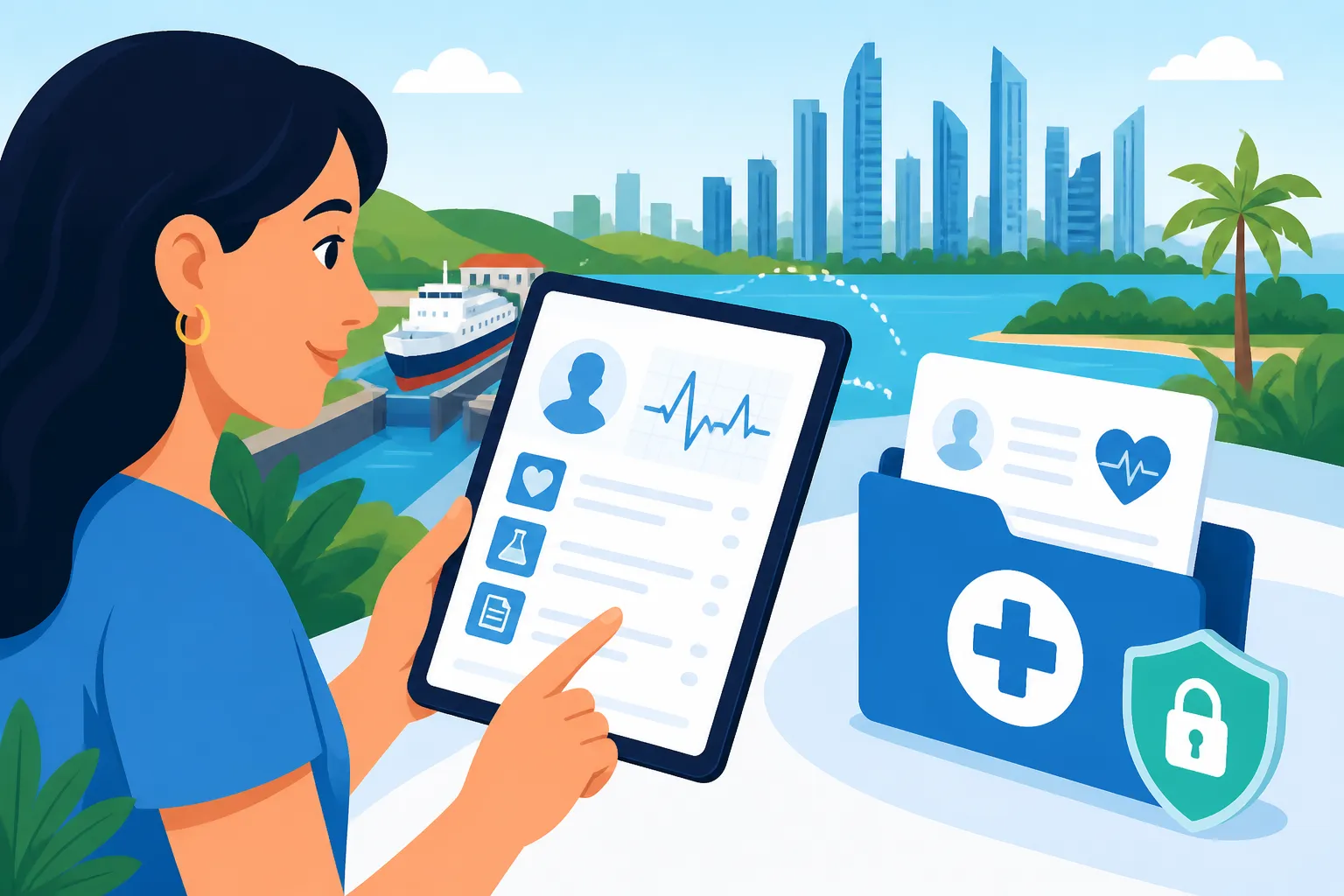
Given the mixed landscape of medical record keeping in Panama, taking matters into your own hands is truly a best practice. Don't rely solely on the system to keep your history neatly organized. Instead, actively create your own "health passport." This means getting copies of all your medical records, whether they are paper or digital, and consolidating them into a format that you can easily access and carry with you.
If you receive paper records, scan them and save them digitally. You can use cloud storage services like Google Drive or Dropbox, or dedicated personal health apps. Make sure to keep both a digital copy (on your phone, a USB drive, or cloud) and a physical folder with printed copies of critical documents. Think about lab results, diagnostic images, specialist reports, and vaccination records. This personal health passport becomes invaluable when you see a new doctor, travel, or in an emergency situation where time is of the essence. It also ensures continuity of care, even if you switch providers or leave Panama temporarily. Having this readily available empowers you to be an advocate for your own health, no matter where you are. And for those planning adventures beyond Panama, having a digital copy of your records accessible through a service like SafetyWing's travel insurance offerings can be a literal lifesaver, especially if you're in a remote area and need to communicate your medical history quickly.
What to Do in Emergency Situations Without Immediate Access
Emergencies don't wait for you to track down your medical records. This is why having critical information immediately accessible is paramount. In a medical emergency, doctors need to know your allergies, current medications, any pre-existing conditions, and your emergency contacts. Write this information down on a card and keep it in your wallet, and consider adding it to your phone's lock screen using an "Emergency Info" feature.
If you find yourself in an emergency and cannot access your detailed history, provide the medical staff with as much verbal information as possible. Don't underestimate the power of knowing your blood type, any significant surgeries you've had, or chronic illnesses you manage. If you have international health insurance or travel insurance like SafetyWing, contact them immediately. Many providers have emergency assistance lines that can help liaise with medical staff, translate, and even help retrieve pertinent medical history if needed. This support can be critical when you're vulnerable and unable to advocate for yourself. For a deeper dive into preparing for the unexpected, our article on Emergency Medical Care in Panama: What Every Expat Needs to Know is a must-read.
| Feature | Private Hospitals/Clinics (e.g., Punta Pacifica) | Public Hospitals/Clinics (CSS) | Individual Doctor/Specialist Clinic |
|---|---|---|---|
| Ease of Access | Generally easier, more streamlined | More challenging, longer processes | Often the easiest, direct contact |
| Language Support | Higher likelihood of English-speaking staff | Primarily Spanish, limited English support | Varies by doctor; many speak some English |
| Processing Time | Days to 1 week | Weeks (can be longer for older records) | Often immediate or within a few days |
| Fees | Small administrative/copying fee possible | Minimal to no fee, but may have other costs (transport) | Minimal to no fee for simple copies |
| Documentation | Passport/Cédula, specific dates, request form | Cédula (CSS card), appointment slips, formal request | Passport/Cédula, direct verbal/written request |
| Record Format | Increasingly digital, but also paper | Predominantly paper, some digital pockets | Mix of digital and paper |
| Bureaucracy | Less, but still present | High | Low to moderate |
Legal Considerations and Patient Rights in Panama
Understanding your legal standing as a patient in Panama can empower you when navigating the healthcare system and seeking access to your personal medical information.
Understanding Data Privacy and Confidentiality
Panama has laws in place that protect personal data, including sensitive medical information. The general principle of medical confidentiality means that your health records should only be accessed by authorized healthcare professionals involved in your care, or by you. Healthcare providers are expected to maintain strict confidentiality and safeguard your information from unauthorized disclosure. This means they cannot just hand out your records to anyone who asks, including family members, without your explicit consent or a legal directive.
If you ever feel your privacy has been violated, or if a facility denies you access to your own records without a clear, lawful reason, you have the right to challenge this. While filing a formal complaint might feel daunting in a foreign country, it’s a recourse available to you. You could, for instance, consult with a Panamanian lawyer specializing in patient rights or administrative law. These professionals can help you understand the specifics of the data protection laws and guide you through the process of asserting your rights, ensuring your sensitive health information is handled appropriately and with the respect it deserves.
The Importance of a Medical Power of Attorney
For expats, a medical power of attorney (POA), also known as a healthcare proxy or durable power of attorney for healthcare, is not just a good idea – it's crucial. This legal document allows you to appoint a trusted individual, usually a spouse, close family member, or very good friend, to make medical decisions on your behalf if you become incapacitated and are unable to communicate your wishes.
While it doesn't directly grant access to your routine medical records without your consent, it becomes invaluable in emergencies where access to your full medical history is vital for your care, and you cannot provide that consent yourself. This appointed agent can then liaise with doctors, access your records, and ensure your treatment aligns with your wishes. Setting one up in Panama involves a Panamanian lawyer and a public notary, ensuring it is legally recognized within the country. It’s a proactive step that provides immense peace of mind, not just for you but also for your loved ones, knowing that your health decisions will be in capable and trusted hands during a crisis. Don't put off getting this sorted; it's one of those documents you hope you never need, but will be eternally grateful for if you do.
Disclaimer
The information provided in this guide is for general informational purposes only and does not constitute legal, medical, or professional advice. While we strive to keep the information up-to-date and accurate, laws, regulations, and procedures in Panama can change. Always consult with qualified Panamanian legal professionals, healthcare providers, or relevant government agencies for advice tailored to your specific situation. Reliance on any information provided in this guide is solely at your own risk.