What Public Holidays Do Employees Get in Panama?
Figuring out the ins and outs of public holidays in a new country can feel like navigating a maze, especially when you're trying to understand your employment rights and what days you actually get off. As an expat employee in Panama, you’re probably wondering which days you get to kick back and enjoy, and how they affect your paycheck. This comprehensive guide is here to shed light on Panama's public holidays, your entitlements as an employee, and how best to enjoy these special days in your new home.
Understanding Panama's Official Public Holidays
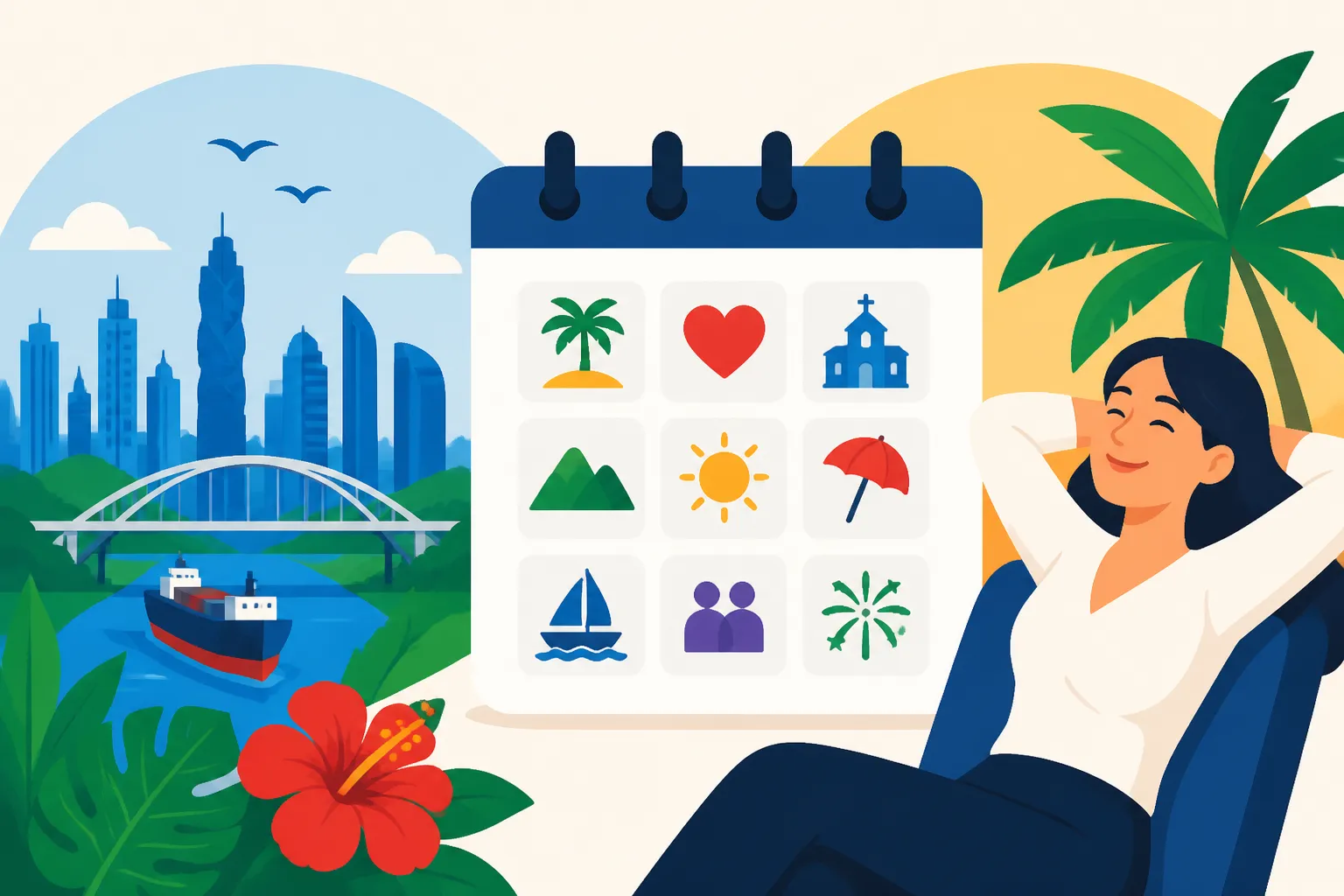
Panama celebrates a vibrant array of public holidays, many deeply rooted in its history, religion, and national identity. These aren't just days off; they're moments when the entire country often slows down, parades fill the streets, and families gather. As an employee, understanding these days is crucial, not just for planning your downtime but also for knowing your legal entitlements.
A Calendar of Panamanian Public Holidays
While some holidays have fixed dates, others are observed differently if they fall on a weekend, leading to a day off in lieu. It's always good to check the official calendar each year, as the government can occasionally declare additional "bridge days" or move an observance to create a long weekend. For employees, these are generally paid days off, meaning your salary remains unaffected.
Here's a general overview of the national public holidays that employees in Panama typically observe:
| Date | Holiday Name | Description |
|---|---|---|
| January 1 | Año Nuevo (New Year's Day) | Celebrates the start of the new year. |
| January 9 | Día de los Mártires (Martyr's Day) | Commemorates the 1964 riots over the Panamanian flag. |
| February/March | Martes de Carnaval (Carnival Tuesday) | The final day of the Carnival celebrations. Varies annually. |
| March/April | Viernes Santo (Good Friday) | Religious observance before Easter Sunday. Varies annually. |
| May 1 | Día del Trabajo (Labor Day) | Recognizes the contributions of workers. |
| November 3 | Separación de Panamá de Colombia | Marks Panama's separation from Colombia in 1903. |
| November 4 | Día de los Símbolos Patrios | Celebrates the national flag, anthem, and coat of arms. |
| November 5 | Día de la Independencia (Colón) | Commemorates the independence movement in Colón. |
| November 10 | Primer Grito de Independencia | Celebrates the first cry for independence from Spain in 1821. |
| November 28 | Independencia de Panamá de España | Marks Panama's full independence from Spain in 1821. |
| December 8 | Día de la Madre (Mother's Day) | Celebrates mothers, a deeply cherished holiday in Panama. |
| December 25 | Día de Navidad (Christmas Day) | Celebration of Christmas. |
It’s worth noting that when a public holiday falls on a Sunday, the following Monday is often declared a holiday. This is a common practice that helps ensure employees still receive their day off. Staying informed about these dates, perhaps by familiarizing yourself with How Panama's Tax System Works: Territorial Taxation Explained (2027), will not only help with planning your leisure time but also with understanding any tax implications related to holiday pay.
Regional and Observed Holidays
Beyond the national calendar, some regions or even specific institutions might observe additional local holidays. While these aren't typically statutory paid days off for all employees across the country, they can impact local businesses and services. For instance, some towns might have patron saint days or historical commemorations that lead to local closures.
For expats, this means that even if the national calendar says it's a regular workday, your local barrio might be celebrating something. It’s part of the charming, often unpredictable, rhythm of life here. If you're working in a specific city or province, it's always wise to ask your local colleagues or HR department about any regional observances. This kind of local knowledge is invaluable and can really help you adapt to How to Adapt to the Panamanian Workplace Culture.
Your Rights and Remuneration on Public Holidays
This is where the rubber meets the road for many expats: what happens if you have to work on a public holiday? Or what about those holidays that fall on your usual day off? Panamanian labor law is quite specific about employee rights concerning public holidays, and it's definitely something you want to get your head around.
Statutory Entitlements for Employees
According to Panama's labor code, official public holidays are considered "days of national rest" (días de descanso obligatorio). For most employees, this means you are entitled to the day off with full pay. Your employer cannot deduct your salary for these days. It’s a fundamental right designed to ensure workers can participate in national celebrations or simply enjoy a well-deserved break.
However, the reality for some industries, especially tourism, retail, or healthcare, is that work continues on these days. This is where the specific compensation rules kick in. If your employer requires you to work on an officially declared public holiday, the law mandates special remuneration. You are generally entitled to:
- Your regular salary for that day.
- An additional 150% of your regular salary for the hours worked.
This means that for every hour you work on a public holiday, you are paid at a rate of triple your normal hourly wage (your normal wage + 150% additional). This isn't just a guideline; it's a legal requirement that employers must adhere to. Understanding these specifics is a key part of Understanding Panamanian Labour Law and Worker Rights (2027).
Holiday Pay and Annual Leave Interaction
A common question that arises is how public holidays interact with annual leave. If a public holiday falls during your scheduled annual leave, it generally does not count as one of your annual leave days. Instead, it is treated as a separate public holiday. This means you should still receive your full holiday pay for that day, and your annual leave balance should not be reduced. It’s essentially a bonus day off within your vacation period.
For example, if you've booked two weeks of annual leave and a public holiday falls on a Tuesday during that period, that Tuesday is essentially a "free" day. Your employer is expected to pay you for the public holiday, and your annual leave calculation should skip over that day. This can be a pleasant surprise for expats who might be used to holidays counting towards their annual leave back home. This highlights the importance of familiarizing yourself with Understanding Annual Leave and Public Holiday Entitlements in Panama. It's always a good idea to confirm this with your HR department or review your employment contract to be absolutely clear.
When it comes to understanding your total remuneration, including things like your "Thirteenth Month" bonus, it's beneficial to know how these paid days off factor into your overall compensation. If you're looking into the nuances of your income, especially how various benefits and deductions affect your take-home pay, resources like Taxes for Expats can offer tailored advice for your situation in Panama.
Navigating Public Holidays as an Expat Employee
As an expat, these holidays aren't just about time off; they're an immersion into Panamanian culture. They offer unique opportunities to see the country through a different lens, but they also come with practical considerations.
Planning Your Time Off
With so many public holidays, especially clustered in November, Panama offers ample opportunities for long weekends and extended breaks. This is fantastic for exploring the country, visiting family, or simply enjoying your new community. Many expats strategically plan their annual leave around these public holidays to maximize their time away from work.
For instance, if you have a holiday on a Monday, taking the Friday before off can give you a four-day weekend. With November being "Patria" (Homeland) month, featuring multiple independence-related holidays, it's not uncommon for Panamanian businesses to have a somewhat reduced work schedule, or for employees to take significant chunks of leave around these dates. This is a great time to truly explore places like Boquete, the San Blas Islands, or even just the various neighborhoods of Panama City. Planning ahead is key, especially if you want to travel, as flights and popular accommodations can book up quickly.
Understanding Cultural Nuances and Business Closures
Public holidays in Panama are often celebrated with parades, cultural events, and family gatherings. Government offices, banks, and many businesses will be closed. While larger supermarkets and some restaurants in tourist areas might remain open, it’s best to anticipate closures and plan accordingly, especially for administrative tasks. Trying to run an errand that involves a government office on a public holiday is a sure recipe for frustration!
For instance, during the November holidays, you'll see a surge of Panamanian flags and patriotic decorations everywhere. Expect larger crowds in public spaces and increased traffic on major routes as people travel to visit family. These celebrations are a wonderful way to experience the local culture firsthand. Engaging with these traditions can also be a great way to practice your Spanish and connect with locals. If you're keen to improve your language skills, platforms like iTalki can be a fantastic resource, allowing you to converse with native speakers and better understand the rich context behind these national celebrations.
The Financial Impact of Public Holidays for Expats
Beyond just days off, public holidays can have financial implications, especially if you're working, self-employed, or managing your finances across borders.
Overtime and Its Effect on Your Earnings
As mentioned, working on a public holiday means earning triple pay. While it might mean sacrificing a day off, for some expats, this can be a significant boost to their income. It’s important to track these hours accurately and ensure your employer is compensating you correctly. Discrepancies can arise, and knowing your rights is your best defense. This extra income might also affect your overall financial planning, especially when considering How to Negotiate Salary and Benefits for a Job in Panama.
If you’re self-employed, the concept of "public holidays" is a bit different. You don't get paid days off in the traditional sense, as your income depends on your work. However, you'll still feel the impact through business closures and reduced client activity. For freelancers or business owners, these days are often quieter, meaning a drop in potential earnings unless your business specifically caters to holiday activities. It's an important consideration when How to Register as Self-Employed in Panama and planning your annual income.
Tax Considerations for Holiday Pay
Any income earned, including the premium pay for working on public holidays, is generally subject to Panamanian income tax. Panama operates under a territorial tax system, meaning that income generated within Panama is taxable here, regardless of your residency status. For employees, this means your employer will typically withhold the relevant taxes and social security contributions from your triple-pay earnings, just as they would with your regular salary.
It's crucial to understand Understanding Income Tax and Social Contributions for Employees in Panama to avoid any surprises come tax season. While the territorial tax system often means foreign-sourced income isn't taxed in Panama, your local earnings definitely are. If you have complex financial arrangements or earn significant overtime, consulting with a tax specialist or a service like Taxes for Expats can help ensure you're compliant and making the most of your earnings. They can provide clarity on how this extra income, or even your "thirteenth-month" bonus (el décimo tercer mes), fits into your overall tax picture, as outlined in Understanding the Thirteenth Month (Decimo) and Overtime in Panama.
Navigating public holidays in Panama is another piece of the expat puzzle, offering both opportunities and responsibilities. By understanding the official calendar, your rights, and the cultural significance of these days, you can truly integrate into Panamanian life and make the most of your experience here.
Disclaimer
The information provided in this guide is for general informational purposes only and does not constitute legal, financial, or professional advice. While we strive to keep the information up-to-date and correct, laws and regulations in Panama, particularly those related to labor and immigration, can change. Always consult with a qualified Panamanian legal expert, HR professional, or financial advisor for advice tailored to your specific situation.