What Is the Cost of Living vs Salary for Students in Panama?
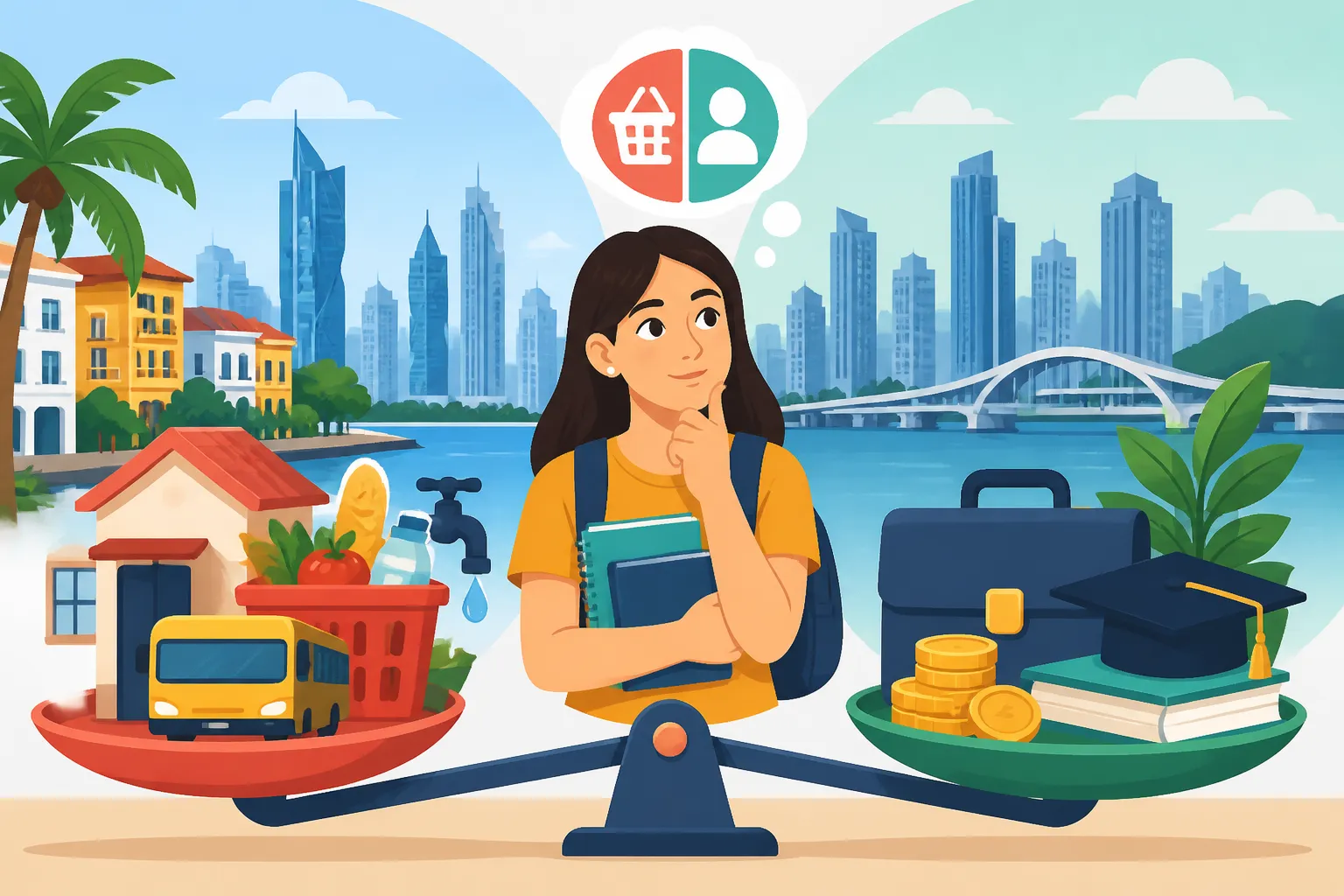
Moving to a new country to study is exhilarating, but let's be honest, the biggest stressor often revolves around money. You're trying to figure out if your savings will stretch, if you can realistically work to support yourself, and what the true cost of living here in Panama really looks like as a student. It’s a completely different ballgame than just visiting for a vacation, and the official guides rarely paint the full, practical picture. This guide is here to cut through the noise and give you a realistic breakdown of what to expect when it comes to student expenses and potential earnings in Panama.
Understanding the Cost of Living for Students in Panama
When you're planning your student life in Panama, it’s vital to get a grip on all the expenses, not just tuition. Panama offers a generally affordable lifestyle compared to North America or Europe, but certain things can surprise you, especially if you're coming from a country with a different economic structure. Let’s break down the major cost categories you’ll face.
Tuition Fees and Academic Expenses
The first thing on any student's mind is tuition, and Panama presents a pretty diverse landscape here. Generally speaking, public universities are significantly more affordable, especially for citizens, but even for international students, they can be a more budget-friendly option. However, getting into a public university can be competitive, and the language of instruction is almost exclusively Spanish, which might require additional language courses if your Spanish isn't up to par.
Private universities, on the other hand, offer more flexibility, often have English-language programs or support for international students, and the application process can be less bureaucratic. Institutions like the Universidad Santa María La Antigua (USMA) or the Universidad Latina often have clearer pathways for international applicants. While these options come with a higher price tag, they might provide a smoother transition. Remember, beyond the sticker price, you'll also need to factor in the cost of textbooks, course materials, lab fees, and sometimes even technology requirements. These can add up quickly, especially for specialized fields. Many students forget to budget for these "hidden" academic costs, which can become a real headache a few weeks into the semester. If you're weighing your options, our guide on The Complete Guide to Studying at a Panamanian University (2027) goes into even more detail about the different institutions available.
Accommodation: Where to Lay Your Head
Your biggest recurring expense will likely be your accommodation. Panama City is, predictably, the most expensive area, especially in popular expat and student-friendly neighborhoods like El Cangrejo, Bella Vista, or San Francisco. Here, a small studio or a room in a shared apartment can range quite a bit. Living on your own in a decent, safe area of Panama City could easily set you back $600-$1000 per month or more for a one-bedroom apartment. This is where most students find themselves making tough decisions.
For many international students, sharing an apartment is the most realistic and common strategy. You can often find rooms for rent in shared flats for $300-$550, depending on the location, amenities, and how many roommates you have. Outside of Panama City, in places like David or Santiago, rental costs drop considerably. You might find a comfortable one-bedroom apartment for $300-$500, making these cities much more appealing if your university program allows it. Always visit a place before committing, and try to speak with current tenants if possible to get a feel for the landlord and the building. Getting a rental agreement sorted can be tricky, so make sure you understand the nuances. Our post about How Much Does It Cost to Rent an Apartment in Panama City in 2026? offers a deeper dive into rental market expectations.
Daily Expenses: Food, Transport, and Fun
Once you've got tuition and a roof over your head sorted, you'll need to account for your day-to-day living costs. This is where smart budgeting really comes into play.
- Groceries: If you cook at home, you can save a significant amount. Local markets (like Mercado de Mariscos for seafood or smaller community markets for produce) offer fresh goods at better prices than large supermarkets like Riba Smith or Super 99, especially for fruits and vegetables. Expect to spend $200-$400 per month on groceries if you're cooking most of your meals. Imported items, however, will always be more expensive.
- Transportation: Panama City has an excellent and affordable public transportation system with the Metro and Metrobus. A Metro card costs a few dollars, and each ride is usually under $0.50. Taxis and ride-sharing apps (like Uber or Didi) are also readily available, though obviously pricier. If your university is well-connected by public transport, your monthly commute costs could be as low as $30-$50. Outside the city, you'll rely more on buses or shared taxis (chivas), which are also very economical. Our guide on How Do I Use the Metro in Panama City? can help you get started.
- Utilities: Electricity can be a significant cost, especially if you rely heavily on air conditioning, which is almost a necessity for part of the year in Panama City. Water is generally inexpensive, and internet packages are reasonably priced (expect $30-$60 for decent speeds). Factor in around $100-$250 per month for utilities, depending on your consumption and apartment size.
- Leisure & Entertainment: Panama offers a vibrant social scene, but going out frequently can quickly drain your wallet. Happy hour deals, local fondas (small eateries serving traditional Panamanian food), and free cultural events are great for students. A night out at a club or a fancy dinner will cost you, but enjoying the Cinta Costera or exploring Casco Viejo on a budget is very doable.
Here's a quick comparison of estimated monthly expenses for a student:
| Category | Panama City (USD) | David (USD) |
|---|---|---|
| Accommodation (Shared) | $400 – $600 | $250 – $400 |
| Groceries | $250 – $400 | $200 – $350 |
| Utilities (Electricity, Water, Internet) | $100 – $250 | $80 – $200 |
| Transportation | $30 – $80 | $20 – $60 |
| Personal Care & Leisure | $150 – $300 | $100 – $250 |
| Total Estimated Monthly Costs (Excluding Tuition) | $930 – $1630 | $650 – $1260 |
Note: These are estimates and can vary widely based on individual lifestyle, choice of accommodation, and academic program.
Student Work Opportunities and Earning Potential
Now that we've talked about what you'll be spending, let's look at how you might earn some cash. It’s crucial to understand the rules and realities of working as an international student in Panama. This isn't just about finding a job; it's about finding a legal job.
Legality of Working as an International Student
This is perhaps the most important point for any international student considering working in Panama: your visa status directly impacts your ability to work. Many student visas in Panama do not automatically grant you the right to work. In most cases, you will need to apply for a separate work permit, which is a process that requires a Panamanian lawyer and can be complex. You can't just arrive on a student visa and start picking up shifts. This is a common mistake expats make, assuming their student status is enough, and it can lead to serious legal issues.
The types of work permits available to students are usually for part-time, temporary positions directly related to their studies or specific programs. It's not uncommon for universities to have agreements or internal policies for student employment on campus, but even then, the proper permits must be obtained. Before you even think about applying for jobs, thoroughly investigate the specific requirements for your nationality and visa type regarding employment. Always consult with your university's international student office and a qualified immigration lawyer in Panama to ensure you comply with all regulations. Our guide on Can International Students Work Part-Time in Panama? elaborates on these vital details.
Common Student Jobs and Average Salaries
Given the legal constraints, student job opportunities often lean towards positions that don't require extensive permits or specialized skills, or those within the university system.
- University-Based Roles: These can include library assistants, research assistants, administrative support roles, or tutors for other students. These jobs are often paid hourly and are usually the most straightforward to secure for international students, as the university can often help navigate the work permit process. The pay might be close to the national minimum wage or slightly above, offering a stable, albeit modest, income.
- Language Tutoring/Teaching: If you're a native English speaker, or fluent in another in-demand language, offering private tutoring is a flexible option. Platforms like iTalki allow you to teach online from anywhere, providing a flexible schedule around your studies. While the rates vary depending on your experience and the language, it can be a decent source of supplementary income without needing a traditional work permit, provided your residence status allows for self-employment. Many students find this route to be less bureaucratic and more rewarding. You might also find opportunities to teach English at private language academies, but these will almost certainly require a formal work permit and specific teaching qualifications. For more on this, check out How to Find English Teaching Jobs in Panama.
- Hospitality and Retail (with caution): While there are many part-time positions in cafes, restaurants, and retail stores, these are harder for international students to get due to the work permit requirements. Employers are often hesitant to sponsor temporary work permits for these roles unless there's a specific need. If you do find such a position, expect wages around the minimum wage, which varies by region and sector but is roughly $3-$3.50 per hour in major cities.
Considering the national minimum wage, even working full-time on a student-specific permit would yield around $500-$600 per month. For most students working part-time, monthly earnings are more realistically in the $200-$400 range. This means that a part-time job will likely serve as supplementary income, rather than covering all your living expenses.
Income Tax and Financial Obligations for Working Students
Even as a student, if you earn income in Panama, you are subject to the country's tax laws. Panama operates on a territorial tax system, meaning that only income generated within Panama is taxed. This is fantastic news for students receiving scholarships or income from sources outside Panama (like online tutoring for clients abroad, if done correctly). However, any local salary or earnings from work performed in Panama will be subject to Panamanian income tax.
The Directorate General of Revenue (DGI) is the Panamanian tax authority, and you would need to obtain a RUC (tax ID) and potentially file an annual tax return, depending on your income level. While the initial income tax brackets are quite generous, with a significant tax-free threshold, it's something you absolutely need to be aware of. Navigating this can feel like a maze, especially when you're already juggling studies and adapting to a new country. It's often wise to consult with a local accountant or a specialized service like Taxes for Expats to ensure you're compliant. Don't risk getting into trouble with the DGI for misunderstanding the system. For a more detailed look, our guide on Understanding Income Tax in Panama (2027) is a must-read.
Strategies for Balancing the Books
Living on a student budget, especially as an international student, requires a proactive approach and some savvy strategies. You can definitely make your money stretch further in Panama if you know how.
Budgeting and Frugal Living Tips
Successful student life in Panama often hinges on mastering the art of frugal living.
- Cook at Home: Eating out, even at affordable local fondas, adds up quickly. Learning to cook Panamanian staples like rice, beans, plantains, and fresh local produce will significantly cut your food budget. Consider meal prepping on weekends.
- Embrace Public Transport: As mentioned, Panama City's Metro and Metrobus are incredibly efficient and cheap. Plan your routes, get your Metro card, and use it religiously. Avoid taxis or ride-shares for daily commutes unless absolutely necessary.
- Explore Free Activities: Panama has a wealth of free or low-cost activities. Spend time at the Cinta Costera, hike in Cerro Ancón, explore the public areas of Casco Viejo, or visit the Miraflores Locks (there's a small entrance fee, but it's worth it for the experience). Many museums offer student discounts or free entry days.
- Student Discounts: Always ask if there's a student discount ("descuento de estudiante") at museums, cinemas, or even some restaurants. You'll be surprised how often it's available, especially if you have a Panamanian student ID.
- Used Market: For textbooks, furniture, or other essentials, check online marketplaces like Encuentra24 or local student groups on social media. Buying second-hand can save you a bundle.
Scholarships and Financial Aid
While direct government aid for international students is rare, don't rule out scholarships. Many Panamanian universities, particularly private ones, offer scholarships based on academic merit or specific needs. It's worth contacting the international admissions office of your chosen institution to inquire about any available programs. Additionally, look for scholarships from your home country specifically for study abroad, or from international organizations that support education in Latin America. These can significantly ease the financial burden.
Another avenue is exploring opportunities for international grants or aid that might be tied to research or academic partnerships. Sometimes, programs in specific fields, like environmental studies or public health, have dedicated funding for international students. Our guide on How Much Is Tuition for International Students in Panama? offers more context on these financial aspects.
The Importance of a Financial Buffer
Moving to any new country comes with unexpected expenses. Bureaucratic fees, unexpected medical costs, or even just needing a new pair of shoes can quickly deplete your funds. Having a financial buffer—a few months' worth of living expenses saved up—is absolutely crucial. This isn't just about covering emergencies; it also reduces stress, allowing you to focus on your studies and enjoy your new environment without constant financial anxiety.
Panama is a relatively stable country, but things can still happen. Your residency paperwork might take longer than expected, delaying your ability to start a job, or you might have an unforeseen travel expense. A solid emergency fund means you won't be caught off guard.
Navigating the Job Search as a Student
Even with the complexities of work permits, knowing where and how to look for opportunities can give you an edge. The job market, even for part-time student roles, has its own nuances.
Where to Look for Part-Time Work
When you're trying to find a student job in Panama, you need to cast a wide net and be strategic.
- University Job Boards and Departments: Start here. Your university's career services or international student office is often the best resource for on-campus employment. Departments might also hire students for specific projects or administrative tasks. These roles are usually more understanding of student schedules and visa limitations.
- Online Platforms: Websites like LinkedIn, Konzerta, or Encuentra24 often list part-time positions, but remember to filter for roles that genuinely accommodate student schedules and for which you can realistically obtain a work permit. For language tutoring, as mentioned, platforms like iTalki are excellent for setting your own hours and reaching an international client base. This flexibility is golden for students.
- Networking: This is Panama, and connections are everything. Let your professors, fellow students, and anyone you meet know you're looking for part-time work. Word-of-mouth referrals can open doors that online applications might not. Attend university events, student clubs, and industry meetups. You never know who might know someone looking for exactly your skills. For a broader view, check out The Expat Guide to Finding a Job in Panama (2027).
Tailoring Your Application
Once you find a potential opportunity, how you present yourself matters.
- Panamanian CV Style: While international CVs are generally accepted, tailoring yours to highlight relevant academic experience, language skills (especially Spanish proficiency), and any local volunteer work can make a difference. Keep it concise, professional, and highlight how your skills can directly benefit the employer, even in a part-time capacity.
- Cover Letter: Always submit a personalized cover letter. This is your chance to explain your student status, highlight your dedication, and (if applicable) clearly state your understanding of the work permit requirements or your willingness to obtain one.
- Interviews: Be prepared for interviews, which might be conducted in Spanish, even if the job itself seems to require English. Research the company or department thoroughly. Emphasize your commitment to both your studies and the job, showing that you can balance both responsibilities effectively. Cultural nuances in communication are also important; politeness, respect, and a willingness to learn are highly valued. Our article on How to Write a CV and Cover Letter for Jobs in Panama offers more specific advice.
Remember, finding the right balance between the cost of living and your earning potential as a student in Panama is all about planning, understanding the rules, and being adaptable. It's a journey, and with the right approach, it can be a truly enriching experience without breaking the bank.
Disclaimer
The information provided in this article is intended for general guidance and informational purposes only, and does not constitute legal, financial, or immigration advice. While we strive to keep the information up to date and correct, Panama's regulations, costs, and opportunities can change rapidly. Readers are strongly encouraged to consult with qualified Panamanian legal, immigration, and financial professionals for advice tailored to their specific situation before making any decisions related to studying, working, or living in Panama.