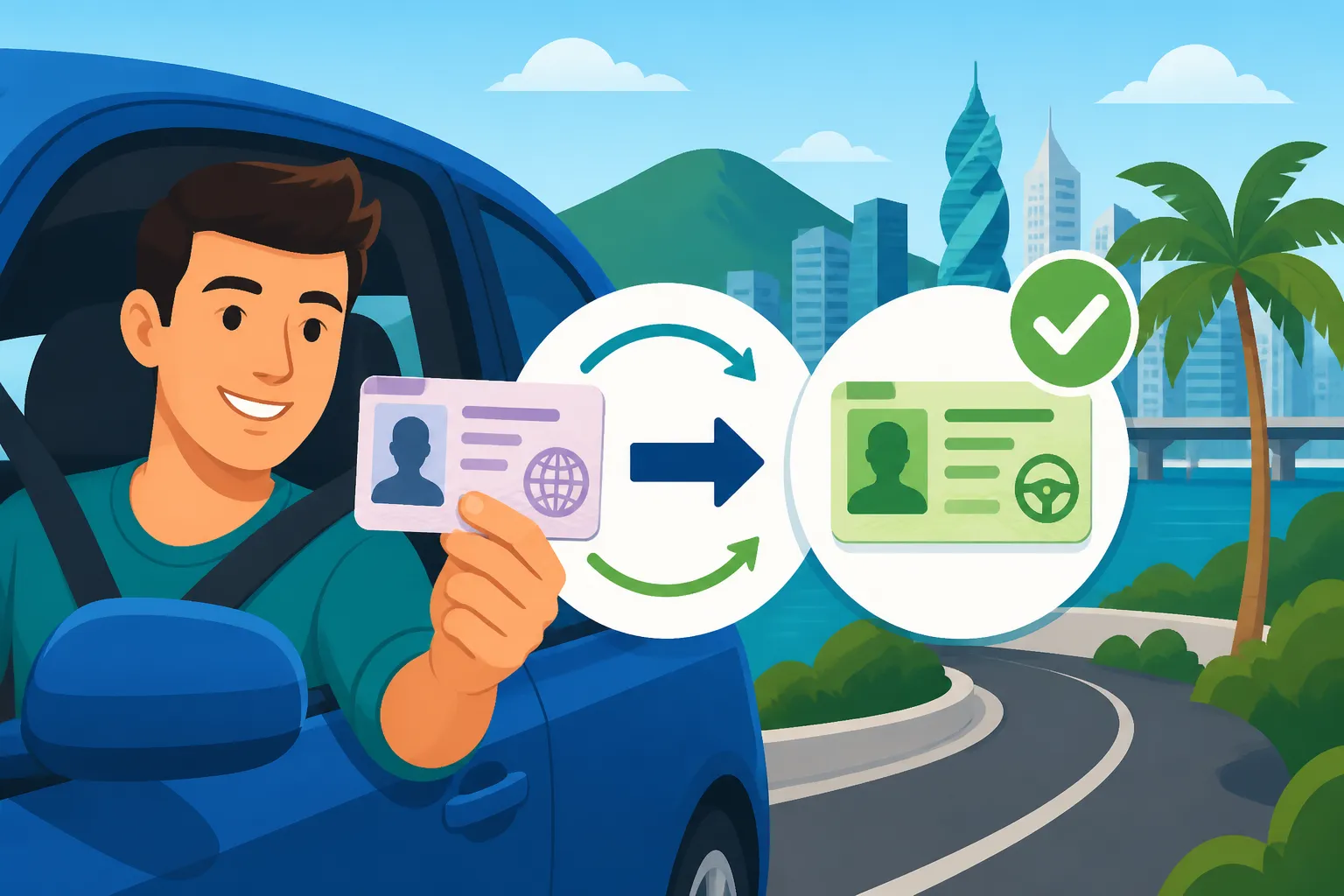
How to Exchange or Use a Foreign Driver’s Licence in Panama
Many expats arrive in Panama with their home country's driver's license, wondering how long it will be valid or if they need to jump through bureaucratic hoops to get a local one. The truth is, navigating the Panamanian driving regulations can feel like tackling a winding, unpaved road, full of unexpected bumps and turns, especially when language barriers and differing administrative processes come into play. This guide will clarify exactly how you can use your foreign license, when you absolutely need to exchange it, and walk you through the often-confusing process of obtaining your very own Panamanian driver's license.
Using Your Foreign Driver's License as a Tourist in Panama
One of the first questions almost every visitor or prospective expat asks is, "Can I just use my existing license here?" For tourists, the answer is usually a cautious yes, but with crucial limitations that you absolutely need to be aware of to avoid any unwelcome surprises or legal troubles. Panama, in a gesture of international courtesy, allows visitors to drive with their valid foreign driver's license for a specific period.
Initial Validity for Tourists
When you first arrive in Panama as a tourist, your foreign driver's license is generally accepted for a period of up to 90 days from your entry date. This is a fantastic convenience for those on shorter stays, whether you're exploring the bustling streets of Panama City, venturing into the natural beauty of Boquete, or driving across the bridge to Amador. It means you don't immediately have to worry about securing a local permit or navigating complex paperwork right off the plane. Just ensure your license is valid, current, and issued by your home country.
However, it's vital to remember that this 90-day window is tied directly to your tourist visa stamp. If you manage to extend your tourist stay in Panama beyond 90 days – which some people do, though it's not always straightforward – your foreign driver's license's validity does not automatically extend with it. Once those initial 90 days are up, technically, you are no longer legally permitted to drive with your foreign license. This can be a real headache, especially for those who thought they could simply stretch out their stay and keep driving. Always keep your passport handy with your entry stamp to prove your arrival date, as traffic police are diligent about checking this.
International Driving Permits: Are They Necessary?
An International Driving Permit (IDP) is often recommended, but in Panama, it’s not strictly mandatory for the initial 90-day tourist period if your original license is in English or Spanish. However, if your license is in a language other than Spanish or English, then an IDP becomes incredibly useful, acting as a translation of your original document. This can save you a lot of hassle and potential misunderstandings with traffic authorities who may not be able to read your license.
Think of an IDP as a universally recognized complement to your national license, not a replacement. It provides a standardized translation of your driving privileges. While Panamanian police generally understand English, an IDP eliminates any doubt about the vehicle categories you're authorized to drive. For peace of mind, especially when dealing with car rental agencies or in the unfortunate event of a traffic stop, having an IDP alongside your home country's license is a smart move. It simplifies things greatly and shows you've made an effort to comply with international driving standards.
Understanding Driving Regulations for Residents
Moving beyond the tourist phase, the rules change significantly. If you're planning on making Panama your long-term home, relying solely on your foreign driver's license won't cut it. The Panamanian authorities, specifically the Autoridad del Tránsito y Transporte Terrestre (ATTT), expect residents to obtain a local driver's license. This transition can often be a source of frustration for expats, as the process is quite different from what many are used to.
The 90-Day Rule for Residents
Just like tourists, new residents can initially use their foreign driver's license for up to 90 days from their last entry into Panama. However, this is where it gets a bit tricky and often confuses people. This 90-day period is not a grace period from the date you gain residency; it’s from your most recent entry stamp. So, if you entered Panama on a tourist visa, then applied for and received residency within those 90 days, your foreign license is still only valid until 90 days from your entry.
Many expats find themselves in a bind here because the residency process itself can take months. This means you might be a resident, but your foreign license is no longer valid, and you haven't yet had time to complete the exchange process. This creates a sort of legal "grey area" where driving could expose you to fines or other penalties. My advice? Plan proactively. As soon as you know you'll be residing long-term, start researching the license exchange process. Remember, driving without a valid license, even if you’re a resident waiting on paperwork, is not something you want to experience firsthand in Panama.
The Importance of Your Residence Status
Your official immigration status in Panama plays a critical role in whether you can exchange your license and, indeed, how long you can even use your foreign one. To initiate the process of exchanging your foreign license for a Panamanian one, you absolutely must have a valid residency card (the cédula). Without this, the ATTT will not even consider your application. This means if you're here on an extended tourist visa, a temporary business visa, or any status that isn't full residency, you cannot simply exchange your license.
The cédula is your key to unlocking many administrative processes in Panama, including banking, setting up utilities, and, of course, getting your driver's license. For those wondering about the initial steps for setting up their life, understand that your residency permit is foundational. For a comprehensive overview of securing your long-term status, you might want to read our guide on How to Get Residency in Panama: The Full Guide (2027). The ATTT uses your cédula to verify your legal right to live and drive in Panama. This is why many expats emphasize the importance of completing the residency process efficiently. It’s not just about living here; it’s about participating fully and legally in everyday life, like driving to the grocery store or taking a trip to the beach without constantly looking over your shoulder.
The Step-by-Step Process to Exchange Your License
Alright, so you've navigated the initial tourist phase, secured your residency, and now it's time to get down to business: exchanging that foreign license for a shiny new Panamanian one. This isn't just a simple swap; it's a multi-step process that requires patience, attention to detail, and sometimes, a good sense of humor. The process is managed by the Autoridad del Tránsito y Transporte Terrestre (ATTT) through their service centers, known as SETRACEN (Servicios de Tránsito de Panamá).
Scheduling Your Appointment and Initial Steps
First things first, you can't just walk into SETRACEN hoping to get everything done. While some aspects can feel a bit spontaneous in Panama, this isn't one of them. You'll need to make an appointment. This is usually done through their online portal, although sometimes you might need to call or visit a SETRACEN office to get a specific date and time. It's a good idea to check the most current procedures, as these can sometimes change. The ATTT website or local expat groups are often the best sources for the latest information.
Once you have your appointment, your very first practical step will typically involve getting a blood type verification. Yes, you read that right. If you don't have a blood type on your existing license or a local Panamanian lab test result, you'll need to get one. Many SETRACEN offices have small, independent clinics right on site or nearby where you can get this done for a small fee, usually cash only. It’s a quick finger prick test, and they'll give you a small card with your blood type printed on it. This might seem like an odd requirement, but it's standard procedure here and a foundational piece of information for all Panamanian driver's licenses.
The Medical Exam and Vision Test
After proving your blood type, the next hurdle is the medical examination. This isn't a full physical, thankfully, but a general health check focusing on your physical and mental fitness to drive. You'll sit with a doctor, usually at the same on-site clinic or a pre-approved facility, who will ask you a series of questions about your health history, any medications you take, and if you have conditions that might impair your driving. Be honest, but don't overshare. The goal here is simply to confirm you're not a danger on the road.
Alongside the medical review, you'll undergo a vision test. This is pretty standard stuff: reading letters off a chart, testing your peripheral vision, and perhaps a color blindness test. If you wear glasses or contact lenses, make sure you bring them and declare that you use them. The doctor will note this, and your Panamanian license will reflect this requirement (e.g., "Usa Lentes" – wears glasses). While these exams are generally quick and not overly invasive, they are mandatory, and failure to pass means no license. Remember, the entire process is designed to ensure that anyone driving on Panamanian roads meets a basic standard of health and capability.
The Written and Practical Driving Tests
This is where many expats start to sweat. Unlike some countries where a license exchange is purely administrative, Panama often requires you to pass both a written and a practical driving test. While there have been cases where certain nationalities or types of licenses are exempt from one or both, it's safer to assume you will need to take them. The ATTT has a manual of traffic laws and regulations, which is available in Spanish and sometimes in English. Studying this is crucial for the written exam. The exam covers everything from road signs and speed limits to right-of-way rules and penalties for infractions.
The practical driving test is taken at a SETRACEN testing track. You’ll need to provide your own vehicle, or rent one for the test, which often adds another layer of logistical planning. The test usually involves basic maneuvers like parallel parking, backing up, and following instructions on a closed course. Many expats find the practical test less about advanced driving skills and more about following explicit instructions and demonstrating familiarity with the Panamanian way of driving. While it might feel redundant if you've been driving for decades, remember this is Panama's system, and showing respect for their rules goes a long way. This is also where understanding local driving nuances, like aggressive merging or the often-fluid interpretation of lane markings, will implicitly help you navigate the test and Panamanian roads afterward.
Essential Documents for Your License Exchange
Gathering the right documents for your Panamanian driver's license exchange is often the most challenging part of the entire process. It’s a classic Panamanian administrative hurdle, where having everything perfectly in order is absolutely non-negotiable. Missing even one tiny piece of paper can send you back to the drawing board, wasting valuable time and patience. So, let’s dive deep into what you’ll need.
Gathering Your Personal and Original License Documents
First and foremost, you'll need your bedrock personal identification: your valid passport and your Panamanian residency card, or cédula. Make sure both are current and have not expired. You'll need original copies and several photocopies of each. Always bring more copies than you think you need, trust me on this. It's a Panamanian administrative golden rule. Additionally, a utility bill or rental contract showing your current Panamanian address is often required as proof of domicile. This reinforces your status as a resident.
Then comes the star of the show: your original foreign driver's license. This must be valid and unexpired. They will often keep your original foreign license once the Panamanian one is issued, so be prepared for that. Alongside the original, you'll need an official certification from the issuing authority in your home country confirming the validity and authenticity of your license. This is often called a "driving record" or "certificate of good standing" and must state when the license was issued, its expiry date, and the categories of vehicles you are authorized to drive. Obtaining this can take time, especially if you’re coordinating with an overseas government department. Start this process early!
Legalisation and Translations: Apostille and Notarisation
This is where things can get particularly intricate. Any official document issued outside of Panama, especially your driving record, must be properly legalized for use in Panama. For many countries, this means getting an apostille. An apostille is a certification issued by a government that verifies the authenticity of a document's signature, stamp, or seal, so that the document can be recognized in other countries that are members of the Hague Apostille Convention. If your home country is not part of this convention, you'll likely need to go through a more complex process of consular legalization, which involves multiple layers of authentication by your country's foreign affairs department and then the Panamanian consulate in your home country.
Once your documents are apostilled or legalized, if they are not in Spanish, they must be translated by an official public translator recognized by the Ministry of Foreign Affairs in Panama. Do not try to do this yourself or use an unofficial translator; the ATTT will reject it. This adds another layer of cost and time to the process, but it's non-negotiable. You can often find a list of approved translators through local legal offices or expat forums. This step can feel like jumping through hoops, but it ensures all your documents are legible and officially recognized by Panamanian authorities. For a deeper dive into legalizing documents, especially for immigration, check out our article on How to Get Your Documents Apostilled for Panama Immigration.
Proof of Residency and Other Supporting Papers
Beyond your passport, cédula, and original license documents, you'll need various other supporting papers. These typically include:
- Proof of Blood Type: As mentioned, a small card from a local clinic, often done on-site at SETRACEN.
- Medical Certificate: Issued by a Panamanian doctor after your vision and basic health check, usually done at SETRACEN.
- ATTT Payment Receipts: There are fees associated with the processing, tests, and the issuance of the license itself. These must be paid at authorized locations (often banks) and the original receipts presented.
- Photographs: While they often take your photo digitally at SETRACEN, sometimes they might still ask for physical passport-sized photos, so it’s always wise to have a few on hand.
- Original and Copies of Your Panamanian Residence Permit and Visa: Even though you show your cédula, having extra copies of your actual residency approval from immigration can sometimes be requested, especially if there's any ambiguity in their system.
Here's a quick table to help you keep track of the main documents:
| Document Category | Specific Item | Requirement/Notes |
|---|---|---|
| Personal Identification | Valid Passport | Original and multiple photocopies |
| Panamanian Residence Card (Cédula) | Original and multiple photocopies | |
| Proof of Address (Utility Bill, Rental Contract) | Recent, showing your name and Panamanian address | |
| Foreign Driver's License | Original Foreign Driver's License | Valid, unexpired, often surrendered upon issuance of Panamanian |
| Certification from Issuing Authority | "Driving Record" or "Certificate of Good Standing" (apostilled) | |
| Official Spanish Translation (if applicable) | By a public translator recognized by Panama's Ministry of Foreign Affairs | |
| Panamanian Requirements | Blood Type Test Result | From an authorized Panamanian clinic (often at SETRACEN) |
| Medical Certificate & Vision Test Results | From an authorized Panamanian doctor (often at SETRACEN) | |
| ATTT Payment Receipts | Proof of payment for all associated fees | |
| Passport-sized Photos (optional but recommended) | A few spare physical photos, just in case |
Preparing this stack of documents properly is a test of its own. It’s an exercise in patience and meticulous organization, but getting it right means a much smoother path to your Panamanian driver’s license.
Navigating Common Hurdles and Expert Tips
Let's be real: bureaucracy in any new country can be a challenge, and Panama is no exception. Even with a clear understanding of the process, you're likely to encounter a few bumps along the way. But with a bit of foresight and the right attitude, you can smooth out most of these wrinkles.
Language Barriers and Bureaucratic Delays
Unless you're fluent in Spanish, the language barrier can be a significant hurdle. While some staff at SETRACEN, especially in major cities like Panama City, might speak a little English, you cannot count on it. Imagine trying to understand complex legal requirements or driving test instructions when you're only catching every third word. This can lead to misunderstandings, incorrect submissions, and frustrating delays. My strong advice is to bring a Spanish-speaking friend, family member, or a professional translator with you, especially for your initial appointment and the driving tests. It makes a world of difference.
Then there are the delays. "Manana" is a way of life here, and government processes often move at their own pace. What you expect to take a day might take a week, and what should take a week might take a month. This can be incredibly frustrating if you're on a tight schedule or need your license for work. Expect to make multiple trips to SETRACEN or related offices. Documents might need to be resubmitted, or a new requirement might pop up unexpectedly. This isn't usually malice; it's just how things operate. Factor in extra time and try not to let it stress you out too much. A good tactic is to show up early for appointments and be prepared for a wait.
Tips for a Smoother Application Process
My first tip for anyone embarking on this journey: hire a lawyer or a facilitator. While it's not strictly necessary, a good Panamanian immigration lawyer or an experienced facilitator can save you countless hours and headaches. They know the system, they speak the language, and they often have relationships that can help navigate the bureaucratic maze more efficiently. They can help you gather the correct documents, ensure they are apostilled and translated properly, schedule appointments, and even accompany you. For those moving their entire lives, services like Sirelo can help with the broader logistics, and a local lawyer fits right into that network of support.
Secondly, photocopy EVERYTHING. I mean it. Every single document you submit, and every receipt you receive, should have at least two copies in your personal file. And organize them! Create folders for different categories. When you return for a follow-up, having everything at your fingertips will impress the staff and speed things up. It also protects you if a document gets misplaced in their system.
Finally, be polite, patient, and persistent. A smile and a "Buenos días" go a long way. Getting agitated or demanding will only make the process harder. Show respect for their procedures, even if they seem illogical to you. And don't give up! Keep following up, keep checking in, and eventually, you will get there. It’s a marathon, not a sprint. Remember to ensure your mobile data is working so you can check emails or directions on the go – Airalo eSIMs are excellent for this, giving you connectivity without the hassle of a local SIM card until you're fully settled.
What Happens After You Get Your Panamanian License?
Congratulations! You've navigated the administrative labyrinth, endured the tests, and now hold your very own Panamanian driver's license. This is a significant milestone for any expat in Panama, granting you full legal driving privileges and a sense of independence. But the journey doesn't quite end there; there are still a few things to keep in mind to ensure you remain on the right side of the law and stay safe on the roads.
Understanding License Categories and Renewals
Panamanian driver's licenses come in various categories, much like in other countries, such as Type A for motorcycles, Type C for private vehicles, and Type D for commercial vehicles. When you exchange your foreign license, the ATTT will typically issue you a Panamanian license corresponding to the highest category you held in your home country. For most private drivers, this will be a Type C license. It's essential to understand what your new license authorizes you to drive.
These licenses are not indefinite; they have an expiration date, usually tied to your residency expiry or a standard period like 4 or 10 years, depending on your age and the license type. It's your responsibility to keep track of this date. Renewing your Panamanian license is generally less arduous than the initial exchange process, but it still requires a visit to SETRACEN, updated medical exams, and payment of fees. Don't wait until the last minute! Renewing before expiry avoids any penalties or the inconvenience of being unable to drive legally.
Driving Legally and Safely on Panamanian Roads
With your new license in hand, you're now fully equipped to drive on Panama's roads. However, driving here can be quite an experience, different from what many expats are accustomed to. Traffic laws exist, but their enforcement and interpretation can sometimes feel… flexible. Aggressive driving, quick lane changes without signaling, and a general sense of urgency are common, especially in urban areas like Panama City. Always drive defensively and assume other drivers might not follow the rules.
Understanding local traffic norms and road conditions is crucial. Potholes can be common, especially after heavy rains, and many rural roads may not be well-lit or paved. You might also encounter pedestrians, cyclists, and even animals on unexpected parts of the road. Always carry your driver's license, cédula, vehicle registration (registro único vehicular), and proof of insurance (póliza de seguro) with you at all times. Police checkpoints are frequent, and they will expect to see these documents. For a deeper dive into the broader legal framework of driving, including how to license a car or get insurance, you'll find our guide on Driving in Panama: Licences, Registration and Rules for Expats (2027) incredibly useful. Staying informed and exercising caution will make your driving experience in Panama far more enjoyable and, most importantly, safer.
Disclaimer
Please note that while this guide provides comprehensive information based on current regulations and common expat experiences in Panama, immigration and traffic laws can change. Always consult with a qualified Panamanian attorney or directly with the Autoridad del Tránsito y Transporte Terrestre (ATTT) or the National Immigration Service for the most up-to-date and personalized advice regarding your specific situation. This content is for informational purposes only and does not constitute legal advice.