Are Private Hospital Rooms Expensive in Panama?
Let's be real for a moment. Moving to a new country like Panama is thrilling, but it also brings a whole new set of worries, especially when it comes to healthcare. One question that keeps many of us up at night, myself included, is "What happens if I get seriously ill or need surgery, and how much will a private hospital room actually cost?" This guide is here to pull back the curtain on the expenses associated with private hospital rooms in Panama, giving you a realistic picture and equipping you with the knowledge to navigate this often-confusing aspect of expat life.
The Reality of Private Hospital Rooms in Panama
When you first land in Panama, especially if you're coming from a country with robust public healthcare, the idea of a "private" hospital can sound dauntingly expensive. But here, the private system often means a significant step up in comfort, speed, and personalized care compared to the public Caja de Seguro Social (CSS) hospitals. This difference is particularly pronounced when it comes to inpatient stays.
Understanding the "Private" Experience: What You Get
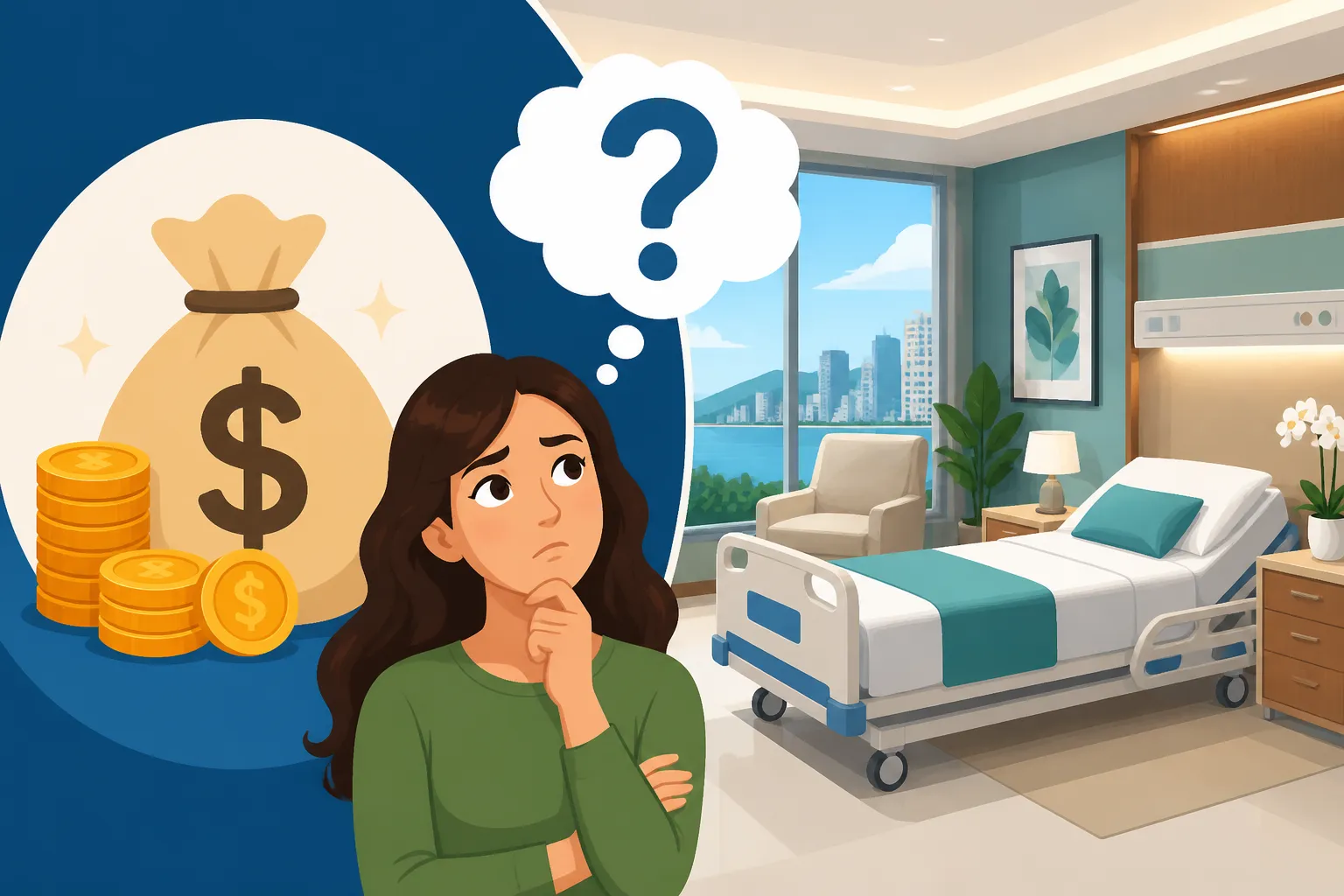
Choosing a private hospital room in Panama is about more than just a bed; it's about the entire experience. Think of it as an investment in your comfort and peace of mind during a vulnerable time. In private hospitals like Hospital Punta Pacifica, Hospital Nacional, or Centro Médico Paitilla in Panama City, a private room typically means exactly that: a private space just for you. No shared wards, no curtains barely separating you from a stranger. This solitude is a huge benefit, especially for recovery and for managing visits from family or friends without disturbing others.
Beyond the dedicated space, these rooms often come with a higher standard of amenities. You'll usually find an en-suite bathroom, a television (sometimes with international channels), and reliable air conditioning – a huge plus in Panama's tropical climate. There's often a sofa bed or comfortable chair for a family member to stay overnight, which can be invaluable. The privacy extends to your medical care too; consultations with doctors, nurses, and specialists can happen more discreetly. Furthermore, the nurse-to-patient ratio tends to be more favorable in private facilities, often leading to more attentive and prompt care. You're not just a number; you’re an individual patient whose needs are being prioritized, and that really makes a difference when you're feeling unwell or recovering from a procedure.
Factors Influencing Room Costs
The price tag on a private hospital room in Panama isn't a one-size-fits-all figure. It’s a dynamic sum influenced by several key variables, much like anywhere else in the world, but with some Panamanian nuances.
First, location is paramount. A private room in a top-tier hospital in Panama City will almost certainly cost more than one in, say, David or Santiago. Panama City boasts the most modern and internationally accredited facilities, and their overheads for state-of-the-art equipment and specialized staff are naturally higher. Then there’s the reputation and accreditation of the hospital itself. Institutions like Hospital Punta Pacifica, affiliated with Johns Hopkins Medicine International, or Hospital Nacional, command higher prices due to their advanced technology, renowned specialists, and higher service standards. Smaller, local private clinics or hospitals might offer more budget-friendly options, but perhaps with fewer amenities or a more limited range of specialized services.
The type of room also plays a significant role. Even within "private" rooms, there can be tiers: a standard private room versus a deluxe suite or an Intensive Care Unit (ICU) room. ICU rooms, for instance, involve continuous monitoring and specialized equipment, driving their daily cost substantially higher. Lastly, the duration of your stay is a direct cost multiplier, and any additional services like specialized nursing, specific medical equipment rented for your room, or even premium meal choices can add to the daily rate. It's a complex equation, and knowing these factors can help you anticipate costs.
Breaking Down the Costs: What to Expect
Let's get down to the brass tacks: what kind of numbers are we actually looking at for a private hospital room in Panama? This is where it gets real, and where having a good understanding can save you from sticker shock.
Typical Daily Rates for Private Rooms
The daily rate for a private hospital room in Panama can vary quite a bit, but for a good, modern private hospital in Panama City, you can expect a standard private room to range anywhere from $150 to $350 USD per day. This is just for the room itself, remember, without the bells and whistles of medical care.
Let's break it down further with some general estimations, keeping in mind these are averages and can fluctuate based on the specific hospital and current economic factors:
- Standard Private Room: As mentioned, think $150-$350 USD per day. This usually includes the room, a private bathroom, a TV, and basic hospital meals. For instance, in a well-regarded private hospital like Hospital Nacional or Centro Médico Paitilla, you'd likely be in the middle to upper end of this range.
- Deluxe or Executive Suite: Some hospitals offer larger, more luxurious rooms with additional living space, better views, and enhanced amenities. These could run from $400 to $800+ USD per day.
- Intensive Care Unit (ICU) Room: These are, understandably, the most expensive due to the continuous monitoring, specialized equipment, and highly trained staff required. ICU rooms can easily start from $800 to $2,000+ USD per day, and this is truly just for the physical space and basic monitoring setup. The medical interventions in an ICU are billed separately and often dwarf the room cost.
For comparison, a private room in a smaller city like David might be slightly less, perhaps starting from $100-$200 USD per day for a standard room, but the specialized care options might also be more limited. When you look at these numbers, they can seem substantial, especially if you're accustomed to healthcare systems where hospital stays are heavily subsidized or "free" at the point of use. This is why understanding your health insurance options is absolutely crucial. You can learn more about this in our guide on how to choose private health insurance in Panama (2026).
Beyond the Room: Additional Charges
Here’s the thing many expats overlook: the private room rate is just the tip of the iceberg. The actual medical services, tests, and professional fees are where the bill really starts to accumulate. It’s not uncommon for the room cost to be a relatively small percentage of the total hospital bill for a significant procedure or illness.
Let's walk through some of those common "additional" charges:
- Doctor's Fees: This is a big one. You'll be billed separately by every doctor who attends to you. This includes your admitting physician, any specialists (cardiologist, pulmonologist, etc.), surgeons, anaesthesiologists, and even consultants who might just pop in for a quick review. These fees are based on their specific services, procedures performed, and their individual rates.
- Medications: Every pill, IV drip, or injection administered during your stay will be itemized and charged.
- Laboratory Tests: Blood work, urine tests, biopsies – all are billed separately.
- Imaging Services: X-rays, MRIs, CT scans, ultrasounds, and other diagnostic imaging come with their own substantial costs.
- Operating Room (OR) Use: If you have surgery, the time spent in the OR, along with the equipment and staff present, will be a significant charge.
- Medical Supplies: From bandages and gauze to catheters and specialized tubing, everything used in your care is added to your bill.
- Therapies: Physical therapy, respiratory therapy, and other rehabilitative services are typically charged per session.
- Emergency Room Fees: If your admission started with an ER visit, that will be an initial charge, often including a facility fee and charges for any immediate tests or treatments received there.
These components quickly add up, transforming a modest daily room rate into a potentially hefty final bill. This is why having comprehensive coverage is essential. Many expats find great value in exploring private and international health insurance options explained in detail here: Health Insurance in Panama: Private and International Options Explained.
Here’s a simplified example of how costs might break down for a moderate hospital stay in a private room (these are illustrative estimates):
| Item | Estimated Daily Cost (USD) | Estimated One-Time/Per Service Cost (USD) | Notes |
|---|---|---|---|
| Standard Private Room | $250 | N/A | Basic amenities, private bathroom |
| Doctor's Daily Rounds | $50 – $150 | N/A | Varies per doctor, complexity of case |
| Nursing Care | Included in room, but extras possible | N/A | More intensive nursing may be billed separately |
| Medications | $50 – $300+ | N/A | Depends heavily on type and quantity of meds |
| Basic Lab Tests (daily) | $20 – $100+ | N/A | Routine bloodwork, etc. |
| One-Time/Procedure Costs | N/A | ||
| Specialist Consult (initial) | N/A | $80 – $200 | Per specialist, per visit |
| X-Ray | N/A | $50 – $150 | Per image/study |
| CT Scan (with contrast) | N/A | $400 – $800+ | Varies by body part |
| Minor Surgery (OR use + fees) | N/A | $1,500 – $5,000+ | Highly variable, excludes implants/prosthetics |
| Anesthesia (for minor surgery) | N/A | $500 – $1,500+ | Varies by duration and complexity |
As you can see, the daily room rate is often a fraction of the overall potential cost. It truly emphasizes why understanding The Cost of Healthcare in Panama: A Complete Breakdown for Foreigners (2026) is so vital.
Navigating Costs with Health Insurance
Without a doubt, private health insurance is your best friend when it comes to managing the costs of private hospital rooms and care in Panama. Trying to pay for a significant medical event out-of-pocket can be financially devastating for many expats.
The Importance of Private Health Insurance
You've heard it before, and I'll say it again: private health insurance in Panama isn't a luxury; it's a necessity for most expats. While Panama does have its public healthcare system through the CSS, its resources and facilities, particularly for inpatient care, can be stretched. Waiting times are longer, privacy is minimal, and the amenities are basic. For those of us who value comfort, privacy, and quicker access to specialist care during a hospital stay, private insurance opens the doors to the country's excellent private hospitals. If you're wondering Do I Need Private Health Insurance in Panama?, the answer for most expats is a resounding yes.
There are generally two routes you can take for private health insurance: local Panamanian plans or international health insurance plans.
- Local Panamanian Plans: These are offered by Panamanian insurers and are often more affordable for basic coverage within the country. Companies like ASSA or Internacional de Seguros are popular choices. They integrate well with the local private hospital networks and doctors. However, they might have less coverage if you travel outside Panama.
- International Health Insurance Plans: These plans are designed for globally mobile individuals and offer broader coverage, often including medical care both in Panama and internationally. They are typically more expensive but provide peace of mind for those who travel frequently or want the option to seek treatment abroad. This is where options like SafetyWing often come up in discussions among expats and digital nomads. While SafetyWing is primarily known as travel medical insurance, it offers a flexible and affordable solution for short-term stays or for those just starting out. It's a great option for initial coverage, but it's important to read the fine print regarding hospital room limits and pre-existing conditions if you're looking for long-term, comprehensive coverage. For more in-depth information, you might want to read How to Choose Private Health Insurance in Panama (2027).
Deductibles, Co-pays, and Coverage Limits
Understanding how your private health insurance interacts with hospital room costs means getting familiar with deductibles, co-pays, and coverage limits. These are the details that can significantly impact your out-of-pocket expenses.
- Deductibles: This is the amount you have to pay out of your own pocket before your insurance coverage kicks in. For example, if you have a $500 deductible, you'll pay the first $500 of your hospital bill (including the room) before your insurer starts paying.
- Co-pays: After your deductible is met, many plans require you to pay a percentage of the remaining bill. This is your co-payment or co-insurance. For instance, if your plan has an 80/20 co-pay, the insurance pays 80% and you pay 20%. This applies to all aspects of the bill, including the daily private room rate, until you reach your out-of-pocket maximum. So, if your room is $250 a day, you might still be responsible for $50 of that even after meeting your deductible.
- Coverage Limits: This is crucial for private hospital rooms. Some insurance policies, especially more basic ones or travel-focused plans like SafetyWing, might have specific daily limits on what they will pay for a hospital room. For example, your policy might state it covers "hospital room and board up to $200 USD per day." If your private room costs $250 per day, you'll be responsible for the $50 difference, in addition to any co-pays or deductibles. Always check these limits carefully, as they can greatly affect the affordability of your preferred private room.
It’s also worth noting that some older, more basic local plans might only cover a semi-private room by default, and you'd have to pay the full difference to upgrade to a fully private room. Therefore, it's vital to meticulously review your policy's terms and conditions or discuss them with your insurance agent. Understanding Out-of-Pocket Healthcare Costs and Co-Pays in Panama can really help you budget and avoid surprises. And if you're ever in doubt, reach out to your insurance provider before a planned hospital stay to confirm coverage and pre-authorization procedures. This proactive step can save you a lot of headache and unexpected bills.
Practical Tips for Expats
Navigating the healthcare system in a foreign country can be intimidating. But with some foresight and preparation, you can significantly ease the burden and ensure you’re well-prepared for any eventualities, even when it comes to private hospital rooms.
Before You Need It: Planning Ahead
Being proactive is the name of the game when it comes to healthcare in Panama. Don't wait until an emergency strikes to figure things out.
First, research your hospitals. If you live in Panama City, familiarize yourself with the major private hospitals like Hospital Punta Pacifica, Hospital Nacional, and Centro Médico Paitilla. Know where they are, what their general reputation is, and if possible, get a sense of their typical costs or billing procedures. If you're in a smaller city like Boquete or Coronado, identify the best local private clinics or hospitals and understand their capabilities. This pre-research will serve you well in an emergency. Our guide on How to Use Major Hospitals Like Punta Pacifica and Hospital Nacional offers a great starting point.
Second, and perhaps most importantly, understand your health insurance policy inside and out. This means knowing your deductible, your co-pay percentages, and critically, any specific daily limits for private hospital rooms. Does your policy cover a private room fully, or only up to a certain amount? What about pre-existing conditions? Does it require pre-authorization for planned hospitalizations or surgeries? Having these answers ready will prevent a lot of stress if you ever need to be admitted. Many international plans, like SafetyWing, are transparent with their coverage limits, so make sure you've read through yours carefully. It's also wise to know Can I Use International Health Insurance at Panamanian Hospitals? and how the direct billing process works.
Third, prepare an emergency kit with vital information. This isn't just a first-aid kit, but a folder (digital and physical) containing copies of your passport, residency card, insurance policy details (card and policy number), your emergency contacts, a list of any allergies, current medications, and any significant medical history. If you can, translate key medical terms or conditions into Spanish. Knowing Emergency Medical Care in Panama: What Every Expat Needs to Know can also help you prepare for the unexpected.
During Your Stay: Asking Questions
When you’re in a hospital, especially if you’re not feeling well, the last thing you want to do is navigate complex billing. However, a little diligence can go a long way.
Don't be afraid to ask for an itemized bill, even during your stay. Many hospitals here, like anywhere, provide a summary bill at discharge. But if you’re staying for more than a couple of days, or if the costs seem unexpectedly high, politely request a detailed breakdown of charges. Ask about room rates, medication costs, and physician fees. It’s your right to understand what you’re being billed for. This aligns with advice in our article on Understanding Hospital Admission and Billing in Panama.
Clarify everything with the billing department. Before or during your admission, if possible, have a conversation with the hospital's billing department. Confirm your insurance coverage, understand what your estimated out-of-pocket costs might be, and discuss payment arrangements if needed. Sometimes, hospitals will offer different payment plans, especially for larger sums.
Finally, if language is a barrier, bring an advocate. If your Spanish isn't fluent, ask a trusted friend, family member, or even a professional interpreter to accompany you for billing discussions or to act as a liaison with hospital staff. Misunderstandings due to language can lead to significant frustration, and having someone to translate and advocate on your behalf is invaluable. If you're looking for English-speaking medical professionals, check out our guide on How to Find an English-Speaking Doctor in Panama.
Exploring Alternatives
While private rooms in top-tier hospitals offer unparalleled comfort and care, they are not the only option. It’s always good to know what other avenues exist, especially if your budget or insurance coverage is limited.
One common alternative within the private system is opting for a semi-private room, if available. Some private hospitals offer rooms shared by two or three patients. While you lose some privacy compared to a fully private room, these are significantly more comfortable and offer better services than public hospital wards. The cost difference can be substantial, making them a viable middle-ground for many.
Another consideration, though often a last resort for expats who prioritize privacy and speed, is the public CSS system (Caja de Seguro Social). If you are formally employed and contribute to the CSS, you are entitled to care in CSS hospitals. While the medical care provided is generally competent, the facilities can be older, crowded, and waiting times for procedures or specialist appointments can be very long. Private rooms are virtually non-existent, and you will likely be in a ward. However, for those with very limited or no private insurance coverage, it is an option. If you find yourself in a situation where you get sick without insurance in Panama, understanding your CSS entitlements is crucial.
Ultimately, the best approach is to be well-informed and well-insured. Having a clear understanding of your options, your policy, and what to expect financially will allow you to make the best decisions for your health and your wallet in Panama.
Disclaimer
The information provided in this guide is intended for general informational purposes only and does not constitute professional medical, legal, or financial advice. While we strive to provide accurate and up-to-date information, healthcare costs, insurance policies, and regulations in Panama are subject to change. Always consult with a qualified healthcare professional, insurance provider, or legal expert for advice tailored to your specific situation. Reliance on any information provided in this article is solely at your own risk.