How to Become a Freelancer Legally in Panama
So, you’ve landed in Panama, felt that incredible tropical breeze, and now you're dreaming of setting up your own thing, working on your own terms, away from the typical 9-to-5 grind. Freelancing in this beautiful country sounds like an idyllic dream, right? Palm trees swaying, laptop open, café con leche in hand… It absolutely can be! But before you dive headfirst into that dream, there are some very real, very Panamanian administrative hoops you need to jump through to make sure you're doing it all legally and without future headaches. Trust me, ignoring the paperwork here is a recipe for stress, and we want you to avoid that. This guide is going to walk you through exactly how to become a freelancer legally in Panama, cutting through the confusion so you can focus on your work.
Understanding Freelancing and Residency in Panama
Many expats arrive in Panama with a tourist visa, fall in love, and then think, "I'll just work remotely for my clients back home." While that might seem harmless, it's a common misconception that can lead to significant problems down the line. Panama, like most countries, has clear rules about who can work within its borders and under what conditions.
The Legal Nuances of Freelance Work for Foreigners
Let's get this straight from the get-go: a tourist visa does not grant you the right to work in Panama, even if your clients are entirely outside the country. This includes freelancing. The Panamanian government views any income-generating activity performed while physically in Panama as work, regardless of where the client is located or where the money originates. This is a critical distinction many foreigners overlook, often leading to issues with immigration or, worse, being unable to formalize their status later.
Imagine this scenario: you're happily coding away from your apartment in El Cangrejo, earning decent money from a client in Europe. You're feeling great about your digital nomad lifestyle. Then, a few months in, you decide you want to stay longer, maybe even buy a car or a property. When you go to apply for residency, officials might question how you've been supporting yourself. If you admit to freelancing without the proper authorization, it could jeopardize your entire application. Panama wants to know that you are either legally employed by a Panamanian company, or you have a residency that explicitly permits self-employment, and that you are paying taxes like any other resident. It's about respecting the local laws and contributing to the economy in the correct way.
Key Residency Paths for Self-Employed Individuals
If your goal is to freelance legally in Panama, your first and most important step is securing the correct residency status that permits self-employment. There are several paths, and the best one for you will depend on your nationality, income, and personal circumstances.
One popular option, though it's evolved over the years, is often associated with professional services or economic solvency. For instance, some individuals might qualify under certain professional visas if their profession is regulated and not restricted to Panamanian nationals. Historically, the Friendly Nations Visa was a go-to for many, and while its requirements have changed significantly, it still offers a route for citizens of specific countries who can demonstrate economic ties to Panama, which can include establishing a local business or being employed by one.
Another route could be the Self-Economic Solvency Visa, designed for individuals who can prove a substantial economic investment or income stream. This often involves depositing a significant sum in a Panamanian bank or investing in real estate. The point is, you need a visa that explicitly allows you to generate income through self-employment. Without it, you're essentially working "under the table," which carries risks. Remember, your How Your Residence Status Affects Health Coverage in Panama is also directly tied to your legal residency, so getting this right impacts more than just your work permits. It affects your ability to access public healthcare services or qualify for local private insurance.
The Importance of Professional Registration
Even with the right residency, you're not quite done. Simply having a visa that permits work doesn't automatically make you a registered business entity or freelancer in the eyes of the Panamanian tax authorities. Think of it like this: your visa gives you permission to exist and work here, but professional registration tells the government what kind of work you're doing and how you're contributing economically.
If you're providing professional services – anything from consulting to web design to translation – you'll need to register with the relevant professional bodies or, at a minimum, with the tax authority as a self-employed individual. This isn't just bureaucratic red tape; it's how Panama keeps track of its workforce and ensures everyone is playing by the rules. It also ensures you can legally issue invoices, deal with clients, and generally operate above board. Trying to avoid this step will leave you in a grey area, making it difficult to open business bank accounts, get legitimate clients, or even properly declare your income. It might feel like a lot of steps, but each one builds a solid legal foundation for your freelance career in Panama.
Registering as a Self-Employed Taxpayer with the DGI
Once you've got your residency sorted, the next big hurdle—and a crucial one for any freelancer—is getting properly registered with Panama's tax authority, the Dirección General de Ingresos (DGI). This is where you formally tell the government, "Hey, I'm here, I'm working, and I intend to pay my fair share of taxes!" It might sound daunting, but it's a fundamental step that ensures your freelance operation is legitimate.
Obtaining Your RUC (Registro Único de Contribuyente)
Your RUC, or Registro Único de Contribuyente, is essentially your tax identification number in Panama. Think of it as the equivalent of a Social Security Number or Tax ID in other countries, but specifically for tax purposes. You absolutely need this to conduct any kind of legal business, including freelancing. Without an RUC, you can't properly file taxes, issue official invoices (facturas), or even register a business bank account.
The process for getting your RUC generally involves a visit to a DGI office, though some initial steps can sometimes be done online or through a registered accountant. You'll need several documents, including your passport, your Panamanian residency card (cédula E or a provisional residency card if applicable), proof of address (like a utility bill), and possibly a letter detailing your freelance activities or professional license if applicable. You'll fill out a form, often with the help of a DGI agent or your lawyer/accountant, and then you'll be assigned your unique RUC. It's not a quick in-and-out process, so be prepared for some waiting, and make sure you have all your documents photocopied and organized. Patience is definitely a virtue when dealing with Panamanian bureaucracy! For more detailed steps on this, you might find specific guidance in a post like How Do I Get an RUC in Panama?.
Understanding Panamanian Income Tax for Freelancers
Panama operates on a territorial tax system. This means that, generally, only income generated within Panama is subject to Panamanian income tax. Income derived from sources outside Panama is typically not taxed here. This is often a huge draw for freelancers, but it's vital to understand what constitutes "Panama-source income."
For a freelancer, if you are physically performing services in Panama, even if your client is in another country and pays you into an overseas bank account, that income is considered Panama-source. Why? Because the "source" of the income is where the work is performed. For example, if you're a graphic designer sitting in your home office in Panama City, creating logos for a company in the USA, the DGI considers that Panama-source income. If, however, you own an apartment in your home country and rent it out, that rental income, generated outside Panama, would generally not be taxed here. This distinction is critical and often misunderstood. Understanding Income Tax in Panama (2027) will delve deeper into these nuances and help you ensure you’re compliant.
Freelancers in Panama are subject to progressive income tax brackets, meaning the more you earn, the higher percentage you pay. It's crucial to keep meticulous records of your income and expenses throughout the year. As a freelancer, you'll be able to deduct legitimate business expenses, which can significantly reduce your taxable income. This is where a good Panamanian accountant can be invaluable, helping you understand what expenses qualify and ensuring you don't miss any deductions. Many expats use services like Taxes for Expats to help navigate the complexities of international tax planning, especially if they have income streams in multiple countries.
Navigating ITBMS (VAT) for Freelance Services
Beyond income tax, there's ITBMS (Impuesto a la Transferencia de Bienes Muebles y Servicios), which is Panama's equivalent of Value Added Tax (VAT) or sales tax. The standard rate is 7%, and freelancers providing services may also need to register for and charge ITBMS.
The good news is that there's typically a threshold for ITBMS registration. As of recent updates, businesses (including individual freelancers) with annual gross income exceeding B/. 36,000 (US$36,000) or providing certain professional services from the outset, are generally required to register for ITBMS. If your annual income falls below this threshold, you might be exempt from charging and collecting ITBMS. However, once you hit or exceed that threshold, you must register, charge the 7% ITBMS on your invoices, collect it, and then remit it to the DGI monthly.
This is another area where solid accounting advice is paramount. You need to know when to start charging it, how to properly record it, and the deadlines for filing and payment. Getting this wrong can lead to fines. So, if you're a successful freelance consultant in Panama, hitting that B/. 36,000 mark isn't just a sign of success; it's a signal to take action regarding ITBMS. For a deep dive into this, you'll want to check out The Complete Guide to ITBMS (VAT) in Panama for Businesses (2027).
Business Structure and Social Security for Freelancers
Deciding how you'll operate your freelance business legally in Panama goes beyond just getting a tax ID. You'll need to consider your business structure and understand your obligations regarding social security. These choices can impact your legal protections, your tax liabilities, and even your access to public services.
Choosing Your Legal Business Structure
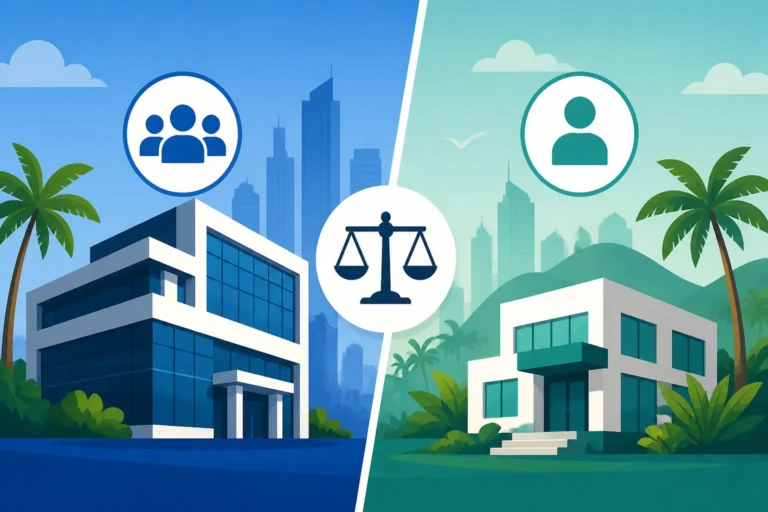
For most freelancers in Panama, the choice usually boils down to operating as a "Persona Natural" (natural person or sole proprietor) or forming a "Sociedad Anónima" (corporation, similar to an LLC). Each has its pros and cons, and what’s best for you depends on your scale, risk tolerance, and future plans.
Operating as a Persona Natural means you, the individual, are the business. This is the simplest and most common route for new freelancers. The setup costs are minimal, and the administrative burden is relatively light. You use your personal RUC for all business transactions, and your income is taxed as personal income. However, there's no legal separation between you and your business. This means your personal assets could be at risk if your business incurs debts or is sued. For many, this is an acceptable risk, especially when starting out with low overhead and professional services. You can learn more about this by reading How to Register as a Natural Person Business (Persona Natural) in Panama.
A Sociedad Anónima (or an SRL, a limited liability company) offers more protection by creating a separate legal entity for your business. This means your personal assets are generally shielded from business liabilities. This structure is often chosen by freelancers who are scaling up, plan to hire employees, or have higher-risk ventures. The downside? It's more complex and expensive to set up and maintain. You'll need a lawyer to incorporate the company, and there are annual fees, separate tax filings for the company, and more stringent record-keeping requirements. You'll also need a separate RUC for the company.
Here’s a quick comparison to help visualize the differences:
| Feature | Persona Natural (Sole Proprietor) | Sociedad Anónima (Corporation) |
|---|---|---|
| Legal Entity | You are the business | Separate legal entity (company) |
| Liability | Unlimited personal liability | Limited liability (personal assets protected) |
| Setup Cost | Low | Higher (lawyer fees, registration) |
| Administrative Burden | Low (personal RUC, simpler tax filings) | Higher (company RUC, separate tax filings, annual fees) |
| Taxation | Income taxed as personal income | Company profits taxed, then dividends (if any) |
| Scalability | Good for solo operations, can become complex with growth | Designed for growth, easy to add partners/employees |
| Perception | Less formal, but perfectly legal for small operations | More formal, can instill greater client confidence |
Understanding Social Security (CSS) Contributions
As a self-employed individual in Panama, contributing to the Caja de Seguro Social (CSS), Panama's social security system, is an important consideration. While contributions are mandatory for salaried employees, for freelancers, it's a bit more nuanced. If you're operating as a Persona Natural, you can voluntarily register and contribute to the CSS. This voluntary contribution grants you access to public healthcare services through the CSS system and helps build up credits towards a future Panamanian pension.
The CSS provides basic medical care, maternity benefits, and eventually, retirement pensions. For many expats, especially those planning to spend their golden years in Panama, enrolling in the CSS can be a valuable safety net. The contributions are usually calculated as a percentage of your declared income, up to a certain maximum. If you choose not to contribute voluntarily, you'll need to rely entirely on private health insurance for medical care and make your own provisions for retirement. To get a full grasp on this, be sure to read Understanding Social Security (CSS) Contributions in Panama. It's a personal decision, but one worth considering for long-term residency and peace of mind.
Essential Business Licenses and Permits
Depending on the nature of your freelance work, you might need more than just an RUC and DGI registration. Certain professions in Panama require specific licenses or permits. For example, if you're a registered engineer, doctor, or lawyer, you'll need to be licensed by your respective professional colegios (associations) in Panama. These often require validating your foreign qualifications in Panama.
Even for less regulated fields, some municipal permits might be necessary, especially if you have a physical office or conduct business in a specific locality. For example, if you decide to teach English online from a small office or studio, even if your clients are international (perhaps through a platform like iTalki), your municipality might require a "permiso de operación" or a "ficha" for that specific commercial activity. Most home-based service freelancers often don't need extensive municipal permits, but it's always wise to check with your local municipality or, better yet, consult with your Panamanian lawyer or accountant. They will be able to advise on any specific licenses or permits pertinent to your particular freelance niche.
Financial Management and Banking for Freelancers
Navigating the financial landscape as a freelancer in Panama can be one of the more frustrating aspects of setting up shop. While Panama uses the U.S. dollar, making currency conversion one less headache, the process of opening bank accounts and managing international payments can still feel like a maze.
Opening a Bank Account as a Freelancer
This is often where many expats hit their first real wall. Opening a bank account in Panama, especially as a foreigner, can be a surprisingly lengthy and document-intensive process. Banks here are very strict due to international anti-money laundering regulations. As a freelancer, this can be even more challenging because you often don't have a traditional employer-issued pay stub to prove income.
You'll need a host of documents: your passport, your Panamanian residency card, a utility bill for proof of address, and importantly, proof of income. For a freelancer, this means providing bank statements (from Panama or your home country), contracts with clients, invoices, and potentially a letter from your accountant or lawyer explaining your source of funds. Some banks may require you to have an initial deposit ready, and they will almost certainly ask for character references or bank references from your home country.
While it's possible to open a personal savings or checking account, if you're serious about freelancing, you should ideally aim for a separate business account once your Persona Natural or company registration is complete. This keeps your personal and business finances distinct, which is crucial for tax purposes and general financial organization. Banks like Banco General and Banistmo are popular choices among expats, but be prepared for a thorough vetting process. To make this smoother, arm yourself with information from resources like The Expat Guide to Opening a Bank Account in Panama and How to Open a Bank Account at a Panamanian Bank as a Foreigner.
Managing Income and Expenses
Good financial hygiene is paramount for any freelancer, and even more so when operating in a foreign country. You need to keep meticulous records of all your income and expenses. This means saving every invoice you issue, every receipt for business-related purchases, and clear records of all payments received.
This detailed record-keeping is vital for two main reasons:
- Tax Filing: When it comes time to file your annual income tax return, you'll need all this information to accurately declare your gross income and deduct your allowable business expenses. Failing to keep records could lead to you paying more tax than necessary or, worse, facing penalties from the DGI.
- Financial Health: Understanding your cash flow, what's coming in and what's going out, is essential for the health of your freelance business. It helps you set rates, budget, and plan for future investments.
Consider using accounting software or a simple spreadsheet to track everything digitally. Many Panamanian businesses, even small ones, still rely heavily on physical receipts, so make sure you have a system for organizing those too.
Navigating International Payments and Transfers
One of the perks of freelancing for international clients is earning in stronger currencies, but getting that money into your Panamanian bank account can sometimes be tricky. Traditional bank wire transfers can be expensive and take several days. Many freelancers use online payment platforms to receive money from clients. However, transferring these funds from the platform to your Panamanian bank account might incur fees and require clear documentation from the bank.
You might also find that some Panamanian banks have limits on the amounts you can receive from international sources or require detailed explanations for larger transfers. Always inform your bank in advance if you're expecting a significant payment from an international client, and be ready to provide copies of contracts or invoices to prove the legitimacy of the funds. This proactive approach can prevent holds on your funds and unnecessary delays.
Practical Tips and Common Challenges for Freelancers in Panama
Becoming a legal freelancer in Panama is only half the battle. Thriving in your new environment requires adapting to local nuances and proactively addressing potential challenges. A little foresight goes a long way.
Finding Clients and Networking
While many expats freelance for international clients, if you're looking to tap into the local Panamanian market, your approach will need to shift. Networking is absolutely key here. Panamanians value personal connections and referrals. Attending business events, joining expat groups, and participating in local community activities can open doors.
Platforms like LinkedIn are useful globally, but local events or even just making friends in your neighborhood or favorite coffee shop can lead to unexpected opportunities. Word-of-mouth is powerful in Panama. If you’re offering services to a local clientele, ensure your website and marketing materials are available in Spanish. If you’re a web designer, for example, offering services to a local Panamanian company will require different marketing than if you’re targeting clients in Canada. Don’t underestimate the power of local expat networks as well; many expat-run businesses seek out other expats for services.
Overcoming Language and Cultural Barriers
Even in a cosmopolitan city like Panama City, Spanish is the dominant language of business and daily life. While many Panamanians in business or tourism speak English, conducting administrative tasks, dealing with government agencies, or even negotiating with local suppliers will almost certainly require some Spanish proficiency.
Beyond the language, cultural nuances are also important. Business moves at a different pace in Panama. Patience is not just a virtue; it's a necessity. Don't expect things to happen as quickly as they might in your home country. Building rapport, or relaciones, is often more important than strictly adhering to schedules. If your freelance work involves direct interaction with local Panamanian clients, investing in Spanish lessons will pay dividends. Many expats find resources like iTalki invaluable for practicing conversational Spanish with native speakers from the comfort of their home offices. A little effort here shows respect and can genuinely smooth over countless interactions.
The Value of Professional Help (Lawyers, Accountants)
I cannot stress this enough: invest in good professional help from the outset. While you might be tempted to save money by navigating the legal and tax landscape yourself, the complexity of Panamanian immigration, tax laws, and business registration for foreigners makes a qualified Panamanian lawyer and accountant almost indispensable.
A good immigration lawyer will guide you through the residency process, ensuring you choose the correct visa that allows you to freelance and properly submit all necessary documents. They can save you countless hours, trips to government offices, and potential rejections due to incorrect paperwork. This is particularly relevant given topics like Understanding Why You Need a Panamanian Lawyer for Residency.
Similarly, a competent accountant specializing in expat and small business taxation will ensure you're compliant with DGI regulations, help you understand the territorial tax system, advise on ITBMS, and assist with filing your annual returns. They can literally save you money through proper expense deductions and prevent costly fines for errors or missed deadlines. Trying to go it alone without understanding the local intricacies can lead to expensive mistakes down the road. Consider it an essential investment in the legal and financial health of your freelance venture in Panama. For comprehensive tax planning and advice, especially with international income, specialized services like Taxes for Expats can be invaluable. They understand the intricacies of foreign income and Panamanian tax obligations.
Ultimately, becoming a freelancer legally in Panama is an achievable goal, but it requires a methodical approach and a willingness to engage with the local administrative processes. Do your homework, get the right professional support, and you’ll be well on your way to enjoying that idyllic Panamanian freelance lifestyle.
Disclaimer
The information provided in this guide is for general informational purposes only and does not constitute legal, tax, or professional advice. While we strive to keep the information accurate and up-to-date, laws and regulations in Panama can change. It is essential to consult with qualified Panamanian legal and accounting professionals for advice tailored to your specific situation before making any decisions related to residency, business, or taxation in Panama.