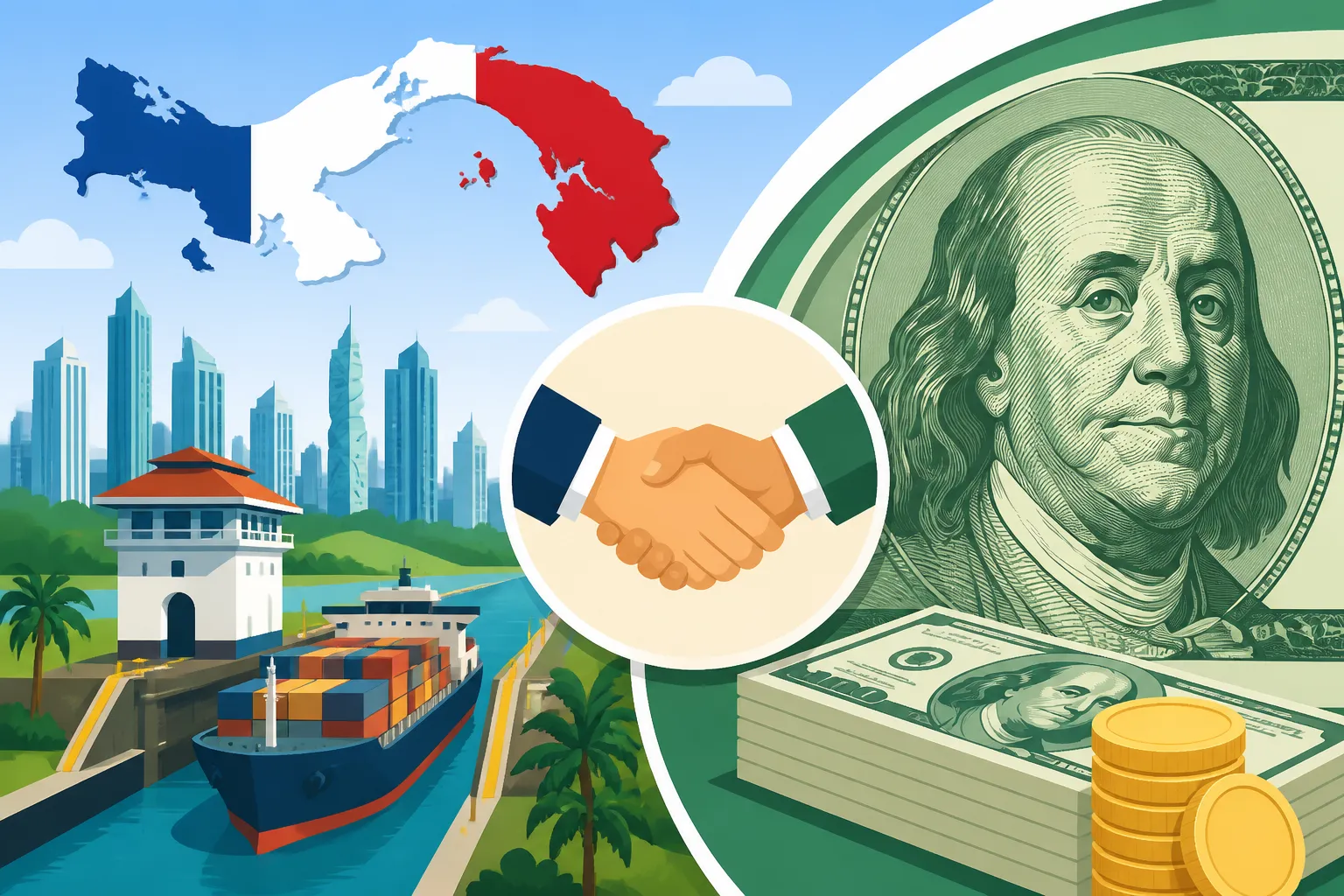
Understanding Why Panama Uses the US Dollar
Moving to a new country is exhilarating, but it often comes with a whole heap of administrative and cultural curveballs that can leave you scratching your head. One of the biggest surprises many foreigners experience when they first land in Panama is the realization that the official currency isn't some exotic local tender, but good old US Dollars. This can be a relief for some, a mystery for others, and for everyone, it begs the question: why? This guide will dive deep into the fascinating history and practical implications of Panama’s dollarized economy, helping you understand how it impacts your life here as an expat.
A Glimpse into Panama's Monetary History: The Decision to Dollarize
Panama's relationship with the US Dollar isn't a recent development; it's a story deeply woven into the very fabric of the nation's economic and political history. Unlike many other Latin American countries, Panama embraced the dollar over a century ago, a decision that has fundamentally shaped its trajectory. It wasn't a sudden whim, but a strategic move born out of necessity and a desire for stability.
The Silver Balboa and Early Currency Woes
Before the US Dollar became the everyday currency, Panama, much like other nascent nations, wrestled with establishing a reliable monetary system. In the early days, after its separation from Colombia in 1903, the country introduced its own currency, the Balboa. Initially, the Balboa was backed by silver and intended to be the national unit of exchange. However, this period was characterized by significant economic instability. Local currencies were often volatile, prone to inflation, and sometimes distrusted by the populace and international markets. Imagine trying to run a business or even just buy groceries when the value of your money fluctuates wildly from one week to the next – it was a challenging environment, to say the least.
The newly formed Republic of Panama understood that for it to truly prosper, especially with the monumental task of constructing the Panama Canal looming, it needed an unwavering foundation of economic certainty. A weak, unstable currency would be a deterrent to foreign investment and international trade, two pillars crucial for the nation's future. The initial Balboa, tied to a fluctuating silver standard, simply wasn't providing the robust financial backbone that the country desperately needed to project confidence on the global stage.
The Gold Standard and the Arrival of the US Dollar
The pivotal moment arrived shortly after Panama gained independence. In 1904, just a year after its separation from Colombia, Panama entered into a monetary agreement with the United States. This agreement effectively pegged the Panamanian Balboa to the US Dollar at par. Crucially, while the Balboa was established as the official currency unit, the agreement stipulated that US currency would be legal tender and circulate freely alongside Balboa coins. This wasn't just a simple exchange rate peg; it was a full embrace of the US monetary system.
At the time, the US Dollar was itself backed by gold, part of the international gold standard that provided a sense of stability across global markets. By aligning with the US Dollar, Panama essentially adopted this gold-backed stability, instantly insulating its economy from the kind of severe monetary fluctuations that plagued many of its neighbors. This move was revolutionary and, for many, a stroke of genius. It provided immediate credibility, attracted foreign capital, and facilitated the massive financial transactions required for the construction of the Panama Canal, which was then underway, financed largely by American money.
The Constitutional Mandate: Balboa as a Unit of Account
Today, the Balboa still exists, but predominantly as a unit of account. This means that while prices are expressed in Balboas, the actual physical currency used for notes is the US Dollar. You'll never encounter a Balboa banknote; they simply don't exist. What you will see are Balboa coins, which circulate alongside US coins (quarters, dimes, nickels, pennies). Panama mints its own coins in denominations of 1, 5, 10, 25, and 50 centésimos (cents), and even a 1 Balboa coin, all of which are the same size, weight, and metallic composition as their US counterparts. In practice, they are interchangeable at a 1:1 ratio.
This dual-currency system, where the Balboa is the nominal currency and the US Dollar is the de facto circulating currency, is enshrined in Panamanian law and practice. It’s a testament to the enduring legacy of that 1904 agreement. For you, as an expat, this means you don’t need to worry about exchange rates when you’re out buying groceries or paying bills. What’s priced in Balboas is paid in dollars, effortlessly. It really simplifies things when you're trying to get settled and understand the local economy, whether you're trying to figure out How Much Does It Cost to Rent an Apartment in Panama City in 2026? or just grabbing a coffee.
The Practical Implications of a Dollarized Economy for Expats
For us expats, living in a dollarized economy like Panama can feel like a mixed bag, but mostly, it’s a huge relief when it comes to financial planning. You bypass a whole layer of complexity that often frustrates foreigners in other countries. Let’s break down what this really means for your daily life here.
Everyday Transactions and Banking
One of the most immediate benefits of dollarization is the sheer simplicity it brings to daily transactions. Imagine landing in a new country and not having to worry about converting your home currency or constantly checking exchange rates. In Panama, your US Dollars are accepted everywhere, from the smallest street vendor to the largest supermarket. This significantly reduces transaction costs and eliminates currency conversion fees for those coming from a dollar-based country. For everyone else, converting your home currency to USD before arriving, or through an international transfer service, is straightforward.
When it comes to banking, the system is also largely familiar. Banks in Panama operate in US Dollars, meaning your deposits, withdrawals, and transfers are all denominated in USD. This stability is a huge plus, especially when you’re trying to set up your financial life. Opening a bank account at a Panamanian bank as a foreigner, while requiring its own set of documents and patience, doesn't involve wrestling with exotic currency accounts. You can easily manage your money, pay bills, and even send or receive international transfers without the added headache of fluctuating exchange rates. If you’re looking into Banking in Panama: A Complete Guide for Foreigners (2027), you'll find that institutions like Banco General and Banistmo are very accustomed to serving expats.
Inflation and Economic Stability
A major advantage of dollarization for Panama is the inherent economic stability it provides. By adopting the US Dollar, Panama effectively imported the US Federal Reserve's monetary policy, which is generally geared towards maintaining price stability. This means that Panama doesn't have its own central bank to print money or set interest rates, which removes the temptation for a government to devalue the currency to solve fiscal problems, a common issue in many developing nations that can lead to rampant inflation.
For expats, this translates into a more predictable cost of living. While global economic factors and local supply and demand still influence prices, the risk of hyperinflation due to domestic monetary mismanagement is virtually eliminated. This stability makes it much easier to budget for your expenses, whether you're planning your monthly outgoings or considering significant purchases like property. It offers a sense of financial security that is highly valued, especially by retirees on fixed incomes, allowing them to better plan for their future without constant worries about their savings being eroded by inflation. It's a key reason why many find The Complete Guide to Cost of Living in Panama for Expats (2026) to be a manageable read, as the currency aspect is so stable.
International Trade and Investment
Panama’s dollarized economy also plays a crucial role in its position as a global trade and logistics hub. The Panama Canal, of course, is at the heart of this, and the efficiency of international trade is significantly boosted by using a globally recognized, stable currency. Businesses engaged in importing and exporting don't have to factor in currency exchange risks when dealing with their primary trading partners, making transactions smoother and more predictable.
For foreign investors and multinational corporations, the absence of currency risk is a massive draw. They don't have to worry about their investments losing value due to unexpected currency depreciation, which makes Panama a more attractive destination for capital. This consistent environment fosters greater confidence, encouraging more foreign direct investment, which in turn stimulates economic growth and creates opportunities. This is a fundamental reason why Panama is often highlighted as a prime location for international business and why it’s appealing for those considering Understanding How to Move to Panama Legally from Abroad (2027) with business interests.
Navigating the Financial Landscape: What You'll Actually See and Use
So, you're in Panama, and you've heard all about the US Dollar. But what does that actually look like when you're pulling out your wallet or checking your bank balance? Let's get down to the nitty-gritty of what currency you'll be handling and how money truly moves here.
The Ubiquitous US Dollar
When you step into a shop, pay for a taxi, or settle your restaurant bill in Panama, you will be using US Dollar banknotes. Seriously, it's that simple. You'll see all the familiar denominations: $1, $5, $10, $20, $50, and even $100 bills. There's no separate "Panamanian Dollar" note. This is fantastic news for anyone coming from the US, as you don't even need to exchange currency upon arrival. Just bring your regular greenbacks!
For those arriving from other countries, the process is still straightforward: you exchange your home currency for US Dollars, and that's the currency you'll use throughout Panama. The ubiquity of the US Dollar means less hassle with conversion rates, less searching for exchange houses, and more focus on enjoying your expat adventure. It's one of those silent conveniences that really makes daily life here a breeze compared to other countries where daily currency fluctuations can be a constant source of stress.
The Balboa: A Ghost in the Machine?
While US Dollar notes are king, Panama does have its own coins, called Balboas, which circulate right alongside US coins. These are interchangeable at a 1:1 ratio. So, when you pay for something with a US $10 bill and your change is, say, $3.75, you might receive a US quarter, a Panamanian diez centésimos (10 cents), and a Panamanian cinco centésimos (5 cents). They look very similar, are the same size, and feel the same. The Balboa coins usually feature national heroes or significant landmarks, while the US coins have their iconic designs.
It's common to accumulate a mix of both US and Balboa coins in your purse or wallet. Don't worry, they are equally accepted everywhere. The one Balboa coin is often the source of slight confusion for newcomers, as it's often mistaken for a US dollar coin (which are less common in general circulation). Just remember, a Panamanian 1 Balboa coin is worth exactly one US dollar. This dual-coin system is part of the unique charm of Panama's currency setup.
Digital Transactions and ATMs
In today's world, it's not just about physical cash, is it? Panama is very much wired for digital transactions, all in US Dollars. Most shops, restaurants, and service providers readily accept major credit and debit cards like Visa, Mastercard, and American Express. Mobile payment apps are also gaining traction, further simplifying transactions.
ATMs are widely available in cities and larger towns, dispensing US Dollars. You can use your international debit or credit card at these ATMs, though be mindful of your home bank's foreign transaction fees and the local ATM fees. For transferring larger sums of money into Panama, many expats rely on international money transfer services. Companies like Wise are popular choices because they offer competitive exchange rates and lower fees than traditional bank wire transfers, making it easier to send money home or receive funds from abroad without excessive costs. When you're managing your finances here, understanding How to Transfer Money Into and Out of Panama as an Expat is key, and services like Wise make the dollarized system even more efficient.
Here's a quick look at the currency you'll actually encounter:
| Currency Type | Denominations | Appearance | Usage in Panama |
|---|---|---|---|
| US Dollar Bills | $1, $5, $10, $20, $50, $100 | Standard US Dollar notes | Exclusively used for banknotes. |
| US Dollar Coins | 1¢, 5¢, 10¢, 25¢, 50¢, $1 | Standard US Dollar coins | Circulate alongside Balboa coins. |
| Panamanian Balboa Coins | 1¢, 5¢, 10¢, 25¢, 50¢, B/. 1 | Similar size/weight to US coins, local designs | Circulate alongside US coins; value is 1:1 with USD. |
The Benefits and Drawbacks of Dollarization for Panama
Every major economic policy comes with its own set of advantages and disadvantages, and Panama's dollarization is no exception. While it has undeniably been a cornerstone of the nation's economic success, particularly in attracting international business and investment, it also presents unique challenges for the government and its economic policymakers. Understanding these facets provides a more complete picture of why Panama chose this path and its long-term implications.
Advantages: Stability, Lower Interest Rates, and Reduced Exchange Risk
The most significant and frequently cited benefit of Panama's dollarization is the unparalleled monetary stability it provides. By adopting the US Dollar, Panama essentially eliminates currency devaluation risk and rampant inflation, which are chronic issues in many developing economies. This stability is a huge magnet for foreign investment, as investors don't have to worry about their capital losing value due to local currency fluctuations. This fosters a climate of confidence that is hard to achieve otherwise.
Furthermore, dollarization often leads to lower domestic interest rates. Since the country borrows and lends in a stable, globally recognized currency, the perceived risk for lenders is significantly reduced. This means Panamanian businesses and individuals can access capital at more favorable rates than they might in a country with a volatile local currency, stimulating economic activity and making large purchases, like homes or business expansions, more affordable. For expats, this can mean more predictable pricing on everything from car loans to mortgages, if you're looking into How to Get a Mortgage to Buy Property in Panama. The absence of exchange rate risk also simplifies international trade and cross-border transactions, a critical factor for a nation whose economy is so deeply intertwined with global commerce, especially through the Panama Canal and its robust financial services sector.
Disadvantages: Loss of Monetary Policy Control and External Shocks
While stability is a major plus, dollarization comes with a significant trade-off: Panama relinquishes control over its own monetary policy. Without a central bank capable of printing its own currency or adjusting interest rates independently, the government cannot use these traditional tools to stimulate the economy during a downturn or to cool it down during periods of overheating. This means Panama is effectively at the mercy of the US Federal Reserve's decisions. If the Fed raises interest rates to combat inflation in the US, Panama's economy feels the ripple effect, regardless of its own internal economic conditions.
Another substantial drawback is Panama's vulnerability to external economic shocks originating from the United States. If the US economy experiences a recession or a financial crisis, Panama is directly impacted because its economy is so closely tied to the dollar. It cannot devalue its currency to make its exports cheaper or to boost local industries in response to such a crisis. This lack of flexibility in monetary policy can make it harder for Panama to respond independently to economic challenges, forcing it to rely on fiscal measures (government spending and taxation) which are often slower and more politically complex to implement.
Impact on Government and Public Debt
Dollarization also has a direct impact on how the Panamanian government manages its finances and public debt. On the one hand, borrowing in US Dollars can be advantageous because, as mentioned, it often comes with lower interest rates due to reduced currency risk. This can make government debt more affordable to service. On the other hand, the government cannot simply print more money to cover its debts, a tactic sometimes employed by countries with their own central banks (though often with disastrous inflationary consequences). This forces a higher degree of fiscal discipline.
The government must rely heavily on tax revenues, prudent spending, and external borrowing to manage its budget. This means that if revenues fall short, perhaps due to an economic slowdown, the government cannot resort to "monetary financing" and must find other ways to cut costs or raise funds. This structural constraint can be both a blessing and a curse. It encourages fiscal responsibility, but it also removes a potential safety net during severe economic crises. For expats, this fiscal discipline can indirectly impact public services, though the overall economic stability typically provides a good environment for personal financial planning, including understanding aspects like How Panama's Tax System Works: Territorial Taxation Explained (2027).
Managing Your Finances in a Dollarized Economy
Living in a dollarized economy simplifies things immensely, but it doesn't mean you can completely switch off your financial brain. As an expat, you still need to be savvy about how you manage your money, especially when it comes to budgeting, international transfers, and understanding the local financial services landscape.
Budgeting and Cost of Living
One of the great reliefs of living in Panama is that your budgeting becomes much more straightforward. Since everything is priced in US Dollars, you don't have to factor in daily exchange rate fluctuations. This means that if you're earning in USD (either from a foreign source or a local Panamanian job), your income and expenses are in the same currency, simplifying your financial planning. You can literally compare the cost of groceries or rent directly to what you’d pay back home in the US.
However, "dollarized" doesn't automatically mean "cheap." While some things might be more affordable than in North America or Europe, certain imported goods, utilities, and high-end services can be surprisingly expensive. It's crucial to research the actual Cost of Living in Panama for Expats in your chosen area. For example, while basic groceries might be reasonable, an imported specialty cheese can cost a fortune. Understanding how your home currency converts to USD and then planning your budget based on actual Panamanian prices is key. Many expats find tools like budgeting apps helpful to track their USD spending here, ensuring they stay within their means.
International Transfers and Currency Exchange
Even though Panama uses the US Dollar, most expats still need to transfer money internationally – whether it's bringing funds from their home country or sending money back to family. This is where currency exchange does come into play, as your original funds might not be in USD. For this, you'll want efficient and cost-effective solutions. Traditional banks often charge higher fees and offer less favorable exchange rates for international wire transfers.
This is where modern fintech solutions really shine. Services like Wise (formerly TransferWise) have become incredibly popular among expats in Panama. They offer transparent, mid-market exchange rates and significantly lower fees for converting various currencies into US Dollars and then transferring them to your Panamanian bank account. This can save you a substantial amount of money over time compared to conventional banking methods. Similarly, if you're sending USD out of Panama, Wise can convert your dollars into the recipient's local currency at favorable rates. It truly streamlines the process of How to Transfer Money Into and Out of Panama as an Expat, making your financial life smoother.
Understanding Local Financial Services
Panama has a well-developed banking sector, dominated by major players like Banco General, Banistmo, and Davivienda. These banks offer a wide range of services, including current accounts, savings accounts, credit cards, and investment products, all denominated in US Dollars. While opening a bank account in Panama as a foreigner can sometimes be a bureaucratic hurdle – requiring specific documentation and patience – once you're set up, managing your finances is quite similar to many Western countries. Online banking platforms are common, allowing you to pay bills, transfer funds, and monitor your accounts from your phone or computer.
It's wise to explore your options before committing to a bank. Some banks might have better English-speaking staff, more user-friendly online interfaces, or specific products that cater better to expats. For a deep dive, check out our guide on How to Choose the Best Bank for Expats in Panama. Understanding these local services is crucial for seamlessly integrating into the financial system, whether you're just paying your internet bill or managing larger investments.
Taxes and the US Dollar: What Expats Need to Know
Now, let's talk about the dreaded 'T' word: taxes. Even in a dollarized economy, taxes are an inevitable part of life, and Panama has a unique system that expats often find appealing, primarily due to its territorial taxation. Understanding how this interacts with the US Dollar is crucial for managing your financial obligations here.
How Territorial Taxation Works with the Dollar
Panama operates on a territorial tax system. In simple terms, this means that only income generated within Panama is subject to Panamanian income tax. Income earned outside Panama – for example, from an online job for a foreign company, a pension from your home country, or investments held abroad – is generally not taxed by the Panamanian government. This is a massive draw for many expats and digital nomads.
The fact that Panama uses the US Dollar simplifies this further. There's no complex currency conversion required when calculating your Panamanian-source income or when dealing with tax declarations. Everything is already in USD, making the calculations straightforward. However, it’s critical to correctly identify what constitutes Panama-source income. If you're physically working in Panama for a Panamanian company, or providing services to Panamanian clients, that income is considered Panama-source. If you are confused by any aspects of this system, especially regarding what income is taxable, it's highly recommended to consult a local tax advisor or seek guidance from services like Taxes for Expats, who specialize in helping foreigners navigate complex international tax situations. For a comprehensive overview, you might find The Complete Guide to Taxes in Panama for Expats (2027) very helpful.
Reporting Foreign Income and Local Expenses
Even if your foreign-sourced income isn't taxed in Panama, it doesn't mean you ignore it entirely. While you generally don't pay tax on it to Panama, some residency visas might require you to demonstrate a certain level of stable income (often foreign-sourced) to qualify. Furthermore, if you are a US citizen or green card holder, you still have an obligation to file taxes with the IRS, regardless of where you live or earn income, though exclusions and credits often prevent double taxation.
For any Panama-source income you do have, you'll need to report it to the Dirección General de Ingresos (DGI), Panama’s tax authority. All these figures, both income and deductible expenses, will be in US Dollars. Keeping meticulous records of your local income and expenses, also denominated in USD, will make your tax filing much smoother. This includes things like business expenses if you're self-employed here. The simplicity of a single currency reduces errors and makes record-keeping less arduous. We have a dedicated guide on How to Register with the DGI (Direccion General de Ingresos) in Panama that can help you get started.
Avoiding Common Financial Pitfalls
Navigating the financial landscape as an expat, even in a dollarized economy, comes with its own set of potential pitfalls. One common mistake is assuming that because it's dollars, everything works exactly like it does back home. While the currency is the same, local banking procedures, bureaucracy, and even the speed of transactions can differ. Patience is a virtue, especially when dealing with financial institutions.
Another pitfall is underestimating the true cost of living. As mentioned, not everything is cheap, and imported goods can quickly inflate your budget. Always factor in potential unforeseen expenses. Lastly, while Panama's territorial tax system is a fantastic benefit, misinterpreting what constitutes foreign versus local income can lead to issues. It's always best to get professional advice, especially when dealing with complex income streams or business structures. The stability of the dollar is a huge asset, but smart financial planning and understanding local nuances are still paramount for a smooth expat life. Understanding Why Panama Uses the US Dollar simplifies many things, but vigilance is still key.
Disclaimer
Please remember that this article provides general information and insights based on common expat experiences and publicly available knowledge. Tax laws, banking regulations, and immigration policies can change, and individual circumstances vary greatly. It is always advisable to consult with qualified legal, financial, or tax professionals in Panama for personalized advice tailored to your specific situation.