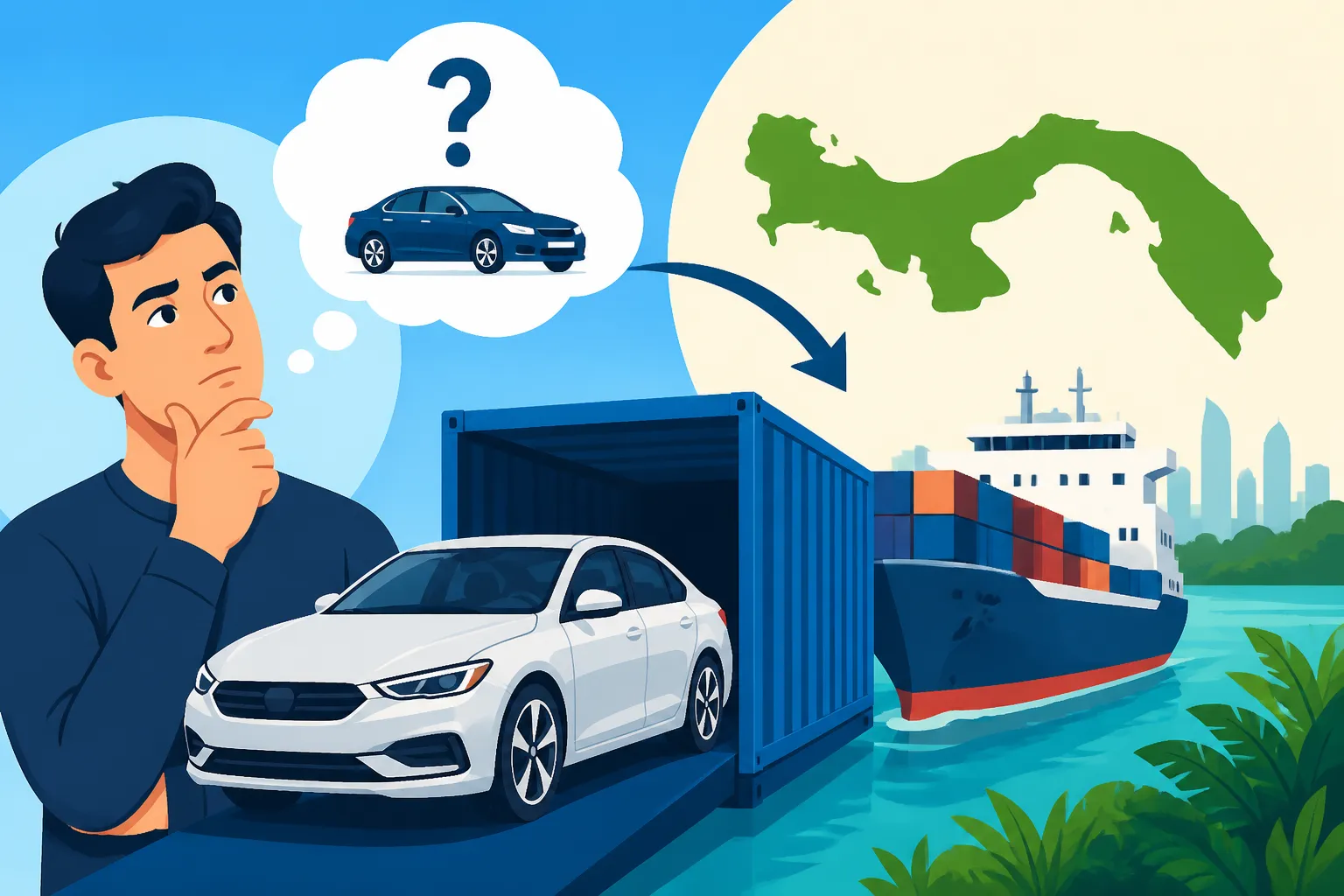
Can I Import My Car to Panama?
Oh, the thought of bringing your beloved car to Panama! It’s a common dream for many of us expats, that comforting idea of having your familiar set of wheels, the one you know inside and out, navigating these new, vibrant streets. But let me tell you, that dream quickly bumps up against a very Panamanian reality: bureaucracy, paperwork, and costs that can make even the most seasoned expat want to pull their hair out. This guide will walk you through the nitty-gritty of importing your car, shining a light on the hurdles, the unexpected expenses, and whether it’s truly worth the headache.
The Initial Question: Can You Really Bring Your Car to Panama?
The short answer, delivered with a weary but understanding smile, is "yes, you can." But the longer, more realistic answer is, "yes, but it’s a complicated, expensive, and often frustrating endeavor that might just make you rethink your entire life plan." Many of us arrive in Panama, envisioning ourselves cruising down the Cinta Costera or navigating the mountain roads of Boquete in the car we’ve always trusted. We’ve had that car for years, we know its quirks, and the idea of leaving it behind feels like abandoning a family member. I get it. The emotional attachment is real, but Panama's import system doesn't care much for sentimentality.
The Short Answer and the Reality Check
While it is absolutely possible to import your car, Panama has a notoriously complex and costly system for bringing foreign vehicles into the country permanently. It’s not simply a matter of packing it onto a ship and picking it up at the port. There are strict regulations, often vague interpretations, and a myriad of fees that can quickly eclipse the value of your vehicle. You'll need patience, a good command of Spanish (or an excellent bilingual helper), and a significant budget set aside for this specific purpose. The government agencies involved, primarily the Autoridad Nacional de Aduanas (ANA), the Dirección de Operaciones del Tránsito, and the Autoridad de Tránsito y Transporte Terrestre (ATTT), each have their own piece of the puzzle, and getting them all to fit together smoothly can feel like a Herculean task.
Key Factors Determining Import Eligibility
Not every car can simply waltz into Panama. The country has specific rules, often related to environmental standards and preventing the import of very old vehicles.
- Age of the Vehicle: This is often the biggest hurdle. Panama generally has limitations on the age of vehicles that can be imported. While rules can change, traditionally, cars older than 10 years are very difficult, if not impossible, to import for private use. Newer vehicles are generally preferred, as they are seen as more environmentally compliant. If your car is a classic, you might have a different route, but for your everyday sedan or SUV, age is a major factor. You might find a vehicle that’s only 5 or 7 years old can still incur massive duties because of its "depreciated" value compared to what it would cost new here.
- Emissions Standards: Panama, particularly for vehicles manufactured for the North American market, often aligns with US EPA emissions standards. If your car meets these, you're usually in better shape. However, for vehicles from other parts of the world, proving compliance can be an additional layer of complexity, sometimes requiring specific documentation from the manufacturer or a local inspection that can be hard to pass without prior knowledge.
- Vehicle Type: Standard passenger cars, SUVs, and light trucks usually follow a similar process. Commercial vehicles, motorcycles, or specialized vehicles might have different regulations and duties. It's crucial to specify exactly what you're importing to your customs agent right from the start.
- Proof of Ownership and Clean Title: You absolutely must have a clear, unencumbered title for your vehicle. If there's a lien on the car from a financing company, you won't be able to import it until that’s resolved. This is non-negotiable.
The Labyrinthine Process: Step-by-Step Car Importation in Panama
Navigating the car import process in Panama is less like a highway and more like a dense jungle path: winding, full of unexpected obstacles, and requiring a good guide to get through. This isn’t a task for the faint of heart, or for those who prefer to save money by doing it themselves. Trust me, you’ll want professional help.
Pre-Arrival Preparations and Documentation
Before your car even leaves its home country, you’ve got a mountain of paperwork to tackle. This is where the meticulous planning comes in.
-
Essential Documents: Gather every piece of paper related to your car. This includes, but isn't limited to:
- Original Title of Ownership: This is paramount. Make sure it's clear and in your name.
- Original Registration: Current registration from your home country.
- Bill of Sale or Purchase Invoice: Proving the declared value.
- Your Passport: Copy of the biographic page.
- Panamanian Residency Card (Cédula E): If you already have it. If not, proof of your visa application or current legal status in Panama will be needed.
- Driver's License: Your foreign license and, if applicable, your Panamanian one (if you’ve already started the process for your Panamanian Driver's Licence).
- Power of Attorney (Poder Especial): You’ll need to grant this to a licensed customs broker (agente aduanal) in Panama. This is usually notarized and then apostilled.
- Emissions Certificate: From your origin country, if available. While not always strictly required for import entry, it can help with the eventual inspection.
- Police Clearance/Background Check for the Vehicle: Some countries offer this to prove the vehicle hasn't been stolen or involved in serious crimes. This isn't always a direct Panamanian requirement but can expedite parts of the process.
-
Apostille Requirements: Here’s a big one. Any public document issued in your home country (like your title or police clearance) will likely need to be apostilled if your home country is part of the Hague Apostille Convention. If not, it will need to be legalized by a Panamanian consulate in your home country. This extra layer of authentication is absolutely critical and can take weeks or even months to process, so plan accordingly.
-
Finding a Reliable Customs Agent: I cannot stress this enough: do not try to do this without a customs agent. Panama’s customs laws are intricate, constantly evolving, and navigating them requires a professional who deals with this daily. Ask for recommendations from other expats or reputable moving companies like Sirelo. Your agent will be your lifeline, guiding you through the paperwork, communicating with customs, and ensuring you have the correct forms filled out. They will charge a fee, but it’s an investment that will save you immense stress and potentially costlier mistakes.
Shipping Your Vehicle to Panama
Once your paperwork is in order and you’ve got an agent, it’s time to get your car on a boat.
-
Shipping Methods:
- Roll-on/Roll-off (RORO): This is often the most cost-effective method for shipping vehicles. Your car is simply driven onto a large vessel designed to carry wheeled cargo and driven off at the destination port. It’s like a giant ferry. The downside is that you can't pack personal items inside the car, and your vehicle is exposed to the elements.
- Container Shipping: Your car is loaded into a sealed shipping container. This offers more protection and allows you to pack some personal effects (though check with your shipping company on restrictions). This method is more expensive, and you might share a container with another vehicle to split costs.
- Choosing Your Port: Most vehicles arrive at the ports in Manzanillo (Colon) or Balboa (Panama City). Your shipping agent will advise on the best port based on their operations and your final destination in Panama.
-
Costs of Shipping: This will vary wildly based on your origin country, the size of your vehicle, and the chosen shipping method. Expect to pay anywhere from $1,500 to $4,000 or more for ocean freight and insurance alone. Don’t forget terminal handling charges at both ends. Using an eSIM from a provider like Airalo can be invaluable during this period to stay connected with your shipping company and customs agent without racking up huge roaming charges.
-
Tracking Your Shipment: Most reputable shipping companies offer tracking services. Stay on top of this, and keep your customs agent informed of the estimated arrival date so they can prepare for clearance.
Customs Clearance and Paying Duties
This is where the real financial hit often comes. Panama has high import duties on vehicles, especially older ones.
- The Role of Your Customs Agent: Your agent will handle the declaration process with the Autoridad Nacional de Aduanas (ANA). They will submit all your documentation and guide the vehicle through the customs process.
- Vehicle Assessment: Aduanas will physically inspect your vehicle and assess its value. This assessment is crucial because it’s the basis for calculating your import duties. They don't always use the purchase price you paid; they often have their own internal valuation tables. This can sometimes lead to unexpected higher valuations than you anticipate.
- The Cost Breakdown: Import Duties and ITBMS:
- Import Duties (Derechos de Importación): These are percentage-based and can range from around 10% to over 30% of the assessed value of the vehicle, depending on its type, engine size, and age.
- ITBMS (Impuesto de Transferencia de Bienes Muebles y Servicios – VAT): This is Panama's equivalent of VAT, currently 7%, and is applied to the sum of the vehicle's assessed value plus the import duties. So, it's a tax on a tax!
- Administrative Fees: Various smaller fees are collected by Aduanas and other agencies.
- Customs Agent Fees: Don't forget their professional fees for handling everything, which can be several hundred to over a thousand dollars.
The total cost, including shipping, duties, ITBMS, and agent fees, can easily add up to 50% or even 80% of the car's current market value, or even more for older vehicles. It's why many expats eventually decide against importing.
- The Waiting Game: Once your car arrives at the port, it won't be released immediately. Customs clearance can take anywhere from a few days to several weeks, especially if there are any discrepancies in paperwork or if customs is particularly busy. Be prepared for delays and maintain communication with your agent.
Post-Importation: Getting Your Vehicle on the Road
Congratulations, your car has cleared customs! But don't pop the champagne just yet. There are still a few more hoops to jump through before you can legally drive it on Panamanian roads.
Registration, Plates, and Inspections
This is the final stretch, but it still requires diligence.
- Mandatory Vehicle Inspection (Revisado): Every vehicle in Panama must pass an annual technical inspection, known as the revisado. This is performed at specific government-authorized centers. For an imported car, this is your first stop after customs clearance. They check brakes, lights, tires, emissions, and overall roadworthiness. Make sure your car is in top condition to avoid repeat visits. You can learn more about this in How Much Does the Revisado Vehicle Inspection Cost in Panama?.
- Obtaining Panamanian License Plates and Registration: Once you have your customs clearance documents and a passing revisado, your customs agent or you (if you're feeling brave) will need to visit the local Municipio (Mayor's Office) to register the vehicle and obtain Panamanian license plates and a placa sticker. This process involves submitting all the customs documents, proof of ownership, your ID, and paying the annual circulation tax. This is covered in more detail in our guide on How Do I Register a Car in Panama?.
- Mandatory Vehicle Insurance: Before you can get your placa, you absolutely must have third-party liability insurance (seguro obligatorio). This is a legal requirement in Panama. There are several local insurance providers, and costs vary based on your vehicle's value and your driving record. You’ll definitely want to look into How Much Is Car Insurance in Panama?.
The Hidden Costs and Ongoing Considerations
The costs don't stop once your car is on the road. There are important long-term considerations.
- Maintenance Costs: If your vehicle is a make and model not commonly sold in Panama, finding parts can be a nightmare. You might have to special order everything, which means long waits and significantly higher prices. Even common makes might have specific trim levels or engine configurations that differ from local models, making parts harder to source.
- Fuel Costs: Fuel prices in Panama fluctuate but are generally comparable to or slightly lower than in the US, but still a significant expense, especially with a larger vehicle.
- Value Depreciation: Cars, especially imported used ones, tend to depreciate quickly in Panama. If you ever plan to sell it, be prepared to get less than you might expect, largely due to the high import taxes already paid.
- Local Driving Conditions: Panama's roads, particularly outside major cities, can be challenging. Potholes are common, and driving styles can be aggressive. Your car will take a beating, which might accelerate maintenance needs. Our guide on Driving in Panama: Licences, Registration and Rules for Expats offers good insights into this.
Is Importing Worth It? A Realistic Comparison
After all this, you might be asking yourself if importing your car is truly worth the significant investment of time, money, and emotional energy. For most expats, the answer, unfortunately, is often no.
Pros of Importing Your Own Car
Let's be fair, there are a few upsides to having your own car from back home:
- Familiarity and Comfort: You know your car. You're comfortable driving it, you know its performance, and it feels like a little piece of home. This psychological comfort can be a big draw.
- Known History: You know the maintenance history, any past accidents, and how well it's been cared for. Buying a used car in Panama can sometimes feel like a roll of the dice in this regard.
- Specific Features: Perhaps your car has features or modifications that are important to you and hard to find in locally available vehicles.
Cons and Alternatives
Now for the cold, hard reality check. The cons often heavily outweigh the pros.
- Exorbitant Costs: As detailed above, the combined cost of shipping, import duties, ITBMS, customs agent fees, and initial registration can easily double the effective price you pay for your car in Panama. This eats into your overall Cost of Living in Panama.
- Bureaucracy and Delays: The process is notoriously slow, complex, and opaque. You’ll need a lot of patience, and even with the best agent, things can go wrong or take longer than expected.
- Vehicle Age Restrictions: If your car is older than 10 years, you're likely facing an uphill battle that might not even be winnable.
- Maintenance Headaches: Finding parts and qualified mechanics for non-standard models is a persistent problem.
- Depreciation and Resale Value: You're unlikely to recoup your full investment when selling the car in Panama.
Given these challenges, many expats choose alternatives:
- Buy a New Car Locally: This is often the simplest, albeit most expensive, route. New cars come with warranties and are designed for local conditions, with parts readily available. You can read more about How to Buy a Car as a Foreigner in Panama.
- Buy a Used Car Locally: The used car market in Panama offers a wider range of prices. While you'll need to do your due diligence (get an independent mechanic to inspect it!), it avoids all the import headaches. Look for popular Japanese or Korean models, as parts for these are most accessible.
- Lease a Car: For shorter stays or if you don't want the commitment of ownership, leasing might be an option, though less common for long-term expat residents.
- Rely on Public Transport: Especially in Panama City, the Metro and Metrobus systems are quite efficient and affordable. While not ideal for every errand, they can significantly reduce your need for a private vehicle. Our guide, The Expat Guide to Public Transport in Panama, offers a deep dive. For longer journeys, intercity buses are also very good.
- Rent a Car for Specific Trips: If you only need a car for weekend getaways or specific purposes, renting is always an option.
Here’s a quick comparison to help you weigh your options:
| Feature | Importing Your Car | Buying a Used Car Locally in Panama | Buying a New Car Locally in Panama |
|---|---|---|---|
| Initial Cost | High (shipping, duties, taxes, agent fees) | Moderate (purchase price, registration, insurance) | High (full purchase price, registration, insurance) |
| Process Complexity | Very High (extensive documentation, customs, multiple agencies) | Moderate (finding reliable vehicle, inspection, transfer) | Low (dealer handles much of it, straightforward) |
| Timeframe | Weeks to months | Days to weeks | Days to weeks |
| Familiarity/Comfort | High (your own car) | Variable (new vehicle to learn) | Variable (new vehicle to learn) |
| Maintenance | Potentially difficult (parts availability for non-local models) | Easier (parts generally available for common local models) | Easiest (warranty, parts readily available) |
| Resale Value | Lower due to high import costs | Moderate, depends on condition and popularity of model | Holds value best, but still depreciates |
| Bureaucracy | Significant | Minimal (title transfer, registration) | Minimal (dealer assistance) |
| Best For | Unique or custom vehicles, deep sentimental value, unlimited budget | Budget-conscious, practical, willing to do due diligence | Peace of mind, long-term stay, higher budget |
Ultimately, while you can import your car to Panama, it's rarely the most financially or logistically sensible decision for the average expat. Before you commit to shipping your vehicle across oceans, take a hard look at the numbers and the potential headaches. For many, the easier path is to simply sell their car back home and embrace the local market here in Panama.
Disclaimer
The information provided in this guide is for general informational purposes only and does not constitute legal, financial, or tax advice. Laws and regulations in Panama are subject to change, and individual circumstances may vary. It is highly recommended to consult with a qualified Panamanian immigration lawyer, customs broker, and financial advisor for advice tailored to your specific situation before making any decisions related to car importation or residency.