How Do I Pay for a Doctor Visit in Panama?
Moving to Panama often comes with a whirlwind of excitement, but let's be real, a big chunk of anxiety often settles around practical matters, especially when it comes to something as vital as healthcare. One of the questions that keeps many expats up at night is, "How exactly do I pay for a doctor visit in Panama?" It's not always as straightforward as back home, and this guide is here to unravel the payment methods available, whether you're using public, private, or international insurance, or just covering the costs yourself. We’ll walk through the local quirks and what to expect when you need medical attention.
Understanding Payment Options for Doctor Visits in Panama
When you step into a doctor's office or clinic in Panama, you'll find that payment methods can vary quite a bit depending on the facility, its location, and whether it's part of the public or private system. It’s crucial to understand these options beforehand to avoid any surprises, especially in a moment of stress or discomfort. Panama’s economy is largely dollarized, which simplifies things in some ways, but the payment culture still has its own rhythm.
Cash Payments: Still King in Many Places
Despite the rise of digital payments globally, cash remains a very strong contender, and often the preferred method, for many smaller clinics, independent practitioners, and even some public health facilities in Panama. It’s a good idea to always have some U.S. dollars on hand in various denominations, especially if you're venturing outside of major urban centers like Panama City or David.
For example, if you visit a local clínica particular (private clinic) in a smaller town like Boquete or Pedasí, or even a smaller family doctor's office in a Panama City neighborhood, cash is frequently the quickest and easiest way to pay. These clinics might not have the card processing infrastructure, or they might simply prefer cash transactions to avoid processing fees. Imagine you're feeling under the weather, you walk into a neighborhood clinic for a consultation, and the doctor charges $40. Having that exact amount in cash makes the transaction smooth and hassle-free, allowing you to focus on getting better. Always ask beforehand if cash is the only accepted form of payment, especially when making an appointment.
Credit and Debit Cards: Growing, but with Caveats
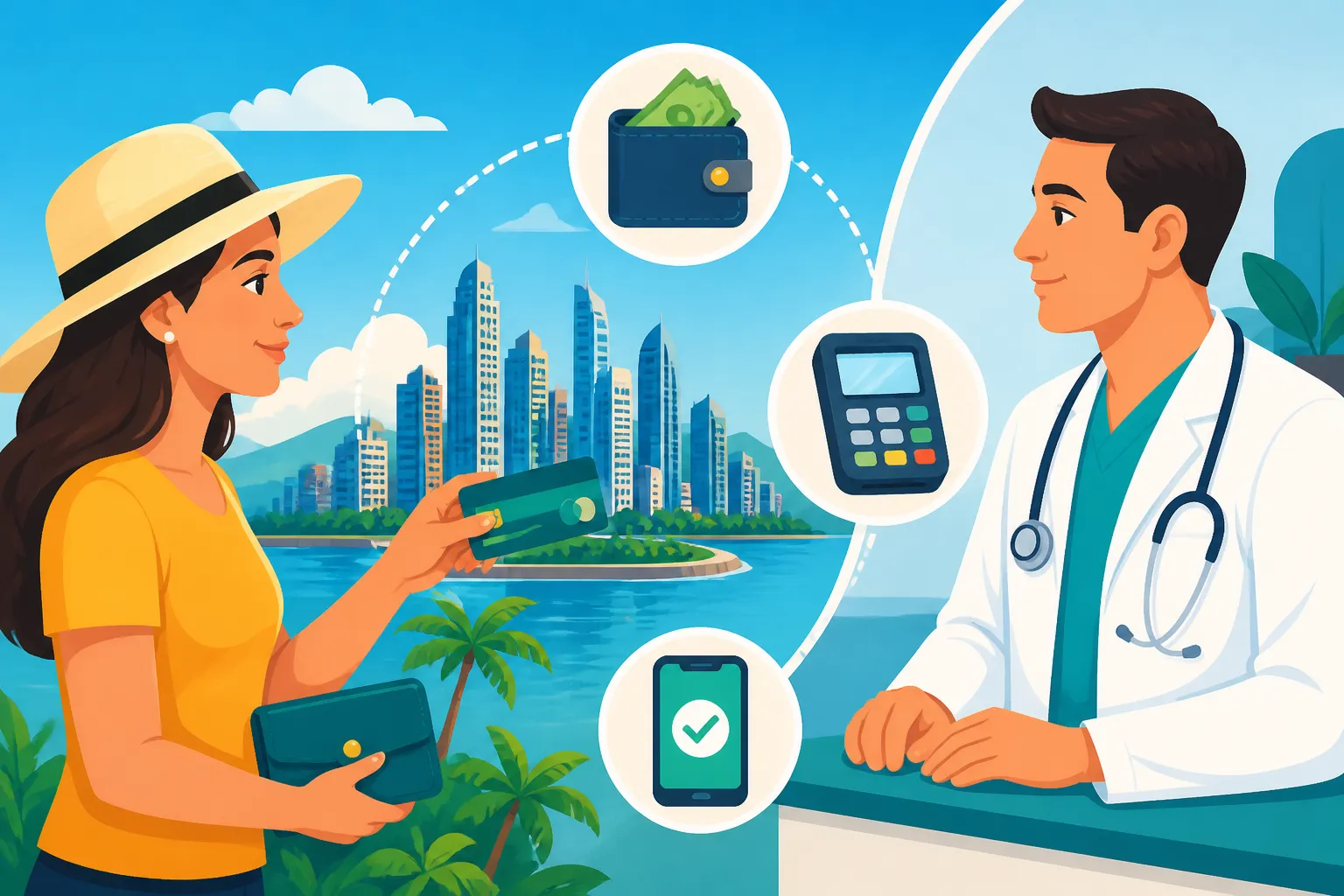
Major credit cards like Visa and Mastercard are widely accepted in larger private hospitals and clinics, especially those catering to international clients in Panama City such as Hospital Punta Pacifica or Hospital Nacional. You'll likely find card readers available at the reception desks, much like you would in North America or Europe. However, relying solely on your foreign credit or debit card can sometimes lead to unexpected issues.
Firstly, keep an eye out for potential foreign transaction fees from your home bank. While the charge might be in U.S. dollars, your bank might still add a percentage for international use. Secondly, sometimes local card readers can be finicky with international cards, and occasionally, a clinic might have issues with their internet connection, making card payments impossible. It's not unheard of for an expat to stand at the reception, credit card in hand, only to be told the system is down and cash is the only option. It’s always best to have a backup plan. If you're wondering, "How Do I Pay for a Doctor Visit in Panama?", having both cash and card options gives you flexibility.
Bank Transfers and Online Payments: Less Common for Direct Doctor Visits
For individual doctor visits, direct bank transfers or online payment platforms aren't typically the go-to method. You might use these for larger bills, like hospital stays, surgeries, or for regular payments to a specialist over a long course of treatment, where the clinic might provide their bank details. However, for a standard consultation, it's generally too cumbersome for both the patient and the clinic.
Some modern, larger clinics might offer online payment portals, especially for appointments booked through their website or for teleconsultations. This is slowly becoming more common, but don't expect it to be universal. For the most part, walk-in or scheduled appointments at most clinics will rely on the immediate payment options discussed above. Always clarify with the clinic or doctor’s office if they have specific instructions regarding payment methods, particularly if you’re dealing with a larger bill that might qualify for a payment plan or a direct transfer.
Navigating Insurance for Doctor Visits: Private, Public, and Travel Coverage
Dealing with medical bills is inherently stressful, but having a solid understanding of how your insurance works in Panama can alleviate a lot of that pressure. Panama offers a dual healthcare system, featuring both public and private options, and your coverage will dictate how you settle your doctor’s bills. This is a critical aspect when considering How Panama's Health System Works: CSS and Private Care Explained (2026).
Local Private Health Insurance
Many expats opt for local private health insurance plans in Panama. These plans are usually designed to cover a significant portion, if not all, of your private doctor visits, consultations, and prescribed treatments. Providers like ASSA, Sura, or Mapfre offer various plans with different levels of coverage, deductibles, and co-pays. When you have local private insurance, the process for paying for a doctor visit in Panama typically follows one of two routes:
- Direct Billing (Convenio): If the doctor or clinic has an agreement (a convenio) with your insurance provider, they can often bill the insurance company directly. You might only be responsible for a co-pay (a fixed amount) or a co-insurance (a percentage of the cost) at the time of your visit. This is the most convenient option, as it minimizes your out-of-pocket expenses upfront. Always ask if the doctor or clinic has a convenio with your specific insurance provider when booking an appointment.
- Reimbursement: If the doctor or clinic does not have a convenio with your insurer, you'll pay the full cost of the visit upfront. You'll then need to submit the receipt (factura) and any required medical reports to your insurance company for reimbursement. Make sure the factura is detailed and includes the doctor's RUC number (tax ID), your name, and a clear description of the service. This process can take a few weeks, but it ensures you eventually get your money back, subject to your plan’s terms. Learning about How to Choose Private Health Insurance in Panama (2026) is vital for understanding these mechanisms.
Public Health System (CSS – Caja de Seguro Social)
The Caja de Seguro Social (CSS) is Panama's public healthcare system, funded by mandatory contributions from employees and employers. If you are formally employed in Panama and contributing to the CSS, you are entitled to use its services. Doctor visits within the CSS system are typically very low-cost or even free, beyond your monthly contributions.
However, using the CSS system can come with significant wait times, especially for specialist appointments, and you might not have as much choice in doctors or facilities. To pay for a doctor visit in this system, you generally present your cédula (Panamanian ID) or CSS card, and any nominal fees will be processed at the facility. For those trying to understand How to Register with the CSS (Caja de Seguro Social) in Panama, be aware that its primary function is for employed residents, and it's not a direct payment service for casual visits. While it’s incredibly affordable, it's a different beast entirely from the private system, and for many expats, the private route offers more convenience and accessibility. For more details on this, see our guide on Public vs Private Healthcare in Panama: What Expats Need to Know.
International and Travel Health Insurance
For new arrivals, tourists, or digital nomads, international or travel health insurance is a common choice. Companies like SafetyWing offer plans that are specifically designed for those living and working abroad, providing comprehensive coverage for unexpected medical events, including doctor visits, hospital stays, and emergency medical evacuation.
If you have an international or travel health insurance plan, you will almost always pay for your doctor visit upfront, and then seek reimbursement from your insurer. It's very rare for international insurance providers to have direct billing arrangements with individual doctors or smaller clinics in Panama. You will need to keep detailed records of all your medical expenses, including original receipts, medical reports, and prescriptions. When considering travel insurance, ensure it covers medical expenses thoroughly and is well-regarded for its claims process. SafetyWing, for instance, is popular among digital nomads for its straightforward approach to international health coverage, making it easier to manage payments and reimbursements while you're focused on enjoying your life in Panama. It’s also crucial to understand Emergency Medical Care in Panama: What Every Expat Needs to Know, as these situations are where such insurance truly shines.
Combination of Options
Many expats use a hybrid approach. They might have a local private health insurance plan for routine care and minor emergencies, but also carry international travel insurance like SafetyWing for global coverage, especially if they travel frequently outside Panama or want extra peace of generality for catastrophic events. This strategy offers comprehensive protection, ensuring that no matter the situation, you have a clear path for How Do I Pay for a Doctor Visit in Panama?
| Payment Method | Typical Use Case | Acceptance at Private Clinics (General Practice) | Acceptance at Major Private Hospitals | Acceptance at CSS Facilities (Public) | Considerations |
|---|---|---|---|---|---|
| Cash (USD) | Small clinics, independent doctors, pharmacies | High | High (but less common for large bills) | Moderate (for small fees) | Often preferred, essential for smaller providers. Always carry small bills. |
| Local Debit/Credit | Mid-to-large private clinics, hospitals, pharmacies | High | High | Low | Convenient. Ensure funds. No foreign transaction fees. |
| Foreign Debit/Credit | Mid-to-large private clinics, hospitals, pharmacies | Moderate to High | High | Low | Check for foreign transaction fees. Occasional compatibility issues with local terminals. Always have a backup. |
| Local Private Ins. | Covered clinics/hospitals, specialists | High (if convenio) | High (if convenio) | Low (only if private wing or specific arrangement, rare) | Direct billing reduces upfront cost. Otherwise, pay and claim reimbursement. |
| Public Health (CSS) | CSS hospitals & clinics | Low (only for emergency stabilization, then transfer or private payment) | Low | High (for registered members) | Very low cost, but can have long wait times and less choice. Requires CSS membership. |
| International/Travel Ins. | All private facilities | Pay and claim reimbursement | Pay and claim reimbursement | N/A | Always pay upfront, then claim. Keep all documentation. Good for initial months or frequent travelers. |
Costs and Transparency: What to Expect When Paying for Care
One of the biggest anxieties for anyone in a new country is not knowing the "real" cost of things, and healthcare is no exception. While Panama's healthcare is generally more affordable than in many Western countries, understanding the typical costs and how transparent pricing can be is key to managing your expenses and answering "How Much Does a Doctor Visit Cost in Panama?".
Typical Consultation Fees
The cost of a doctor’s visit in Panama can vary significantly. For a general practitioner (GP) in a private clinic, you might pay anywhere from $30 to $60 for a consultation. In more upscale areas of Panama City or at renowned hospitals like Hospital Santa Fe, these fees might go up to $75-$100, especially if you're seeing a doctor with an international background or specialized certifications. Specialists, as expected, will charge more. A consultation with a cardiologist, dermatologist, or gynecologist can range from $70 to $150 or even higher, depending on their reputation and the clinic's prestige.
It’s always a good practice to inquire about the consultation fee when you make an appointment. Don't be shy about asking, "Cuánto cuesta la consulta?" (How much is the consultation?). Most receptionists will be upfront about the cost. This transparency helps you budget and also gives you a sense of what to expect, especially if you're weighing your options between different providers or clinics. Remember that these fees usually cover just the consultation itself; any tests, procedures, or medications will be additional costs.
Hidden Fees and Unbundled Services
While "hidden fees" are less common in the sense of surprise charges for the doctor's visit itself, what often surprises expats is how services are "unbundled." In some countries, a doctor’s visit might include minor procedures, basic tests, or even a shot. In Panama, it’s common for almost every service to be charged separately.
For example, you might pay $50 for the consultation. If the doctor gives you an injection, that could be an additional $10-$20. If they run a rapid strep test right there in the office, that’s another charge. Even basic lab tests like blood work, urine analysis, or an X-ray will almost certainly be referred to a separate lab or imaging center, and you will pay for those services there. This isn't a ploy to get more money; it's just how the system works. Be prepared for multiple bills if your visit involves more than just a chat and a prescription. Always ask for an itemized receipt (factura detallada) for everything, especially if you plan to claim reimbursement from your insurance. Our guide on The Cost of Healthcare in Panama: A Complete Breakdown for Foreigners (2026) delves deeper into these aspects.
Negotiation and Payment Plans
For standard, one-off doctor visits, negotiation on the consultation fee isn't common. The prices are usually set. However, for more extensive treatments, procedures, or hospital stays, particularly if you're self-paying without insurance, there might be some room for discussion on the total bill, or the possibility of establishing a payment plan.
This is more likely to happen at private hospitals for larger sums. If you find yourself in a situation with a substantial medical bill, it’s worth speaking with the billing department (departamento de facturación) to see if they offer discounts for upfront cash payments for the full amount, or if they can arrange an installment plan. This is a common practice in many parts of the world, and Panama is no exception, especially when trying to manage significant expenses. Don't expect this for a routine $40 doctor visit, but for a $2,000 procedure, it's certainly worth the conversation. You should also understand Understanding Out-of-Pocket Healthcare Costs and Co-Pays in Panama to better prepare for these scenarios.
Practical Tips for Managing Medical Payments in Panama
Navigating a new healthcare system can feel like learning a new language, even when everyone speaks your native tongue. To make the payment process for doctor visits in Panama as smooth as possible, a few practical strategies can go a long way.
Always Carry Multiple Payment Options
This might sound obvious, but it’s probably the single most important piece of advice. Don’t rely solely on one method. Always have a sufficient amount of U.S. dollars in small denominations (like $5, $10, $20 bills) for smaller clinics or unexpected co-pays. Alongside that, carry at least one, preferably two, different credit or debit cards.
Imagine this scenario: you're at a private clinic, feeling unwell, and they can't process your foreign Visa card because their machine is acting up. If you don't have enough cash, you could be in a tricky spot, needing to run to an ATM while feeling miserable. Having a Mastercard from a different bank as a backup, or enough cash to cover the visit, can save you a lot of grief. This also helps if you’re trying to figure out What Happens If I Get Sick Without Insurance in Panama? having these options on hand can be a lifesaver.
Ask About Costs and Accepted Payments Upfront
Whenever you call to make an appointment or even when you first arrive at the clinic, take a moment to ask about the cost of the consultation and which payment methods they accept. A simple, "Hola, ¿aceptan tarjetas de crédito para la consulta?" (Hello, do you accept credit cards for the consultation?) or "¿Cuál es el costo de la consulta?" (What is the cost of the consultation?) can prevent misunderstandings.
This is especially important if you're seeing a new doctor or visiting a clinic for the first time. For instance, if you're looking for an English-speaking doctor in Panama City, some of the more internationally oriented practices might have higher fees but more robust card processing systems, while a smaller local doctor might be cash-only but more affordable. Knowing these details ahead of time allows you to make an informed choice and ensures you're prepared when it's time to pay. This is also key when looking into How to Find an English-Speaking Doctor in Panama.
Keep Detailed Records for Insurance Claims and Taxes
Whether you're paying cash or by card, and regardless of whether you have local or international insurance, always, always, always get a proper, itemized receipt (una factura). This receipt should clearly state the date, the services rendered, the cost, the doctor’s name and professional license number (if applicable), and the clinic’s tax ID (RUC).
If you have insurance, these detailed receipts are absolutely essential for submitting claims for reimbursement. Without them, your insurance company won't be able to process your claim. Even if you're self-paying, these records are invaluable for your personal budgeting, tracking your healthcare expenses, and potentially for tax purposes if your home country allows medical expense deductions. Think of it as your financial paper trail for peace of mind. Our guide on How to Claim Reimbursement from Private Insurance in Panama offers extensive advice on this exact topic.
Be Aware of Exchange Rates and ATM Fees
While Panama uses the U.S. dollar, if you're withdrawing cash from an ATM with a foreign debit card, you might still encounter conversion fees from your home bank if your account isn't dollar-denominated, plus a local ATM usage fee. These fees can add up, so it’s wise to withdraw larger sums less frequently if you plan to rely on cash.
Also, be vigilant at ATMs. Stick to well-lit, secure ATMs inside banks or major shopping centers. Always check for skimmers or any suspicious modifications to the machine. Losing access to your funds, or worse, having your card compromised, is the last thing you need when trying to manage medical payments. Being prepared for these small financial details can save you headaches in the long run. When you're trying to figure out How to Buy Private Health Insurance as a Newcomer in Panama, these logistical considerations also come into play during those first few weeks.
By following these guidelines and proactively informing yourself, navigating doctor visits and their associated payments in Panama can be much less daunting. It’s all about preparation and understanding the local way of doing things.
Disclaimer
The information provided in this guide is intended for general informational purposes only and does not constitute professional medical, financial, or legal advice. While we strive to offer accurate and up-to-date information, healthcare systems, costs, and insurance policies are subject to change. Always consult with a qualified medical professional for health concerns, a financial advisor for monetary planning, and an immigration lawyer for residency or visa matters in Panama. We recommend independently verifying all information, especially regarding specific costs or insurance coverage, with the relevant institutions or providers.