How Much Does an Emergency Room Visit Cost in Panama?
The sudden jolt of an unexpected illness or accident in a foreign country is a fear many of us expats carry, especially when it comes to the emergency room. In Panama, navigating the healthcare system, particularly in a crisis, can feel like trying to solve a Rubik's Cube blindfolded. Beyond the immediate concern for your health, the looming question of "how much will this cost?" can add a whole new layer of stress. This guide is here to shed some light on the costs associated with an emergency room visit in Panama, giving you a clearer picture and hopefully, a little peace of mind.
Understanding Emergency Care in Panama: A Dual System
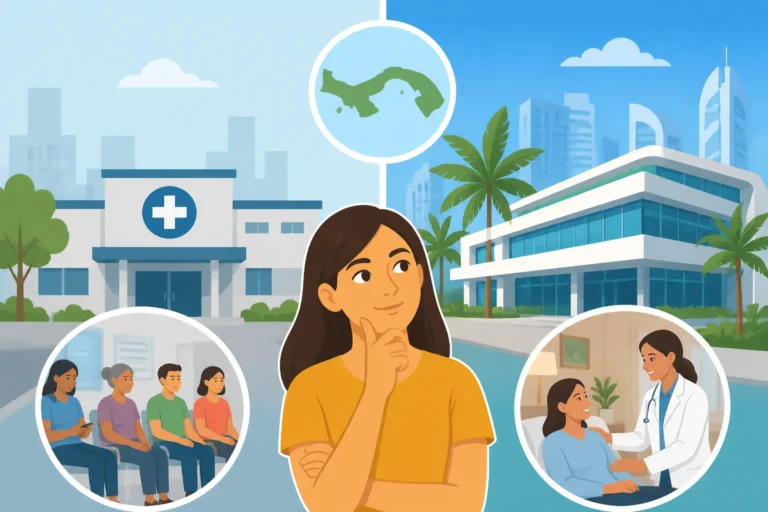
Panama's healthcare landscape, like many aspects of life here, operates on a dual system: public and private. For emergency care, understanding this distinction is crucial, as it directly impacts everything from wait times and quality of service to, of course, the price tag.
Public vs. Private Emergency Rooms
On one side, you have the public hospitals, primarily run by the Caja de Seguro Social (CSS) and the Ministry of Health (MINSA). Think of hospitals like Hospital Santo Tomás or Hospital Arnulfo Arias Madrid in Panama City. These facilities are generally bustling, serving the vast majority of the local population. If you find yourself in a public emergency room, you'll likely experience longer wait times, especially for non-life-threatening conditions. The staff might have limited English proficiency, which can be an added hurdle when you're already vulnerable. The costs here are significantly lower, sometimes even free for basic care if you are a registered CSS member. However, for an expat who isn't contributing to the CSS, you'd generally be charged a nominal fee, but the standard of care, while competent, often lacks the amenities and speed of private options. To dive deeper into the differences, you might find our guide on Understanding the Difference Between Public and Private Hospitals in Panama quite helpful.
Then there are the private hospitals, which expats often gravitate towards. These are the modern, well-equipped facilities like Hospital Punta Pacifica, Hospital Nacional, and Centro Médico Paitilla in Panama City. Here, you'll typically find a much more efficient system, shorter wait times, and a higher likelihood of encountering English-speaking medical professionals. The private sector prides itself on cutting-edge technology and a more comfortable, hotel-like experience. Naturally, this comes at a premium. An emergency room visit to one of these private institutions will be considerably more expensive than in the public system, but for many, the trade-off in speed, comfort, and communication is worth it, especially in a true emergency.
Initial Steps in an Emergency: What to Expect
When a medical emergency strikes, your first instinct might be to dial 911. Panama does have an emergency number, and ambulances can be dispatched. However, it's worth noting that the public ambulance service can sometimes be slow or difficult to navigate for foreigners, especially if there's a language barrier. For serious emergencies, many expats or those with private insurance often opt to go directly to a private hospital, either by taxi, private car, or if absolutely necessary, arranging a private ambulance service. If you're wondering about the emergency contact numbers and what to do, our post What Is the Emergency Phone Number in Panama? offers crucial information.
Upon arrival at a private emergency room, you'll typically be triaged by a nurse who assesses your condition and determines the urgency of your case. This is where you'll provide your identification and, if you have it, your private health insurance information. Even with insurance, many private hospitals require a deposit upfront before treatment begins, especially for more complex cases or if your insurance company hasn't pre-authorized payment. This can be a frustrating experience in a moment of panic, but it's a common practice here. Be prepared to pay this, even if it's eventually reimbursed by your insurer.
The Real Cost of an Emergency Room Visit in Panama
Let's get down to the brass tacks: what kind of figures are we talking about? The cost of an emergency room visit in Panama can vary wildly, depending on the hospital (public vs. private), the severity of your condition, the tests required, and the treatment administered. Think of it as a sliding scale, where a scraped knee will cost a fraction of what a severe accident or a heart attack might.
Initial Consultation and Basic Services
Even if you just walk into a private ER and are seen by a doctor for a basic evaluation, there will be a charge. This initial consultation fee typically covers the doctor's time for assessment and a basic nurse evaluation. For something relatively minor, like a sudden fever, a bad cold, or a sprain that turns out to be nothing serious, you might be looking at a consultation fee alone. Generally, in a private hospital in Panama City, a basic emergency room consultation could range from $50 to $150 USD. This is just for the doctor to see you and determine the next steps. It doesn't include any diagnostic tests or medications. For comparison, a regular doctor's visit, outside of an emergency, would be less. You can learn more about these costs in our article How Much Does a Doctor Visit Cost in Panama?.
Diagnostic Tests and Procedures
This is where the costs can really start to climb. Once the doctor has assessed you, they will often order diagnostic tests to pinpoint the problem. These can include:
- Blood tests: From basic blood counts to more specialized panels, these can range from $30 to $150+ USD, depending on the number and type of tests.
- X-rays: A single X-ray (e.g., for a suspected fracture) might cost between $40 and $100 USD.
- Ultrasounds: For abdominal pain, kidney stones, or other soft tissue issues, an ultrasound can be anywhere from $70 to $200 USD.
- CT Scans (CAT Scans): These are significantly more expensive. A CT scan of a specific body part (e.g., head, abdomen) can run from $300 to $800+ USD, especially if contrast dye is used.
- MRI Scans: If your condition requires an MRI, be prepared for a substantial bill. While not always done in the immediate ER setting unless life-threatening, an MRI can cost $500 to $1,500+ USD. You can find out How Much Does an MRI Scan Cost in Panama in 2026?.
- Specialist Consultations: If your ER doctor feels a specialist is immediately needed (e.g., a cardiologist for chest pain, a surgeon for appendicitis), that specialist's consultation will be an additional charge, often in the range of $80 to $200 USD.
Each of these tests adds to your total bill. It's not uncommon for a moderately complex ER visit involving a few tests to easily reach several hundred dollars, or even over a thousand for more serious issues requiring advanced imaging.
Medication and Treatment
Once a diagnosis is made, treatment will follow. This might involve administering medication, performing minor procedures, or even admission to the hospital.
- Medication: Any medication administered in the ER (e.g., pain relievers, antibiotics, IV fluids) will be charged to your bill. While individual drug costs in Panama are often reasonable, accumulation in an ER setting adds up. You can learn more about the pharmacy system here: Prescription Medications and Pharmacies in Panama: The Complete Guide.
- Minor Procedures: If you need stitches for a cut, a wound cleaning, a cast for a simple fracture, or an IV drip for dehydration, these services will have their own fees. Suturing a wound, for example, could add $100 to $300 USD to your bill, depending on complexity.
- Observation Stay: Sometimes, you might be kept for a few hours of observation without being formally admitted. This "ER observation" period can still incur charges for the bed, nursing care, and continuous monitoring.
To give you a clearer idea, here's a table of estimated costs for common emergency services in private hospitals in Panama City. Keep in mind these are estimates and can vary.
| Service | Estimated Cost Range (USD) | Notes |
|---|---|---|
| Emergency Doctor Consultation (Basic) | $50 – $150 | Initial assessment, no tests included. |
| Basic Blood Tests (e.g., CBC) | $30 – $70 | May be higher for multiple or specialized tests. |
| X-Ray (single view) | $40 – $100 | Price per view; multiple views will increase cost. |
| Ultrasound (e.g., Abdomen) | $70 – $200 | Cost varies by body part and complexity. |
| CT Scan (e.g., Head without contrast) | $300 – $600 | Significantly higher with contrast, or for multiple body areas. |
| IV Fluids & Administration | $50 – $150 | Per bag/drip, including nurse administration. |
| Simple Wound Suturing | $100 – $300 | Varies by length, depth, and location of the wound. Includes local anesthetic and dressing. |
| Basic Pain Medication (IV/Oral) | $20 – $80 | Price per dose/administration. |
| Ambulance Transfer (Private) | $150 – $400+ | Varies greatly by distance and urgency; not always covered by basic ER bill. |
These figures underscore the importance of having some form of financial preparation when living or traveling in Panama.
Navigating Payment and Insurance for ER Visits
Dealing with medical bills is never fun, but in a foreign country, it can be particularly daunting. This is where a good strategy and understanding of your options come into play.
The Role of Private Health Insurance
For most expats, private health insurance is the absolute hero in an emergency situation. Whether it's a local Panamanian plan or an international policy, having robust coverage can save you from a massive financial shock. Many international plans, like those offered by SafetyWing, are designed specifically for travelers and remote workers, offering excellent coverage for unexpected medical emergencies.
When you arrive at a private ER with private insurance, the ideal scenario is for the hospital to have a direct billing agreement with your insurance provider. This means the hospital bills your insurer directly, and you only pay your deductible or co-pay upfront. However, direct billing isn't always possible, especially if your insurance is international or if it's outside business hours. In such cases, you might be required to pay the full amount upfront and then seek reimbursement from your insurance company. This is why having funds readily available (e.g., on a credit card) is so important.
It's crucial to contact your insurance provider as soon as possible, or have a family member do so, when you are admitted to an emergency room. They can guide you on the process, inform the hospital of your coverage, and often initiate the direct billing process or advise you on how to claim reimbursement. Understanding your policy's specifics, like deductibles, co-insurance, and any network restrictions, before an emergency strikes, will save you a lot of headache. For those exploring options, our guide on How to Choose Private Health Insurance in Panama (2027) provides a comprehensive overview. And if you do end up paying out-of-pocket, knowing How to Claim Reimbursement from Private Insurance in Panama will be invaluable.
What If You Don't Have Insurance?
If you find yourself in a Panamanian emergency room without private health insurance, you'll be responsible for the full cost of your treatment. As mentioned, private hospitals will typically require a deposit before major procedures or even extensive diagnostics begin. This can be hundreds or even thousands of dollars.
For expats, relying solely on the public system for emergencies without CSS registration is risky due to potential language barriers and longer wait times for non-critical issues. While public hospitals will not turn away a true emergency, they will expect payment for services rendered, albeit at a much lower rate than private facilities.
The honest truth is, going without some form of health insurance in Panama as a foreigner is a gamble. An ER visit, even for something that might seem minor, can quickly escalate into a bill you weren't expecting. Travel insurance, even for those not actively traveling, can sometimes provide a basic safety net for sudden unexpected medical needs, and providers like SafetyWing offer flexible plans. Our article What Happens If I Get Sick Without Insurance in Panama? elaborates on the potential pitfalls of being uninsured here.
Understanding Your Bill: Tips for Expats
Once the emergency has passed, and you're discharged, you'll receive a bill. Panamanian medical bills can sometimes be a bit opaque, especially if you're not fluent in Spanish. Don't be shy about asking for an itemized bill (una factura detallada). This breaks down every single charge – consultation, each test, every medication, every supply used (down to bandages).
If you don't speak Spanish well, try to have a Spanish-speaking friend, family member, or even a local contact review the bill with you. Most private hospitals have patient services departments that can help explain charges, but a familiar face can be more comforting. Having an advocate can also be incredibly useful if you believe there are discrepancies. Insurance providers like SafetyWing often have customer support that can assist in navigating these details, adding an extra layer of reassurance during a stressful time.
Real-World Scenarios and Cost Expectations
To give you a better grasp of the financial implications, let's look at a couple of hypothetical situations that differentiate between the "ouch" and the "oh my god" levels of cost.
Minor Emergencies vs. Major Trauma
Imagine you slip on a wet pavement in Casco Viejo and twist your ankle badly. You can't put weight on it. You head to a private emergency room like Hospital Punta Pacifica.
- Initial consultation: $100
- X-ray (2 views): $120
- Doctor determines it's a sprain, not a fracture.
- Pain medication given in ER: $30
- Elastic bandage and basic crutches: $80
- Total estimated cost: ~$330
Now, let's consider a more serious scenario. You're involved in a car accident on the Corredor Sur, resulting in potential head trauma and internal injuries. You're rushed to Hospital Nacional.
- Initial trauma assessment and stabilization: $200
- Multiple X-rays (chest, pelvis): $200
- CT scan (head, abdomen with contrast): $800
- Extensive blood work, IV fluids, and multiple medications: $300
- Specialist consultation (e.g., neurosurgeon): $150
- Overnight observation in ER/short stay unit (if not admitted): $400
- Total estimated cost: ~$2,050 (and this is before any potential surgery or formal hospital admission!)
As you can see, the costs can escalate dramatically depending on the severity and complexity of the care required. This really drives home the point that having solid health coverage is not a luxury, but a necessity. Our comprehensive guide Emergency Medical Care in Panama: What Every Expat Needs to Know can provide more context on handling these situations.
Geographic Variations in Cost
While Panama City boasts the most modern and expensive private hospitals, costs can differ significantly if you're in other parts of the country. In a smaller city like David in Chiriquí province, a private clinic or hospital might offer slightly lower prices for similar services compared to the capital. For example, a basic ER consultation in David might be closer to $70-$120, and an X-ray might be $30-$80.
However, the trade-off outside Panama City can sometimes be the availability of highly specialized equipment or specialists for very rare or complex conditions. For simple emergencies, smaller clinics can be very efficient and more affordable. If you're residing outside the capital, it's a good idea to research the local medical facilities and their typical costs beforehand. Our post How Much Does a Private Clinic Visit Cost in David? gives specific insights into regional pricing.
The Importance of a Medical Emergency Plan
Living in Panama is an adventure, but being prepared for the unexpected is key. Having a medical emergency plan isn't about being paranoid; it's about being pragmatic.
- Know Your Insurance: Understand your policy inside out. Carry your insurance card and know how to contact your provider, including their emergency assistance line. International travel medical insurance like SafetyWing can be a lifesaver for transient expats and digital nomads.
- Emergency Contacts: Keep a list of emergency contacts readily accessible, both digitally and physically. Include a local friend or a Spanish speaker who can help communicate with medical staff if needed.
- Local Hospital Information: Know the location and contact details of the nearest private hospital or reputable clinic to your home or where you're traveling within Panama.
- Funds: Have access to funds (credit card, emergency cash) to cover potential upfront deposits or full payments if direct billing isn't an option.
- Medical History: Keep a summary of your medical history, current medications, allergies, and any pre-existing conditions in English and ideally, Spanish. This can be invaluable to doctors in an emergency.
Planning ahead can truly ease the burden during a crisis. It allows you to focus on your health, knowing that you've got the practicalities covered. Our guide Navigating the Panamanian Healthcare System: An Expat's Roadmap (2027) provides even more strategies for comprehensive preparation.
Disclaimer
Please remember that the information provided in this guide regarding medical costs is based on general estimates and typical experiences for expats in Panama as of 2026. Healthcare costs are subject to change without notice due to various factors including inflation, hospital policies, and the specifics of your medical condition. This content is for informational purposes only and does not constitute medical or financial advice. Always consult with a qualified healthcare professional for medical concerns and an insurance or financial advisor for specific financial planning.