Understanding Titled vs ROP (Rights of Possession) Property in Panama
Navigating the Panamanian property market can feel like trying to solve a Rubik's Cube blindfolded, especially when you start bumping into terms like "titled property" and "Rights of Possession" (ROP). Believe me, I've been there, scratching my head and wondering if I was ever going to understand it all. This guide is going to walk you through the essential differences between these two types of property ownership in Panama, helping you understand the pros, cons, and crucial considerations for expats so you can make informed decisions and avoid potential headaches down the road.
The Fundamental Difference: Titled vs. ROP
When you're looking at property in Panama, one of the very first things you'll hear about, and arguably the most important, is whether a piece of land or property is "titled" or held under "Rights of Possession" (ROP). This isn't just a legal technicality; it’s the bedrock of your ownership, dictating everything from your security to how you can develop or sell the land later on. It’s a distinction that can genuinely make or break your investment and your peace of mind here.
Understanding Titled Property: The Gold Standard
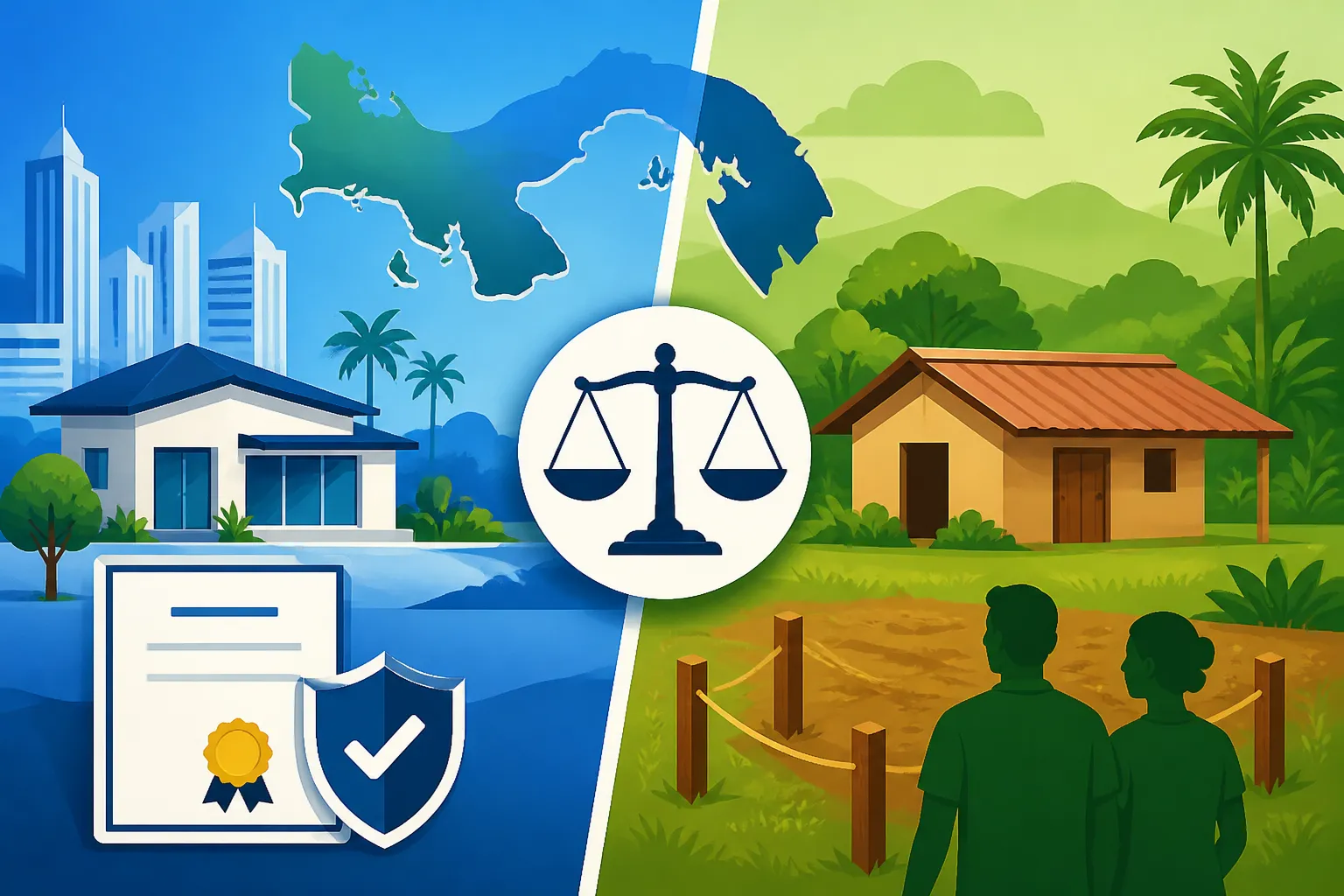
Let's start with titled property, which is generally considered the gold standard, especially for foreigners. This is what most people in Western countries would recognize as conventional private property ownership. When a property is titled, it means it has been officially surveyed, registered, and recorded with the Public Registry of Panama (Registro Público). This registration provides a clear, indisputable legal record of ownership, detailing the exact boundaries, size, and specific holder of the title. It’s like having a birth certificate for your land, proving its existence and who legally owns it.
The process of getting a property titled involves extensive surveys, legal checks, and public notices to ensure there are no existing claims or disputes. Once complete, the title is issued, and your name (or your corporation's name) is officially recorded as the owner. This registration ensures that your ownership is recognized and protected by Panamanian law, offering a robust layer of security. If you ever needed to prove ownership in a legal dispute, your registered title is the definitive document. For anyone looking to invest significantly or build on the land, this security is invaluable. It’s also the type of property most readily accepted by banks for mortgages, which is a huge consideration if you're not planning to pay cash. Think of it as purchasing a property with a full, verified history and clear boundaries – it’s straightforward, less risky, and offers peace of mind.
Understanding ROP Property: A More Traditional Approach
Now, let's talk about Rights of Possession (ROP), or Derechos Posesorios. This is where things get a bit more… Panamanian, in the sense that it often involves a more traditional, informal, and historically rooted understanding of ownership. ROP essentially means that you have the right to possess and use a piece of land, but you don't hold a formal, government-registered title to it. It's based on the concept of continuous, public, and peaceful occupation of land for a certain period, traditionally 10 to 20 years, depending on whether the previous possessor was known or not. The concept is akin to "squatter's rights" in some other jurisdictions, but it's formally recognized under Panamanian law, particularly in rural or indigenous areas, and on islands or coastal zones where formal titling has historically been less common.
While ROP is a legally recognized form of holding land, it doesn't offer the same ironclad security as a registered title. Your "proof" of ownership typically comes from documents like purchase agreements from previous possessors, sworn declarations from neighbors acknowledging your long-term presence, utility bills in your name for that location, or even receipts for improvements you’ve made to the property. It’s a cumulative body of evidence rather than a single definitive document from the Public Registry. Many Panamanian families have held land under ROP for generations, passing it down through informal agreements. For an expat, this often means relying heavily on local knowledge and trust, which can be a steep learning curve. The appeal often lies in the lower purchase price, but this comes with significantly higher risks and complexities, especially when it comes to proving clear ownership or defending against competing claims.
The Legal Framework and Risks of Each Type
Understanding the different legal frameworks for titled and ROP property is absolutely paramount. This isn't just dry legal jargon; it directly impacts your security, your ability to develop the land, and your peace of mind. It’s the difference between sleeping soundly at night and potentially waking up to a protracted legal battle.
Legal Protections for Titled Property Owners
With titled property, you're operating within a clear, well-defined legal structure. The Public Registry is the official record-keeper, and any transactions, liens, or encumbrances are noted there. This means that before you buy, your lawyer can perform a thorough due diligence check at the Public Registry to verify the seller's ownership, confirm the boundaries, and uncover any outstanding debts or legal claims against the property. This process, often referred to as a "title search," provides transparency and reduces risk significantly. When you become the registered owner, you receive a Certificate of Title (Certificado de Título), which is your definitive proof of ownership. This document is recognized by all legal institutions in Panama, including courts, banks, and government agencies.
The legal system here is designed to protect registered title holders. If someone tries to claim your titled land, you have a strong legal basis to defend your ownership. Enforcement is generally more straightforward, and the process for resolving disputes is clearer, albeit sometimes slow, as is the case in many legal systems. Furthermore, titled properties are eligible for property insurance, which adds another layer of financial protection. This strong legal foundation makes titled property not just a purchase, but a secure investment. It's why virtually all banks will only offer mortgages on titled land, as they require that indisputable security. For foreigners, especially, this legal clarity is a massive benefit, minimizing potential misunderstandings and safeguarding your investment. If you're looking to understand more about this, our guide on How to Complete the Property Purchase and Title Process in Panama offers a detailed walkthrough.
The Intricacies and Risks of Rights of Possession
ROP land operates on a different, more fluid legal plane. While the law recognizes Derechos Posesorios, it lacks the rigid, centralized registration of titled property. Your "ownership" is based on the aforementioned continuous, peaceful, and public possession. This means that proving your claim often relies on eyewitness testimonies, historical records (like old sales contracts that aren't registered at the Public Registry), and a clear demonstration that you've been actively using and improving the land. This can become incredibly complex, especially if you're trying to prove a long chain of possession.
The biggest risks with ROP include potential boundary disputes, multiple claims to the same land, or the land actually being national land (terrenos nacionales) that hasn't been designated for private titling yet. Imagine purchasing ROP land, only to have a distant relative of the "seller" suddenly appear with their own set of informal documents, claiming the land is theirs. Or even worse, the property you thought you owned might actually be part of a protected area or indigenous territory. These situations can lead to lengthy and expensive legal battles, with no guarantee of a favorable outcome. Banks are highly unlikely to finance ROP purchases, which can make a sale difficult in the future. Furthermore, while it is possible to eventually title ROP land (a process called titulación), it can be a drawn-out, costly, and complex endeavor, requiring extensive surveys, legal work, and potential navigation of bureaucratic hurdles. This process is far from guaranteed and requires significant expertise. For those interested in understanding the nuances, our article on Understanding Property Ownership and the Market in Panama delves deeper into these aspects.
Navigating Disputes with Titled vs. ROP
When a dispute arises, the resolution process differs dramatically between titled and ROP property. For titled property, a dispute would typically be handled by the civil courts, where the Public Registry records serve as primary evidence. Your registered title is a formidable weapon in any legal challenge, and the courts generally defer to the official record. While legal battles are never pleasant, with titled property, you have a clear legal framework and strong documentation backing your claim.
With ROP property, disputes are inherently more challenging. Lacking a centralized, definitive record, proving ownership requires a more intricate evidentiary process. You might need to gather sworn affidavits from neighbors, old utility bills, receipts for construction, and other evidence to demonstrate your long-term, public, and peaceful possession. These cases are often handled by agrarian courts or specialized ROP tribunals, which can be notoriously slow and require a deep understanding of local customs and land use practices. The outcome can be less predictable, as judges may weigh various forms of evidence and testimony differently. This uncertainty is precisely why many legal professionals strongly advise against purchasing ROP land without significant local expertise and a very clear understanding of the risks, ideally with the specific goal of initiating a titling process immediately. The initial lower cost of ROP land often pales in comparison to the potential legal fees and stress involved in resolving a dispute.
| Feature | Titled Property | Rights of Possession (ROP) Property |
|---|---|---|
| Legal Basis | Registered with Public Registry, clear ownership | Based on continuous, peaceful, public occupation |
| Proof of Ownership | Certificate of Title (Certificado de Título) | Informal documents, witness testimonies, evidence of use |
| Security | High; legally protected, indisputable | Lower; vulnerable to disputes, multiple claims, government |
| Due Diligence | Clear process via Public Registry search | Complex; relies on local knowledge, historical evidence |
| Financing | Generally eligible for bank mortgages | Rarely eligible for bank mortgages |
| Transferability | Straightforward, legally recorded sale | Complex, informal agreements, higher risk for buyer |
| Development | Easier to get permits, clear boundaries | Can be difficult to get permits, uncertain boundaries |
| Titling Process | Already titled | Possible to title, but complex, costly, and lengthy |
| Risk for Expats | Low to moderate (standard real estate risks) | High (legal disputes, unclear ownership, government claims) |
Buying and Selling: The Practicalities for Expats
As an expat, the process of buying and selling property in Panama can be daunting enough, but the distinction between titled and ROP property adds an entirely new layer of complexity. Forget what you know from back home; this is Panama, and understanding these practicalities is crucial for a smooth transaction.
The Process of Acquiring Titled Property
Purchasing titled property in Panama generally follows a relatively conventional process, though with local nuances. It starts, ideally, with finding a reputable real estate agent and a trustworthy Panamanian lawyer. Your lawyer is your absolute best friend in this process. They will conduct a thorough due diligence on the property, which includes performing a title search at the Public Registry to verify the seller's ownership, check for any liens, mortgages, or legal encumbrances, and confirm the exact boundaries and size of the land. This is where you find out if the seller truly owns what they claim and if there are any hidden issues. If you're looking for help with moving your belongings to Panama to furnish your new titled home, services like Sirelo can assist you in finding reliable international moving companies.
Once due diligence is satisfactory, a Promise to Purchase Agreement (Contrato de Promesa de Compraventa) is usually drafted, outlining the terms of the sale, purchase price, payment schedule, and closing date. A deposit, typically 10% of the purchase price, is made and often held in an escrow account. Then comes the formal Sale and Purchase Agreement (Escritura Pública de Compraventa), which is signed before a Notary Public. The Notary public verifies the identities of the parties and ensures the legality of the transaction. After signing, this document is submitted to the Public Registry for registration, effectively transferring the title into your name (or your Panamanian corporation's name). This entire process usually takes several weeks to a few months, depending on the complexity and efficiency of the parties involved. Our comprehensive guide, How to Buy Property in Panama as a Foreigner: The Full Guide, offers a deeper dive into these steps, and you might also want to look into How to Get a Mortgage to Buy Property in Panama if you plan on financing.
The Challenges of Buying and Selling ROP Property
Buying or selling ROP property is a completely different beast, fraught with more challenges and requiring a much higher degree of caution. Since there's no official title registered at the Public Registry, the due diligence process becomes exponentially more difficult and subjective. Instead of a clear title search, your lawyer (who absolutely must specialize in ROP cases) will need to undertake a rigorous investigation involving:
- Historical Chain of Possession: Tracing previous owners through informal sales contracts, if they exist, or even just word of mouth from long-term residents.
- Witness Testimonies: Gathering sworn statements from neighbors who can attest to the seller's long-term, peaceful, and public possession of the land.
- Physical Inspection & Documentation: Verifying the actual physical occupation, looking for evidence like fences, crops, homes, and utility bills (electricity, water) in the seller's name for that specific location.
- Government Agency Checks: Inquiries with the National Authority of Land Management (ANATI) to see if there are any ongoing titling processes, prior claims, or if the land is designated as national land, protected area, or part of indigenous reserves where private ownership is restricted.
The "sale" itself is not a transfer of a registered title, but rather a transfer of the "rights of possession." This is typically done through a notarized document (a contrato de cesión de derechos posesorios) where the seller formally cedes their rights to you. This document is then often presented to local authorities (like the Mayor's office or Juzgado de Paz) for their acknowledgment, but it doesn't get registered in the Public Registry in the same way a title does. Selling ROP property down the line is similarly complex; your buyer will face the same due diligence challenges, which can severely limit your pool of potential buyers and impact resale value. It's often advised that if you do buy ROP, you should immediately begin the process of titulación (getting it titled), a journey that can take years and significant legal fees, as explained in How to Check a Property Title in Panama.
Financing Options for Titled vs. ROP
When it comes to financing, the distinction between titled and ROP property couldn't be starker. This is a critical point for most expats, as few people have the means to purchase property outright with cash.
For titled property, securing a mortgage from a Panamanian bank is a very real possibility, provided you meet their eligibility criteria. Banks like Banco General or Banistmo will typically require a significant down payment (often 20-30% for foreigners), a stable income, a good credit history (though international credit can be tricky to translate here), and a clear title to the property. They need that registered title as collateral, as it provides them with the legal security they need to recoup their investment if you default. The process can be cumbersome, requiring a fair bit of paperwork and patience, but it is achievable. Our guide on How to Get a Mortgage to Buy Property in Panama breaks down the requirements and steps involved.
For ROP property, obtaining traditional bank financing is virtually impossible. As mentioned, banks will not accept ROP as collateral because it lacks the clear, indisputable legal ownership provided by a registered title. The risks are simply too high for them. This means that if you choose to purchase ROP land, you will almost certainly need to pay cash. This severely limits who can buy ROP property and can make it difficult to sell in the future, as potential buyers will also need to be cash buyers. While this might be appealing to those seeking very low-cost land initially, it’s a major hurdle for liquidity and future planning. This inability to secure financing is a significant factor contributing to the lower prices of ROP land, reflecting the inherent risk and limited market.
Long-Term Implications and Investment Potential
When you're making a significant investment like buying property in a foreign country, it's not just about the upfront cost; it's about the long-term implications, the potential for growth, and what it means for your financial future. Titled and ROP properties present vastly different pictures in this regard.
Investment Security and Future Development with Titled Property
Titled property offers a far greater degree of investment security. Because your ownership is formally registered and legally protected, your asset is less vulnerable to disputes or governmental claims. This stability makes titled land a more attractive investment in the long run. Banks are willing to lend against it, and insurance companies are willing to cover it, which are both indicators of its recognized value and reduced risk. When you want to sell, the clear title makes the transaction much smoother, attracting a wider range of buyers, including those who need financing. This broader market typically means better resale value and greater liquidity for your investment.
Furthermore, developing titled property is generally more straightforward. Getting building permits, utility connections (electricity, water, internet), and other necessary approvals from municipal and national agencies is easier when you can prove clear ownership. This is crucial if your plan involves building a home, establishing a business, or undertaking any significant construction. The transparent boundaries and documented ownership minimize bureaucratic friction. For expats keen on setting up their new life with all the modern conveniences, knowing you can easily connect utilities is key. And speaking of utilities, getting your internet and mobile service connected quickly means you can stay in touch, perhaps even using a service like Airalo for easy eSIM data when traveling initially, before getting a permanent local plan. Knowing that your investment is secure and your development plans are feasible truly offers peace of mind. To understand the various costs associated with ownership, explore Understanding Property Tax (IBI) for Homeowners in Panama.
The Evolving Landscape for ROP Holders
The long-term outlook for ROP land is significantly more complex and uncertain. While ROP has a long history in Panama, the government is actively working to formalize land ownership across the country through titling programs managed by institutions like ANATI. This means that areas traditionally held under ROP may eventually be surveyed and titled. While this can be a positive development for ROP holders, potentially converting their rights into full title, the process is often lengthy, expensive, and not guaranteed. There can be instances where the government determines the land is actually national property or has conflicting claims, leading to potential loss for the ROP holder.
The investment potential of ROP land is speculative. While you might acquire it at a lower price, its resale value remains limited due to the inherent risks and difficulty in obtaining financing. Liquidity is low, and finding a buyer willing to navigate the complexities of ROP can be challenging. For some, the appeal lies in securing a piece of land in a desirable, undeveloped area with the hope that it will eventually be titled, thus appreciating significantly. However, this is a high-risk, high-reward strategy that requires deep local knowledge, significant patience, and expert legal guidance. Without a clear path to titling, ROP land remains a less secure investment.
Property Taxes and Other Considerations
When it comes to property taxes and other fees, both titled and ROP properties have their own set of considerations.
Titled Property: For titled properties, you will pay annual property tax (Impuesto de Bien Inmueble, or IBI) based on the registered value of the land and any improvements (buildings). Panama has a progressive tax structure for IBI, and there are often exemptions or reduced rates for properties below certain values or for primary residences. These taxes are clearly defined and payable to the DGI (Direccion General de Ingresos). In certain developments, you might also have homeowner association (HOA or PH) fees, which cover shared amenities and maintenance. These costs are predictable and part of the overall cost of ownership. Understanding these is vital; our articles on How Much Is Property Tax in Panama? and What Taxes Apply When Buying Property in Panama? provide detailed information.
ROP Property: Historically, ROP holders often paid a symbolic annual fee or tax to the local municipality or ANATI, known as canon de arrendamiento or similar, acknowledging their possession rather than full ownership. However, the legal and tax landscape for ROP can be more opaque. Some ROP properties might not be on any formal tax rolls for IBI until they are titled. This can sometimes be seen as an advantage (lower annual costs), but it also reflects the property's unofficial status and the lack of formal recognition that comes with a title. If you are developing ROP land and connecting utilities, you might start receiving municipal assessments, further legitimizing your possession but not necessarily granting full title. It's crucial to consult with a lawyer specializing in ROP to understand any existing or potential annual fees and tax obligations, as they can vary greatly depending on the location and the specific history of the land.
Making Your Decision: Which Path is Right for You?
Choosing between titled and ROP property in Panama is one of the most significant decisions you'll face as an expat looking to invest in land here. It's not a one-size-fits-all answer, and your choice should align perfectly with your risk tolerance, financial capacity, and long-term goals.
Scenarios Where Titled Property Shines
For the vast majority of expats, especially those who are new to Panama or are looking for a secure, straightforward investment, titled property is the clear winner. Here are the scenarios where choosing titled property makes the most sense:
- Seeking Maximum Security and Peace of Mind: If you want absolute clarity on ownership, minimal risk of legal disputes, and the strongest legal protections, titled property is your only option. You'll sleep better at night knowing your investment is secure and formally recognized by the Panamanian government.
- Planning Significant Development or Construction: If your dream involves building a home, establishing a business, or making substantial improvements to the land, titled property provides the necessary legal foundation. Obtaining construction permits, utility connections, and official approvals is far simpler and more reliable with a clear title.
- Requiring Bank Financing: If you're not paying cash and plan to finance your purchase with a mortgage, you must choose titled property. Panamanian banks will not lend against ROP land due to the inherent lack of registered collateral.
- Prioritizing Resale Value and Liquidity: If you view your property as an investment that you might want to sell in the future, titled land offers greater liquidity and a broader market of potential buyers, leading to potentially better resale value. Its clear ownership and reduced risk appeal to both local and international buyers.
- New to Panama or Limited Local Knowledge: For those who are still getting their feet wet in Panama and lack deep local connections or an intricate understanding of the informal land tenure system, sticking to titled property is the safest bet. It removes many layers of potential misunderstandings and fraud. If you're wondering about making the move and navigating initial setup, services like Airalo can help you stay connected, and The Expat Guide to Setting Up Utilities (Electricity, Water, Internet) in Panama offers more practical guidance.
When ROP Might Be a Consideration (With Extreme Caution)
There are very specific, narrow circumstances where ROP property might be considered, but I cannot stress enough that this path is for the adventurous, the deeply informed, and those with a very high-risk tolerance. This is not for the faint of heart.
- Deep Local Expertise and Trust: If you have lived in a specific Panamanian community for many years, have developed deep trust with local residents and authorities, and genuinely understand the historical context and informal ownership chains of a particular piece of land, you might consider ROP. This usually means a long-term integration into the local culture.
- Significant Discount and Willingness to Title: ROP land is typically significantly cheaper than comparable titled land. If you acquire ROP at a substantial discount, and you are fully prepared to embark on a lengthy, complex, and potentially costly titling process (with no guarantee of success), it could be a path. This requires a specialized ROP lawyer and immense patience.
- Minimal Investment and No Development Plans: If you're looking for a very small, very low-cost piece of land for purely recreational use, with no intention of building substantial structures or expecting significant appreciation, ROP might be an option. However, even then, the risks of dispute remain.
- Understanding of Risk and Potential Loss: Crucially, if you consider ROP, you must go into it with eyes wide open, fully acknowledging the significant risks, including the potential for total loss of your investment or protracted legal battles. This means treating it as a highly speculative venture. It’s imperative to consult with a lawyer specializing in ROP land, and even then, remember that even the best legal minds can face unexpected challenges in this murky area.
The Importance of Due Diligence and Professional Guidance
Regardless of whether you choose titled or ROP property, due diligence and professional guidance are non-negotiable.
For titled property, your Panamanian lawyer will be instrumental in conducting thorough title searches at the Public Registry, verifying the property's legal status, identifying any encumbrances, and ensuring a clean transfer. They will also guide you through the contracts, ensuring your interests are protected. This is also where you'd be advised on matters such as What Are the Rules for Foreigners Buying Property in Panama?
For ROP property, the stakes are exponentially higher. You must engage a lawyer who has extensive, verifiable experience specifically with ROP cases and the titling process in the particular region you are looking at. Their due diligence will go far beyond a simple Public Registry search, involving extensive fieldwork, interviews, and historical research. They will be critical in assessing the feasibility of obtaining title and navigating any potential disputes. This isn't an area where you want to cut corners on legal fees or rely on casual advice.
In both cases, consider also engaging a reputable real estate agent who understands the local market and can help you Find a Reliable Real Estate Agent in Panama. They can provide invaluable insights into pricing, location, and local customs. While the Panamanian dream of owning a slice of paradise is very real, approaching property acquisition with caution, knowledge, and the right team of professionals will ensure that your dream doesn't turn into a nightmare.
Disclaimer
Please note that this guide provides general information and does not constitute legal or financial advice. The laws and regulations regarding property ownership in Panama can change, and individual situations vary greatly. It is always recommended to consult with a qualified Panamanian attorney and financial advisor specializing in real estate for expats before making any property investment decisions.