Can I Do Freelance Work Legally in Panama?
When you dream of working independently from the vibrant streets of Panama, coffee in hand, tapping away at your laptop, it’s easy to get caught up in the romance of it all. But then the cold splash of reality hits: Can I actually do freelance work legally here? The administrative maze in a new country can feel like trying to navigate the busiest parts of Panama City traffic during rush hour – confusing, often frustrating, and full of unexpected detours. This guide is here to untangle that knot for you, offering a clear, empathetic path to setting up your freelance hustle legally in Panama, ensuring you stay on the right side of the law and can truly enjoy your expat life.
The Legal Landscape for Freelancers in Panama: What You Need to Know
Let's get straight to it: yes, you absolutely can do freelance work legally in Panama, but it's not a simple case of just showing up and starting to work. Like most countries, Panama has a structured legal framework for self-employed individuals, which includes foreigners. The key is understanding that "freelance" often translates to "self-employed" in the official jargon, and that means registering your activities and complying with local regulations. Ignoring these steps can lead to unnecessary stress, fines, and even jeopardize your residency status, which is the last thing any expat wants.
The initial hurdle for many is simply wrapping their head around the concept. Back home, you might just declare your freelance income on your annual tax return, and that’s that. Here, it’s a bit more proactive. Panama wants to know who you are, what you’re doing, and whether you’re contributing to the local economy, even if your clients are all abroad. This isn't about being nosey; it's about ensuring a fair system for everyone operating within its borders.
Understanding the 'Persona Natural' Registration
When you talk about becoming a legal freelancer in Panama, you're primarily talking about registering as a "Persona Natural" with commercial activities. This term, which translates to "Natural Person," is how individuals operating independently, rather than through a registered company, are classified for business and tax purposes. It's the most common and often simplest route for expats offering services.
Think of it this way: instead of forming a complex corporate structure like an S.A. (Sociedad Anónima) or an S.R.L. (Sociedad de Responsabilidad Limitada), you, as an individual, are recognized as a business entity. This means your personal name is also your business name, and you're personally liable for any business debts or obligations. While this might sound a little daunting, for most freelancers, it’s perfectly manageable and significantly less complicated than setting up a full company. It simplifies the registration process, reduces initial costs, and often involves less ongoing administrative burden. For a deeper dive into this, you might find our guide on How to Register as a Natural Person Business (Persona Natural) in Panama incredibly helpful.
The Role of Your Visa and Residency Status
This is perhaps the most critical component for any aspiring expat freelancer in Panama: your immigration status. You cannot simply enter Panama on a tourist visa and begin legally freelancing. A tourist visa, by its very nature, is for tourism – not for gainful employment or running a business within the country. Attempting to do so is illegal and can lead to serious consequences, including deportation and being barred from re-entering Panama.
To legally freelance, you absolutely need a residency visa that permits work or self-employment. Several visa categories in Panama allow for this:
- Friendly Nations Visa: This is a popular option for citizens of many countries, offering a path to permanent residency and the right to work, including self-employment. However, it typically requires setting up a Panamanian company or having a job offer, even if you plan to freelance. You'd technically be employed by your own company, which then enables your freelance work.
- Pensionado (Retiree) Visa: While primarily for retirees, this visa allows you to earn income from local sources, though there might be nuances regarding active commercial activities versus passive income. If your freelance work is more a hobby that brings in some cash, it might fit, but it's best to consult an immigration lawyer. Our comprehensive guide on The Expat Guide to the Pensionado (Retiree) Visa in Panama (2027) offers more specific details.
- Qualified Investor (Golden Visa) Programme: For those with substantial capital to invest, this route grants permanent residency, which in turn allows for legal work or self-employment.
- Work Permits and Other Residency Visas: Some other residency visas (e.g., specific professional visas) might also grant work authorization. If you're looking into broader options for work, consider reading Do I Need a Work Permit to Work in Panama?
It's crucial to consult with a reputable Panamanian immigration lawyer before you make any definitive plans. They can assess your specific situation, nationality, and intentions to guide you towards the most appropriate residency path. Attempting to navigate this complex legal maze without expert guidance is a recipe for headaches, delays, and potential pitfalls. This is not the time to cut corners, my friend.
Essential Registrations and Bureaucracy: Getting Legit
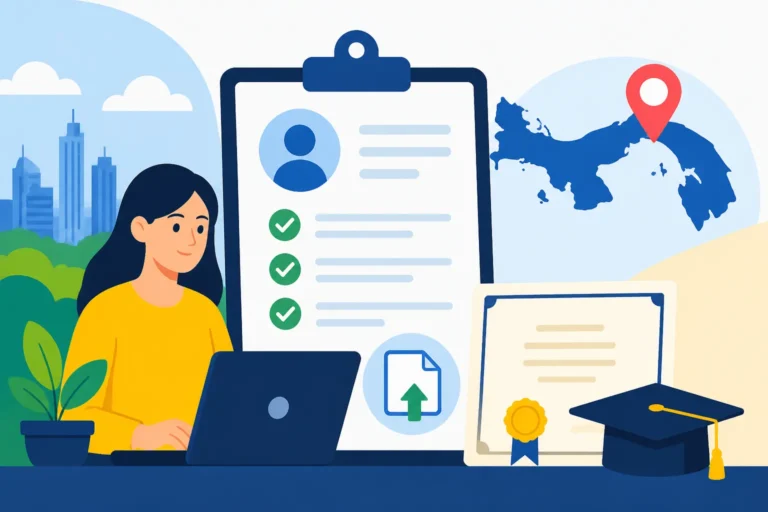
Once you've secured your residency and the right to work, the next step is to officially register your freelance activity with the Panamanian authorities. This is where the rubber meets the road, and while it might seem like a lot of paperwork, each step is crucial for operating legally. Remember, this isn't just about avoiding trouble; it's about being a legitimate part of your new community and contributing fairly.
Obtaining Your RUC (Tax ID) and DGI Registration
The RUC, or "Registro Único de Contribuyente," is your unique tax identification number in Panama. Every individual or entity engaged in economic activity must have one. Think of it as your business's social security number. Without it, you cannot legally declare income, pay taxes, or conduct formal business transactions.
Here's a general outline of the process to get your RUC and register with the DGI (Dirección General de Ingresos), Panama’s tax authority:
- Gather Your Documents: You'll typically need your Cedula (your Panamanian ID card), passport, a copy of your residency card, and proof of address. Depending on your specific activity, additional documents might be requested.
- Visit the DGI Office or Use the Online Portal: While the DGI has made strides in digitalization, some aspects still require an in-person visit, especially for initial registration. However, much of the ongoing filing can be done through their online portal, E-Tax 2.0. If you’re not comfortable with Spanish or the intricacies of Panamanian bureaucracy, hiring a local accountant or a lawyer specializing in business registrations is highly recommended. It will save you immense frustration. For more on this, check out our guide on How Do I Get an RUC (Tax ID) as a Foreigner in Panama?
- Complete the Registration Form: You'll fill out a form (Formulario de Inscripción de Contribuyentes) specifying your economic activity (e.g., graphic designer, consultant, writer). This classification is important for tax purposes, particularly if your services might be subject to ITBMS (Panama's equivalent of VAT).
- Receive Your RUC: Once processed, you'll receive your RUC number. This number will be used for all your tax declarations and interactions with the DGI.
- Register for ITBMS (if applicable): If your freelance services exceed a certain annual income threshold (currently B/.36,000 per year, though always double-check the latest figures as these can change), you'll also need to register for ITBMS and collect it from your clients. We'll talk more about ITBMS shortly.
This process can feel like a bureaucratic marathon, especially if your Spanish isn’t fluent. Don't be afraid to ask for help! Local professionals are accustomed to guiding foreigners through these steps.
Navigating Social Security (CSS) as a Self-Employed Individual
Panama has a mandatory social security system, the Caja de Seguro Social (CSS), which provides healthcare and pension benefits. If you are legally employed in Panama, your employer will automatically deduct your contributions. However, as a self-employed freelancer, you are responsible for registering and making these contributions yourself.
Here's why this is important:
- Healthcare Coverage: Contributing to the CSS grants you access to the public healthcare system. While many expats opt for private insurance, having CSS coverage as a backup or for certain services can be beneficial. You can learn more about how Panama's health system works, including the CSS, in our guide: How Panama's Health System Works: CSS and Private Care Explained (2027).
- Pension Benefits: Your contributions accumulate towards a future pension, offering a layer of financial security in retirement.
- Legal Compliance: It's a legal requirement. Failure to contribute can lead to penalties down the line.
The process involves:
- Registration as an Independent Contributor: You’ll need to go to a CSS office (often separate from the DGI) with your Cedula and RUC to register as an independent (self-employed) contributor. They will provide you with forms to fill out, detailing your income (or estimated income) based on which your contributions will be calculated.
- Contribution Calculation: Contributions are typically a percentage of your declared income, often based on a minimum wage or a fixed scale for independent workers. This is where it gets a bit tricky to calculate precisely, as the rules can be intricate. Our post on How Much Are CSS Contributions for the Self-Employed in Panama delves into the specifics.
- Monthly Payments: Once registered, you'll be required to make monthly payments. These can often be paid at various banks or through the CSS online portal.
Navigating the CSS can be even more complex than the DGI. Be prepared for potential lines and perhaps a need for a translator or a local friend to help you through the process, especially during your initial registration. It’s all part of the expat adventure, right? Just remember, once it's done, it's done, and you're set for legal compliance.
| Step | Authority | Key Document/Outcome | Estimated Timeframe (Initial) |
|---|---|---|---|
| Secure Work-Permitting Residency | Immigration (Migración) | Residency Card / Cedula | Varies (Months to Year+) |
| Register as Persona Natural | DGI (Dirección General de Ingresos) | RUC (Tax ID Number) | 1-4 Weeks |
| Register for ITBMS (if applicable) | DGI (Dirección General de Ingresos) | ITBMS Registration | Concurrent with RUC |
| Register for Social Security | CSS (Caja de Seguro Social) | CSS Contributor Number | 2-6 Weeks |
Practicalities and Pitfalls: Running Your Freelance Business
So you've tackled the legal and bureaucratic mountain, congratulations! Now that you're legitimately set up, it’s time to think about the day-to-day realities of running your freelance business in Panama. This involves understanding your tax obligations and managing your finances effectively.
Understanding Income Tax and ITBMS for Freelancers
Panama operates on a territorial tax system. This is a huge benefit for many expats! In simple terms, this means that income generated outside of Panama from foreign sources is generally not subject to Panamanian income tax. This is a game-changer for digital nomads and freelancers whose clients are predominantly international. Our article Understanding Why Foreign Income Is Not Taxed in Panama (2026) explains this concept in much greater detail.
However, if your freelance work generates income from Panamanian sources (i.e., your clients are located in Panama), then that income is taxable in Panama. This income is subject to a progressive income tax scale, similar to many other countries, where higher earners pay a higher percentage. You'll need to file an annual tax return with the DGI. Don't worry, it's not as scary as it sounds, especially with some preparation. For a deep dive into filing your taxes, check out How to File Your Annual Tax Return in Panama.
Now, let's talk about ITBMS (Impuesto a la Transferencia de Bienes Muebles y Servicios), which is Panama’s value-added tax (VAT) equivalent.
- Threshold: As mentioned earlier, if your annual gross income from services exceeds B/.36,000, you are legally required to register for ITBMS. Below this threshold, you are not obliged to collect or pay ITBMS.
- Rate: The general ITBMS rate in Panama is 7%.
- Collection: If you're registered, you must add 7% to your invoices for services rendered in Panama and then remit that collected ITBMS to the DGI on a monthly basis. This is not your income; it's a tax you collect on behalf of the government.
Keeping accurate records of your income and expenses is paramount. This will not only make tax season less stressful but also allow you to claim legitimate deductions. If your tax situation feels complicated, especially with foreign income coming into play, it's wise to consult with a tax specialist. Brands like Taxes for Expats specialize in helping individuals navigate international tax complexities, ensuring you comply with both Panamanian and your home country's regulations. They can provide invaluable advice on how to structure your finances and reporting to maximize your benefits under Panama's territorial tax system.
Banking and Payment Solutions
Managing your finances efficiently is key to a smooth freelance operation. Once you're legally established in Panama, opening a local bank account will be essential, especially if you have local clients or need to pay local expenses.
- Opening a Bank Account: As an expat, opening a bank account in Panama can sometimes feel like an uphill battle. You’ll need your Cedula, RUC, proof of income (even if it’s freelance income, show contracts or invoices), and potentially letters of reference from your home country bank. Banks like Banco General or Banistmo are popular choices. Our detailed guide, The Expat Guide to Opening a Bank Account in Panama, walks you through the entire process. Expect to provide a good amount of documentation, including proof of source of funds, as part of their "Know Your Customer" (KYC) compliance.
- Receiving Payments:
- International Clients: For clients outside Panama, you'll likely use international transfer services like Wise (formerly TransferWise), Payoneer, or traditional wire transfers. Having a local Panamanian bank account makes receiving funds locally much easier.
- Local Clients: For Panamanian clients, direct bank transfers are common. You'll invoice them, and they'll transfer funds to your local account.
- Managing Funds: Keep your personal and business finances as separate as possible, even if you’re a Persona Natural. This makes record-keeping for taxes infinitely easier. Use accounting software or a simple spreadsheet to track all income and expenses.
Remember, transparency with your bank about the source of your freelance income is crucial. They are legally obligated to report suspicious activity, so being upfront about your legitimate earnings will prevent unnecessary headaches.
Building Your Freelance Life in Panama: Beyond the Paperwork
So, you’ve wrestled with the bureaucracy, secured your legal status, and you’re ready to dive into the work itself. But what about actually finding clients, integrating into the local scene, and making your freelance life thrive in Panama? This is where the real expat experience comes into play.
Finding Freelance Opportunities and Clients
Your approach to finding freelance work in Panama will largely depend on whether your target clients are international or local.
- International Clients: For many digital nomads and remote freelancers, Panama is simply a base from which to serve clients worldwide. Platforms like Upwork, Fiverr, or specialized industry job boards are your bread and butter. The beauty of Panama's territorial tax system means that income from these foreign clients is generally tax-exempt in Panama, provided the work is performed here and the client is foreign. This makes Panama an incredibly attractive location for such work. Consider exploring our guide on Working Remotely from Panama: The Definitive Expat Guide (2027) for more insights on this.
- Local Clients: If you're looking to serve the Panamanian market, networking is king.
- Word of Mouth: This is incredibly powerful in Panama. Get to know other expats and locals, attend community events, and let people know what you do.
- Professional Associations: Join local business groups or chambers of commerce. Many exist in Panama City and other expat hubs like Boquete.
- Online Presence: A professional website, LinkedIn profile, and possibly a local Facebook group presence can also help.
- Language Skills: While many Panamanians in business speak English, being able to communicate in Spanish will significantly broaden your potential client base. This is where resources like iTalki come in handy. Learning Spanish through an online tutor on iTalki can not only help you better connect with local clients but also enrich your daily life, from navigating the local market to making new friends. It's an investment that pays dividends far beyond just your business.
Remember, building a local client base takes time and patience. Panama is a relationship-driven culture, so invest in building genuine connections.
Cultural Nuances and Professional Etiquette
Working as a freelancer in Panama means adapting to some local ways of doing business. This isn't just about language; it's about understanding the rhythm and expectations.
- Patience is a Virtue: Things often move at a slower pace in Panama than what you might be accustomed to in North America or Europe. Deadlines might be more flexible, and responses might take longer. Embrace it, don't fight it.
- Personal Relationships: As mentioned, personal connections are vital. Meetings often start with a bit of small talk about family or personal life before diving into business. Taking the time to build rapport will serve you well.
- Dress Code: Even if you're a freelancer, when meeting clients or attending professional events, dressing smartly is usually appreciated. Panamanians tend to be well-groomed and professional in appearance.
- "Mañana" Mentality: While not universal, the "mañana" (tomorrow) mentality can sometimes affect project timelines. It's important to set clear expectations and follow up politely but consistently.
- Negotiation: Price negotiation is common, so don't be surprised if clients try to haggle. Be firm but polite, and always be prepared to justify your rates.
Embracing these cultural nuances won't just make you a more successful freelancer; it will make your life in Panama more enjoyable. It's all part of becoming a true expat, learning to adapt and thrive in a new environment. This journey, while sometimes challenging, is incredibly rewarding.
Disclaimer
The information provided in this guide is for general informational purposes only and does not constitute legal, tax, or financial advice. While we strive to keep the information up-to-date and accurate, laws and regulations in Panama can change. It is essential to consult with qualified Panamanian legal, tax, and immigration professionals for advice tailored to your specific situation before making any decisions related to freelance work, residency, or financial matters in Panama.