What Is the Cost of Living in Panama vs Costa Rica?
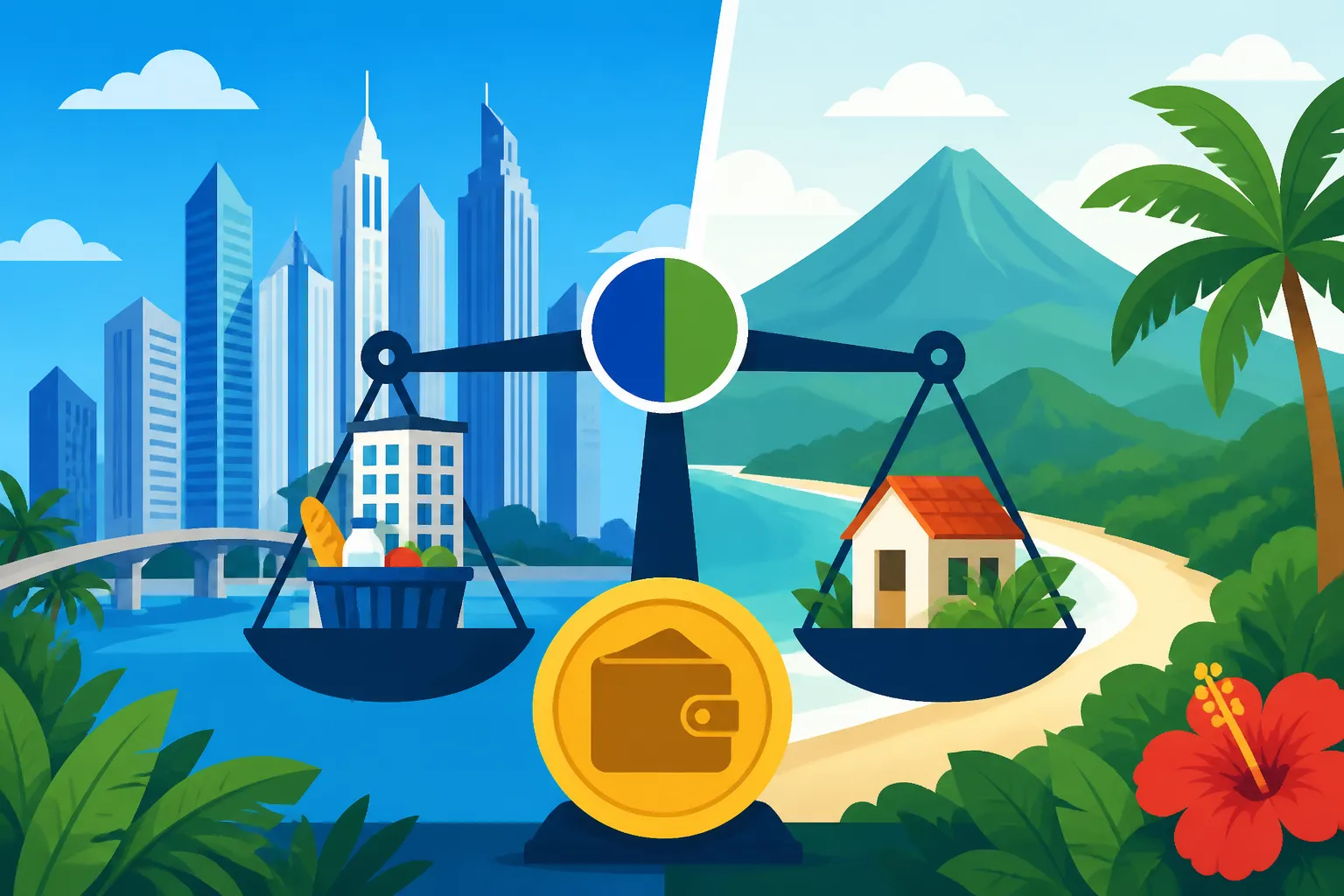
Choosing between Central America’s two powerhouse expat destinations often comes down to dollars and cents. Many moving overseas struggle to decipher whether Panama or Costa Rica offers better value for their lifestyle. This guide breaks down real-world housing, healthcare, grocery, tax, and utility expenses so you can accurately forecast your budget before making the leap.
Breakdown of Essential Monthly Expenses Rent Food and Utilities
When you start analyzing where your hard-earned dollars go every month, housing, groceries, and domestic utilities will form the vast majority of your outflow. Central America is often romanticized as an ultra-cheap tropical paradise, but the reality is nuanced. Cost of living varies significantly depending on whether you crave modern high-rise luxury in Panama City, a rustic beach retreat in Tamarindo, or a cool mountain estate in Boquete or Heredia.
Understanding how everyday costs stack up between these two neighboring nations requires looking past surface-level tourist prices and examining what long-term residents actually spend to keep a household running smoothly.
Housing and Accommodation Costs
Rent is almost always your largest monthly line item, and this is where Panama often demonstrates a distinct structural advantage over Costa Rica. Panama City features a substantial surplus of modern residential tower inventory. High-density developments in neighborhoods like San Francisco, Bella Vista, and Costa del Este create healthy market competition. This keeps rental rates surprisingly reasonable for high-end multi-bedroom apartments featuring full building amenities like pools, gyms, and 24-hour security.
In contrast, Costa Rica’s major urban hubs like San José, Escazú, and Santa Ana, along with heavily visited coastal enclaves like Jacó and Nosara, feature far lower high-rise density and stricter zoning laws. Supply limitations combined with high demand mean you often pay noticeably more per square foot in Costa Rica for an equivalent standard of accommodation.
Outside the capital cities, the dynamic shifts slightly but remains consistent. If you are exploring regional living, learning Understanding the Best Cities and Areas for Expats in Panama reveals how rental pricing scales down significantly once you move to secondary hubs like David or beach communities like Coronado. In Costa Rica’s popular Expat hubs, short-term vacation rentals have driven long-term rental rates higher, making budget-friendly housing harder to secure unless you live entirely off the tourist path. For a deeper breakdown on domestic leases, check out The Complete Guide to Renting an Apartment in Panama (2027).
Groceries Dining and Daily Expenses
Grocery costs in both countries surprise many newcomers who expect dirt-cheap food prices across the board. Because both Panama and Costa Rica rely heavily on imported goods from North America and Europe to stock major supermarket shelves, buying imported brand-name items will quickly inflate your register total.
Panama holds a slight edge regarding imported packaged goods due to its status as a major global trade hub and its utilization of the US Dollar, which eliminates currency conversion surcharges on American imports. Supermarket chains like Riba Smith offer vast foreign selections, though they come at a premium compared to local produce markets.
In Costa Rica, imported goods face high import tariffs, making familiar overseas grocery brands noticeably expensive. However, Costa Rica excels in its local agricultural distribution network. Shopping at the local feria del agricultor (weekly farmers market) yields exceptional savings on fresh fruit, vegetables, dairy, and coffee. If you cook local ingredients seasonally, food expenses in Costa Rica can stay quite manageable. Dining out follows a similar pattern: high-end international restaurants in Escazú or Panama City’s Casco Viejo charge North American prices, whereas small local eateries (fondas in Panama, sodas in Costa Rica) deliver hearty, traditional meals for a fraction of the cost.
Utilities Connectivity and Local Logistics
Utility bills vary depending on your geographic location and personal lifestyle choices, particularly air conditioning usage. In warmer coastal areas or low-elevation cities, air conditioning will dominate your monthly electric bill. Panama’s electricity rates tend to be somewhat lower per kilowatt-hour, but the intense heat in Panama City means units often run constantly. If you choose cooler mountain climates like Boquete in Panama or Monteverde in Costa Rica, air conditioning becomes unnecessary, slashing your utility bill to a nominal fee covering basic lighting and water.
When managing moving arrangements and container transport from abroad, comparing international shipping services through platforms like Sirelo can help you accurately gauge moving budgets early on. Once you land on the ground to inspect properties or set up your household, immediate connectivity is essential. Activating an international e-SIM through Airalo allows you to seamlessly stay connected to local mobile networks the moment you land, bypassing expensive international roaming fees while navigating local utility setups.
For detailed steps on handling local utility connections once your contract is signed, consult The Expat Guide to Setting Up Utilities (Electricity, Water, Internet) in Panama.
Everyday Life Costs Healthcare Transportation and Taxes
Beyond household bills, day-to-day expenditures like keeping your car filled with fuel, visiting a doctor, and managing annual tax liabilities play a vital role in determining long-term affordability. Both countries boast impressive infrastructure compared to regional neighbors, but their administrative systems and price structures diverge significantly.
Healthcare Access and Insurance Options
Healthcare quality in both Panama and Costa Rica is exceptional, attracting medical tourists from around the globe. However, access mechanics and financial structures differ markedly between the two nations.
Costa Rica operates a universal public healthcare system known as the Caja (Caja Costarricense de Seguro Social). Legal foreign residents are required to contribute a percentage of their reported monthly income into the Caja system, which grants access to public clinics and hospitals without additional co-pays. While cost-effective, the public system can suffer from lengthy wait lists for non-emergency consultations and procedures. Consequently, many Costa Rican residents supplement their public coverage with private health insurance to access quick care at top private facilities like Hospital CIMA or Clinica Biblica.
Panama operates a dual system consisting of the public Caja de Seguro Social (CSS) and a robust private healthcare sector featuring world-renowned facilities such as Hospital Punta Pacífica (affiliated with Johns Hopkins Medicine International) and Hospital Nacional. While public coverage exists, foreign residents overwhelmingly choose private healthcare due to its affordability relative to Western prices and high standard of English-speaking care. Out-of-pocket doctor visits and minor procedures remain reasonable even without comprehensive insurance, though securing local or international private health coverage is standard practice for long-term peace of mind. For a complete overview of navigating medical facilities, read Public vs Private Healthcare in Panama: What Expats Need to Know.
Public Transport Driving and Getting Around
Transportation expenses depend heavily on whether you intend to own a personal vehicle or rely on public transit networks. Panama City features Central America’s only underground metro system, integrated with an expansive Metrobus network. Rides are extraordinarily inexpensive, making urban commuting efficient and budget-friendly. Long-distance buses link Panama City to provincial hubs smoothly and cheaply.
Costa Rica relies heavily on an extensive bus network that reaches nearly every corner of the country, though urban traffic congestion around the Greater Metropolitan Area (GAM) can make bus transit slow during peak hours.
If you choose to drive, vehicle ownership costs favor Panama. Importing a car, buying new or used vehicles, and paying annual license fees are generally less expensive in Panama due to lower import duties on automobiles. Gas prices in both countries fluctuate with world markets, but fuel in Costa Rica is heavily taxed, making petrol noticeably pricier per gallon than in Panama.
If you plan to get behind the wheel in Panama, review Driving in Panama: Licences, Registration and Rules for Expats (2027) as well as Understanding How to Buy a Car as a Foreigner in Panama to avoid costly administrative surprises.
Tax Structures and Financial Systems
One of the largest, yet most overlooked, components of the overall cost of living comparison is how each country handles your income. Panama operates on a strict territorial tax structure. Under this system, income earned from business activities, investments, or remote work performed outside the physical territory of Panama is generally exempt from local income tax. For remote workers, digital nomads, and international business owners, this territorial setup offers a significant financial advantage that drastically lowers global tax burdens. You can learn more about this by reading How Panama’s Tax System Works: Territorial Taxation Explained (2027).
Costa Rica has historically operated on a territorial tax basis as well, though recent legislative discussions and fiscal reforms have tightened definitions surrounding foreign-sourced income and corporate taxation. Additionally, Costa Rica imposes a higher Value-Added Tax (VAT) rate on goods and services compared to Panama’s equivalent ITBMS (Impuesto de Transferencia de Bienes Muebles y Servicios), which generally sits at a lower baseline rate. Furthermore, Panama’s official currency is the US Dollar (circulating alongside the Panamanian Balboa at a 1:1 fixed rate), eliminating currency fluctuation risk for expats holding USD savings. Costa Rica uses the Colón, meaning your purchasing power fluctuates alongside foreign exchange rates.
Real-World Monthly Budget Comparison
To contextualize these costs, it helps to view estimated mid-tier expenditures side by side. The table below outlines typical monthly spending ranges for a couple living a comfortable, middle-class lifestyle in popular expat destinations within each country.
| Expense Category | Panama estimated range | Costa Rica estimated range |
|---|---|---|
| Rent Modern Two-Bedroom Apartment | Mid-range to High | High to Very High |
| Utilities Electricity Water Trash | Low to Moderate | Moderate to High |
| High-Speed Internet and Mobile Data | Low to Mid-range | Low to Mid-range |
| Groceries Combination Local and Imported | Moderate | Moderate to High |
| Dining Out and Entertainment | Moderate | Moderate to High |
| Private Health Insurance per Couple | Moderate | Moderate |
| Gasoline and Vehicle Maintenance | Low to Moderate | Moderate to High |
| Local Sales Tax VAT ITBMS Rate | Low Baseline | Moderate Baseline |
Analyzing the Single Expat vs Family Budget
For a single expat, baseline monthly living expenses in Panama typically land slightly lower than in Costa Rica, primarily due to cheaper urban housing alternatives and lower transportation costs. A single individual living in a secondary Panamanian city like David or a quiet town like Las Tablas can live comfortably on a moderate income, whereas living in popular Costa Rican expat hotspots like Tamarindo, Nosara, or Escazú requires a higher monthly commitment.
For families, the dynamic hinges on educational requirements and household space. Both nations offer high-quality private international schools where instruction is delivered in English or bi-lingually. However, tuition costs for top-tier international schools in Panama City and San José are broadly comparable to Western private school rates. Families in Panama often save on overall home maintenance and domestic help, while families in Costa Rica may benefit from cheaper local fresh food markets if they cook extensively at home. For a complete holistic view on overall financial planning, explore The Complete Guide to Cost of Living in Panama for Expats (2026).
Lifestyle Factors and Choosing the Right Country for Your Budget
While financial metrics provide clear benchmarks, numbers alone should not dictate your final destination. How you prefer to spend your daily life dictates where your money goes and whether you perceive a country as good value.
Urban vs Coastal vs Mountain Living Costs
Panama is ideal for those who crave world-class urban sophistication alongside tropical landscapes. Panama City offers a true cosmopolitan environment complete with modern skyscrapers, high-end shopping centers, an vibrant culinary scene, and immediate access to major international flight hubs via Tocumen International Airport. If you want a modern city lifestyle with ocean views at a cost lower than major North American or European cities, Panama is hard to beat.
Costa Rica, on the other hand, appeals to those prioritizing environmental biodiversity, eco-conscious living, and outdoor adventure over urban infrastructure. Costa Rica has deliberately constructed its global brand around Pura Vida, nature conservation, and wellness living. While San José offers urban amenities, most expats move to Costa Rica specifically to escape city life and settle near beaches or rainforests. You are paying a slight premium in Costa Rica for access to its world-renowned national parks, eco-lodges, and progressive environmental policies.
Final Practical Tips for Stretching Your Budget
Whichever country you choose, implementing a few smart local habits will help you stretch your budget significantly further:
- Shop like a local: Avoid relying solely on large Western-style supermarkets for your weekly shop. Spend mornings at local fruit stalls, fish markets, and regional produce fairs.
- Choose your climate wisely: Choosing to live at higher elevations where natural breezes reduce or eliminate the need for air conditioning will instantly trim your utility bills.
- Use local transport networks: Utilizing municipal public transit options rather than relying on constant taxi trips or maintaining two private vehicles saves thousands annually.
- Plan moving logistics early: Coordinate international shipping quotes using services like Sirelo well in advance to prevent unexpected customs fees or last-minute container charges.
- Secure immediate connectivity: Pick up an Airalo digital SIM card before traveling so you can navigate local property searches, communicate with real estate agents, and manage logistics seamlessly from day one.
By aligning your lifestyle preferences with the realistic costs of each nation, you can establish a sustainable, comfortable, and financially sound tropical lifestyle in Central America.
Disclaimer
This article is for general informational purposes only and does not constitute professional advice. Laws, prices and regulations vary by location and change over time. Consult a qualified professional for guidance on your specific situation.