Can I Live in Panama City on 2,000 Dollars a Month?
Many expats arrive in Panama City dreaming of a comfortable life on a budget, only to find the reality of living in a vibrant, international metropolis can be quite different from the postcard image. Trying to make ends meet on $2,000 a month in Panama City isn't just a hypothetical; it's a real challenge many newcomers face. This guide is here to walk you through the ins and outs, showing you exactly where your money will go, what sacrifices you might need to make, and how to stretch those dollars to genuinely thrive, not just survive, in the heart of Panama.
The Nitty-Gritty: Breaking Down Your $2,000 Budget
Living on $2,000 a month in Panama City is absolutely doable, but let's be realistic: it's not going to be a life of luxury beachfront condos and daily fine dining. You'll need to be savvy, embrace local living, and probably make a few compromises, especially if you're coming from a country with a much higher cost of living. This budget requires conscious choices and a willingness to adapt.
Housing: Your Biggest Expense
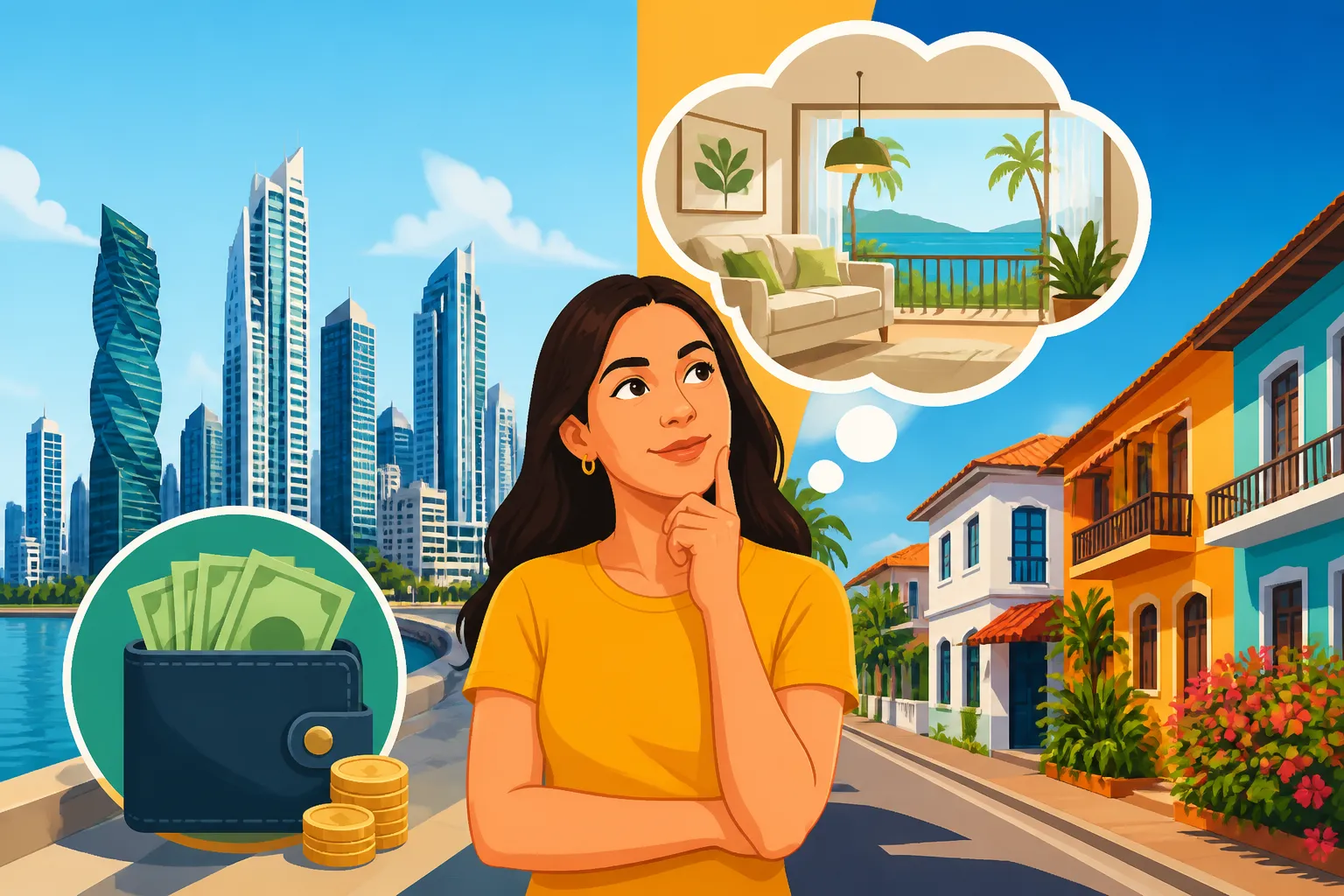
Let's not beat around the bush; housing will be your single largest outlay. Panama City, particularly the popular expat areas, can be surprisingly expensive for rentals. If your budget is $2,000, you're not going to be living in a swanky high-rise in Punta Pacifica or Avenida Balboa. Those places often start at $1,500-$2,000 just for rent for a basic one-bedroom, and that's before utilities or PH (property horizontal, or HOA) fees.
To stay within your $2,000 total budget, you'll need to aim for rent in the $600-$900 range, maximum. This means looking at specific neighborhoods and being realistic about the size and age of your apartment. Forget the brand-new buildings with pools and gyms in the prime areas. Instead, consider areas like:
- Pueblo Nuevo / 12 de Octubre: These are more local, bustling neighborhoods further from the immediate city center. You might find older, smaller apartments here, often unfurnished, for around $600-$750. You'll definitely experience authentic Panamanian life, which can be a huge plus, but also come with fewer expat amenities.
- Parts of San Francisco (away from Calle 50): If you venture a bit further from the main commercial arteries, you might snag a smaller, older one-bedroom apartment or a studio for $750-$900. These often don't include utilities, so factor that in. You’re still close enough to amenities but in a less glitzy part of the neighborhood.
- El Carmen / La Cresta: These are older, more established neighborhoods that can sometimes offer better value than their trendier counterparts. Apartments might be in buildings from the 70s or 80s, but often have solid construction and more space for the price. Expect around $700-$900.
Finding these gems often means walking around, looking for "Se Alquila" signs, asking locals, or working with a very local real estate agent who understands your budget constraints. Websites are helpful, but the real deals are often found offline. Many apartments, especially at this price point, will be unfurnished, meaning you'll need to budget for basic furniture. You can find second-hand items or budget-friendly options at places like Rodelag or Do It Center. For a comprehensive look at rental costs, check out our guide on How Much Does It Cost to Rent an Apartment in Panama City in 2026? It gives a good overview of what to expect across different areas.
Groceries and Dining Out
Food costs can sneak up on you if you're not careful. Eating out daily, especially in touristy spots or expat-friendly restaurants, will quickly blow your budget. However, Panama offers plenty of ways to eat well and affordably.
- Local Markets are Your Friends: This is where you'll save big. Visiting places like the Mercado de Abastos (the main wholesale market, now Merca Panama) or the smaller, more local mercados scattered around the city, will get you fresh fruits, vegetables, and meats at a fraction of supermarket prices. Imagine a huge bag of plantains or a week's worth of avocados for just a few dollars. It's an experience too!
- Supermarkets: You'll likely frequent a mix. Super 99 and El Rey are generally more budget-friendly than chains like Riba Smith or Super Xtra. Riba Smith, while offering more imported goods and a wider selection, comes with a higher price tag. Sticking to local brands and seasonal produce at Super 99 will help keep your grocery bill around $300-$400 a month for one person. This assumes you cook most of your meals.
- Dining Out (Strategically): You can still enjoy the Panamanian culinary scene! Look for fondas or small local eateries that offer menú del día (daily specials). A hearty lunch with rice, beans, meat, and a drink can cost anywhere from $5-$8. These are delicious and authentic. Limiting restaurant meals to maybe once or twice a week, and choosing local spots, will allow you to budget around $100-$150 for dining out. A casual dinner at a mid-range restaurant might set you back $20-$30 per person, so choose wisely.
Utilities and Connectivity
This is another area where costs can vary wildly depending on your habits.
- Electricity (A/C is the Culprit!): Panama is hot and humid, so air conditioning is almost a necessity for many. But it's also the biggest driver of your electricity bill. If you run your A/C 24/7, expect bills easily exceeding $150-$200, even for a small apartment. To manage this on a $2,000 budget, you'll need to be disciplined: use it only at night, set it to a higher temperature (like 24-25°C), and rely on fans during the day. A realistic electricity bill, with careful A/C use, would be $70-$120. Our guide, How Do I Pay My Electricity Bill in Panama?, has more tips on managing costs.
- Water and Gas: Water is usually quite affordable, often $10-$20 a month. If your apartment has gas for cooking or water heating, that's another $5-$10.
- Internet and Mobile: Reliable internet is essential. Providers like Tigo, Cable Onda (now Liberty), and Digicel offer various plans. For a decent speed (say, 100-200 Mbps), expect to pay $40-$60 a month. For mobile, a prepaid plan with data can be as low as $10-$20 a month, or a basic post-paid plan for $25-$40. When you first arrive, getting connected is crucial. Services like Airalo can provide eSIMs for immediate data, helping you navigate while you sort out a local plan and avoid roaming charges. For more detailed insights, read The Expat Guide to Setting Up Utilities Electricity, Water, Internet in Panama and How to Set Up Internet and Mobile Service in Panama.
| Expense Category | Estimated Monthly Cost (USD) | Notes |
|---|---|---|
| Housing (Rent) | $600 – $900 | Older, smaller 1BR/studio, outside prime expat zones, possibly unfurnished. |
| Utilities | $125 – $180 | Electricity (managed A/C), water, gas. |
| Internet & Mobile | $50 – $80 | Decent internet speed, basic mobile plan. |
| Groceries | $300 – $400 | Cooking at home, shopping at local markets & budget supermarkets. |
| Dining Out | $100 – $150 | Limited to local fondas and occasional mid-range meals. |
| Transportation | $40 – $70 | Primarily public transport (Metro, Metrobus), occasional Uber/taxi. |
| Personal Care/Medical | $30 – $60 | Basic toiletries, occasional pharmacy visit. |
| Entertainment/Leisure | $50 – $100 | Free activities, occasional cinema/drinks. |
| Miscellaneous/Buffer | $100 – $200 | Unexpected costs, visa admin, coffee, etc. |
| Total Estimated Range | $1,395 – $2,140 |
This table illustrates that $2,000 is indeed a tight but viable budget, heavily dependent on your choices, especially regarding housing and utilities.
Getting Around and Staying Connected: Transportation and Communication
Navigating Panama City efficiently and affordably is key to making your $2,000 budget work.
Public Transportation vs. Private Cars
Owning a car in Panama City on a $2,000 monthly budget is, frankly, not advisable. Between the purchase price, insurance, maintenance, revisado (vehicle inspection), and gastos de combustible (fuel costs), it would consume a significant chunk of your funds. A small car could easily add $300-$500 or more a month, quickly pushing you over budget. Plus, traffic in Panama City is legendary for its congestion. For those considering car ownership, our guide How Do I Get a Panamanian Driver's Licence? provides more information.
Thankfully, Panama City boasts an affordable and increasingly efficient public transportation system:
- The Metro: This is your best friend. Panama City has a modern, air-conditioned metro system that is incredibly cheap – usually under $0.50 per ride. It connects key areas from San Miguelito through El Cangrejo, Albrook, and towards the old city. For just a few dollars a week, you can commute reliably.
- Metrobus: The bus system covers routes not served by the Metro. While not as comfortable or easy to navigate for newcomers as the Metro, it's even cheaper, often just $0.25 per ride. You'll need a Metro card, which can be purchased and topped up at Metro stations.
- Taxis and Ride-Sharing (Uber/Cabify): These are more expensive but still reasonably priced compared to many Western cities. An Uber ride across the city might cost $5-$10, while a shorter trip is $3-$5. Limiting these to occasional use, perhaps once or twice a week, allows you to budget around $40-$70 a month for transportation. This means no daily Ubers to work. For a detailed look at navigating the city, refer to The Expat Guide to Public Transport in Panama.
You'll quickly find that walking is a great way to explore and save money, especially in neighborhoods like El Cangrejo, Bella Vista, and Casco Viejo.
Mobile and Internet
Staying connected is non-negotiable in today's world, and Panama offers solid options without breaking the bank.
- Mobile Service: As mentioned earlier, prepaid SIM cards are widely available and very affordable. Providers like Tigo, Digicel, and Más Móvil offer various packages. You can buy a SIM card for a few dollars and then purchase data and call packages as needed. A typical plan might give you unlimited social media, a decent amount of data, and local calls for $10-$20 a month. This gives you flexibility and control over your spending.
- Home Internet: For home internet, the main players are Tigo and Liberty (formerly Cable Onda). You can often get packages with speeds ranging from 100 Mbps to 300 Mbps for $40-$60 a month. The reliability is generally good in most urban areas. Bundling services (internet, TV, phone) can sometimes offer marginal savings, but for a single person on a budget, an internet-only plan is usually sufficient. Remember, a major part of The Expat Guide to Setting Up Utilities Electricity, Water, Internet in Panama will be selecting the right provider for your needs.
When you first land, you can grab a local SIM card at the airport or any corner store. This immediate connectivity is vital for navigating, communicating, and even finding your first apartment.
Lifestyle Considerations: Beyond the Essentials
Beyond keeping a roof over your head and food on the table, a healthy budget allows for some enjoyment of your new life.
Entertainment and Leisure
Panama City offers a surprising array of entertainment and leisure options that cater to various budgets.
- Free and Low-Cost Activities: Take advantage of the city's natural and cultural offerings. Strolling or cycling along the Cinta Costera (coastal beltway) is free and offers stunning views of the skyline and ocean. Exploring Casco Viejo, the historic district, can take an entire day, soaking in the architecture and vibrant atmosphere without spending much beyond a coffee or a raspado (shaved ice). Visiting the Miraflores Locks at the Panama Canal is a must-do and reasonably priced. Many parks, like Parque Omar, offer green spaces for relaxation and exercise. You can easily fill your weekends with these types of activities.
- Occasional Splurges: On a $2,000 budget, you won't be hitting the fancy nightclubs every weekend, but you can definitely enjoy an occasional movie (around $5-$8), a happy hour drink with friends ($3-$5 per beer/wine), or a visit to a museum. The key is moderation. Maybe one cinema trip and one social outing per month keeps your budget around $50-$100 for leisure.
- Socializing: Expats here are generally a friendly bunch, and there are many meet-up groups and social events, often centered around coffee, walks, or casual gatherings that don't cost a fortune. Making local friends will also open doors to more authentic and affordable social experiences.
Healthcare and Personal Care
Healthcare is an important consideration, and even on a budget, it’s wise to understand your options.
- Basic Healthcare Costs: Panama has both public and private healthcare systems. For this budget, you'll likely be relying on private clinics for routine visits, as the public system (CSS) can have long wait times and language barriers. A visit to a general practitioner in a private clinic typically costs $20-$40 without insurance. Specialist visits might be $50-$80. Medications are generally affordable, and many pharmacies can be found throughout the city. For a full understanding, check out Prescription Medications and Pharmacies in Panama: The Complete Guide. While some employers enroll you in the CSS, many expats opt for private insurance. Understanding How Much Does a Doctor Visit Cost in Panama? is crucial.
- Private Health Insurance: Getting private health insurance is highly recommended, even if it's a basic catastrophic plan. A simple local plan can start from around $50-$100 a month for a young, healthy individual, helping to cover unexpected emergencies and keeping you from massive out-of-pocket expenses. Our guide on How to Choose Private Health Insurance in Panama (2027) can help you weigh your options.
- Personal Care: Basic toiletries, haircuts, and other personal grooming items are similar in price to North America or Europe, perhaps slightly cheaper. Budget $30-$60 here.
Miscellaneous Expenses and Unexpected Costs
Always, always factor in a buffer for the unexpected. Panama can throw curveballs, and you don't want to be caught unprepared.
- Visa Renewals and Administrative Fees: If you're here on a temporary visa or going through the residency process, there will be periodic fees for renewals, lawyer services, or other administrative hurdles. These can range from a few hundred to over a thousand dollars annually, depending on your visa type. You should set aside a portion of your monthly budget for these. For instance, if a visa renewal costs $1,200 annually, that's $100 per month. Learning How to Get Your Cedula (Residency ID) in Panama is a crucial step that often involves fees.
- Home Goods and Repairs: Even in a rental, you might need to buy cleaning supplies, replace a lightbulb, or fix a minor issue. Having a small emergency fund or budgeting $20-$50 for these unforeseen home expenses is smart.
- Shopping: Beyond essentials, Panama City has plenty of malls and shops. While tempting, discretionary spending on clothes, electronics, or souvenirs will quickly erode your budget. Prioritize needs over wants.
- Travel and Excursions: Panama offers incredible opportunities for exploring rainforests, beaches, and indigenous cultures. While day trips can be affordable, longer excursions or flights to other parts of the country (like Bocas del Toro or the San Blas Islands) will require careful saving.
- Shipping & Moving: If you're coming from abroad, don't forget the initial costs of moving your belongings. Comparing international moving services through platforms like Sirelo can give you an idea of costs and help you budget, though on a $2,000 budget, you'd likely be bringing minimal possessions.
Living in Panama City on $2,000 a month is about making smart choices, embracing the local way of life, and being disciplined with your spending. It's a fantastic experience, but it requires a proactive approach to budgeting and a willingness to step outside the typical expat bubble. For a broader overview of costs, take a look at The Complete Guide to Cost of Living in Panama for Expats (2026).
Disclaimer
Please remember that this article provides general information based on current market conditions and expat experiences in Panama as of 2026. Costs are estimates and can fluctuate due to inflation, exchange rates, personal lifestyle choices, and specific location within Panama City. It is always recommended to conduct your own thorough research and consult with local professionals, such as real estate agents and financial advisors, to get personalized advice tailored to your individual circumstances.