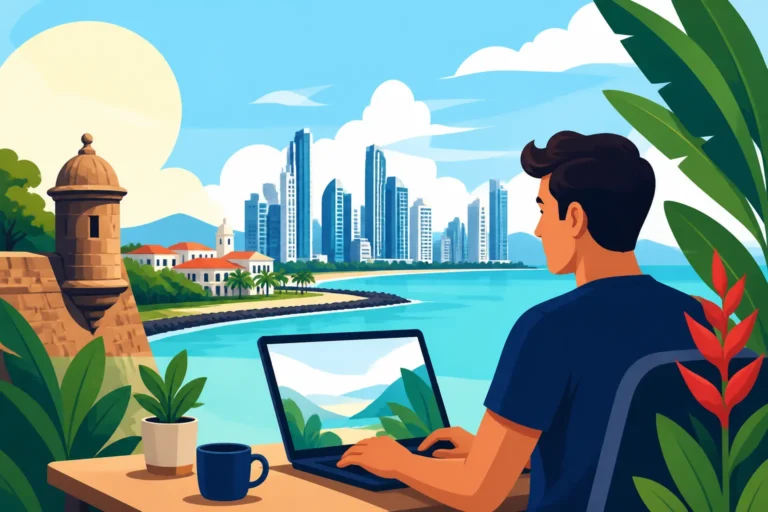
The Complete Guide to Freelancing in Panama as an Expat
So, you've got that entrepreneurial itch, that burning desire to call your own shots, and you're dreaming of doing it all from the tropical embrace of Panama? Sounds like a dream, doesn't it? Ditching the 9-to-5 grind and carving out your own path, laptop in hand, with the sounds of the jungle or the city pulse as your soundtrack. But let's be real, the fantasy can quickly turn into a bureaucratic maze if you don't know the ropes. This comprehensive guide is here to untangle the complexities, offering you a clear, realistic roadmap to successfully launching and managing your freelance career as an expat in Panama.
Understanding the Freelance Landscape in Panama for Expats
When you first land in Panama, especially if you're coming from a fast-paced Western country, the idea of being your own boss here feels incredibly liberating. The cost of living can be lower, the pace of life often feels more relaxed, and the vibrant culture offers endless inspiration. However, the freelance scene isn't just a free-for-all; there's a specific dynamic at play that expats need to understand to thrive.
The Appeal of Freelancing in Panama
For many, Panama represents a fantastic opportunity for geographical arbitrage – earning in dollars (or other strong currencies) from international clients while enjoying the lower expenses and vibrant lifestyle of a Central American hub. Imagine starting your day with a fresh cup of Panamanian coffee on your balcony overlooking the Pacific Ocean or the lush mountains of Boquete, then diving into your client work. This lifestyle attracts digital nomads, creative professionals, and consultants alike. The country's strong internet infrastructure, particularly in Panama City, and its strategic location as a business crossroads, add to its appeal. Many expats find that they can maintain a high standard of living on a freelance income that might be stretched thin back home.
However, it's not just about the economics. Panama offers an incredibly rich cultural experience. From the bustling mercados to the serene beaches, there's always something new to explore. For creatives, this can be a huge boost. Writing about your experiences, designing for local businesses, or even teaching English online, your environment can become a significant part of your brand and inspiration. The community of expats is also diverse and generally welcoming, providing a built-in network for both social and professional connections.
Common Freelance Sectors for Expats
While you can technically freelance in any field that doesn't require specific Panamanian licensing (like law or medicine), some sectors are naturally more accessible and popular for expats. The digital realm is, of course, king. Think web design and development, digital marketing, content writing, social media management, and virtual assistance. These roles allow you to work remotely for clients anywhere in the world, aligning perfectly with Panama's territorial tax system (more on that later!).
Beyond the digital sphere, many expats find success in consulting – leveraging their international experience in areas like business development, finance, or project management for local or international companies with operations in Panama. English teaching, both online and in-person (through private tutoring or language schools), is another common pathway. For the creatively inclined, photography, videography, and art also offer freelance opportunities, especially within the tourism sector or for the growing expat community itself. Moreover, with Panama's increasing focus on tourism, there are niches for tour guides, hospitality consultants, and event planners who can cater to an international clientele.
Reality Check: Challenges and Opportunities
While the idea of freelancing in Panama is alluring, it's vital to have a realistic perspective. The "Pura Vida" pace can sometimes translate to a "mañana" approach to business, which can be frustrating when you're used to quicker turnaround times. Bureaucracy, while navigable, can be a test of patience. Expect things to take longer than you anticipate, and always double-check requirements, as they can sometimes change without much notice. The language barrier, if you don't speak Spanish, can also be a significant hurdle, not just for daily life but for engaging with local clients or navigating administrative tasks. Learning some Spanish can dramatically improve your experience and open up more opportunities. For example, language learning platforms like iTalki can be a fantastic resource for expats looking to improve their Spanish skills and better integrate into Panamanian life.
However, with these challenges come immense opportunities. Panama is a developing nation with a growing economy and a thirst for international expertise. If you can bridge cultural gaps and offer high-quality, reliable services, you can carve out a very rewarding niche. Networking, both within the expat community and with local professionals, is absolutely crucial. Attending local business events, joining expat groups, and even simply striking up conversations can lead to unexpected collaborations and clients. The flexibility of freelance work also means you can truly immerse yourself in the Panamanian lifestyle, travelling, exploring, and building a life that genuinely excites you, rather than just tolerating your work.
Legal Foundations: Your Residency and Work Rights
This is often where the dream hits a snag. Many expats mistakenly believe that if their clients are international, they don't need a specific work permit in Panama. This is a common misunderstanding that can lead to significant legal trouble. Panama has clear rules about who can work and under what conditions, regardless of where your clients are based. Understanding these rules is your first and most critical step.
Can You Freelance on Any Visa? Navigating Work Permits
The short answer is no, you generally cannot freelance legally in Panama on just any visa, especially not a tourist visa. A tourist visa explicitly prohibits working for pay within Panama, whether for local or international clients. This includes remote work. The Panamanian government views any activity where you earn income while physically present in the country as "work," and it requires proper authorization. Ignoring this can lead to fines, deportation, and future entry bans.
To legally freelance in Panama, you typically need some form of residency that also grants you work authorization. This is not always straightforward, as many residency visas are tied to specific types of employment or investment. For example, while the popular Friendly Nations Visa allows you to obtain a work permit under certain conditions, it's often more geared towards employment with a Panamanian company rather than individual freelancing. However, there are avenues for the self-employed, which we'll explore. It's crucial to understand that a "work permit" is a separate document from your residency visa and is issued by the Ministry of Labor (MITRADEL). Navigating the nuances of this can be complex, and getting it wrong can jeopardize your entire expat journey.
Residency Options for Aspiring Freelancers
While a direct "freelance visa" as some countries offer doesn't exist in Panama (at least not in the traditional sense, though the short-stay digital nomad visa is an option for temporary stays), several residency pathways can lead to the ability to freelance legally.
- Friendly Nations Visa: This is a popular option for citizens of specific countries. While it traditionally requires an employment contract with a Panamanian company or the establishment of a Panamanian corporation with specific economic activity, it can be adapted. If you establish your own corporation (a "Sociedad Anónima") in Panama and can demonstrate that it's engaged in economic activity and generates income, you might be able to secure a work permit through that entity. However, this is more complex than simply freelancing under your own name and requires significant planning and legal guidance. Understanding the Friendly Nations Visa in Panama (2027) is a good starting point.
- Pensionado Visa (Retiree Visa): If you qualify as a retiree with a lifelong pension exceeding $1,000 USD per month, this visa offers an attractive route. While the primary benefit is residency for retirees, the Panamanian constitution grants work rights to all permanent residents. This means if you have the Pensionado Visa, you are legally allowed to work and, by extension, freelance. This is often seen as one of the most straightforward ways for qualified individuals to freelance legally without jumping through additional work permit hoops.
- Qualified Investor Visa (Golden Visa): For those with substantial capital, investing in Panamanian real estate, a reforestation project, or a fixed-term deposit can grant you residency. Like the Pensionado Visa, this also typically grants work rights as a permanent resident, allowing you to freelance.
- Short-Stay Visa for Remote Workers (Digital Nomad Visa): Panama recently introduced a specific visa for remote workers. This isn't a long-term residency but allows you to stay for an initial nine months, extendable for another nine months. It's ideal for testing the waters or for those who don't want permanent residency. Crucially, it specifically allows you to work remotely for companies or clients outside of Panama. While it's a "short-stay" option, it directly addresses the desire to freelance or work remotely legally without the commitment of full residency.
It is paramount to thoroughly research each option and ensure it aligns with your long-term goals and specific financial situation. Each visa has distinct requirements for income, investment, and documentation.
The Importance of Legal Counsel
Seriously, don't try to navigate Panama's immigration and labor laws on your own. It's a labyrinth of requirements, forms, and waiting periods. What seems logical from an expat's perspective might be completely different in the eyes of the Panamanian authorities. Engaging a reputable Panamanian immigration lawyer is not an expense; it's an investment that will save you time, stress, and potential legal headaches. A good lawyer can assess your specific situation, recommend the best visa pathway for your freelance aspirations, help you gather and apostille the necessary documents, and guide you through every step of the application process. They'll also be invaluable in explaining the nuances of How Your Residence Status Affects Health Coverage in Panama and other critical aspects of your life here. They understand the intricacies of How to Get Residency in Panama: The Full Guide (2027) far better than any online forum ever could.
This is especially true when it comes to work permits. If your residency path doesn't automatically grant work rights, your lawyer will be essential in applying for the separate work permit from MITRADEL. This typically involves demonstrating that your skills are needed in Panama and that your work won't displace a Panamanian worker, even if your clients are entirely international.
Registering Your Freelance Business in Panama
Once you've got your legal right to work sorted, the next big step is making your freelance activities official. This means registering your business with the Panamanian authorities. This process might seem daunting, but it's a necessary part of operating legally and transparently.
Choosing Your Business Structure: Persona Natural vs. Company
For most individual freelancers, you'll likely be looking at two main structures: operating as a "Persona Natural" (natural person/sole proprietor) or establishing a "Sociedad Anónima" (corporation).
- Persona Natural: This is the simplest and most common route for individual freelancers. You operate under your own name and are personally liable for your business's debts and obligations. The setup is relatively straightforward, requiring registration with the Dirección General de Ingresos (DGI), Panama's tax authority. You'll get an RUC (Registro Único de Contribuyente – unique taxpayer registry number) tied to your personal ID. This option is generally preferred for those with lower revenue, minimal risk, and no immediate plans for expansion. Filing taxes is also simpler, often done as part of your personal income tax. You can find more details on How to Register as a Natural Person Business (Persona Natural) in Panama.
- Sociedad Anónima (S.A.): This is a Panamanian corporation, a separate legal entity from yourself. It offers limited liability, meaning your personal assets are protected from business debts. Setting up an S.A. is more complex and costly, involving a lawyer, a registered agent, and annual fees, but it can project a more professional image, which might be beneficial if you're working with larger clients or plan to scale your business. It also provides more flexibility for future investments or bringing in partners. However, it requires separate accounting and corporate tax filings.
Here’s a quick comparison to help you decide:
| Feature | Persona Natural (Sole Proprietor) | Sociedad Anónima (Corporation) |
|---|---|---|
| Setup Cost | Low (mostly lawyer/accountant fees for registration) | Higher (lawyer, registered agent, articles of incorporation) |
| Annual Maintenance | Lower (filing personal income tax) | Higher (annual corporate taxes, registered agent fees, accountant) |
| Liability | Unlimited (personal assets at risk) | Limited (personal assets protected) |
| Complexity | Simpler, fewer administrative requirements | More complex, requires more formal compliance |
| Perceived Professionalism | Varies, might be less for larger clients | Higher, especially for corporate clients |
| Tax Filing | Part of personal income tax, simpler | Separate corporate tax filings, more complex |
| Ideal For | Individual freelancers, lower revenue, minimal risk | Higher revenue, scaling business, limited liability, multiple owners |
Most expats starting out freelance opt for Persona Natural due to its simplicity. However, if your long-term plan involves significant growth, hiring others, or higher revenue, an S.A. might be worth considering.
Getting Your RUC and DGI Registration
No matter which structure you choose, obtaining your RUC (Registro Único de Contribuyente) is non-negotiable. This is your tax identification number in Panama, similar to a Social Security number for tax purposes or a Tax ID in other countries. You'll need it for everything from filing taxes to opening a business bank account.
To get your RUC, you'll need to register with the DGI (Dirección General de Ingresos), Panama's tax authority. This process usually involves submitting an application form (Formulario 03-24 "Inscripción en el RUC") along with copies of your passport, residency card (cédula), and any other supporting documents your lawyer advises, such as proof of address. Your lawyer can handle this entire process for you, ensuring all paperwork is correctly filled out and submitted. This is a critical step, and understanding How to Get an RUC (Tax ID) as a Foreigner in Panama is foundational. The DGI process can be lengthy, so start early.
Once registered, you'll be assigned your RUC, which will be essential for all your financial dealings as a freelancer. This enables you to issue invoices, report your income, and fulfill your tax obligations.
Navigating Municipal Permits and Licenses
Beyond national tax registration, some freelance activities might require municipal permits or licenses, especially if you operate a physical office, interact directly with the public, or your service falls under specific regulated categories. For example, if you're offering local services like photography for events or operating a small consulting office, you might need a "Aviso de Operación" (Notice of Operation) from the Ministry of Commerce and Industries (MICI) and potentially a municipal business license from the local Alcaldía (Mayor's Office) where you reside or operate.
However, for many purely remote, international-client-focused freelancers (e.g., a graphic designer working from their home for clients in the US), these local permits are often not explicitly required, as your "business activity" is not physically located or consuming local resources in the traditional sense, and your income is foreign-sourced. This is an area where specific legal advice is invaluable. Your lawyer can clarify if your particular freelance activity triggers any local permit requirements. Trying to guess can lead to unnecessary costs or, worse, operating illegally.
Taxation for Freelancers in Panama
Ah, taxes. It's often the most intimidating part of freelancing, but in Panama, it can actually be one of the most attractive aspects for expats, thanks to its territorial tax system. This system is a major reason why many choose Panama as their base.
Understanding Panama's Territorial Tax System
Panama operates on a territorial tax system. In simple terms, this means that only income generated within Panama is subject to Panamanian income tax. Income earned from sources outside of Panama is generally not taxed by the Panamanian government. This is a huge benefit for freelancers whose clients are predominantly international.
So, if you're a web developer living in Panama but all your clients are in the United States, Europe, or elsewhere outside of Panama, the income you receive from them is considered foreign-sourced income. As such, it would likely not be subject to Panamanian income tax. This is a significant advantage compared to countries with worldwide tax systems where you're taxed on all your income, regardless of where it's earned.
However, there's a critical nuance: if you provide services to a client physically located in Panama, or if your income originates from an economic activity within Panama (e.g., selling products or services to Panamanian residents or companies), then that income is considered Panama-sourced and will be subject to Panamanian income tax. For instance, if you're a consultant in Panama City and get a gig helping a local Panamanian business with their marketing strategy, that income is taxable in Panama. This is where it’s essential to be clear about your client base. For complex situations, particularly if you have mixed income sources, consulting with a specialized service like Taxes for Expats can provide clarity and ensure compliance. They truly understand the territorial tax system and how it applies to various expat scenarios.
Filing Your Freelance Taxes: What You Need to Know
Even if your income is foreign-sourced and therefore not subject to Panamanian income tax, you generally still have an obligation to file an annual income tax return with the DGI. This return will declare your income and specify its source. If all your income is foreign-sourced, your tax liability will be zero, but filing is still mandatory to demonstrate compliance and confirm your tax residency. This is crucial for maintaining your legal status and avoiding issues down the line.
For income that is Panama-sourced, you will need to pay income tax based on Panama's progressive tax brackets. As a Persona Natural, your tax calculation will generally follow the individual income tax rates. It's important to keep meticulous records of your income and expenses to ensure accurate reporting and to maximize any legitimate deductions. Your lawyer or a local accountant (contador) can help you understand the specific requirements for record-keeping and how to File Your Annual Tax Return in Panama.
Panamanian Income Tax Brackets (for individuals/Persona Natural, approximate rates for 2024-2026):
| Annual Taxable Income (USD) | Tax Rate |
|---|---|
| $0 – $11,000 | 0% |
| $11,001 – $50,000 | 15% |
| $50,001 and above | 25% |
Note: These are general guidelines; always consult with a Panamanian tax professional for the most accurate and up-to-date information, as rates can change.
Remember, tax deadlines in Panama are typically March 15th for individuals. Missing deadlines can incur penalties, so mark your calendar! Utilizing the DGI's online portal is common, and your accountant will likely use it to file on your behalf. More on this can be found by researching Understanding the DGI Online Portal and E-Tax in Panama.
ITBMS (VAT) and Other Potential Taxes
Beyond income tax, freelancers might encounter other tax obligations, primarily ITBMS (Impuesto a la Transferencia de Bienes Muebles y Servicios), which is Panama's equivalent of VAT or sales tax. The standard ITBMS rate is 7%.
When does ITBMS apply to freelancers?
If you provide services within Panama to Panamanian clients, and your annual gross income exceeds a certain threshold (currently $36,000 USD), you are generally required to register for ITBMS and charge it on your invoices. You then collect this tax from your clients and remit it to the DGI monthly. If your income from Panamanian sources is below this threshold, you are usually not required to register or charge ITBMS. Again, for services rendered to international clients outside of Panama, ITBMS typically does not apply.
It's also worth noting that if you establish a Sociedad Anónima, you'll be subject to corporate taxes and potentially dividend taxes if you distribute profits. This is another reason why a Persona Natural is often simpler for individual freelancers. Additionally, there might be other minor taxes or fees depending on your specific industry or location, such as municipal taxes if you have a physical office. This is why it's critical to have solid accounting advice tailored to your situation. For those specifically looking into How Much Income Tax Will I Pay in Panama in 2026?, this information is crucial.
Banking and Financial Management for Freelancers
Once you're legally set up and understand your tax obligations, the practical side of managing your freelance finances comes into play. Opening a bank account, handling payments, and managing your money efficiently are essential for smooth operations.
Opening a Business Bank Account as an Expat
This is one of the most common frustrations for new expats in Panama. While it's relatively easy for Panamanian citizens, opening a bank account as a foreigner, especially for business, can be a bureaucratic challenge. Panamanian banks are stringent due to international anti-money laundering regulations. You'll likely need to provide:
- Your valid passport and residency card (cédula): These are non-negotiable.
- Proof of address: A utility bill in your name.
- Proof of income/funds: Bank statements from your home country, letters from previous employers, tax returns, or a letter from your Panamanian lawyer explaining the nature of your freelance income.
- Two bank references: Often, banks want references from existing Panamanian bank account holders, which can be tricky for newcomers. Sometimes a letter from a lawyer or a reference from a bank in your home country can suffice, but this varies.
- Business documentation: Your RUC registration from the DGI, and if you have an S.A., the company's articles of incorporation.
- A "Know Your Customer" (KYC) interview: Banks will want to understand the nature of your business, where your funds come from, and where they're going. Be prepared to explain your freelance model in detail.
Banks like Banco General and Banistmo are popular choices and generally expat-friendly, but the process still requires patience. It's often recommended to work with your lawyer to facilitate this. They may have contacts within banks that can streamline the process. Don't underestimate this step; it can take weeks or even months. Having a local bank account is indispensable for receiving payments, paying local bills, and managing your Panamanian-sourced income. More detailed steps can be found in How to Open a Bank Account at a Panamanian Bank as a Foreigner.
Managing Income and Expenses Across Borders
For freelancers with international clients, receiving payments efficiently is key. While your Panamanian bank account will be your primary hub, you'll likely use various methods to receive funds from abroad.
- Wire Transfers: Traditional bank transfers are reliable but can incur fees and take a few days. Ensure your clients have your correct SWIFT/BIC code and account number.
- Online Payment Platforms: Services like PayPal, Stripe, Wise (formerly TransferWise), Payoneer, and others are extremely popular among freelancers. They offer faster transfers and often more competitive exchange rates than traditional banks. You can link these accounts to your Panamanian bank account for easy withdrawal.
- Cryptocurrency: For some tech-savvy freelancers, receiving payments in cryptocurrency is an option, though converting to USD (Panama's official currency) will involve using local exchanges or P2P platforms, which adds another layer of complexity and potential fees.
When it comes to expenses, keep track of everything! Dedicated accounting software or even a simple spreadsheet can help. Distinguish between personal and business expenses. For Panama-sourced income, legitimate business expenses (e.g., internet, office supplies, professional development, software subscriptions) can be deducted from your taxable income. This is where a good accountant or service like Taxes for Expats truly shines, ensuring you're taking advantage of all allowable deductions.
Payment Gateways and Invoicing
As a freelancer, your invoicing process needs to be professional and compliant. Use invoicing software (like Wave, FreshBooks, or even simple templates) that allows you to clearly outline your services, rates, and payment terms.
Key elements for your invoices:
- Your business name (or full name if Persona Natural) and RUC.
- Your client's business name and tax ID (if applicable).
- Invoice number and date.
- Detailed description of services provided.
- Quantity, unit price, and total amount.
- Any applicable ITBMS (if billing Panamanian clients and exceeding the threshold).
- Payment due date.
- Your bank account details or preferred payment gateway information.
Ensure your invoices are clear, professional, and easy for your clients to understand. If you're dealing with international payments, consider the currency. Panama uses the US dollar, so invoicing in USD simplifies things, as there are no currency conversion headaches on your end for direct bank transfers. For digital nomads or those constantly on the go, How to Set Up Online Banking with a Panamanian Bank will be incredibly useful for managing your cash flow.
Practicalities of Freelance Life in Panama
Beyond the legal and financial frameworks, there's the day-to-day reality of being a freelancer in Panama. This involves everything from finding clients to ensuring you have a reliable internet connection and taking care of your health.
Finding Clients and Building Your Network
While many expats arrive with existing international clients, finding new clients, especially locally, requires a proactive approach.
- Online Platforms: Sites like Upwork, Fiverr, Freelancer.com, and LinkedIn are global marketplaces where you can find clients regardless of your physical location. These are excellent for maintaining a steady stream of foreign-sourced income.
- Expat Networks: Join local expat Facebook groups, attend meetups, and leverage professional networking events. Other expats often need services or can refer you to international businesses operating in Panama. This is a powerful way to tap into your community.
- Local Networking: Attend local business events, chambers of commerce gatherings, and industry-specific conferences. While a good grasp of Spanish is essential here, it can open doors to Panamanian clients who appreciate international expertise. Consider offering your services to local businesses that want to expand their reach internationally. This aligns with advice in The Expat Guide to Finding a Job in Panama (2027) which stresses the importance of networking.
- Word-of-Mouth: Do excellent work, and referrals will follow. This is true everywhere, but especially in Panama, where personal connections and trust are highly valued.
Remember that building a network takes time and consistent effort. Don't expect instant results, but be persistent and genuine in your interactions.
Co-working Spaces and Internet Connectivity
A reliable internet connection is the lifeblood of most freelancers. Panama, especially Panama City, has excellent internet infrastructure. Major providers include Cable & Wireless (C&W), Tigo (formerly Cable Onda), and Más Móvil. Fiber optic internet is widely available in urban areas, offering high speeds suitable for demanding freelance work. For more information on setting up your internet service, refer to How to Set Up Internet and Mobile Service in Panama.
While working from home is convenient, co-working spaces have become increasingly popular for freelancers in Panama City. They offer:
- Reliable Internet: Often redundant and faster than home connections.
- Professional Environment: A dedicated workspace helps maintain focus and professionalism.
- Networking Opportunities: Mingle with other entrepreneurs and freelancers.
- Amenities: Meeting rooms, printers, and sometimes even coffee/snacks.
Popular co-working spaces in Panama City include Workings, Spaces, and various independent local options. If you're in smaller expat hubs like Boquete, you might find smaller, community-run co-working spots or cafes with excellent Wi-Fi.
Healthcare and Social Security for the Self-Employed
Healthcare is a critical consideration for any expat, especially freelancers who don't have employer-provided benefits. As a self-employed individual in Panama, you will typically need to arrange your own healthcare coverage.
- Private Health Insurance: This is the most common and recommended option for expats. Panama has an excellent private healthcare system, especially in Panama City, with modern hospitals like Punta Pacifica Hospital and Hospital Nacional. Private insurance plans offer comprehensive coverage, shorter wait times, and access to English-speaking doctors. You can choose local Panamanian plans (e.g., from companies like ASSA, Mapfre, or Suramericana) or international health insurance. The cost varies based on age, coverage, and deductible, but it’s generally more affordable than in North America. For a deeper dive into options, consult Health Insurance in Panama: Private and International Options Explained.
- Caja de Seguro Social (CSS): As a self-employed individual, you generally have the option to voluntarily contribute to the public social security system (CSS). While this provides access to public healthcare and pension benefits, the public system can have longer wait times and less English-speaking staff. Many expats who contribute to CSS still choose to carry private insurance for better access to private facilities. Understanding Social Security (CSS) Contributions in Panama is important. While CSS contributions are mandatory for employees, for freelancers and the self-employed, it is often voluntary, but something to consider for long-term benefits.
- Emergency Care: Regardless of your chosen path, it's wise to understand the local emergency procedures. Know the emergency numbers and the location of the nearest reputable hospitals. If you have private insurance, know your policy's emergency care protocols. For general information, How Panama's Health System Works: CSS and Private Care Explained (2027) offers a comprehensive overview.
Taking care of your health is paramount. Don't skimp on health insurance, as a medical emergency without coverage can be financially devastating.
Overcoming Common Freelance Hurdles in Panama
No expat journey is without its challenges, and freelancing in Panama is no different. You'll encounter unique hurdles, but with the right mindset and strategies, you can navigate them successfully.
Language Barriers and Cultural Nuances
Panama is a Spanish-speaking country. While English is widely spoken in business circles and tourist areas of Panama City, particularly among younger generations and in international companies, daily life and especially interactions with government agencies or local businesses will largely be in Spanish.
Tips for overcoming the language barrier:
- Learn Spanish: This is non-negotiable for long-term integration and will significantly improve your quality of life and business opportunities. Even basic conversational Spanish can make a huge difference. Enroll in a language school, hire a private tutor, or use apps and platforms like iTalki, which connects you with native Spanish speakers for lessons.
- Hire a Translator/Assistant: For critical meetings or complex administrative tasks, consider hiring a local assistant or translator. Many young Panamanians are eager to practice their English and can provide invaluable help for a reasonable fee.
- Be Patient: Panamanian Spanish has its own slang and pace. Don't get discouraged. People generally appreciate the effort you make.
Understanding cultural nuances is equally important. Business interactions can be more relationship-focused, and directness might be perceived differently. Be prepared for less punctuality in some settings (the "Panamanian minute" is real!) and embrace a more relaxed approach. Building trust and personal relationships ("palanca") can be key to success in many local contexts.
Dealing with Bureaucracy and Delays
If you're used to highly efficient, digital-first administrative processes, Panama might test your patience. Government processes can be slow, paper-heavy, and require multiple visits to different offices. This is perhaps one of the biggest frustrations for many expats.
Strategies for managing bureaucracy:
- Hire Professionals: As mentioned, a good lawyer and accountant are worth their weight in gold. They know the system, the shortcuts (legal ones, of course!), and who to talk to. They can often handle tasks that would take you days.
- Patience and Persistence: Bring a book, prepare for waiting, and follow up politely but consistently. Don't expect things to happen on your timeline.
- Organize Your Documents: Keep multiple copies of everything, both physical and digital. Ensure all documents are apostilled or authenticated as required.
- Go Early: Arriving at government offices right when they open can sometimes save you hours of waiting.
For example, when dealing with the DGI, even with an accountant, you might experience delays. Don't let it stress you; it's part of the process.
Maintaining Work-Life Balance in Paradise
One of the biggest temptations, and ironies, of freelancing in paradise is forgetting to actually enjoy paradise. It's easy to get caught up in work, especially when your office is also your home. Panama offers an incredible lifestyle, and it's essential to build a routine that allows you to enjoy it.
- Set Boundaries: Establish clear working hours and stick to them. It's too easy for work to bleed into evenings and weekends when there's no office to leave.
- Explore: Force yourself to step away from the laptop. Take advantage of Panama's stunning natural beauty—the beaches, mountains, rainforests, and islands. Go to the Biomuseo, explore Casco Viejo, or take a weekend trip to Bocas del Toro.
- Connect: Build a social life outside of work. Join expat groups, sports clubs, or volunteer organizations. Having a support network is crucial for mental well-being.
- Prioritize Wellness: Make time for exercise, healthy eating, and relaxation. The stress of freelancing, combined with adapting to a new country, can take a toll.
Ultimately, freelancing in Panama offers an unparalleled opportunity to craft a life that balances professional ambition with a rich, vibrant personal experience. With careful planning, legal compliance, and a dose of patience, you can absolutely make it work. Just remember that the goal isn't just to work from paradise, but to live it too. For a wider view on costs, consider The Complete Guide to Cost of Living in Panama for Expats (2026) to ensure your freelance income aligns with your desired lifestyle.
Disclaimer
Please note that the information provided in this guide is for general informational purposes only and does not constitute legal, financial, or tax advice. Laws and regulations in Panama, especially concerning immigration, labor, and taxation, can change frequently and vary based on individual circumstances. It is essential to consult with qualified Panamanian legal professionals, immigration experts, and tax advisors for personalized advice tailored to your specific situation before making any decisions related to freelancing or living in Panama.